To enjoy a taste of Oktoberfest at the end of September, Nik and I headed to Germany. Based on festival schedules and trying to fit in a soccer game, we decided to visit Cologne first where we spent two nights. Safe to say, we absolutely loved it.
Getting to Cologne
Nik is the flight planner and found it best to fly in and out of Düsseldorf, so that’s what we did. We landed in Düsseldorf around 3 in the afternoon and took a train from the airport to city center where we caught a train to Cologne.
As the Marriott loyalists we are, we chose a Marriott just a short walk from Cologne Central Station, and it ended up being convenient for everything we did during our stay. The room wasn’t anything too exciting but I would love to know the history of the land its on since nearby were a series of Stolperstein, also known as Stumbling Stones.
Stumbling Stones in Cologne
The city of Cologne has at least 1,400 Stumbling Stones throughout the city with some of the first ones being laid in 2005.
As a refresher, Stumbling Stones are small concrete cubes topped with a brass plate that commemorate victims of Nazi persecution or extermination at their last known place of residence. They’re incredibly moving to see, even more so when you look up the names and learn about the people who once lived there.
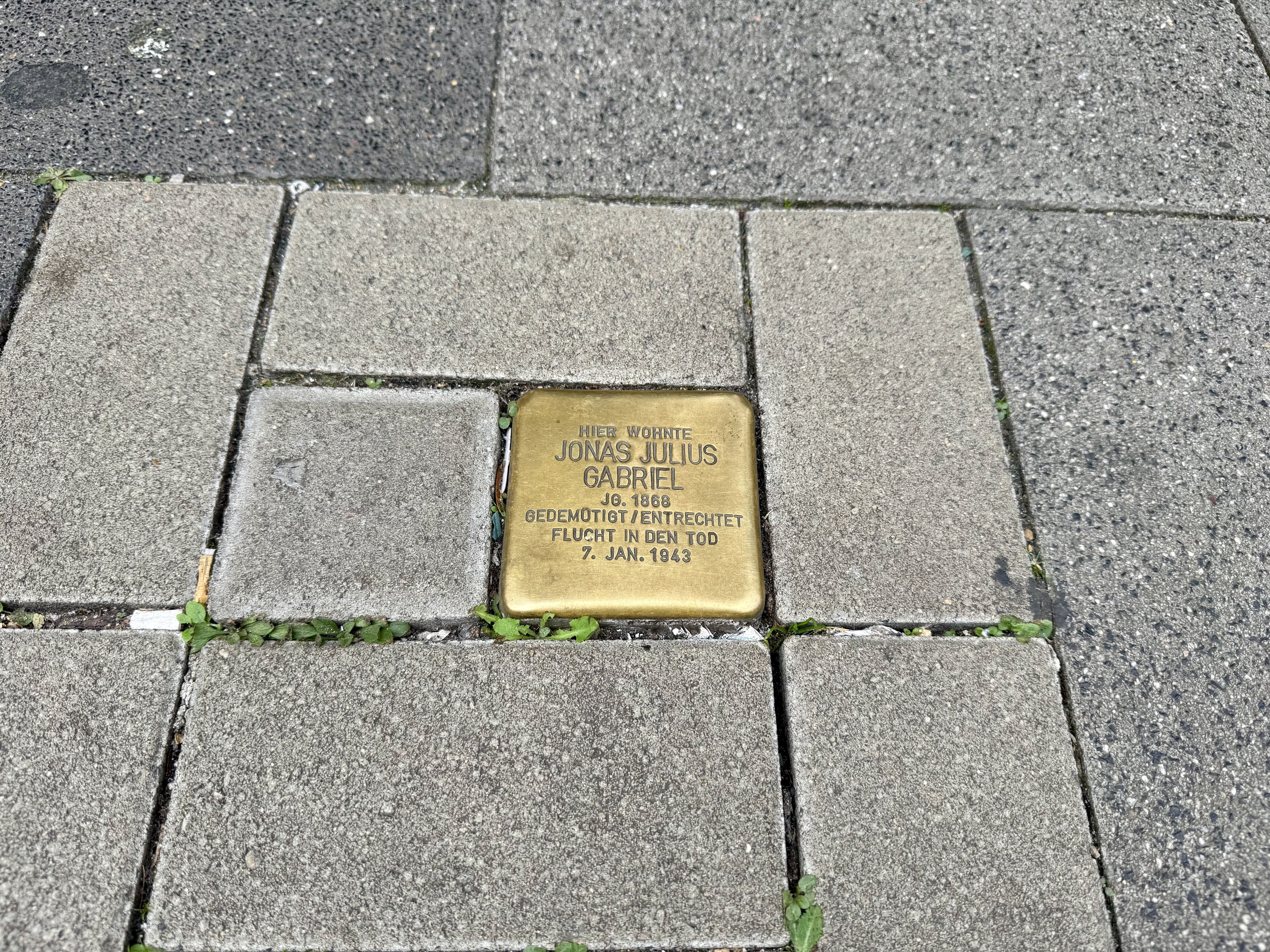
The stone above for Jonas Julius Gabriel at Richmodstraße, 29 loosely translates to: slandered or humiliated. Rights revoked. Death by suicide. (Probably to avoid the impending deportation.)
At the address of Jakordenstraße, 17 is a large grouping of Stumbling Stones. According to this Wikipedia entry, several families at the same address were deported to two different sites: the Łódź (Litzmannstadt) Ghetto and the Kulmhof extermination camp, where they were murdered.
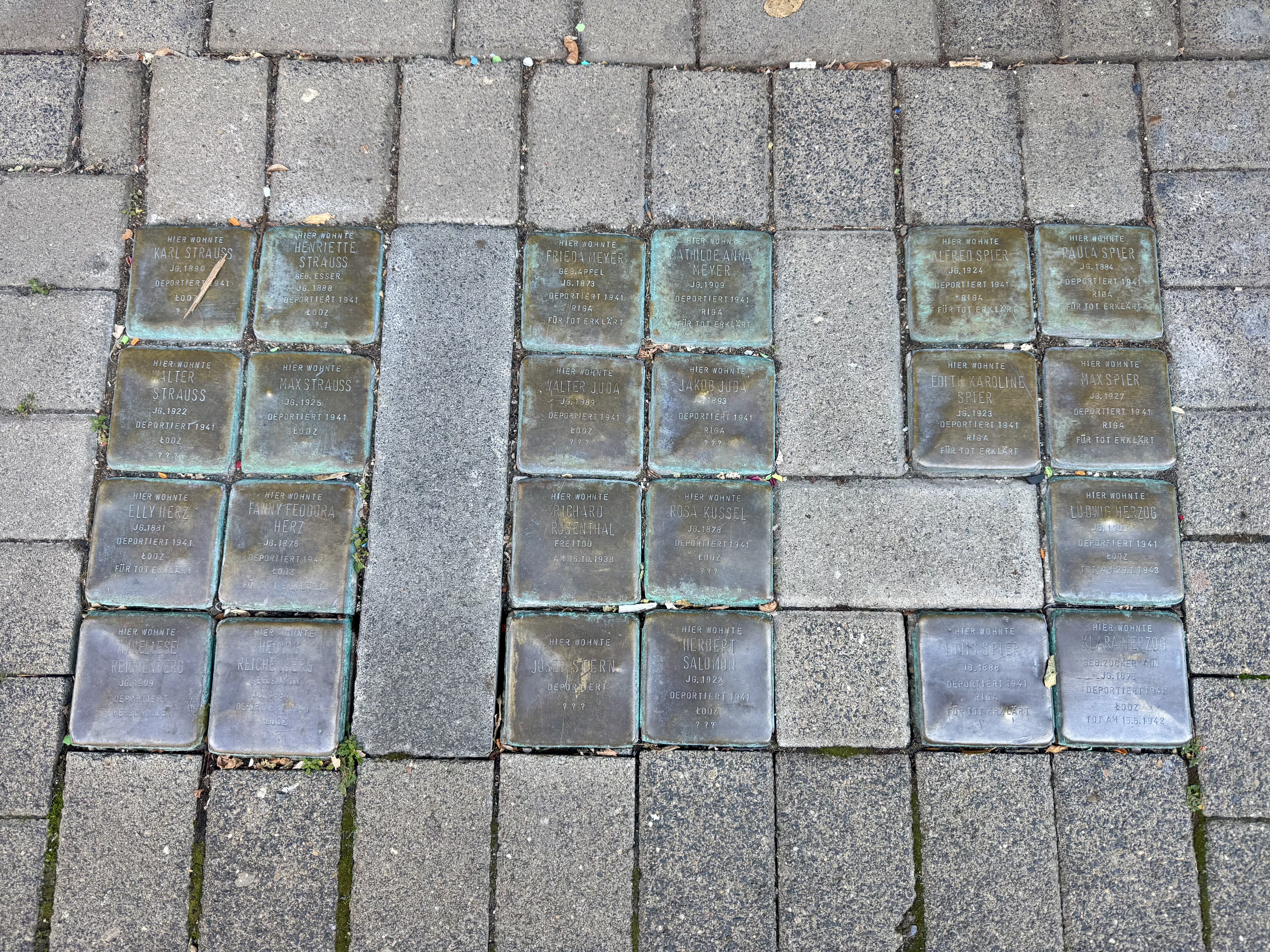
These are just a few of the many Stumbling Stones we saw in Cologne. The next time your travels take you through countries such as Austria, Hungary, or Germany, keep an eye out as you walk as you’ll likely come across some Stumbling Stones as well.
Cologne Cathedral
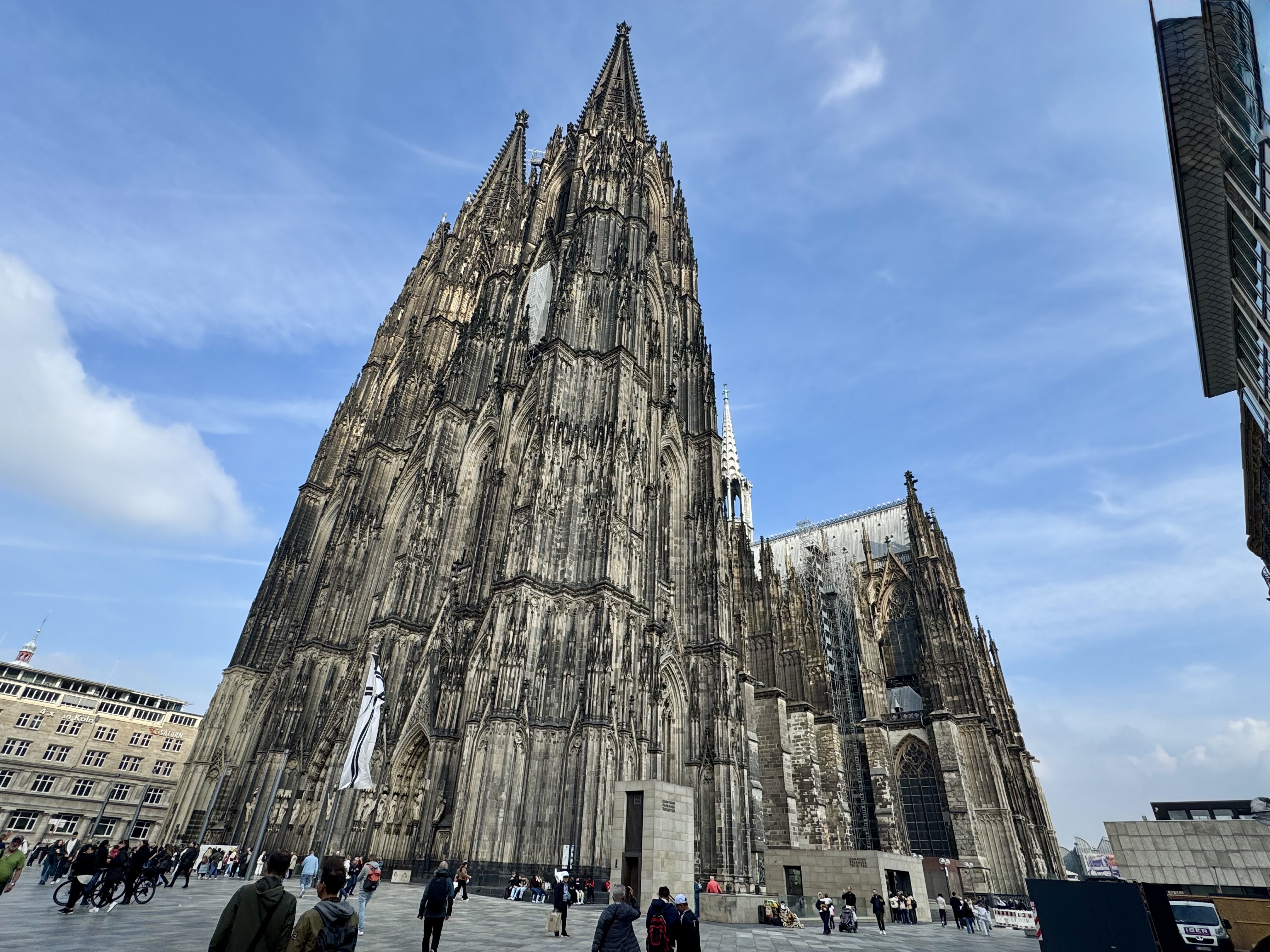
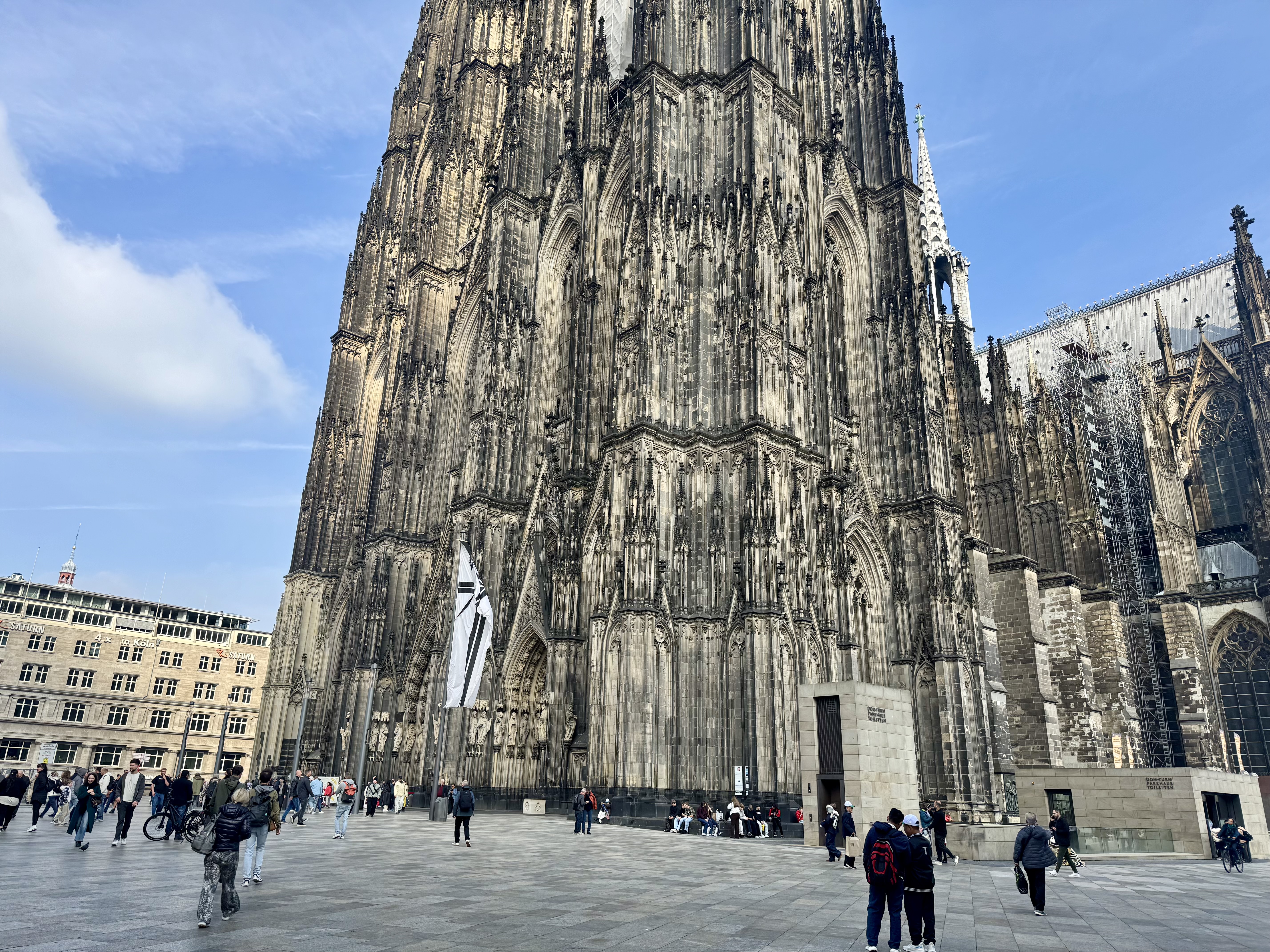
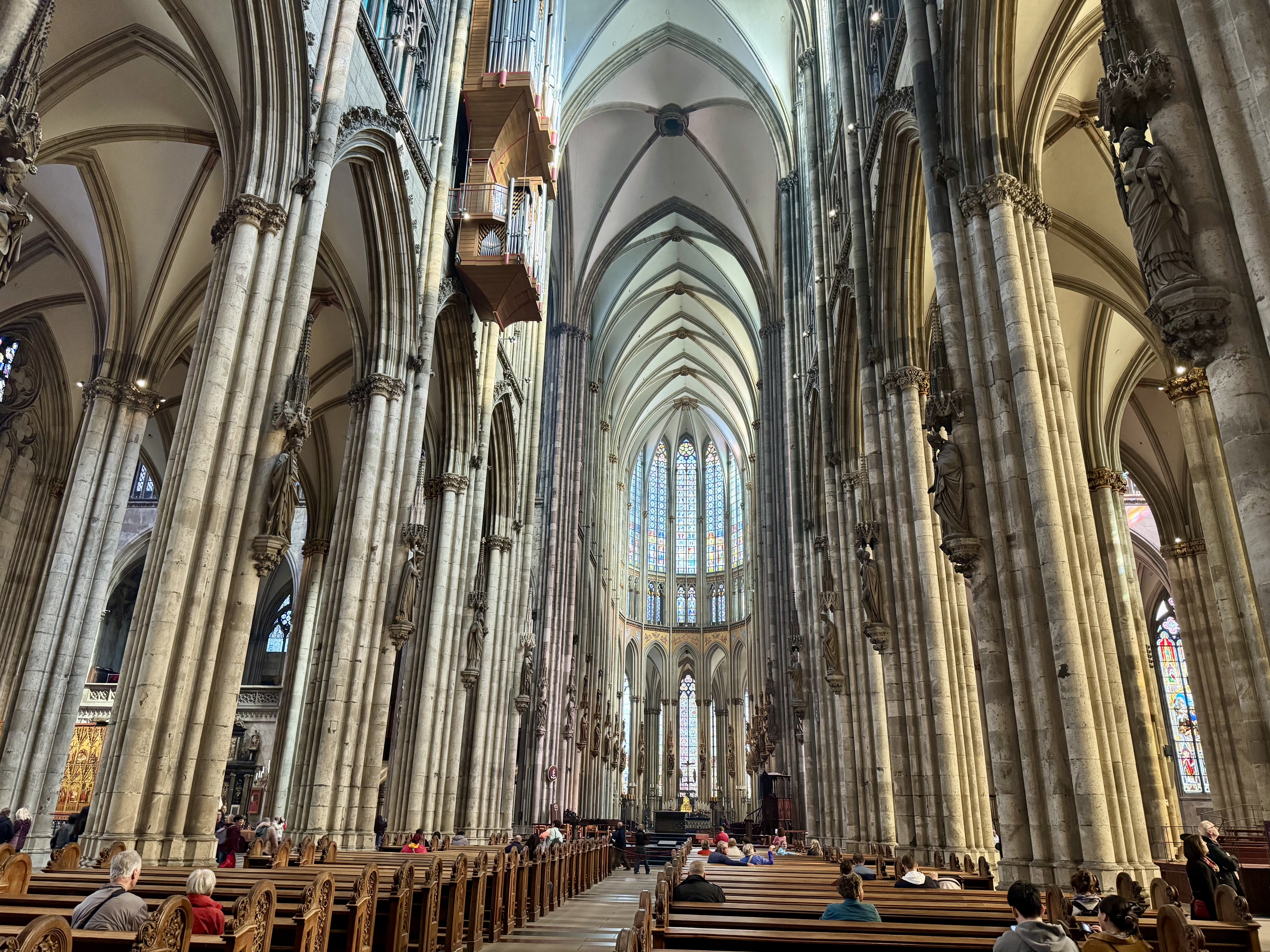
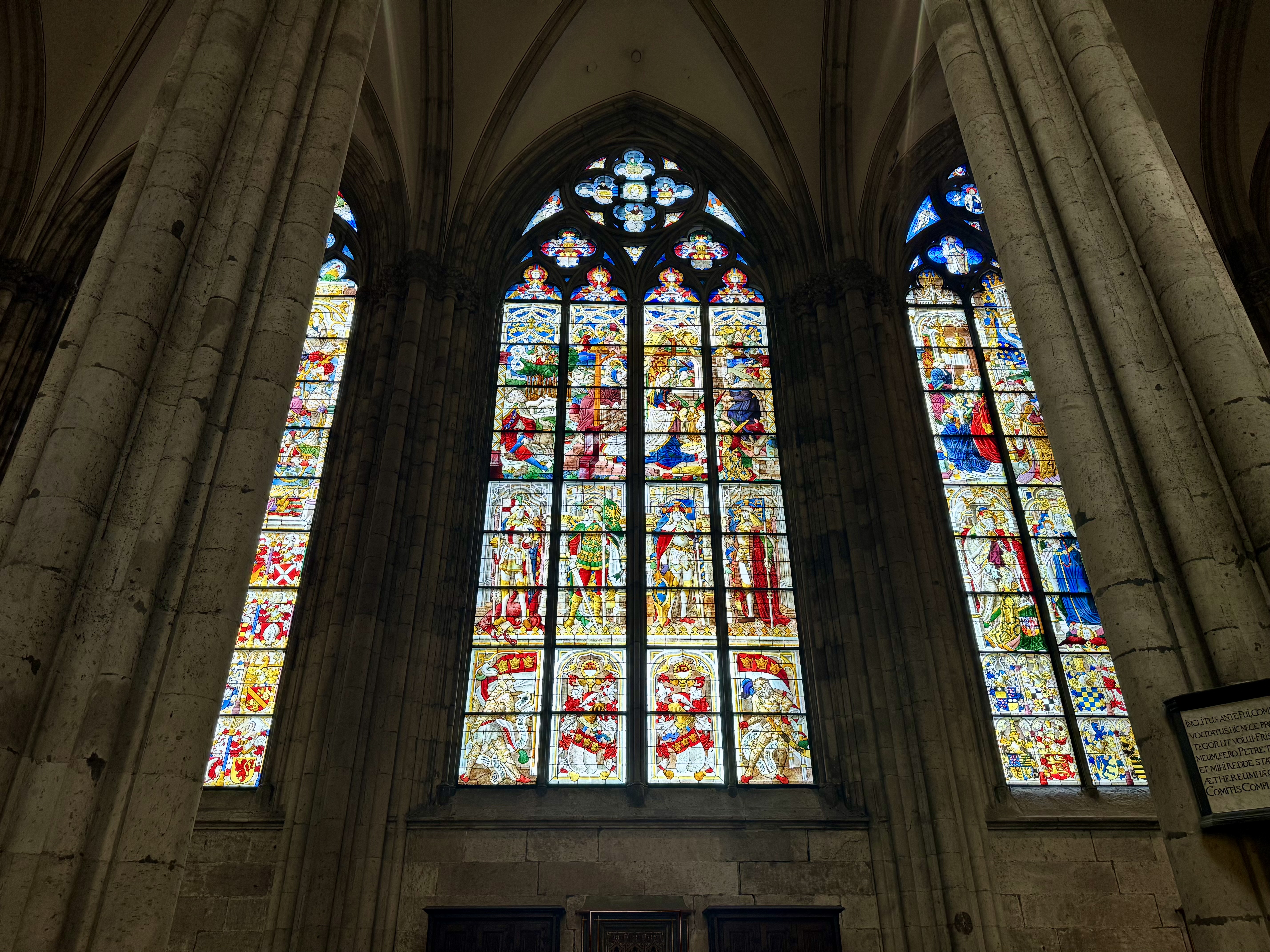
Located near the train station is the grandiose Cologne Cathedral (Kölner Dom in German). It’s the third tallest church in Europe, which is evident as you stand out front and admire its beautiful Gothic design.
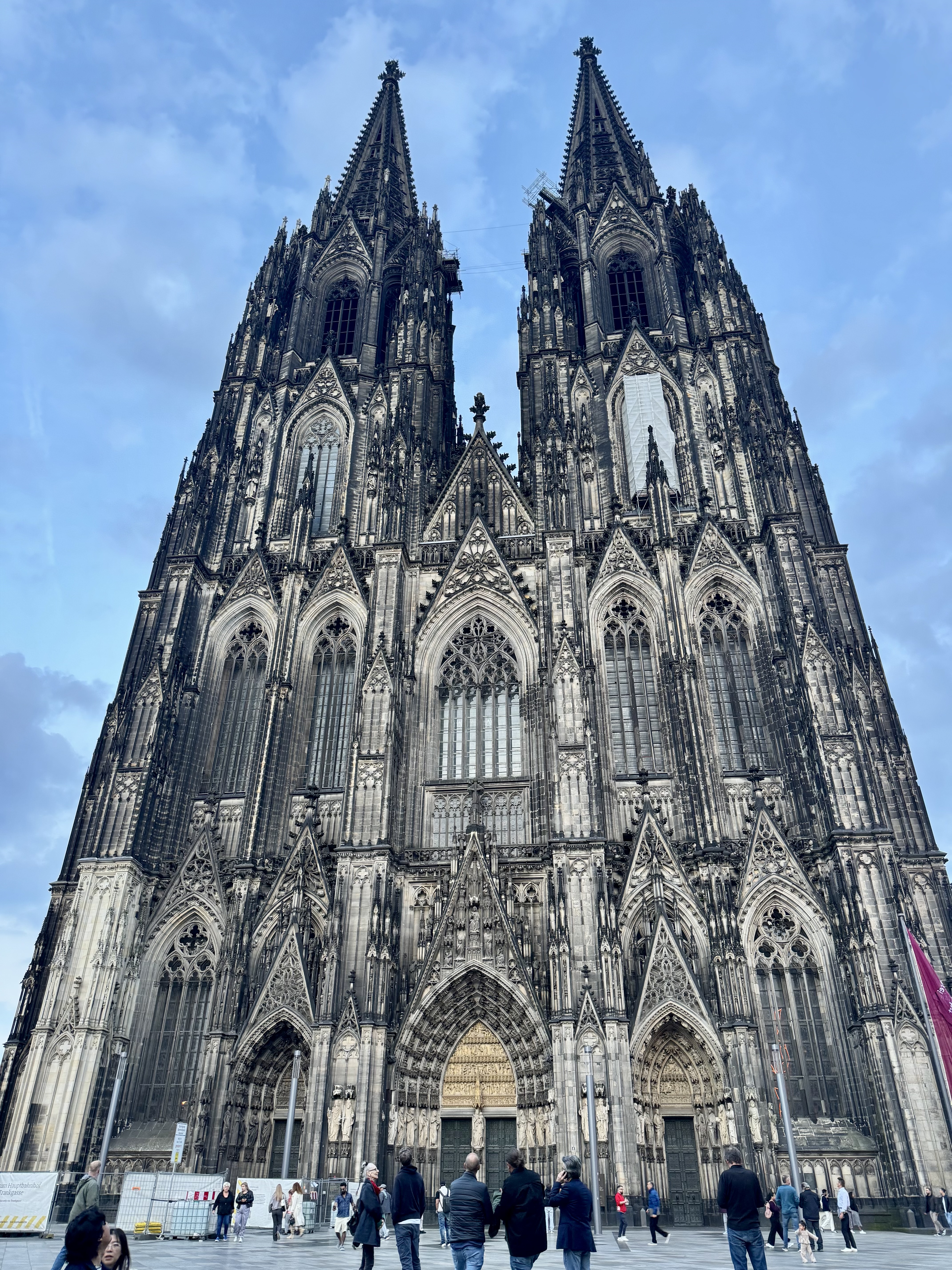
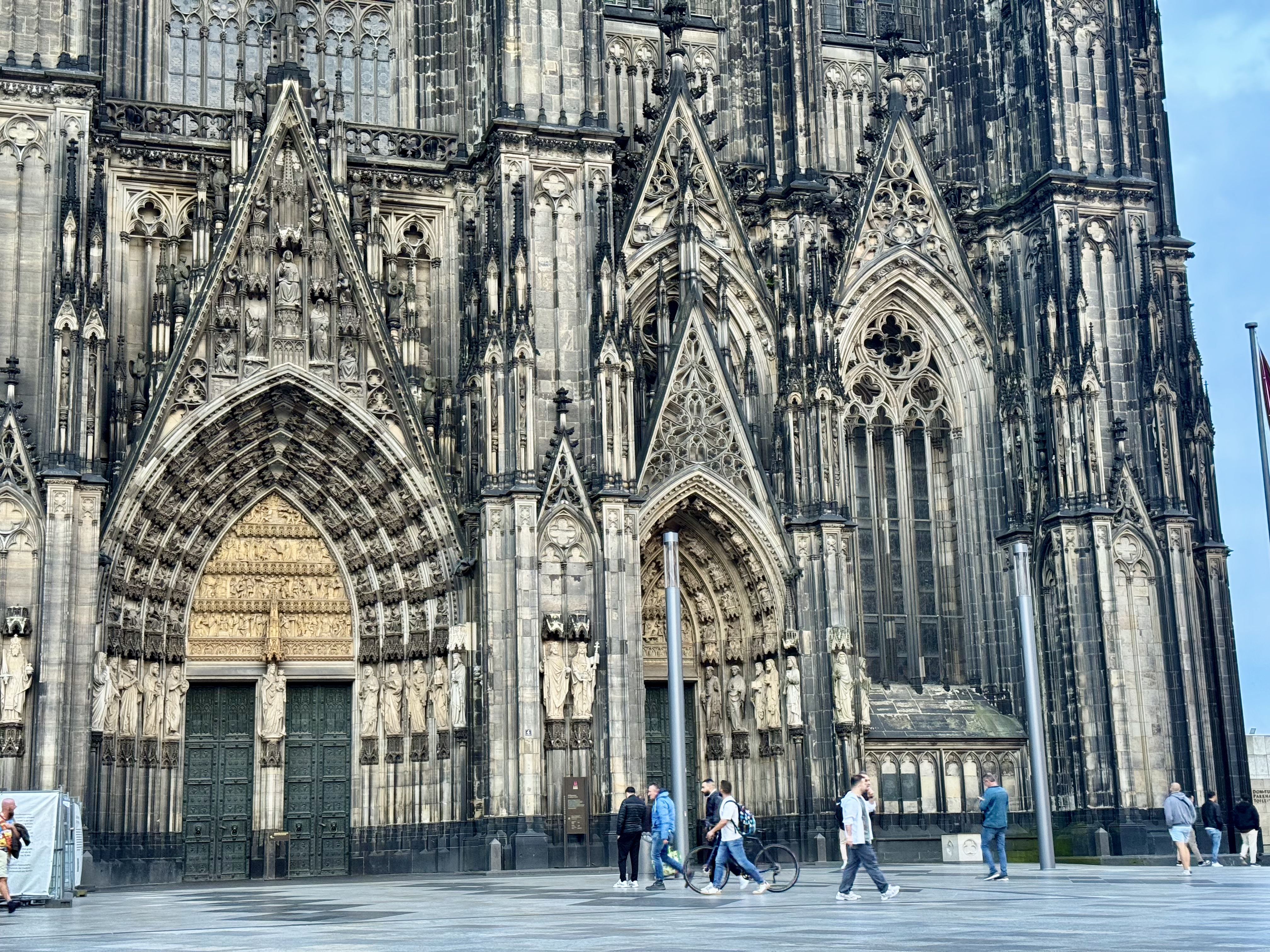
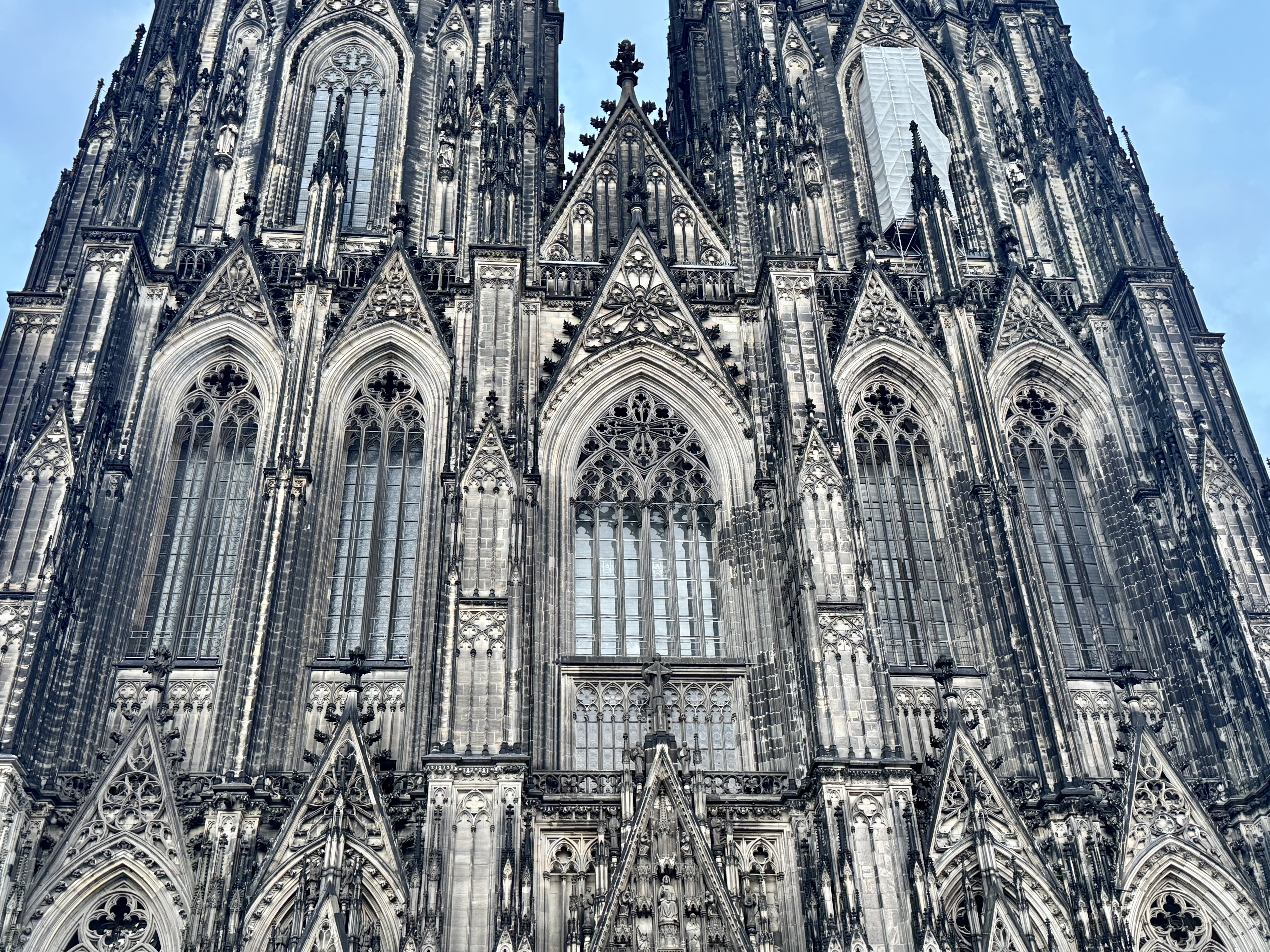
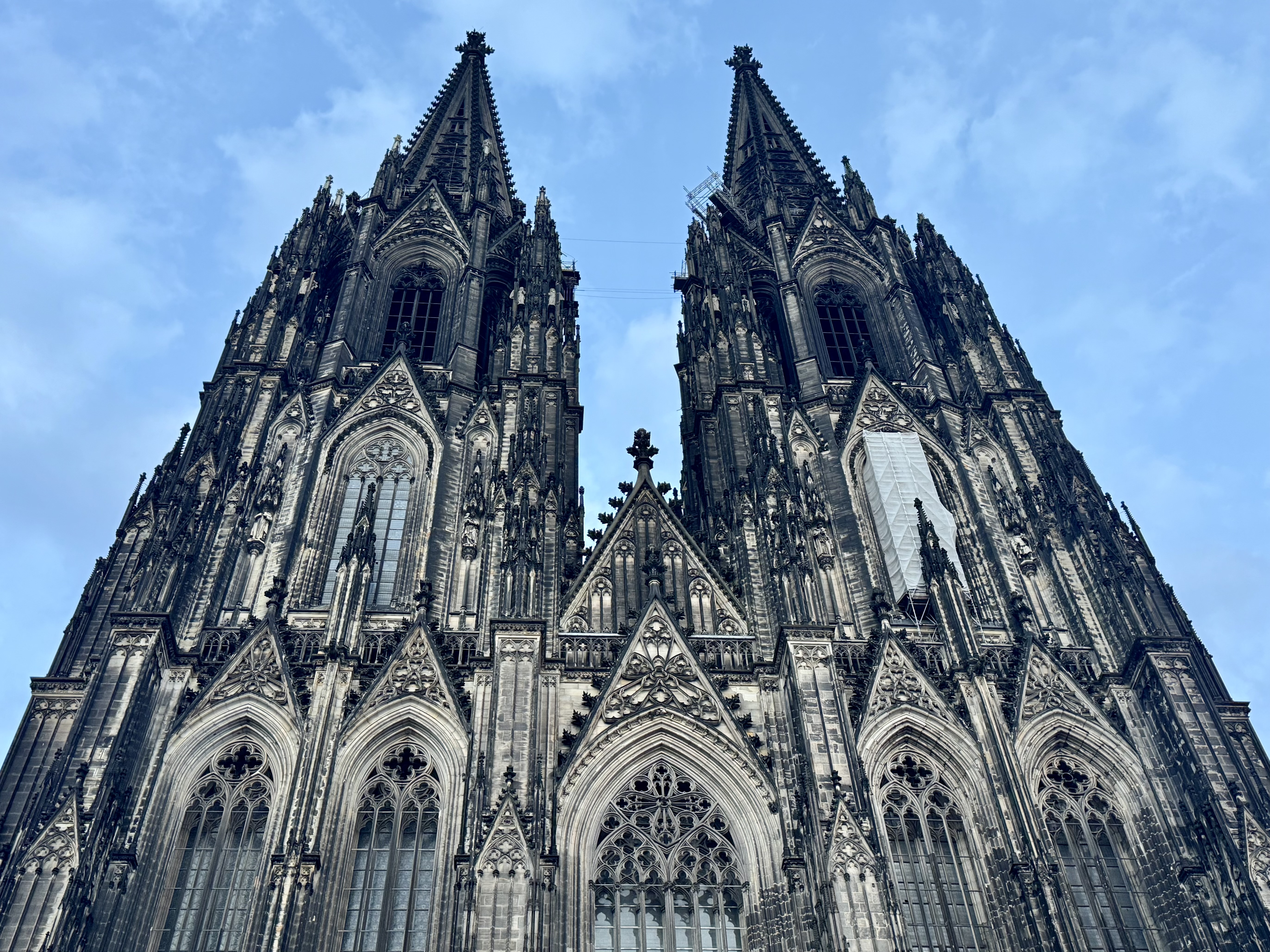
Construction began in 1248 and was halted many times over the years, including in the 1560’s, before being completed in the 1880’s. It was badly damaged during World War II, though it remained standing. There is some incredible footage of combat between American and German tanks that took place near the cathedral:
Hohenzollern Bridge
The Hohenzollern Bridge was constructed between 1907 and 1911 and was originally used as both a road and railway bridge.
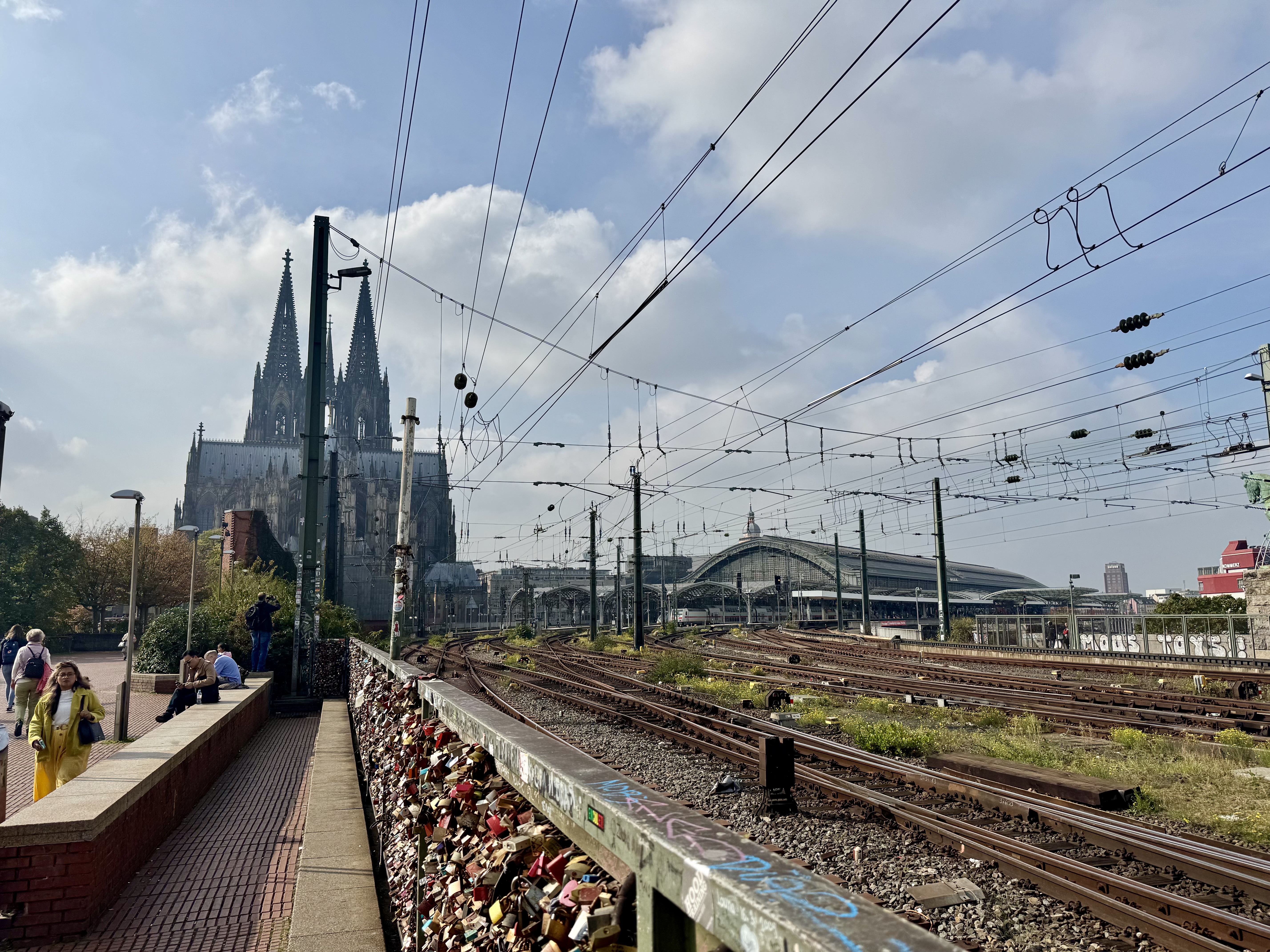
The bridge survived World War II bombing until March 6, 1945 when German troops decided to blow it up as Allied troops began approaching the city.
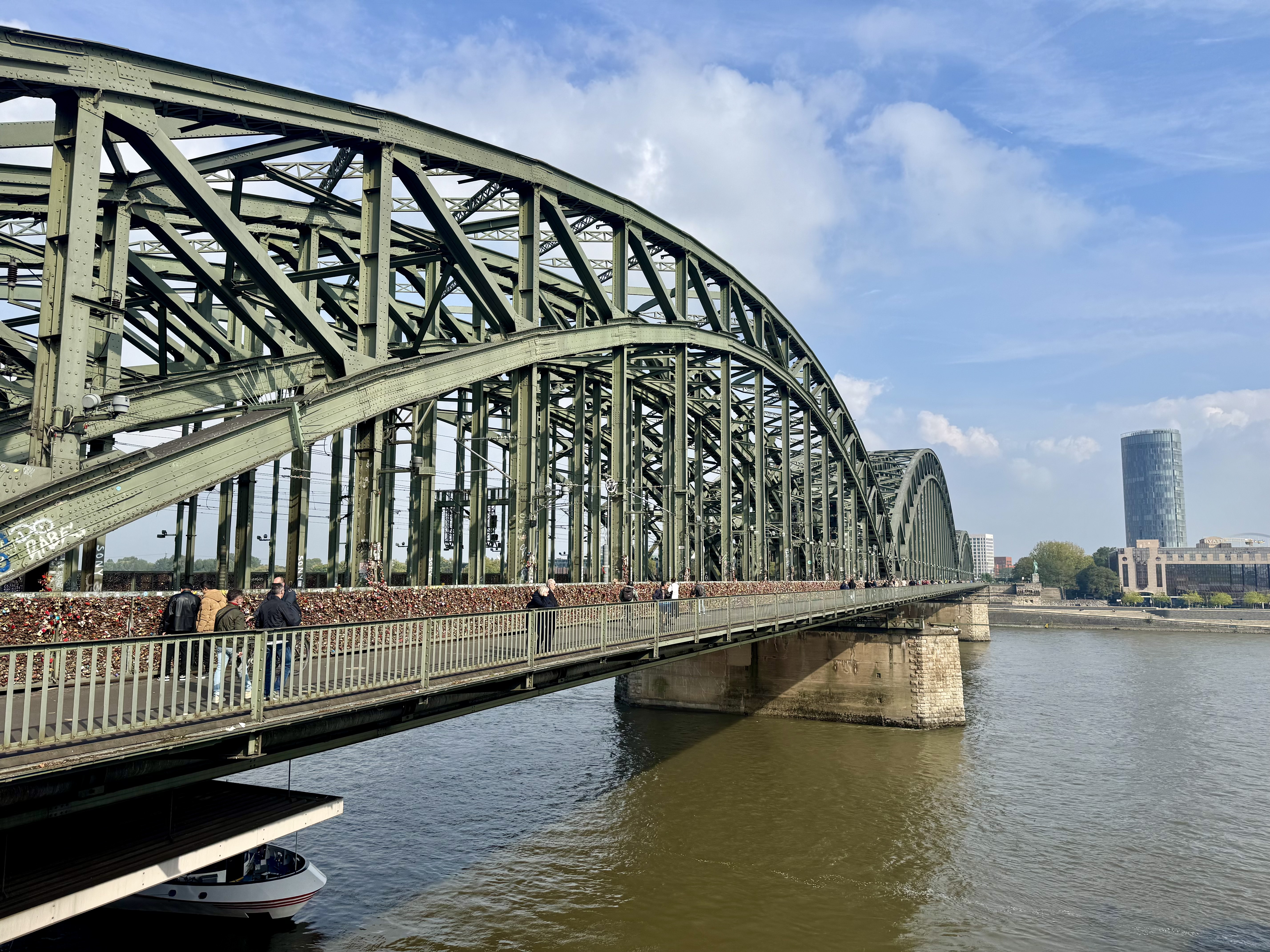
Four equestrian statues of Prussian kings and German emperors of the Hohenzollern family flank each ramp. In our picture is Wilhelm II who was the last German Emperor and King of Prussia from 1888 until his abdication in 1918.
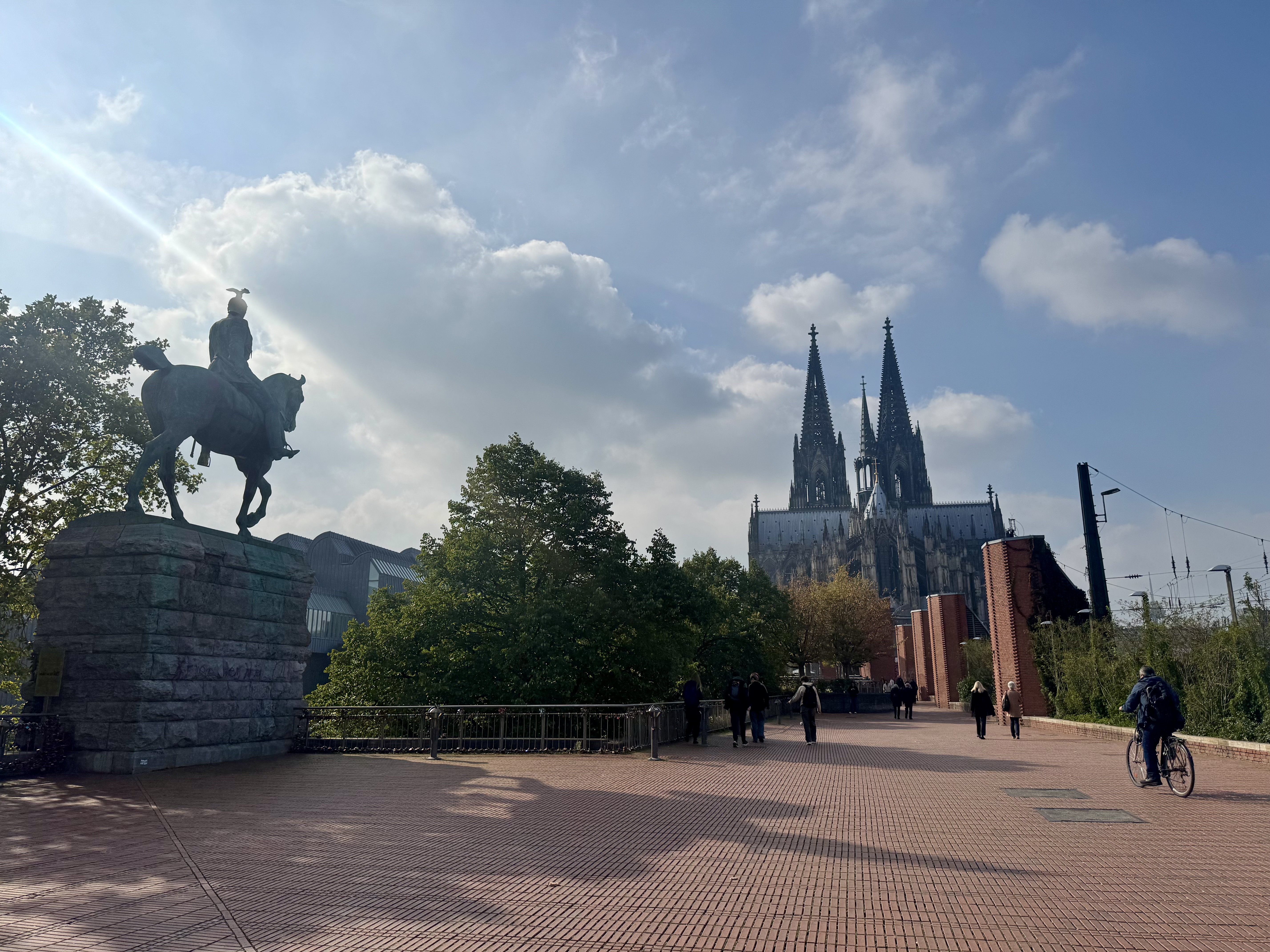
Germany surrendered May 8, 1945 and the bridge was made operational again on a temporary basis until complete reconstruction was completed in 1959. Its present use is for railway and pedestrian traffic only.
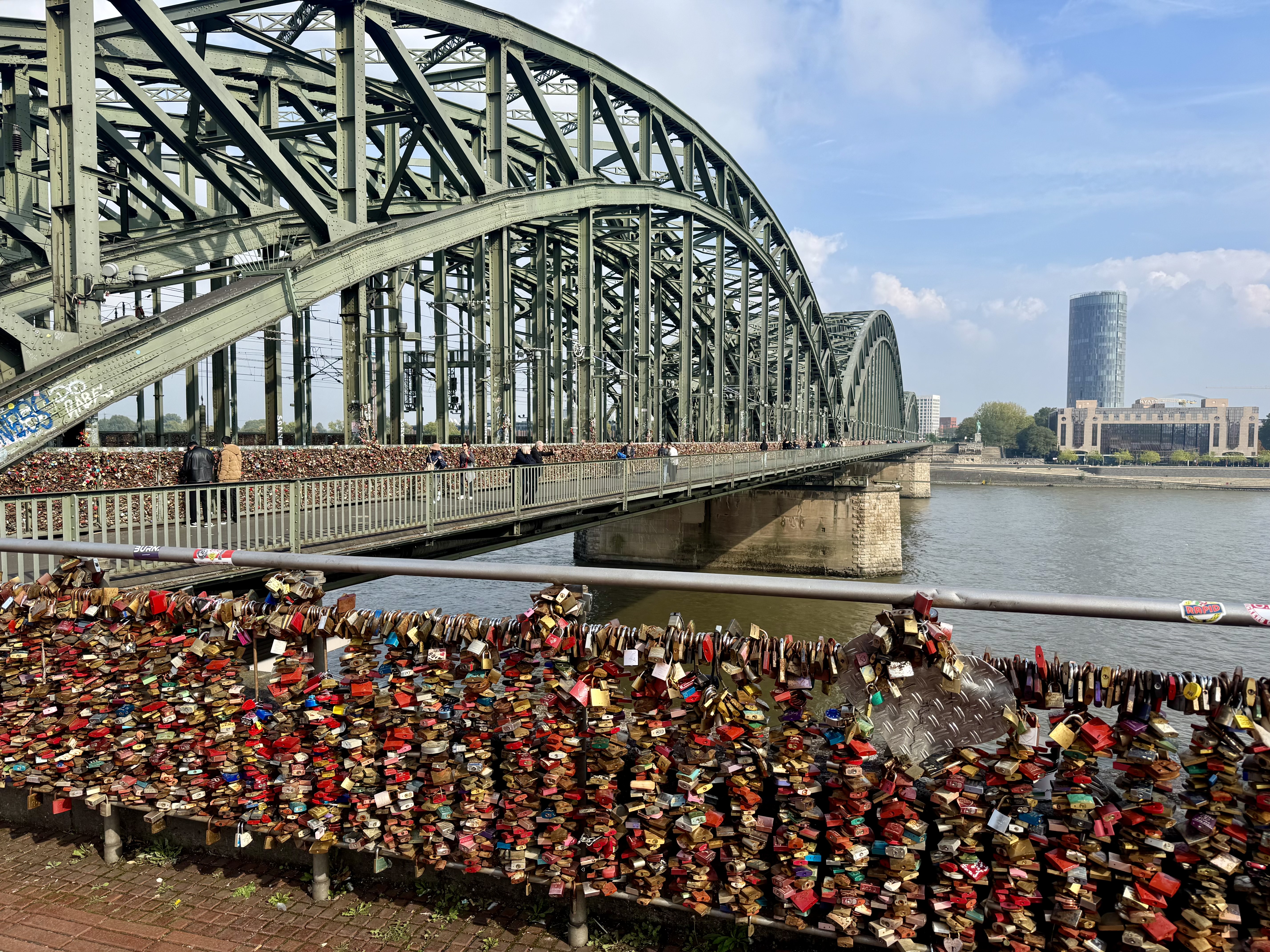
Since summer 2008, the custom of love padlocks, which originated in Italy, has been placed on the bridge.
Cologne’s Shopping District
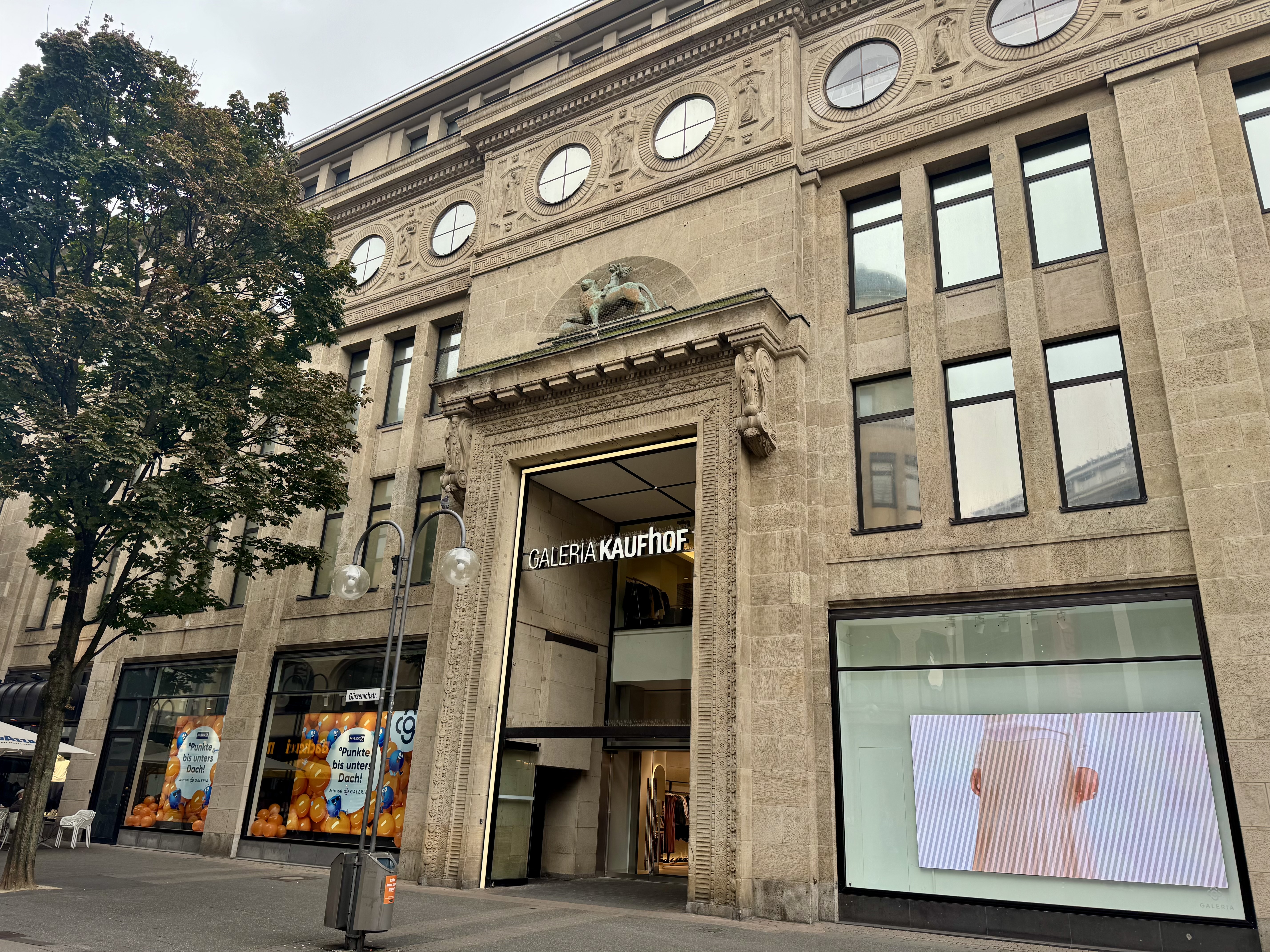
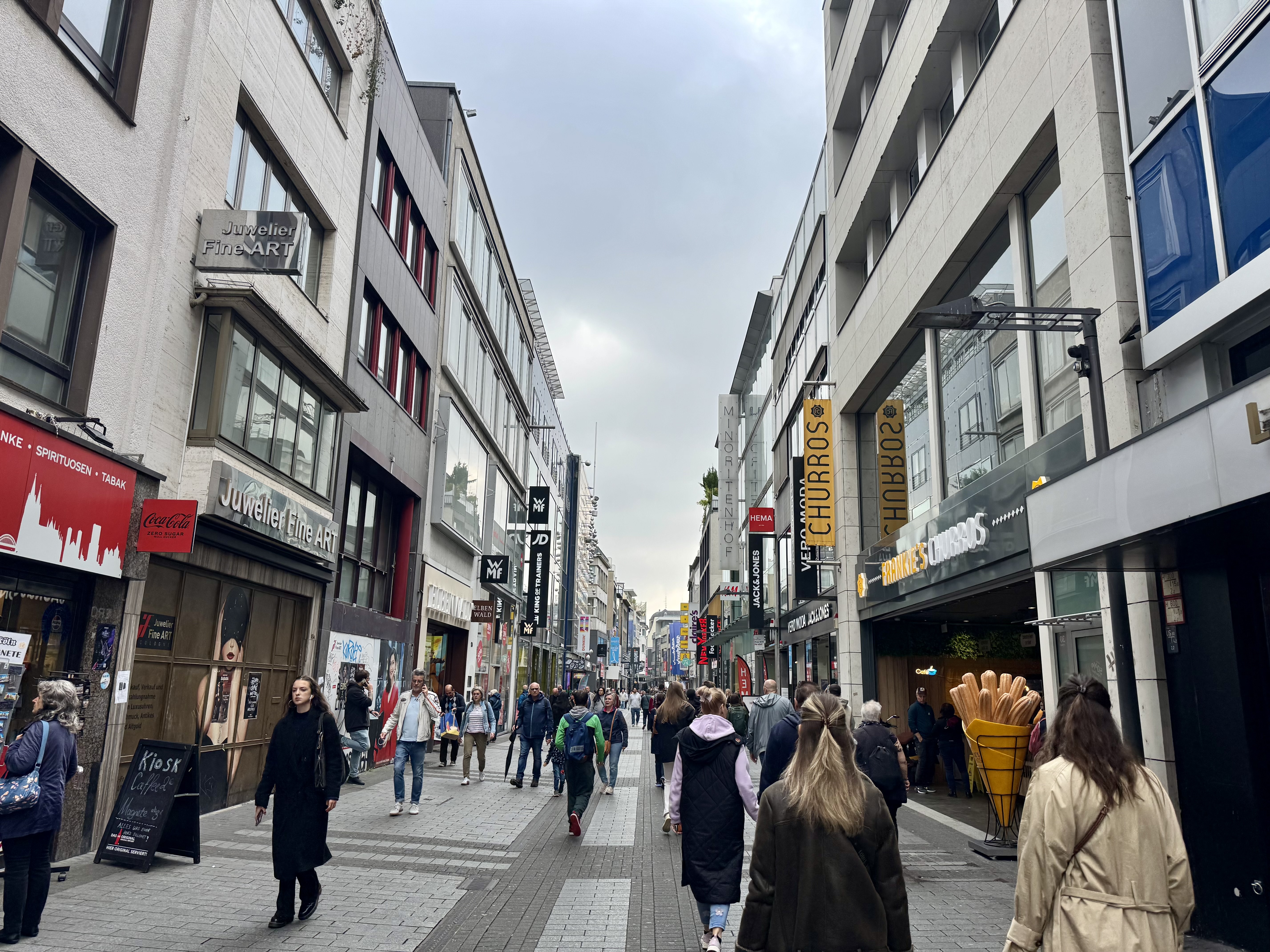
Schildergasse is Cologne’s most famous and busiest shopping street and it was fun to walk through the area.
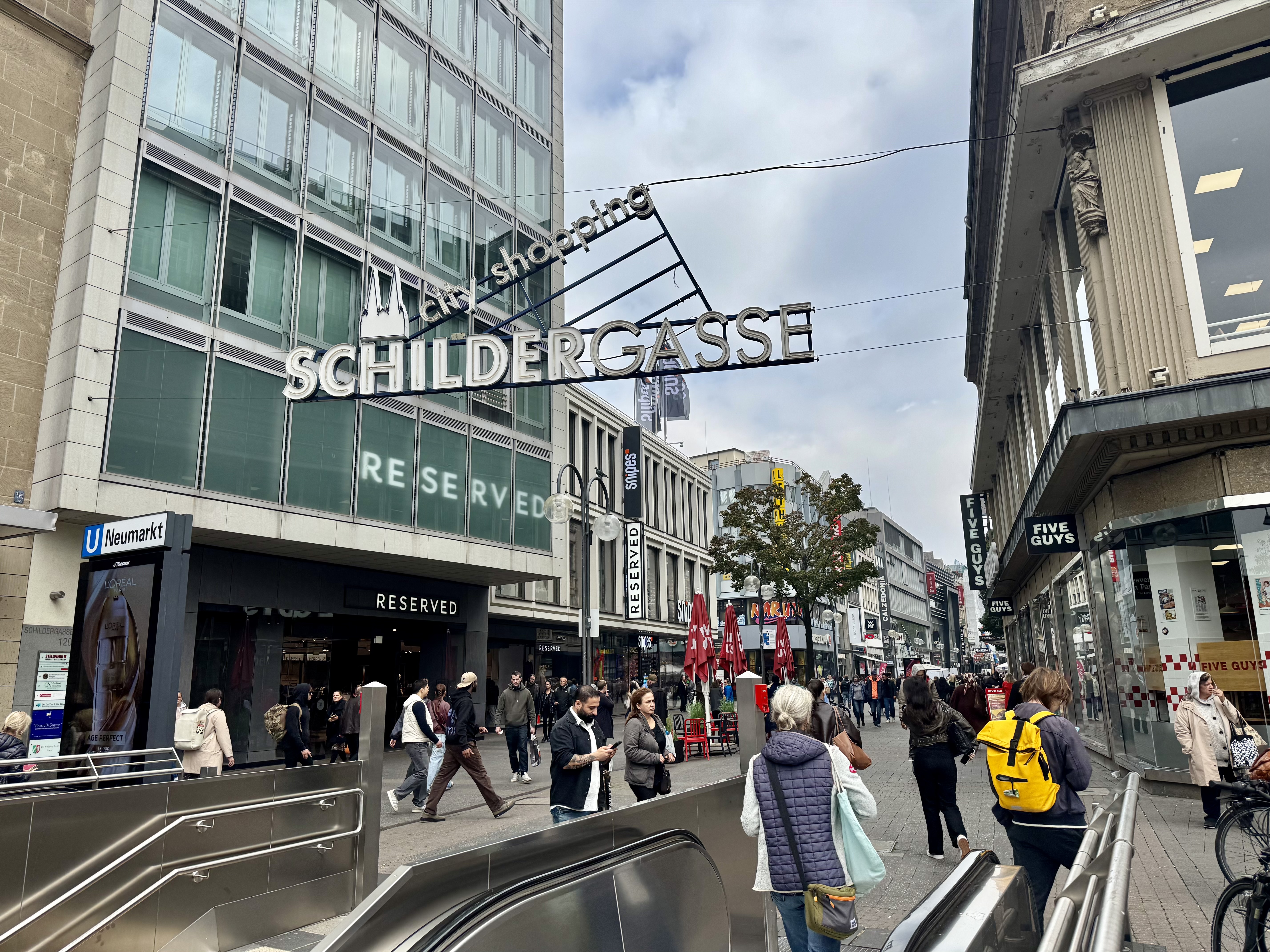
So many shops for clothing, food, electronics – really anything you might need. It’s fully pedestrian and seemed to stretch a large part of the city.
Eating and Drinking in Cologne
It is common in Germany for a region or city to specialize in a specific type of beer. Whether it is Altbier in Düsseldorf or Hefeweizen in Bavaria. This approach is very prevalent in Cologne with the Kölsch style and not one complaint about it from me.
The Brauhaus Früh am Dom
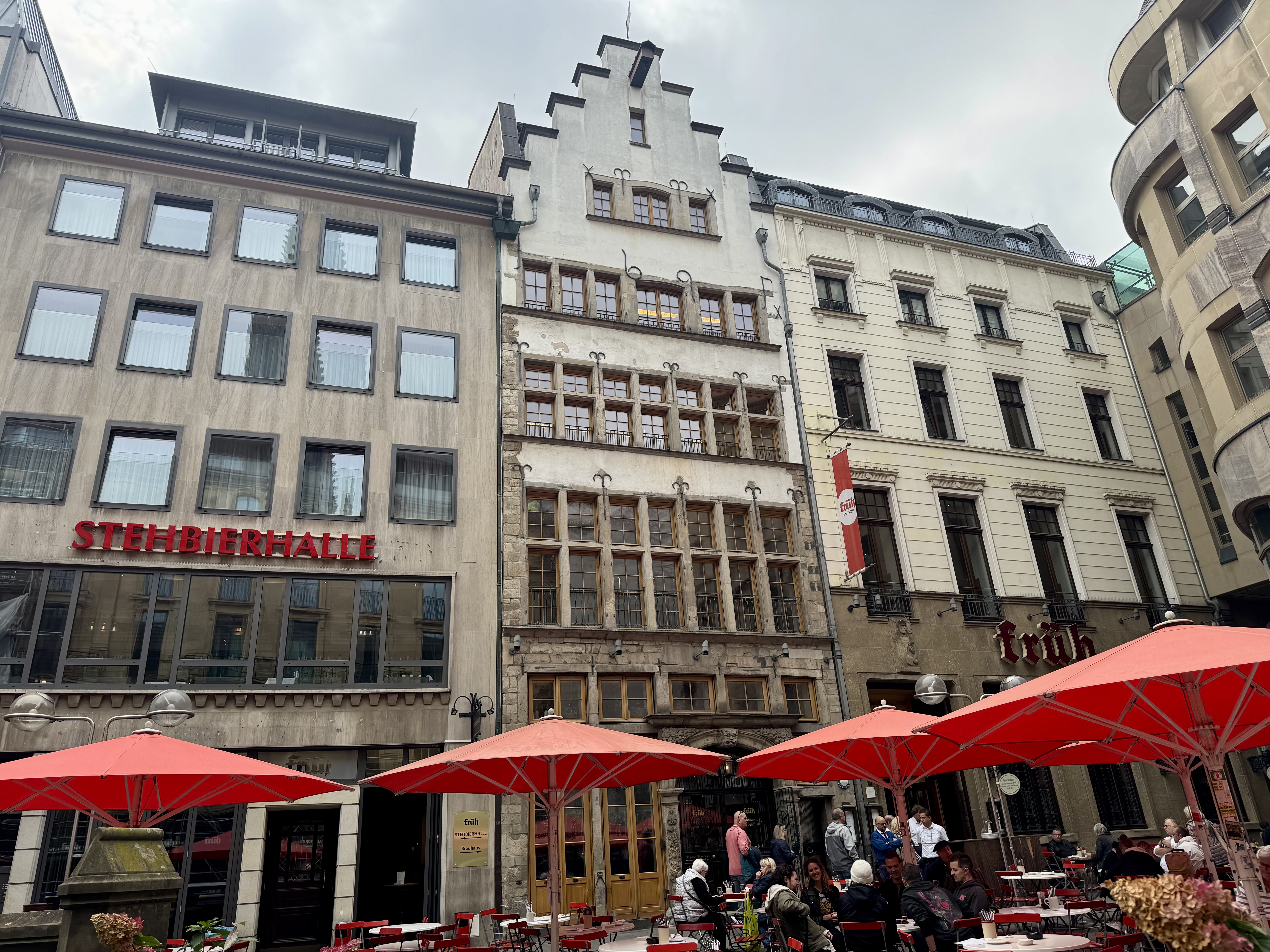
Not far from the Cologne Cathedral is The Hofbräu Früh am Dom which became our first stop for some local Kölsch. Früh has an extensive history going back over 120 years and is the second-largest brewery pub in Germany, second only to the Hofbräuhaus in Munich.
Kölsch beer is always served in small .2L glasses called a Stange. The idea of the smaller serving is that the beer will remain cold by the time you’re ready for the next one. We first had a few beers in Früh’s more casual bar area that seemed to offer a limited menu of food.
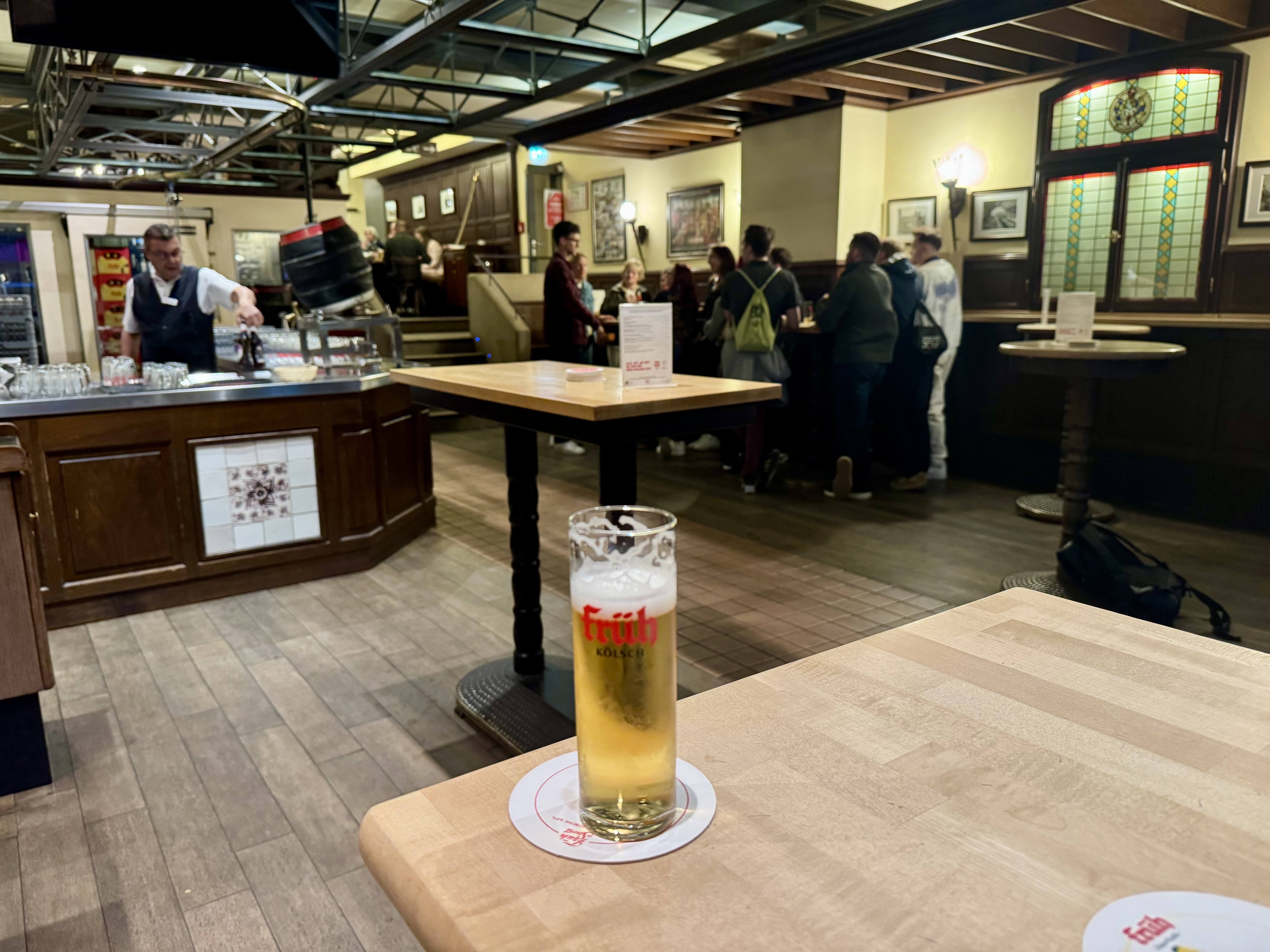
Waiters, or Köbes as they’re called in German, move around frantically holding specially designed trays for the glasses. Refills come as soon as you’re empty and the waiter tracks your tally with a small mark on your coaster. The only way to let them know you don’t want another refill is to cover your glass with the coaster.
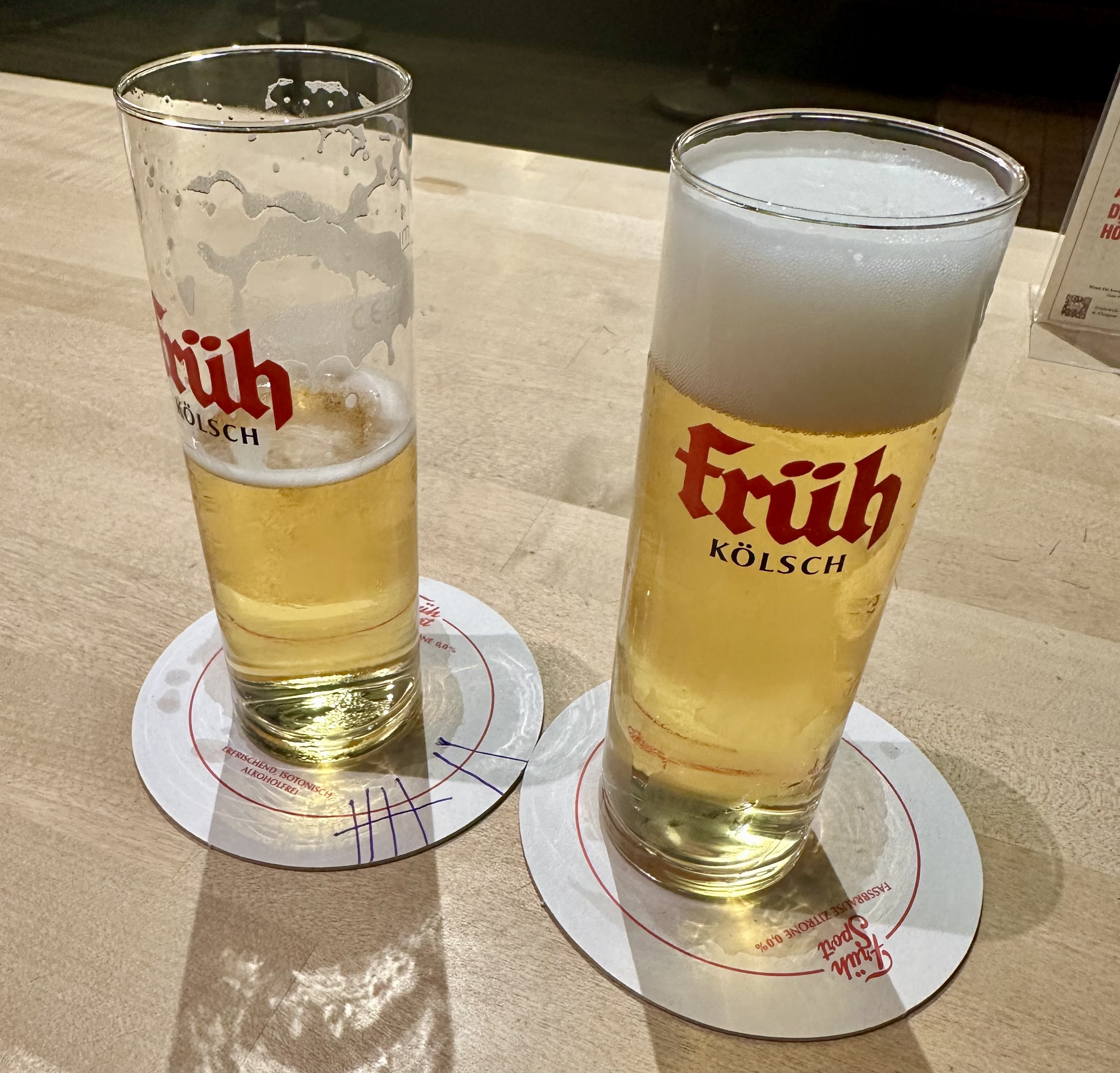
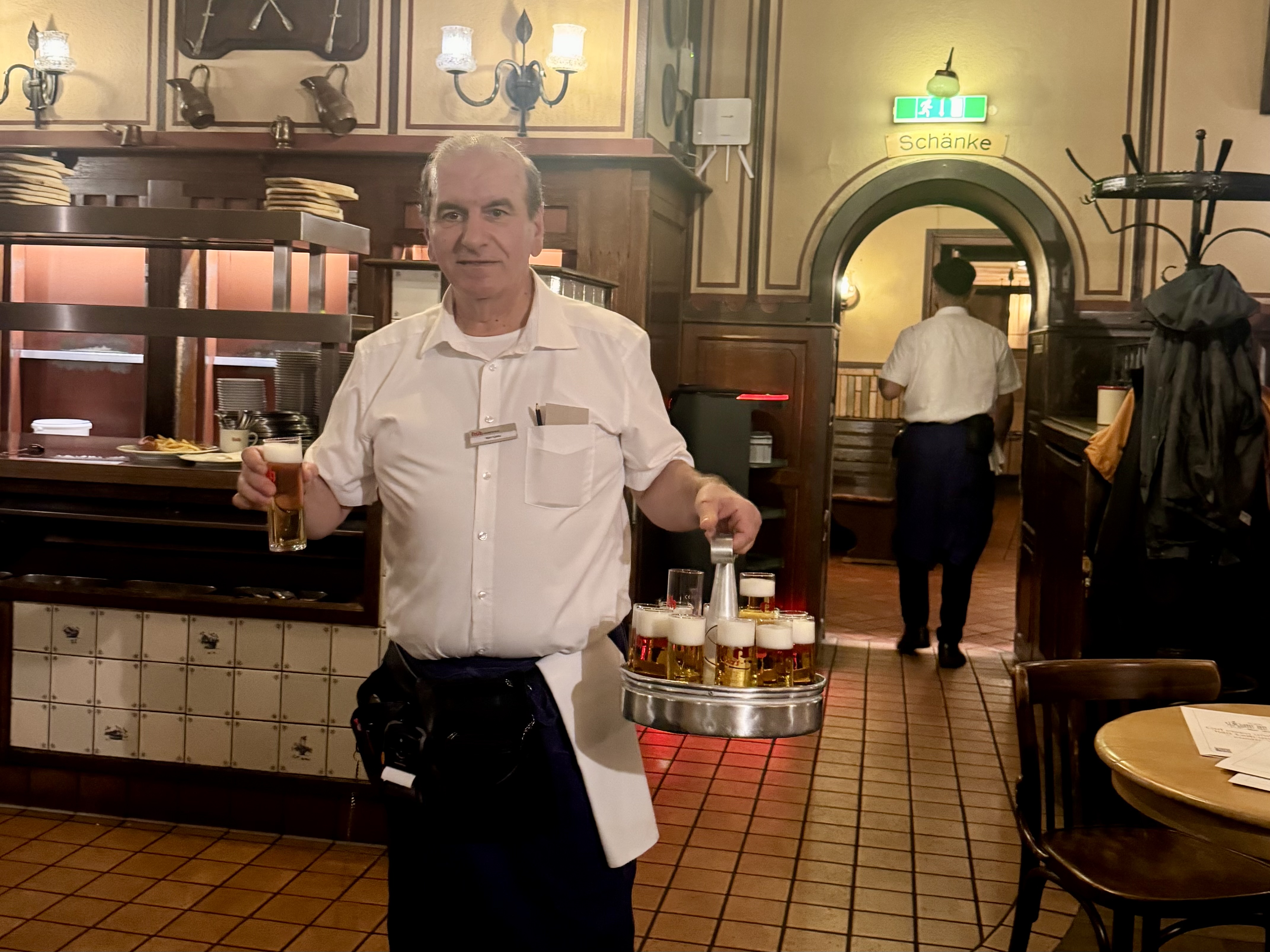
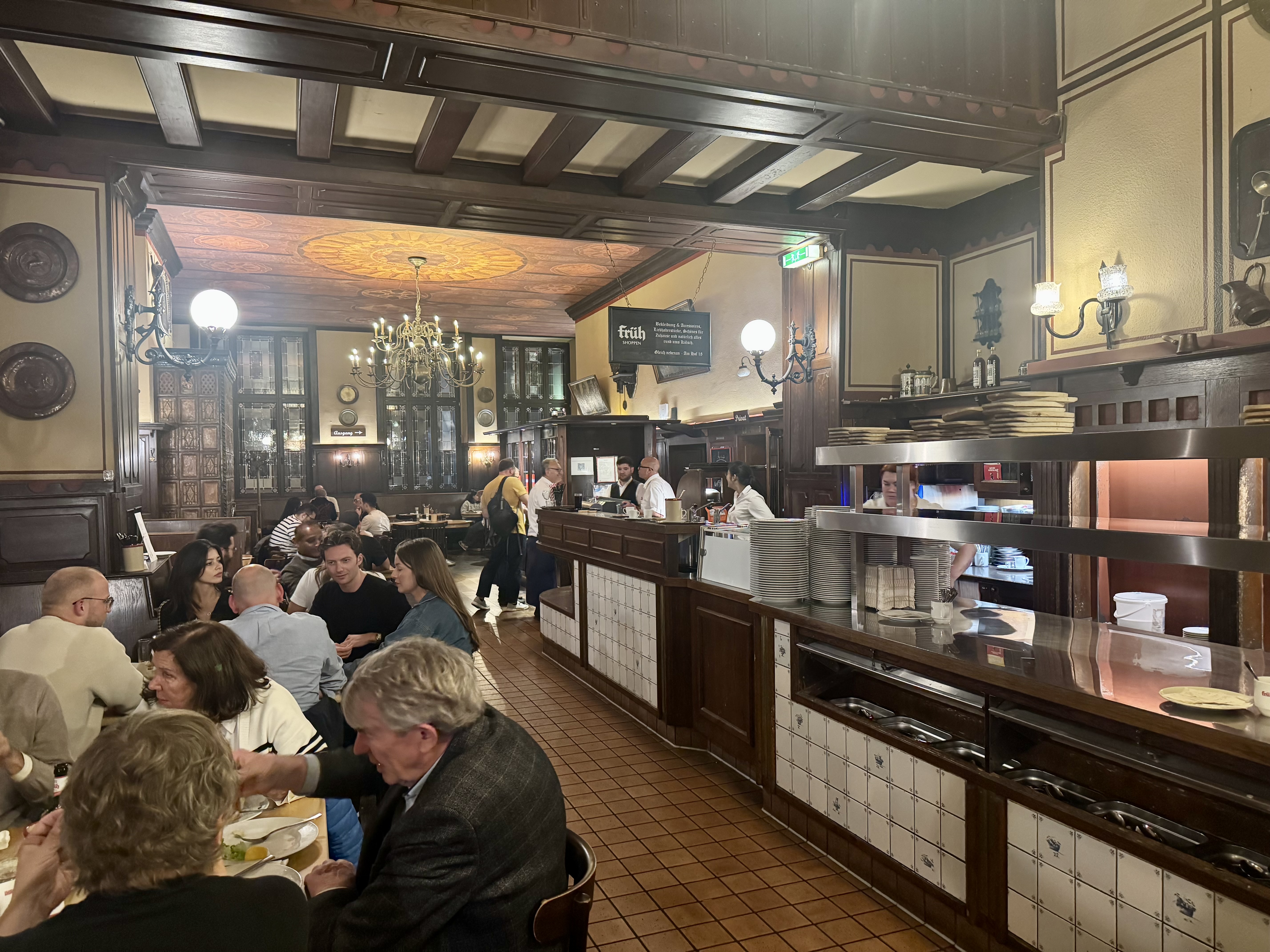
Nik and I eventually decided to move into Früh’s main dining space for dinner which featured a rustic feel with wooden tables and chairs.
We love eating alpine cuisine while visiting countries such as Germany and Austria so we ordered the pork knuckle and their potato fritters, better known to me as latkes. The latkes came with the most fresh tasting apple sauce, the only condiment I like when I eat them. Nik also had a bowl of their goulash soup.
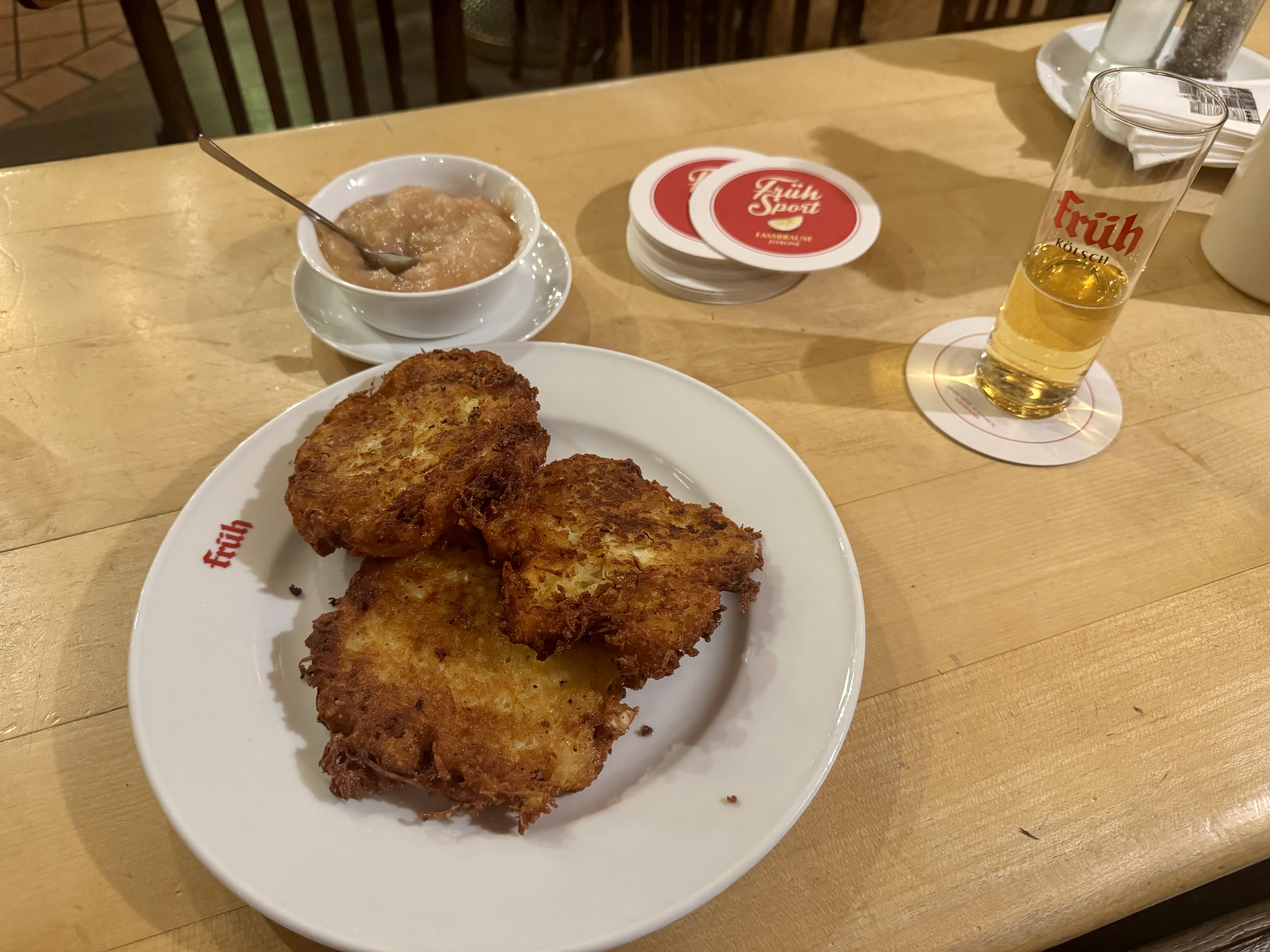
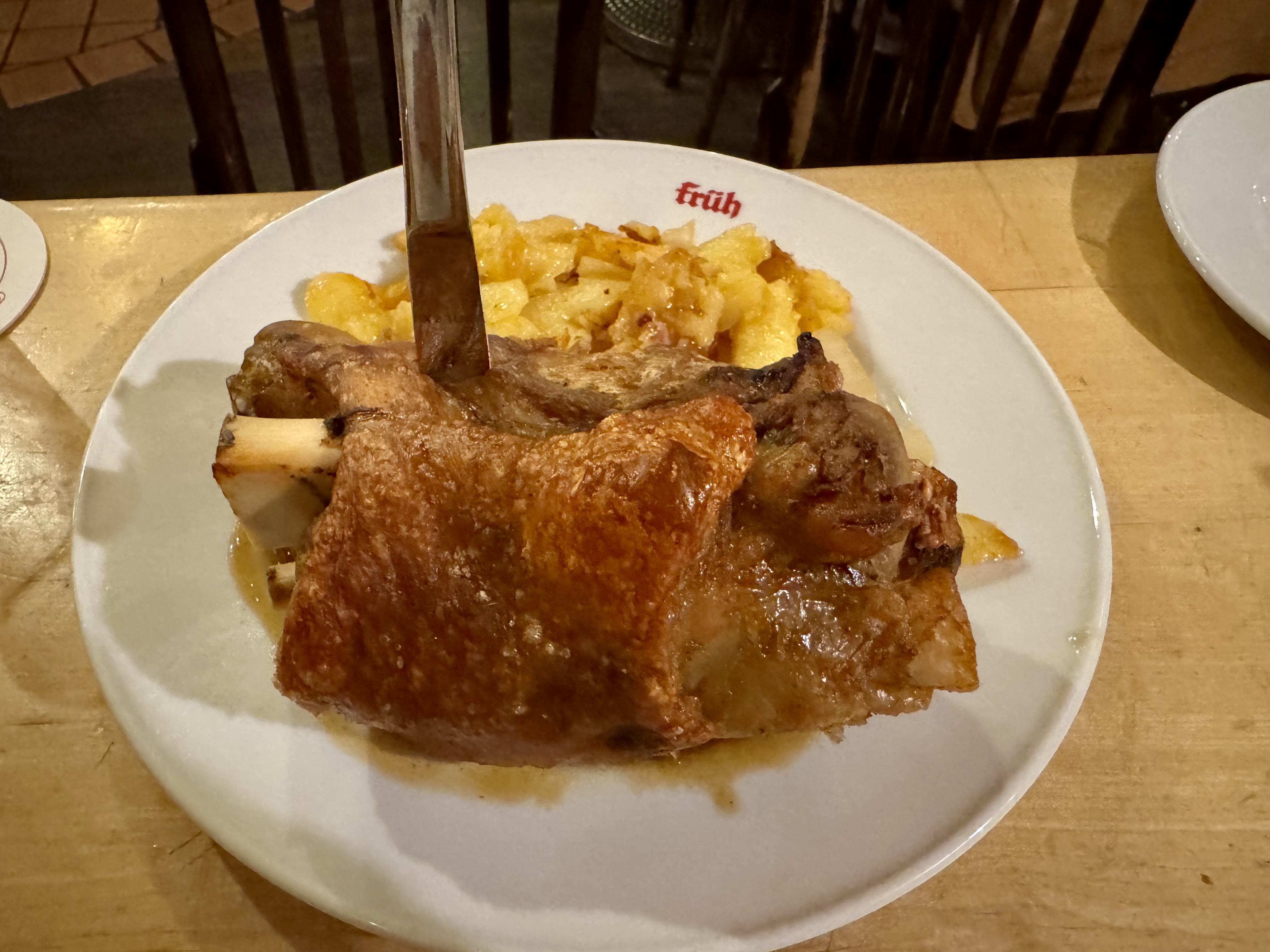
The portions were very generous, the food delicious and it looked like we barely made a dent in the two main plates. We were so full that we sadly didn’t have room for any strudel dessert.
More Kölsch in Cologne
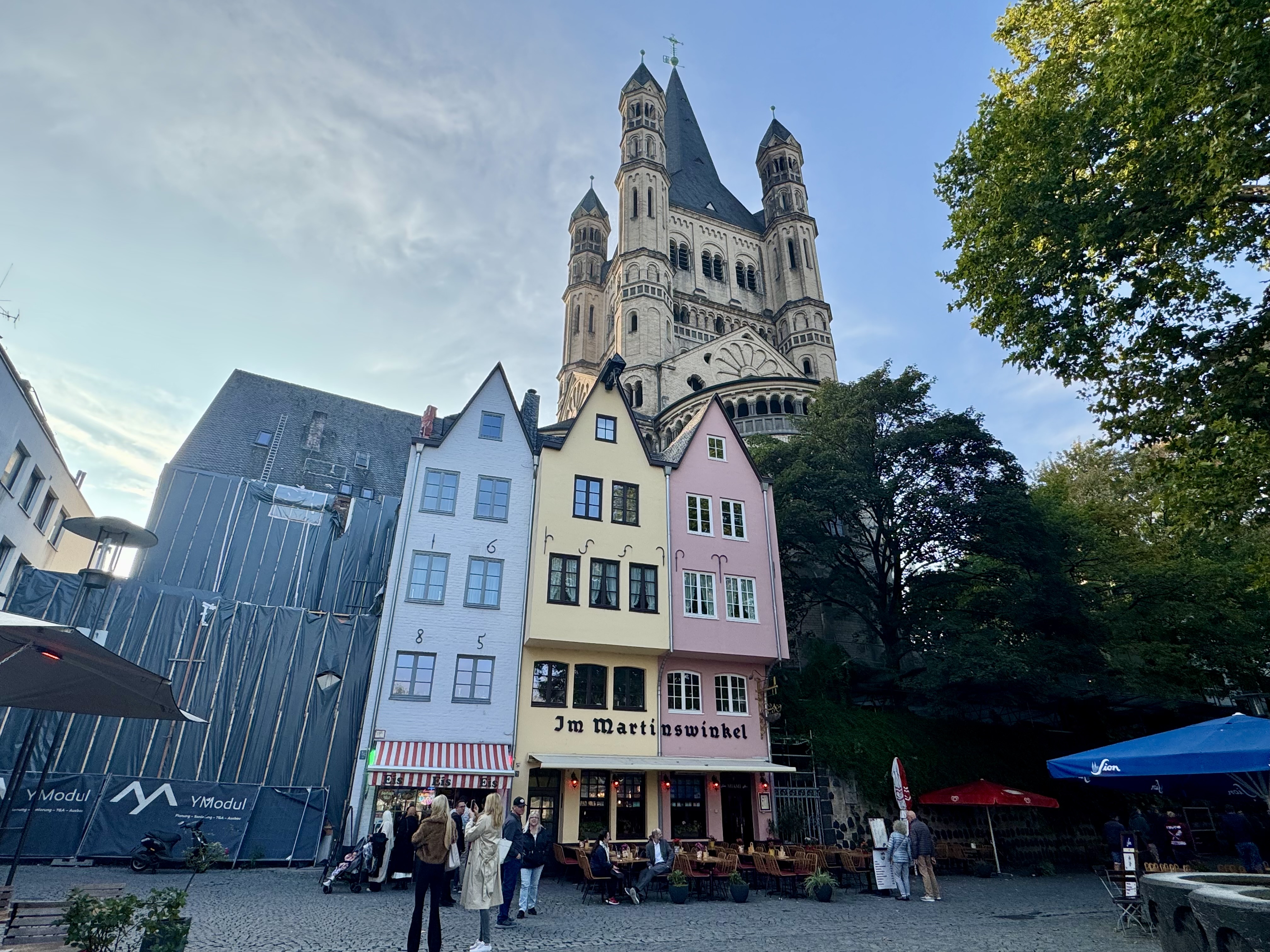
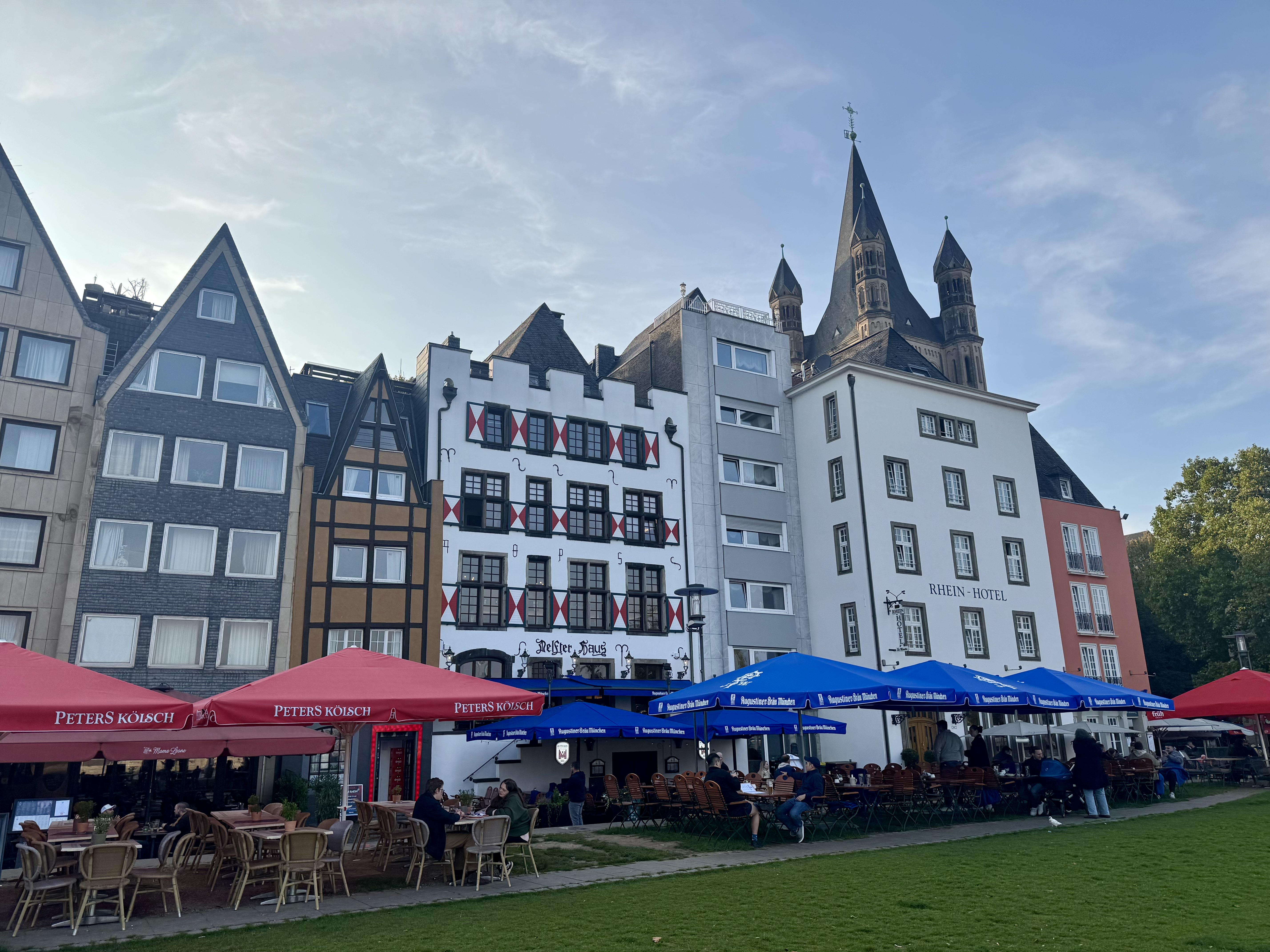
During our two days in Cologne, Nik and I walked everywhere. The Old Town was easy to explore and at every turn we either stumbled into a cute little square or saw some amazing colorful buildings and architecture.
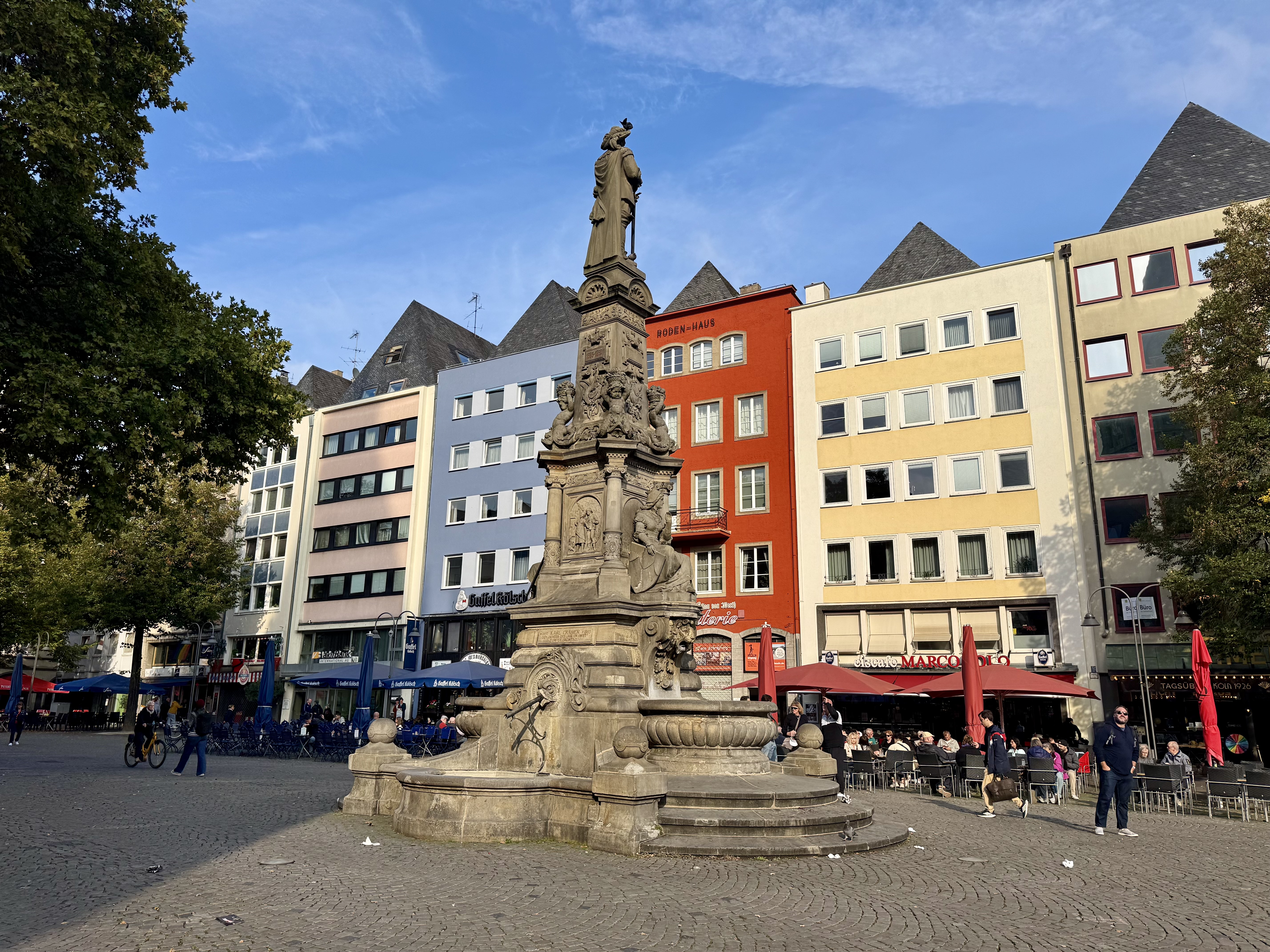
Randomly roaming around was how we enjoyed more Kölsch in a variety of local spots.
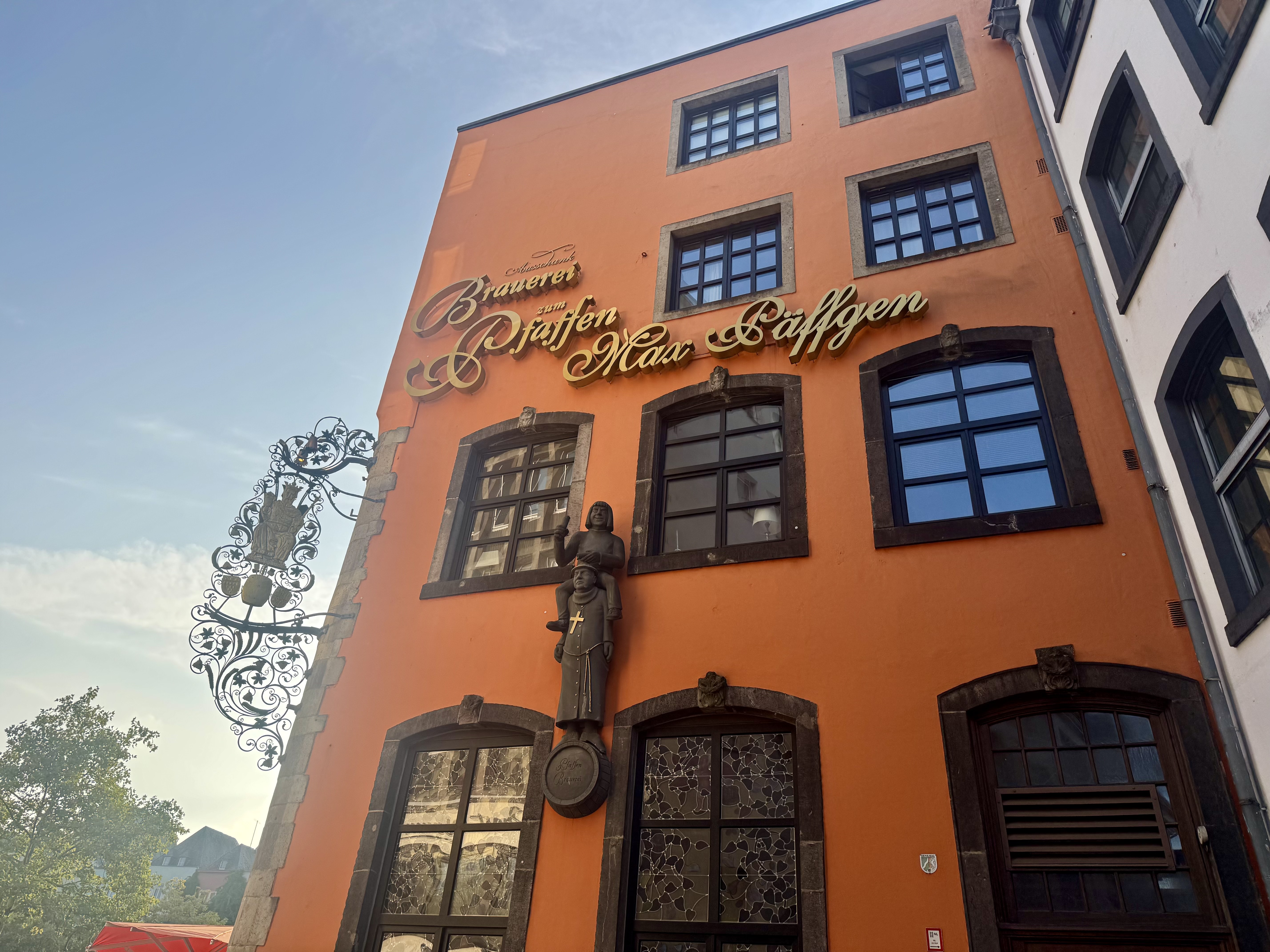
In no particular order we stopped at Peters Brauhaus; Brauerei Pfaffen – which had a bright orange facade that really stood out; Haxenhaus along the river front – we had a pretzel and goulash here; Brauhaus Zum Prinzen; Die Kulisse Köln; Kunstkaschaemm – where we also watched some European football.
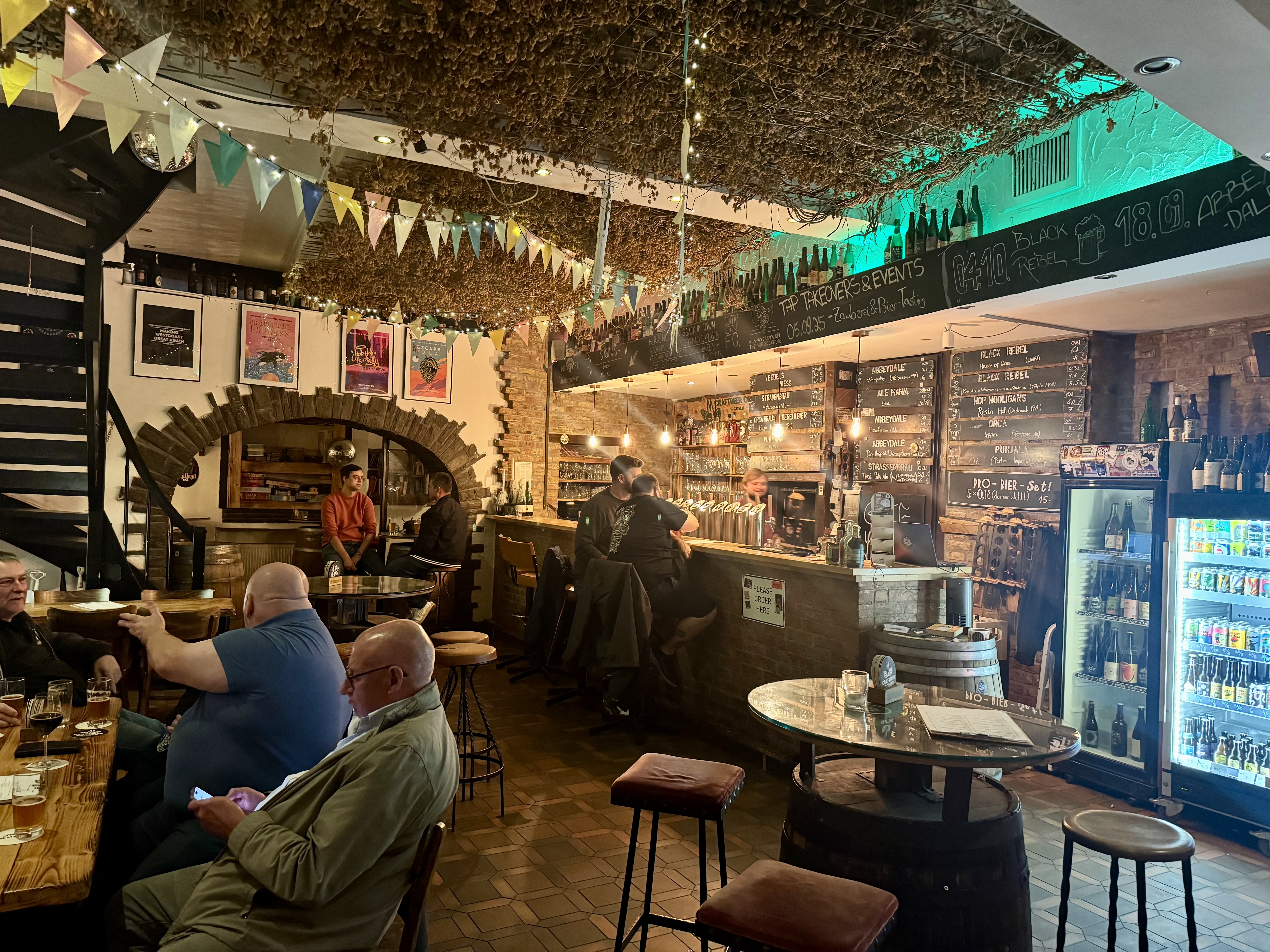
Aside from thoroughly enjoying all the Kölsch, Nik and I found one craft beer spot, aptly called Craftbeer Corner. It had a dive bar vibe and offered up 15 beers on draft. I got a flight of beers and Nik enjoyed a couple pints.
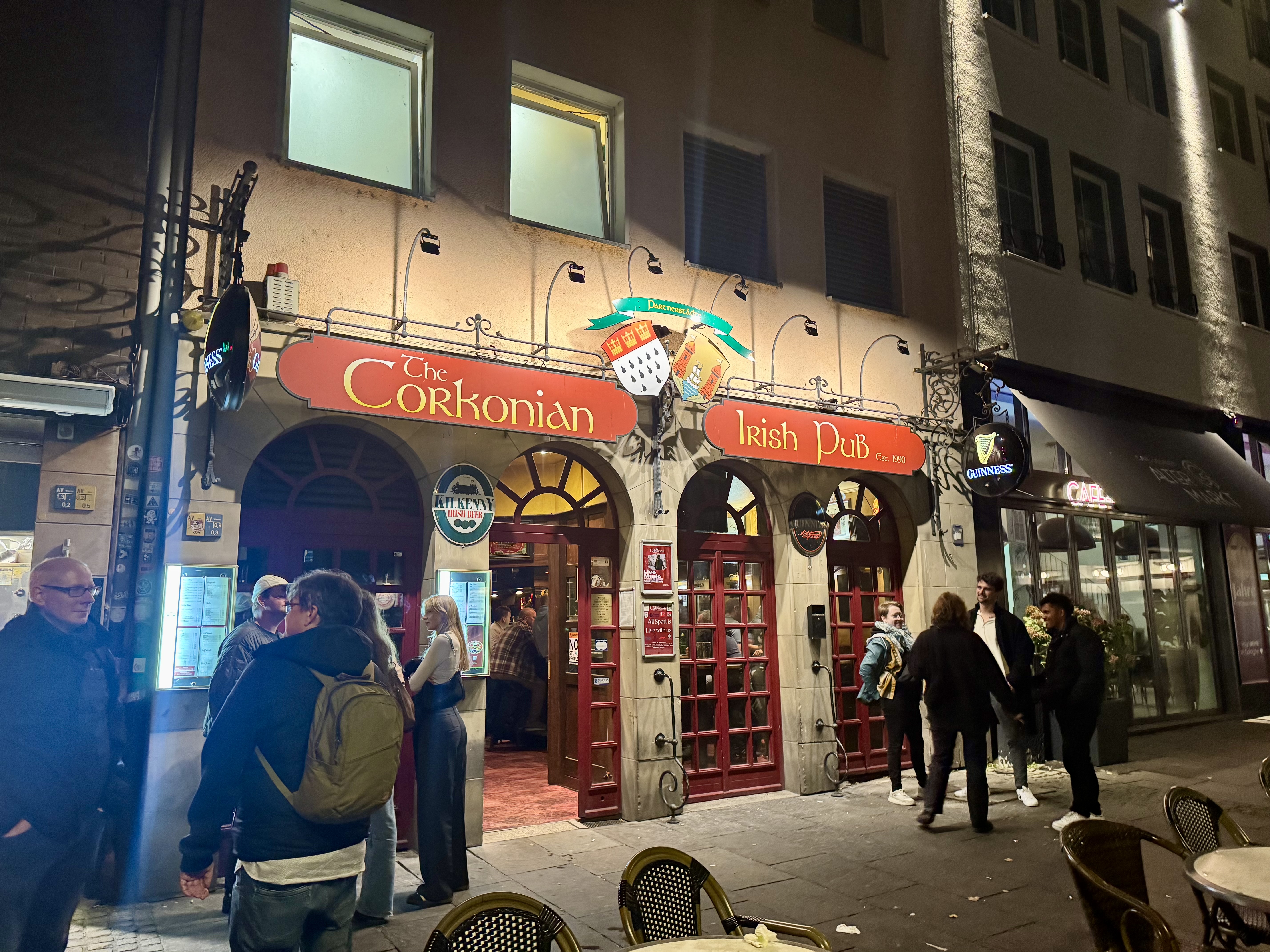
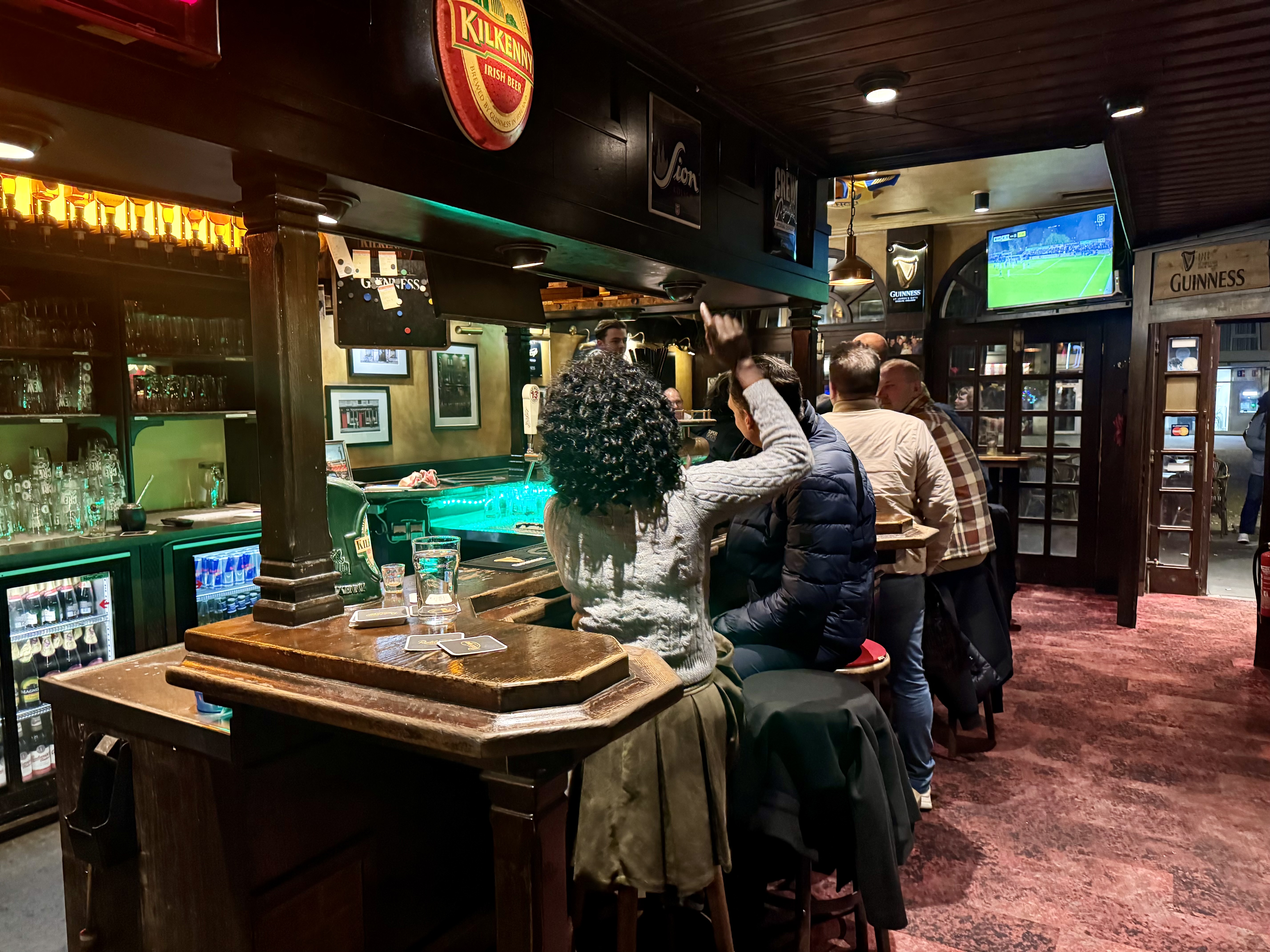
We also made a stop at an Irish Bar, because why not? The Corkonian Irish Pub could not have been more Irish or more divey. Complete with wall-to-wall carpet.
Dinner at Servus Alpine
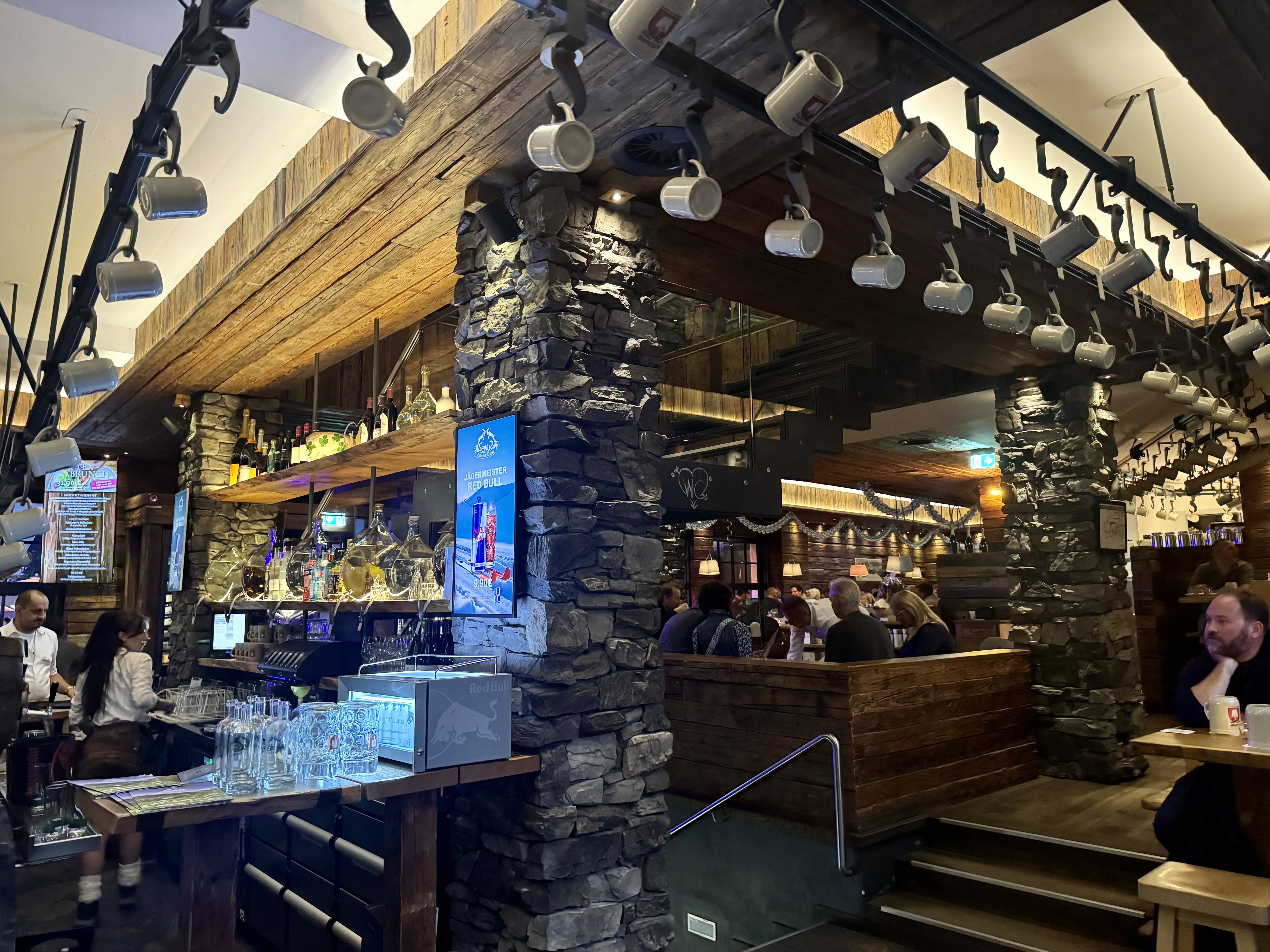
Our second dinner in Cologne was at a typical German restaurant called Servus Colonia Alpina located in Heumarkt, another cute historical square. The restaurant was pretty busy and although we didn’t have a reservation, we were able to get seated right away.
Its rustic and wooden charm was highlighted by the carousel of beer mugs that hung from a conveyer belt of sorts and moved around the restaurant to the bar where they were filled.
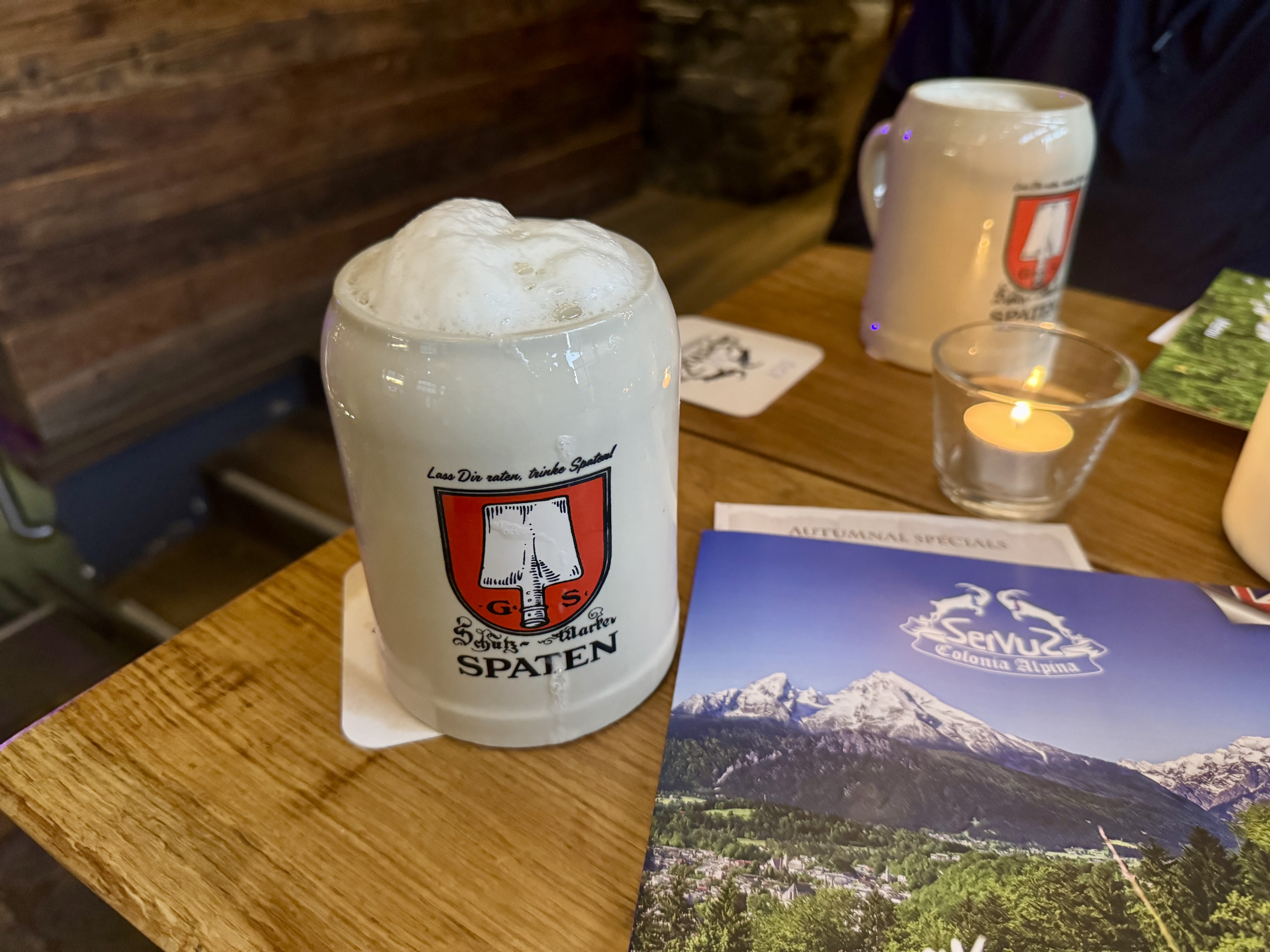
For our meals we went with two Alpine staples that we hadn’t yet had on the trip: pork schnitzel and Kaiserschmarrn.
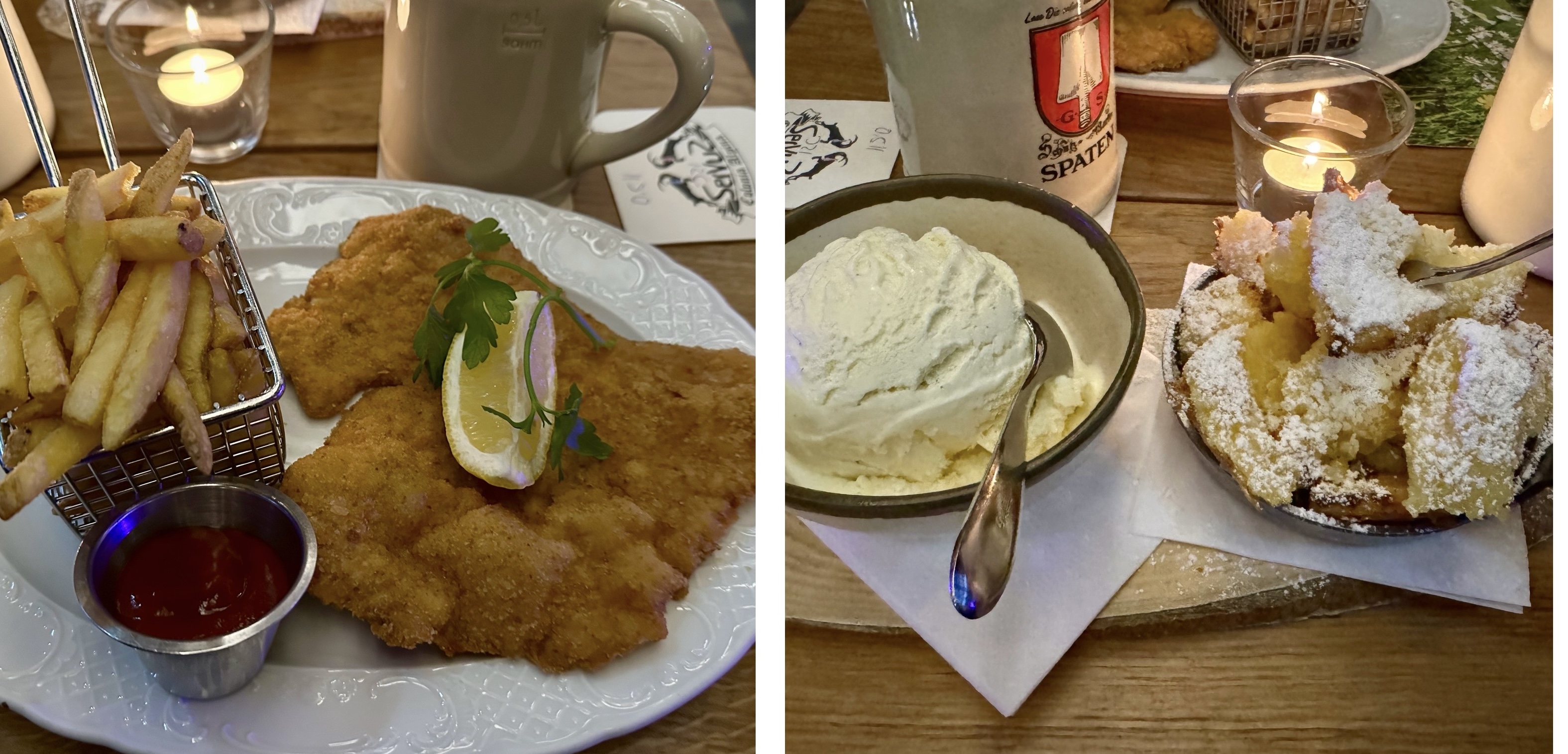
Schnitzel is a fairly standard dish found in many countries, but Kaiserschmarrn is unique to the region. This sweet, fluffy pancake is lightly caramelized, torn into bite-sized pieces, and dusted with powdered sugar. Ours came with a side of some of the best vanilla cream we’d had in quite a while.
Papa Joe’s Biersalon
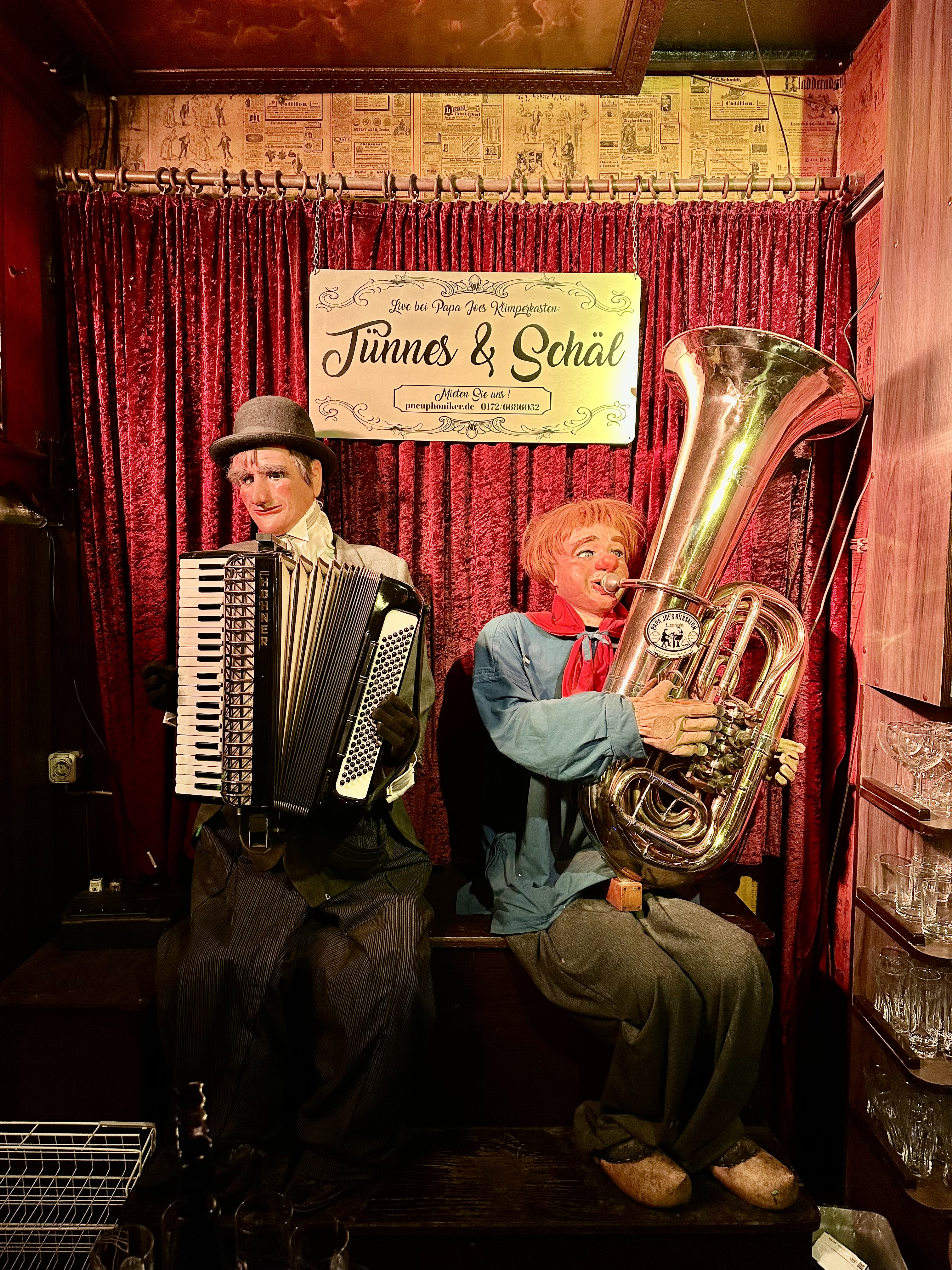
For an absolutely unique experience during your visit to Cologne, I cannot recommend Papa Joe’s Biersalon enough. Its like walking into a grandparents basement from the 80s. The walls are covered with various knickknacks, vintage signs, posters and pictures.
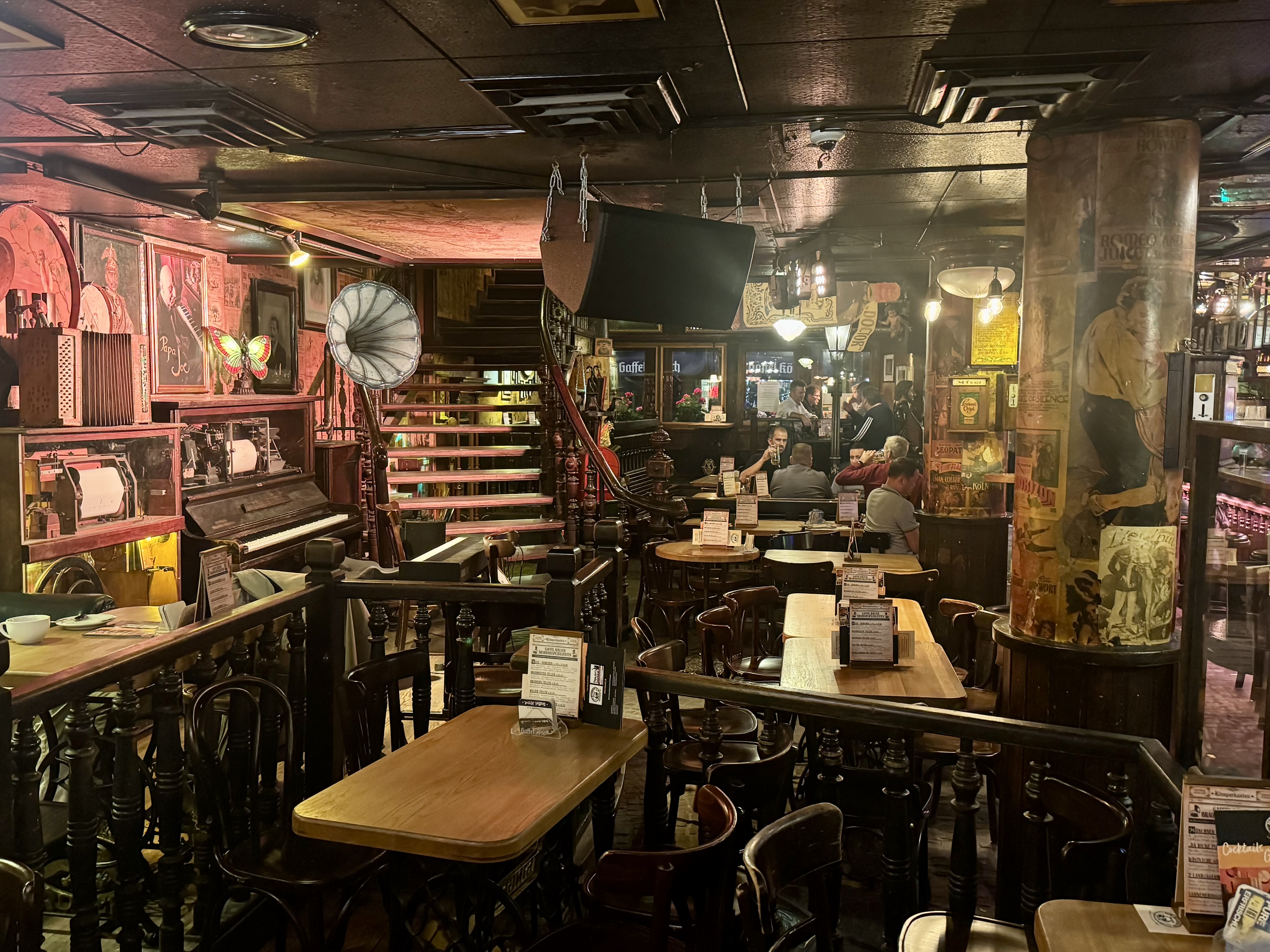
The real centerpiece are the self-playing instruments highlighted by the musical marionettes advertised as “the world’s first self-playing tuba-accordion orchestra.”
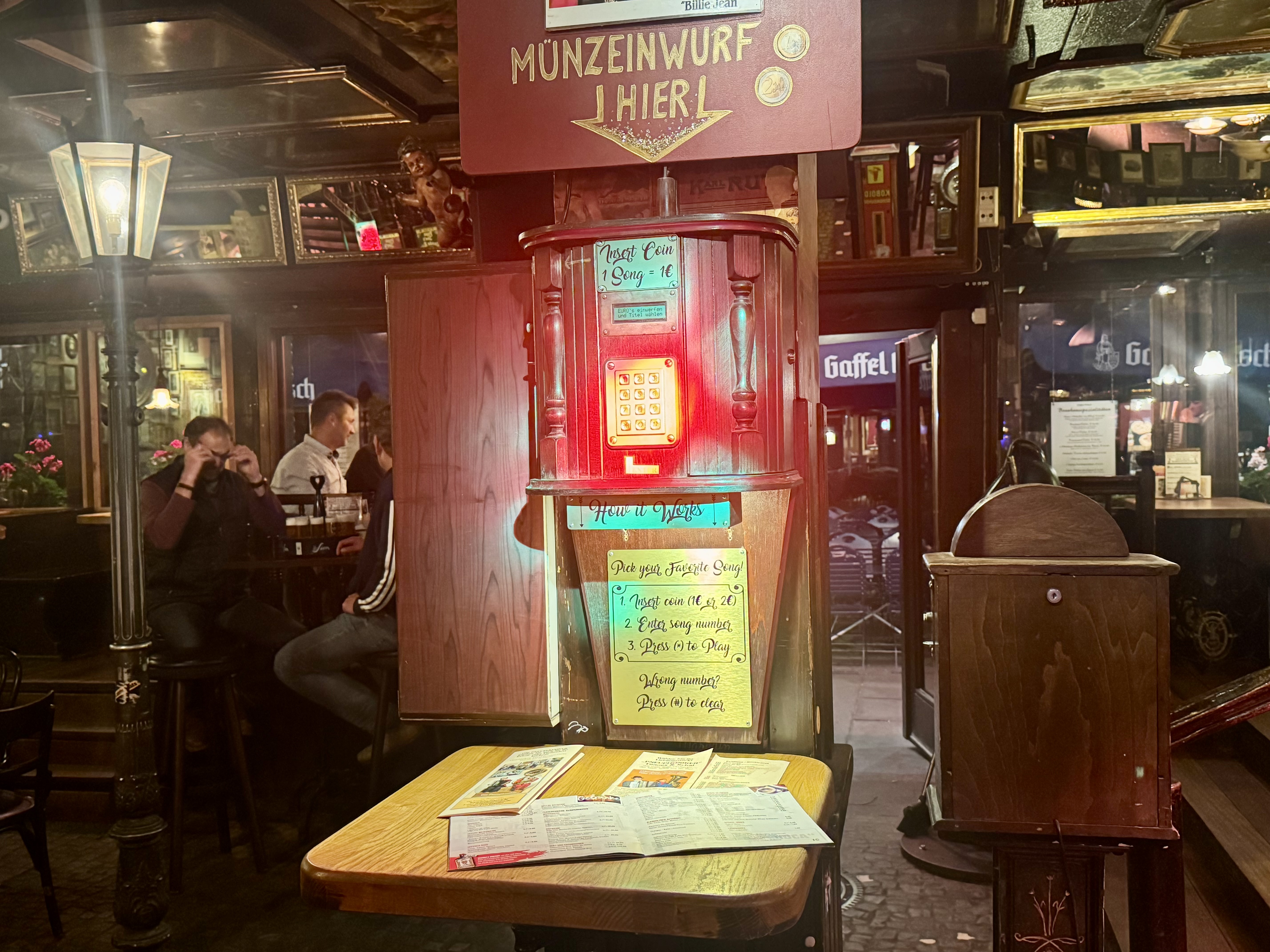
You select songs by depositing a few coins in wooden box and punching in a code.
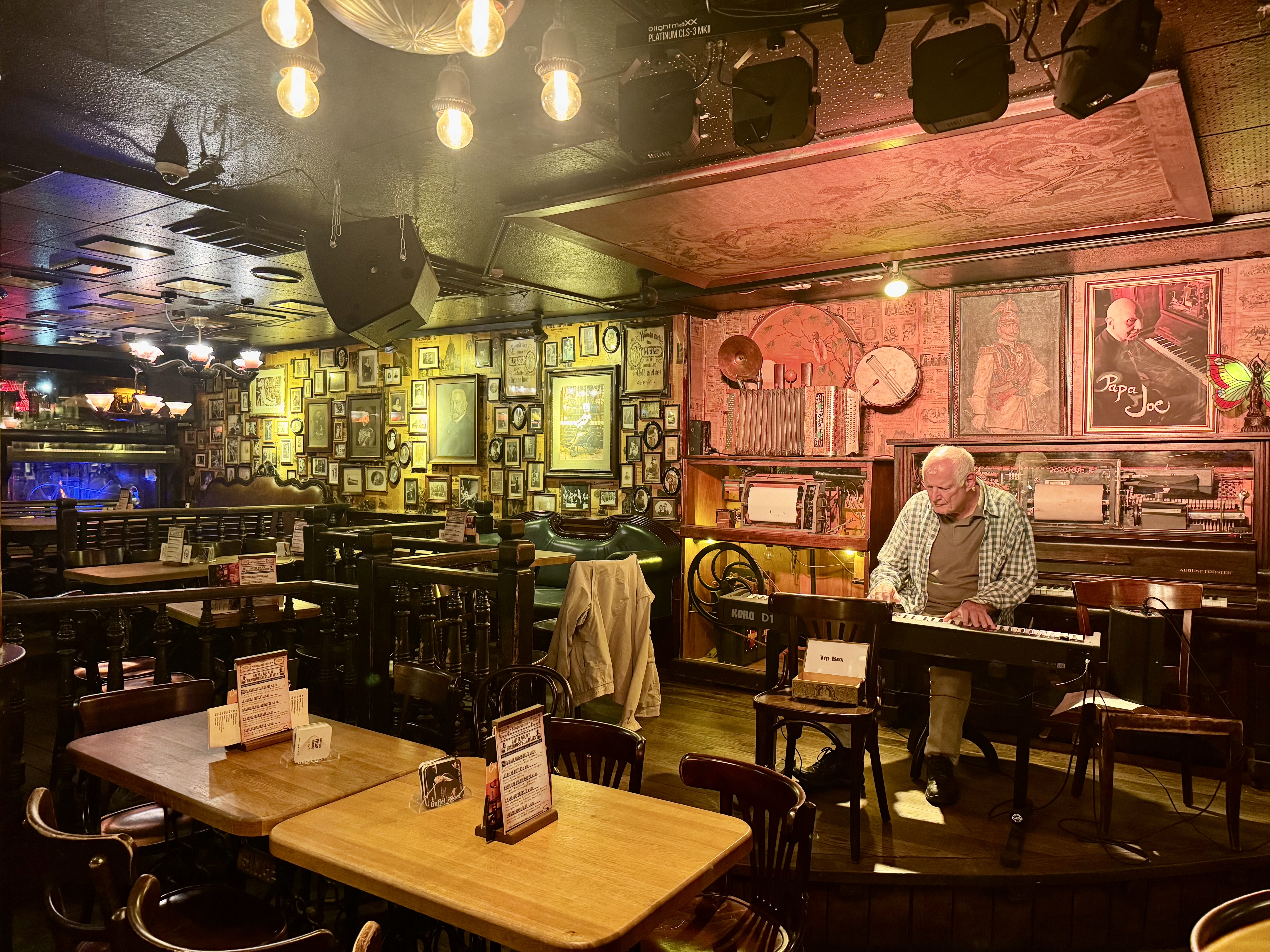
Overall, Nik and I loved our time in Cologne. The beer was fresh and delicious and I could easily drink it daily. The city was cute with an endless array of places to walk to and visit. A return visit to Cologne is definitely on my list.
Next: On to Dortmund!