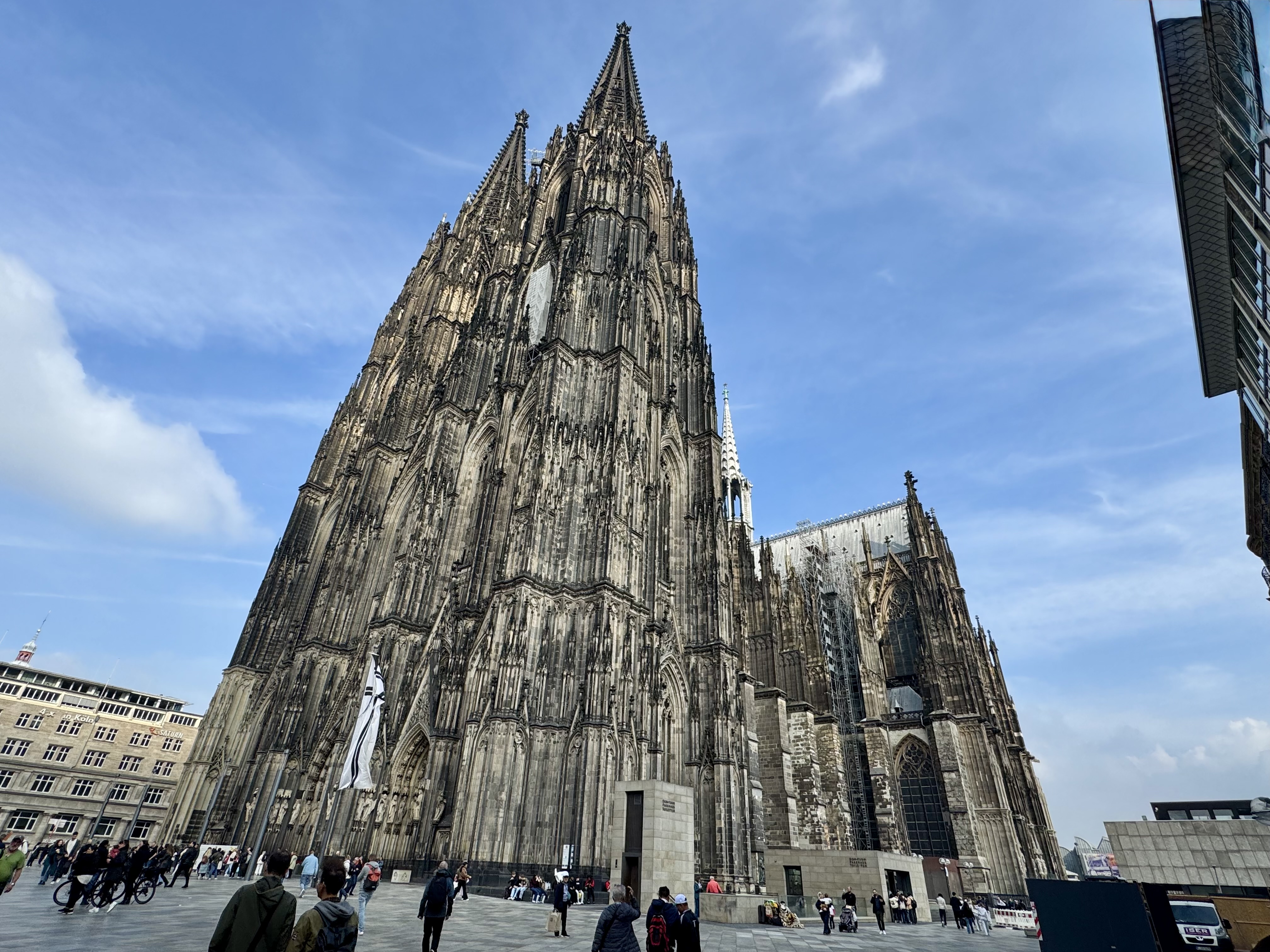
In 2023, Nik and I met our friend Rosie at the Bruce Springsteen concert in Barcelona. She had traveled from Hannover, Germany, for the show. Fast forward to 2026, when Nik and I bought tickets to see Paul Simon in Berlin. We wanted to add another stop to our trip, so we reached out to Rosie to see if she’d be home in Hannover and up for a visit.
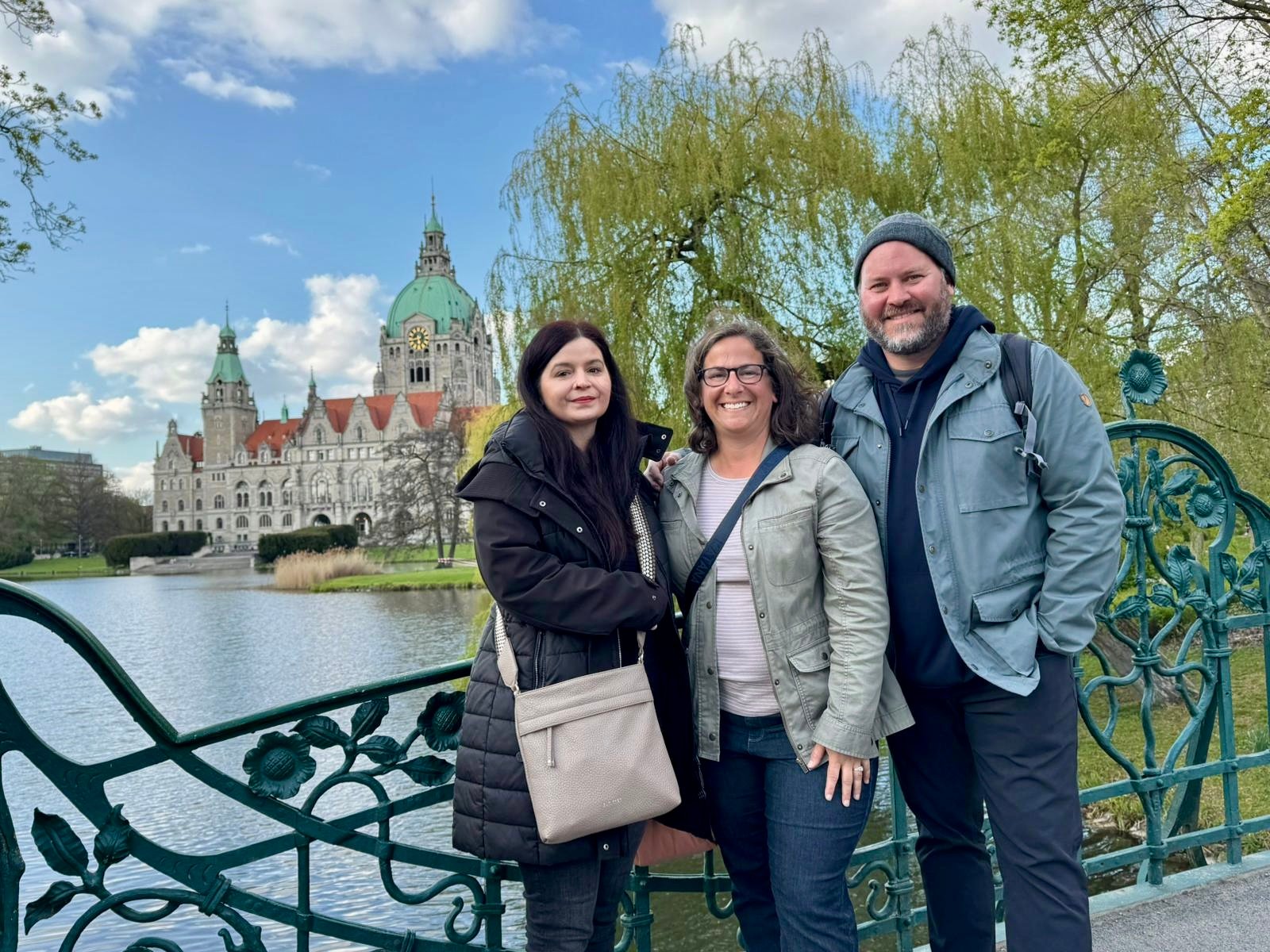
It would be our first time in Hannover (Germany’s 13th-largest city), and I’m so glad we made the trip! We had a great time exploring the city with someone who knows it best.
Getting to Hannover
Nik and I decided to book roundtrip flights from Nice to Berlin and take the train from Berlin to Hannover. The train ride was incredibly easy and we arrived in Hannover just after lunchtime. After checking into our hotel, the Sheraton Hannover Pelikan Hotel, a Marriott property, of course, we settled into the room. Since we were there for my birthday, we mentioned it in our reservation notes, and the hotel surprised me with a very cute birthday card and a plate of sweet treats.
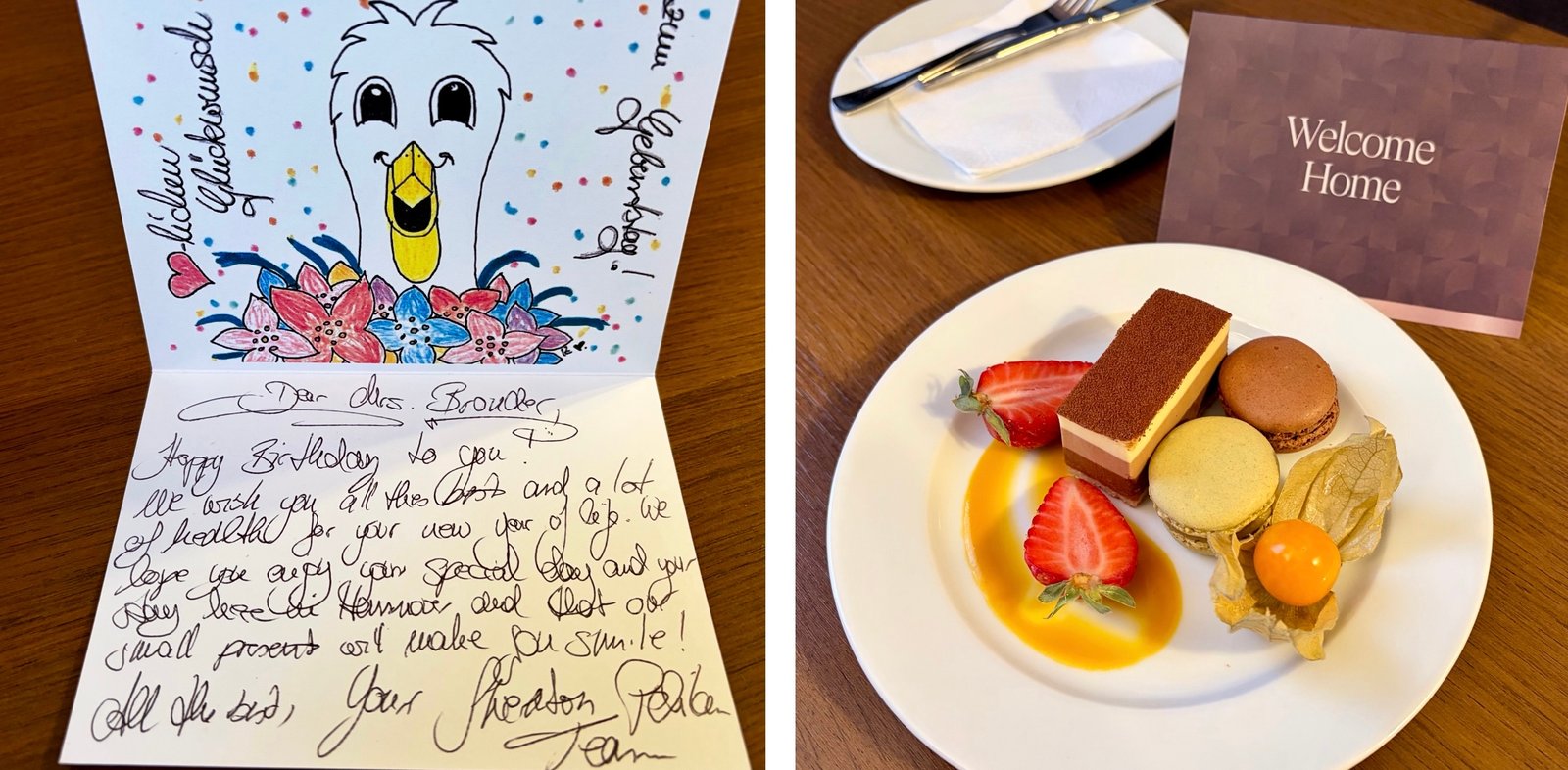
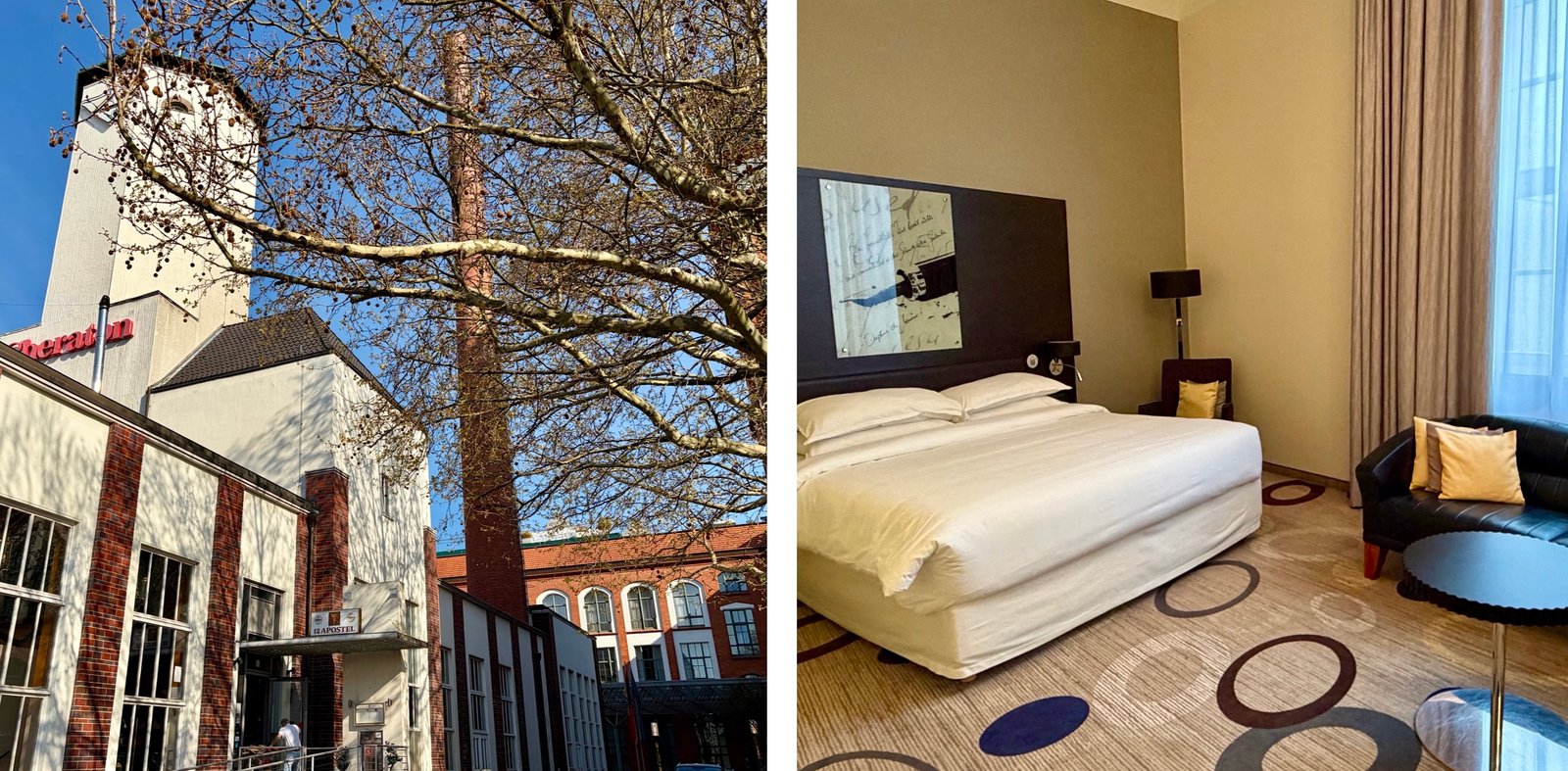
The hotel also has a fascinating history. The building once housed the Pelikan fountain pen factory, which opened in Hannover in 1838. Marriott Bonvoy members at different loyalty levels often receive a welcome gift or points at check-in, so the hotel’s history explains why they offered us a pen. We opted for the points, as we almost always do.
The room was nice, nothing particularly special, but the bathroom felt a little cramped and had an oddly laid-out design, with a step up to the shower. The room also came with slippers and robes, which are always a nice touch. The location was perfect for our two-night stay, right off a tram line and not too far from where Rosie lived either.
Sightseeing Around Hannover
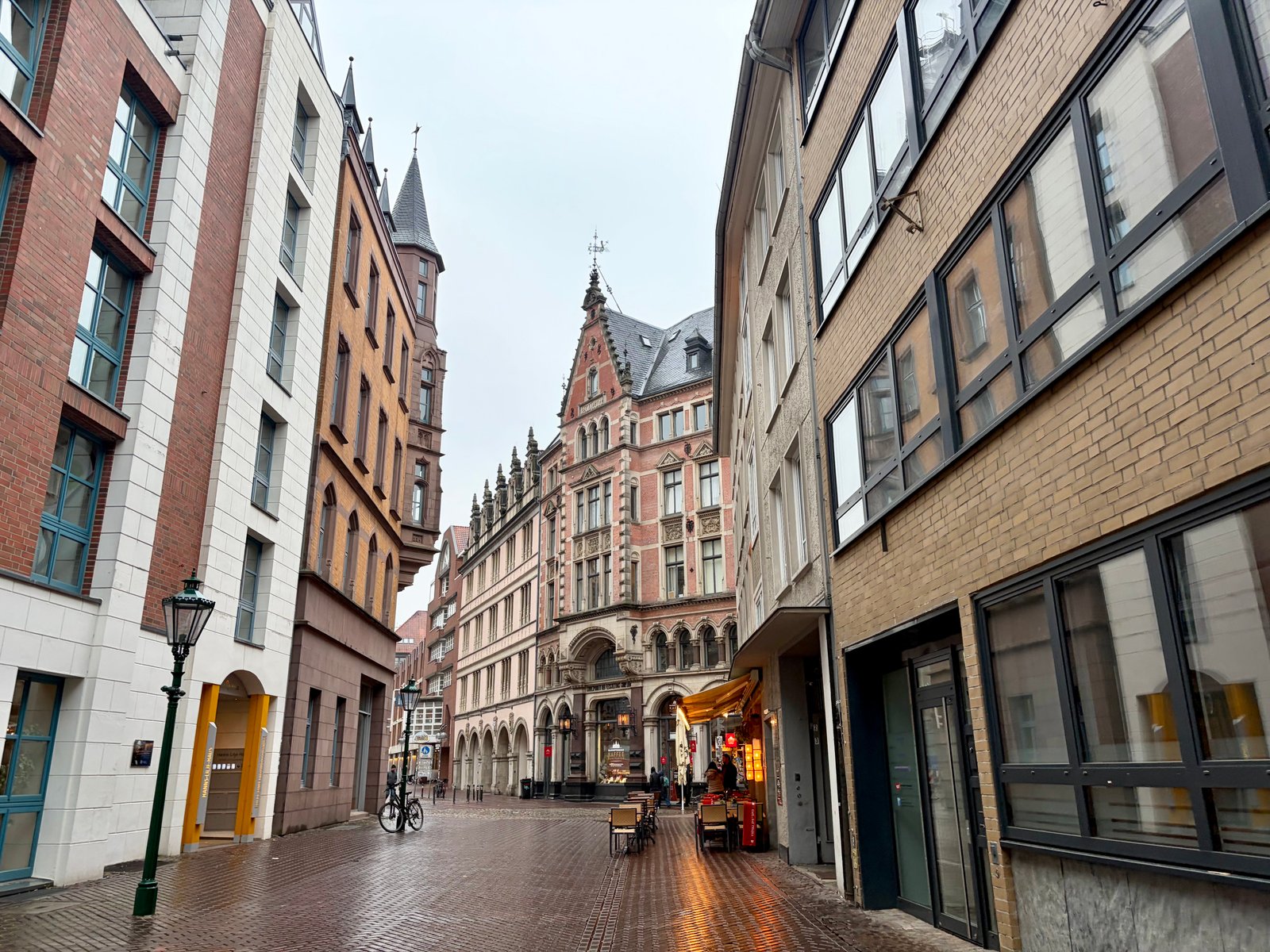
Our first afternoon was spent with Rosie taking us around and getting the lay of the land. This would serve as a warm-up to walking The Red Thread the next day.
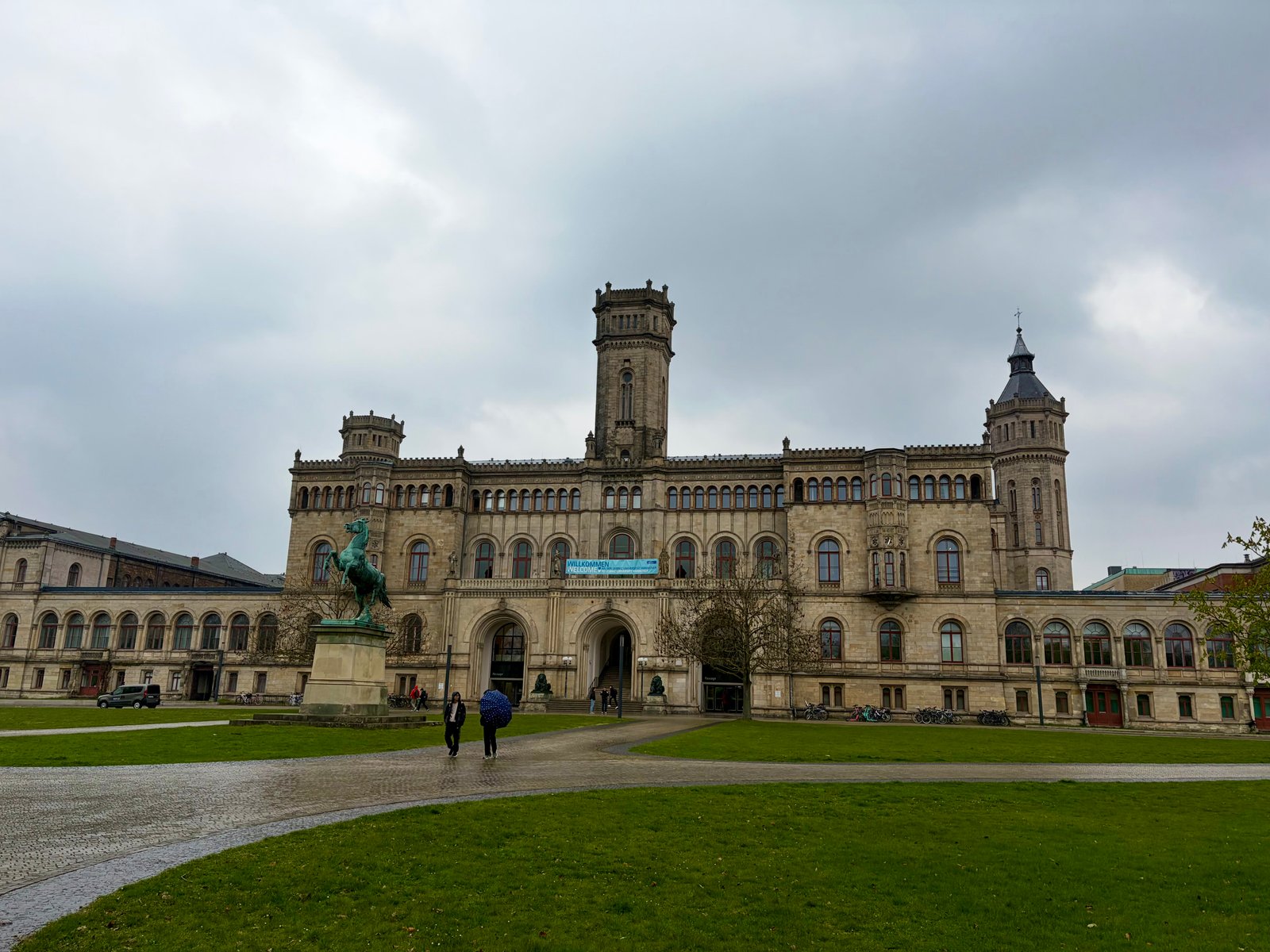
I really loved the architecture of The Welfenschloss. The former royal palace dates back to the first half of the 18th century and now serves as the main building for the University of Hannover.
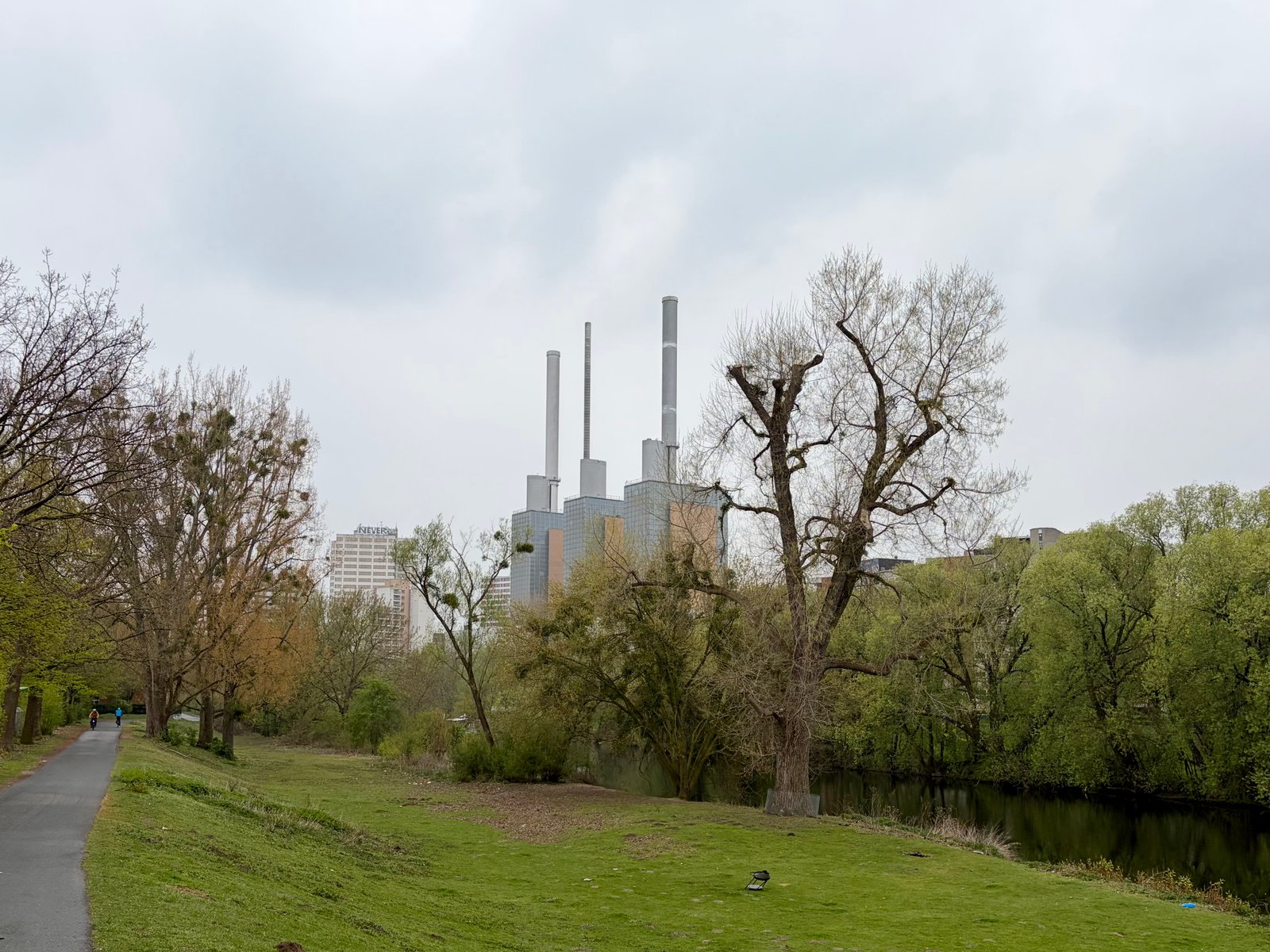
The Linden Combined Heat and Power Plant is known by the nickname “The Three Warm Brothers” and is a landmark in Hannover.
Golden Leibniz Cookie
One of the buildings Rosie took us to see was the Bahlsen headquarters. Bahlsen is one of Germany’s most successful biscuit companies and makes the tasty Leibniz butter biscuits.
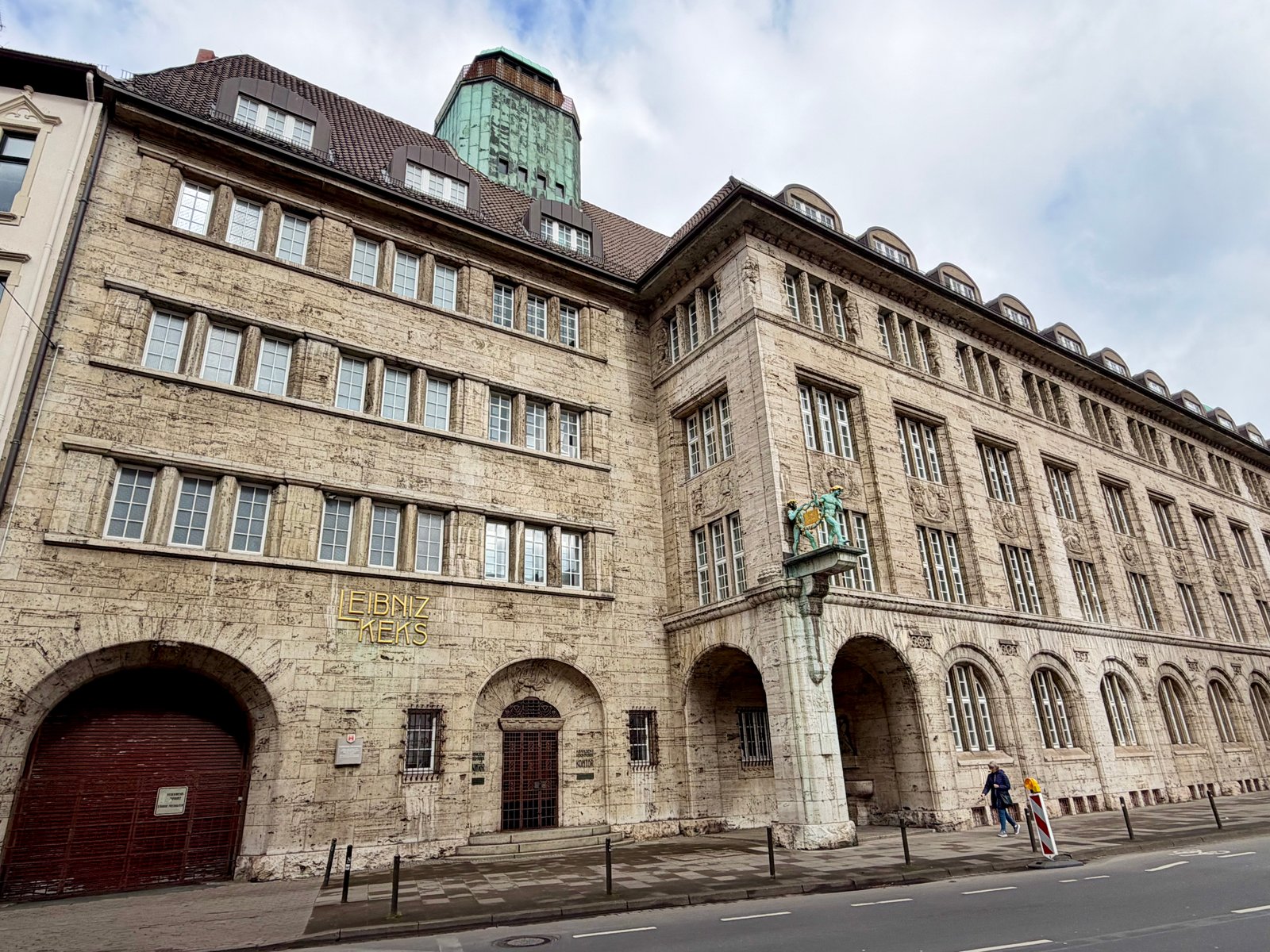
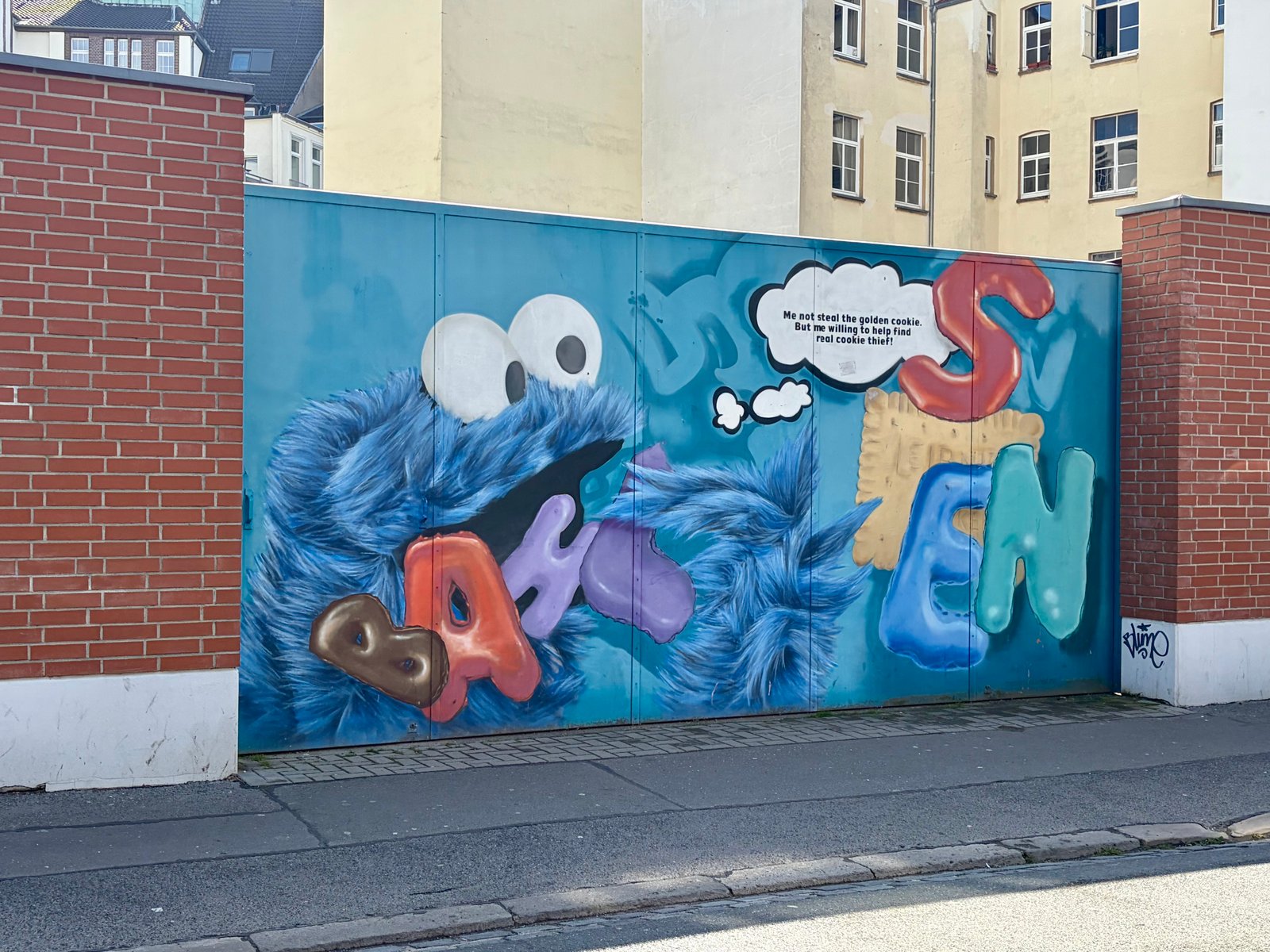
A famous golden biscuit hung from a sculpture on the facade of the company’s headquarters and someone stole it in 2013. The theft attracted worldwide attention when a ransom note followed, signed by the ‘Cookie Monster.’ The culprit demanded complimentary shipments of Leibniz milk chocolate biscuits for a children’s hospital.
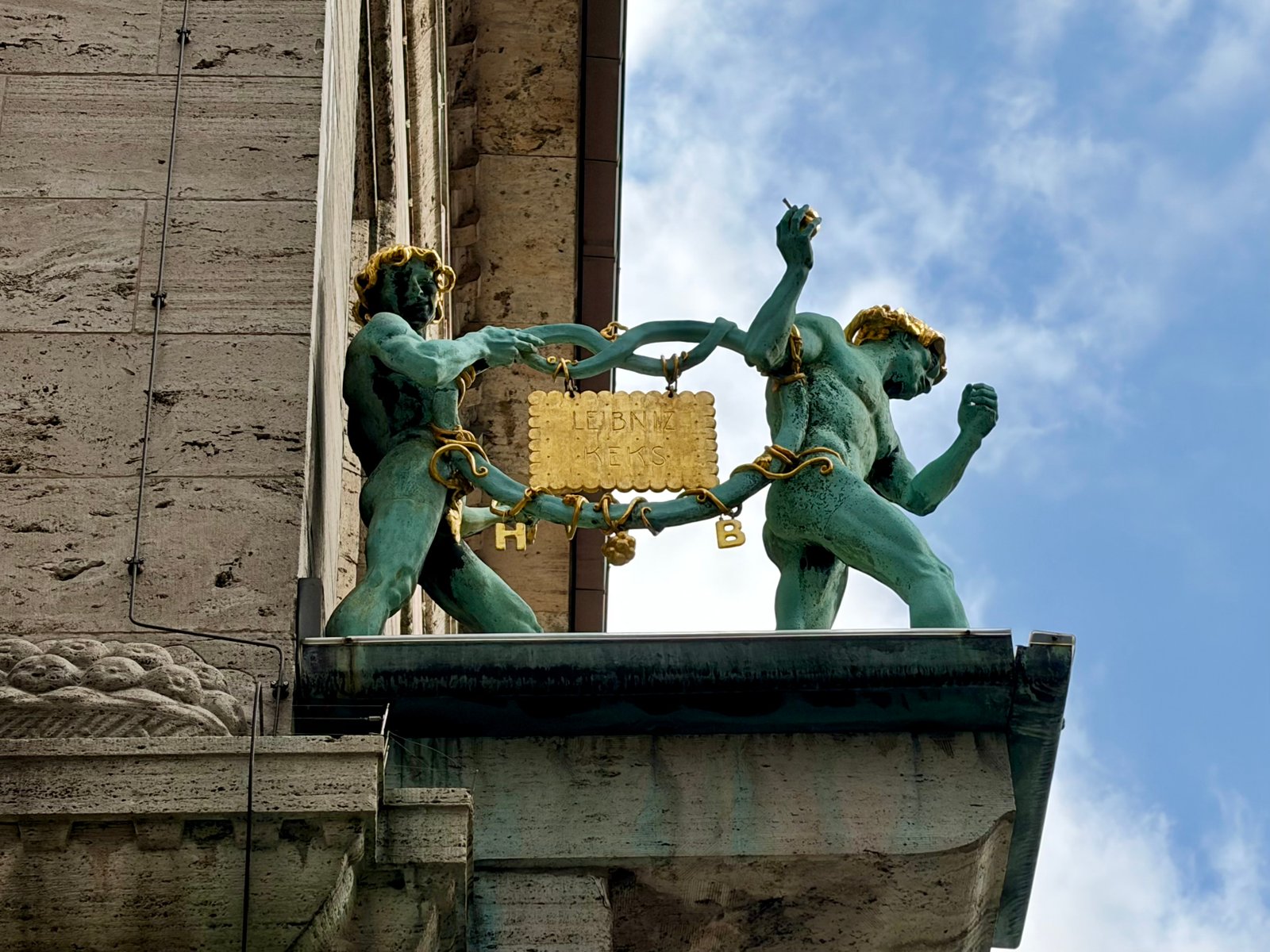
After initially resisting the demand, Bahlsen eventually agreed to donate 52,000 packages of its sweet, crispy biscuits to various institutions in exchange for the golden biscuit’s return. A few weeks later, the gilded biscuit mysteriously reappeared, hanging from a horse statue at the University of Hannover. It was eventually placed back between the two sculptures on the company’s building. Despite an extensive police investigation, authorities never identified the culprit and the mystery remains unsolved today.
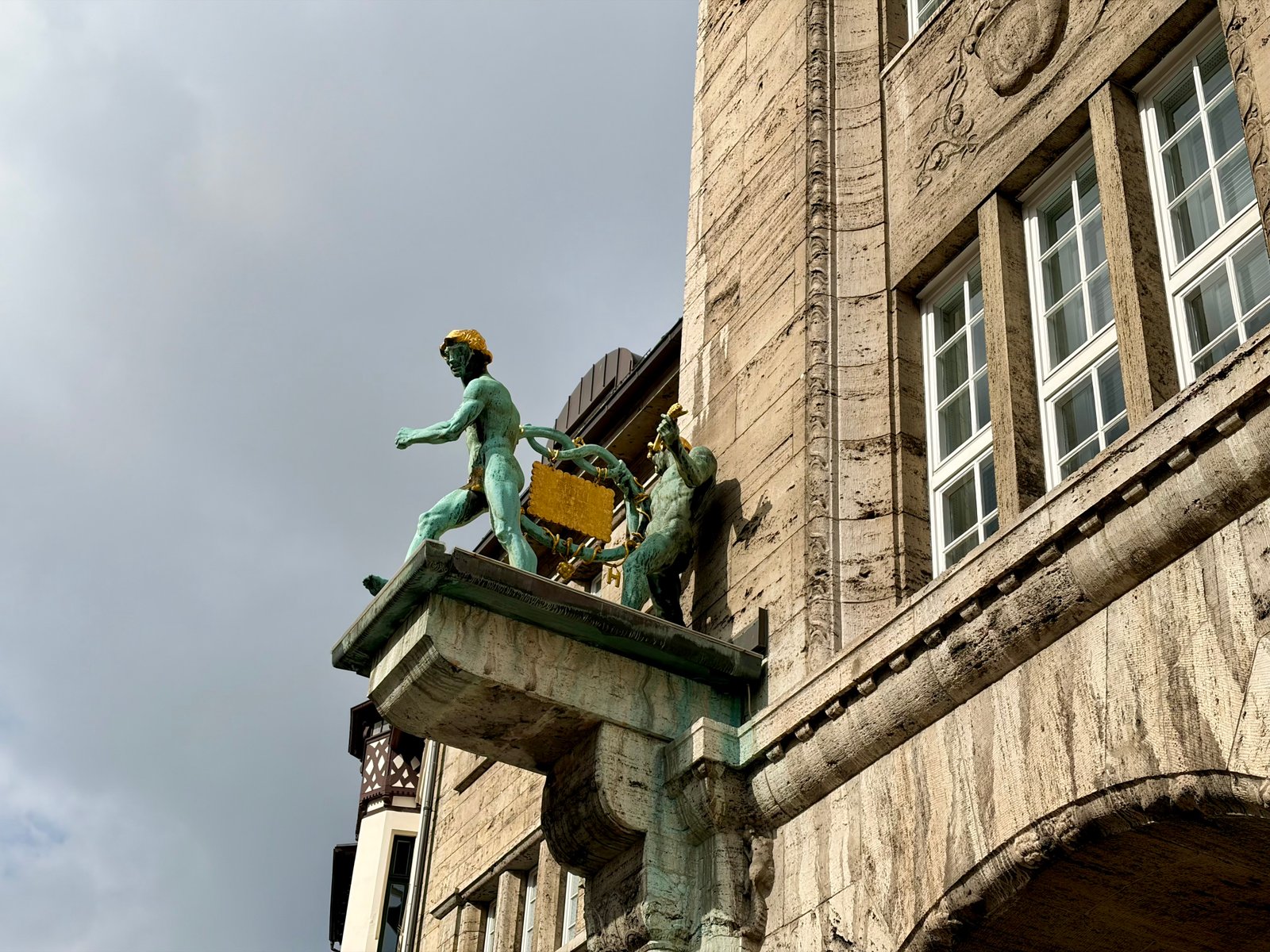
In 2016, Bahlsen decided to embrace the incident as part of its company history and commemorate the story with a mural on its property.
We picked up some of the cookies during our trip and brought a pack back home to Nice. They were really good and we’ll keep an eye out for them the next time we’re in Germany.
The Red Thread
Based on the Freedom Trail in Boston, Massachusetts, The Red Thread stretches 4.2 km (2.6 miles) through the city, passing 36 important sights. As you stroll through the city center and old town, you’ll spot a red line painted on the ground to follow with a numbered circle marking each landmark.
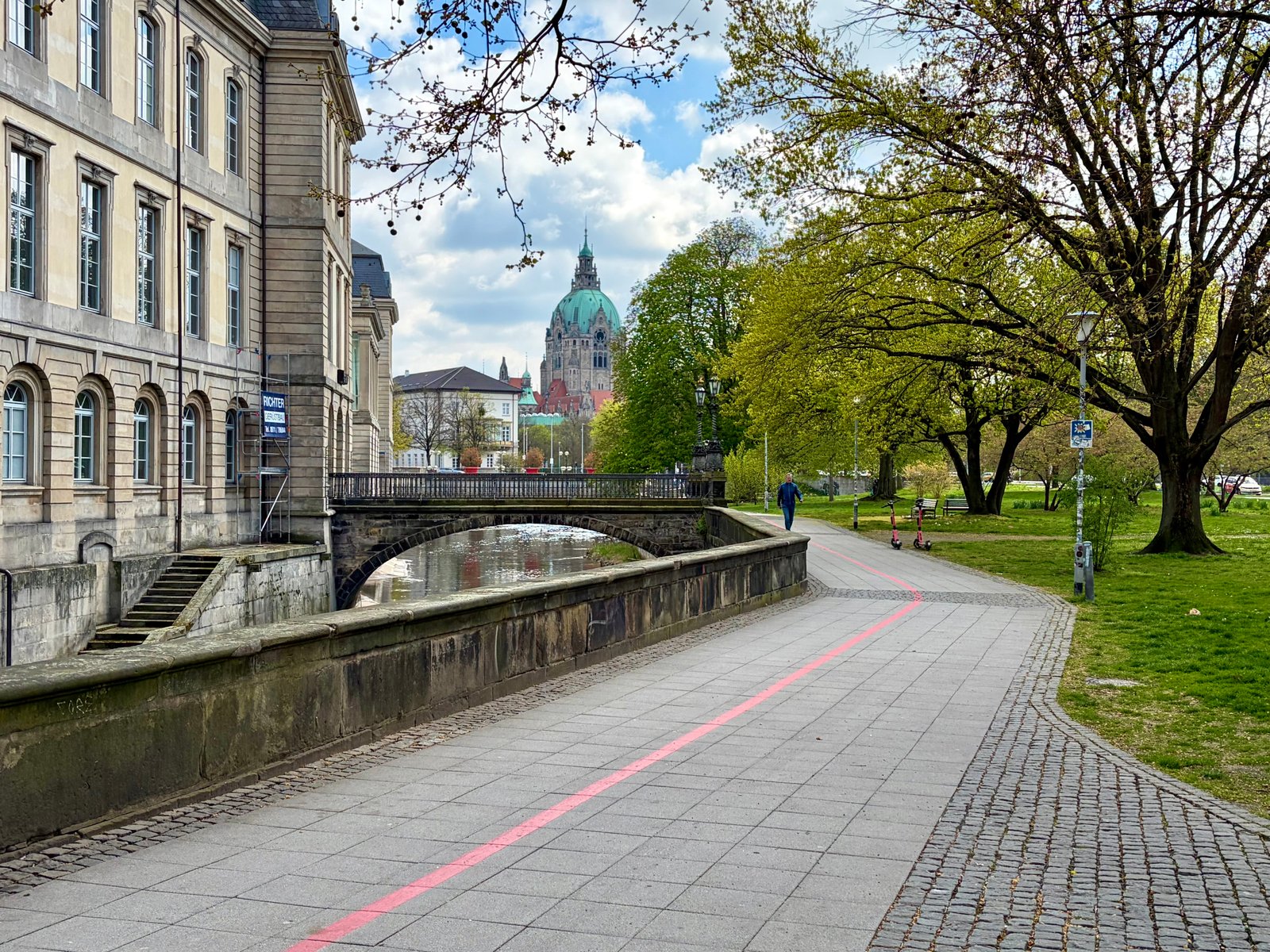
The official starting point is the Tourist Information office, where Rosie picked up booklets for all three of us a few days earlier. Of course, you can start at any point along the route, but we decided to start at the beginning. That said, I’m not going to cover every site. Instead, I’ll highlight some of my favorites and the ones I found most interesting.
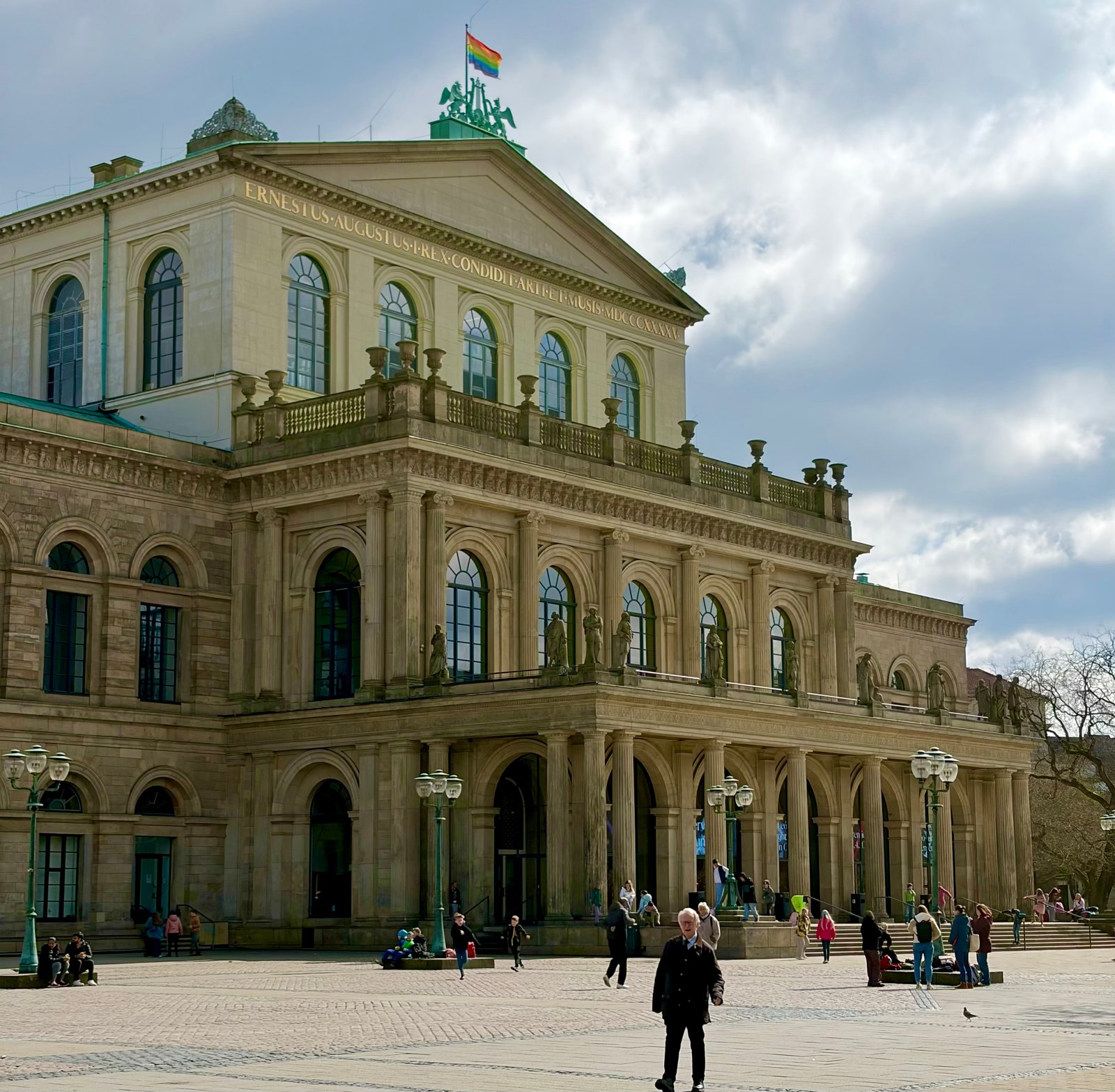
Near the tourist information office is the Hannover Opera House, which originally opened in 1852. It’s a gorgeous building from the outside, and if you know me well, you know I love an opera house!
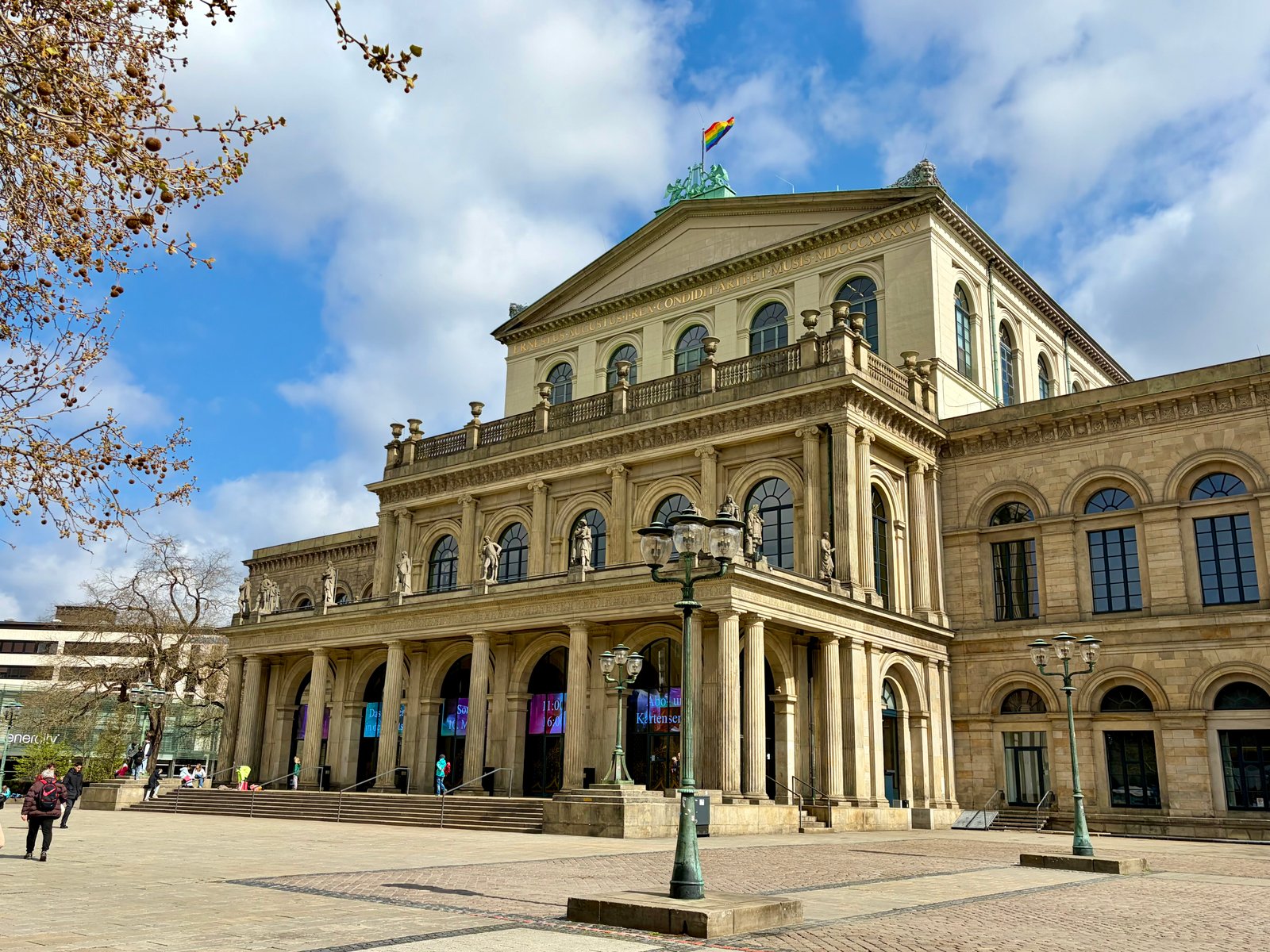
As an important railway and road junction and production center, Hannover was a major target for strategic bombing during World War II. More than 90% of the city center, including the opera house, was destroyed during a total of 88 bombing raids. After the war, the city rebuilt the opera house, which reopened in 1950.
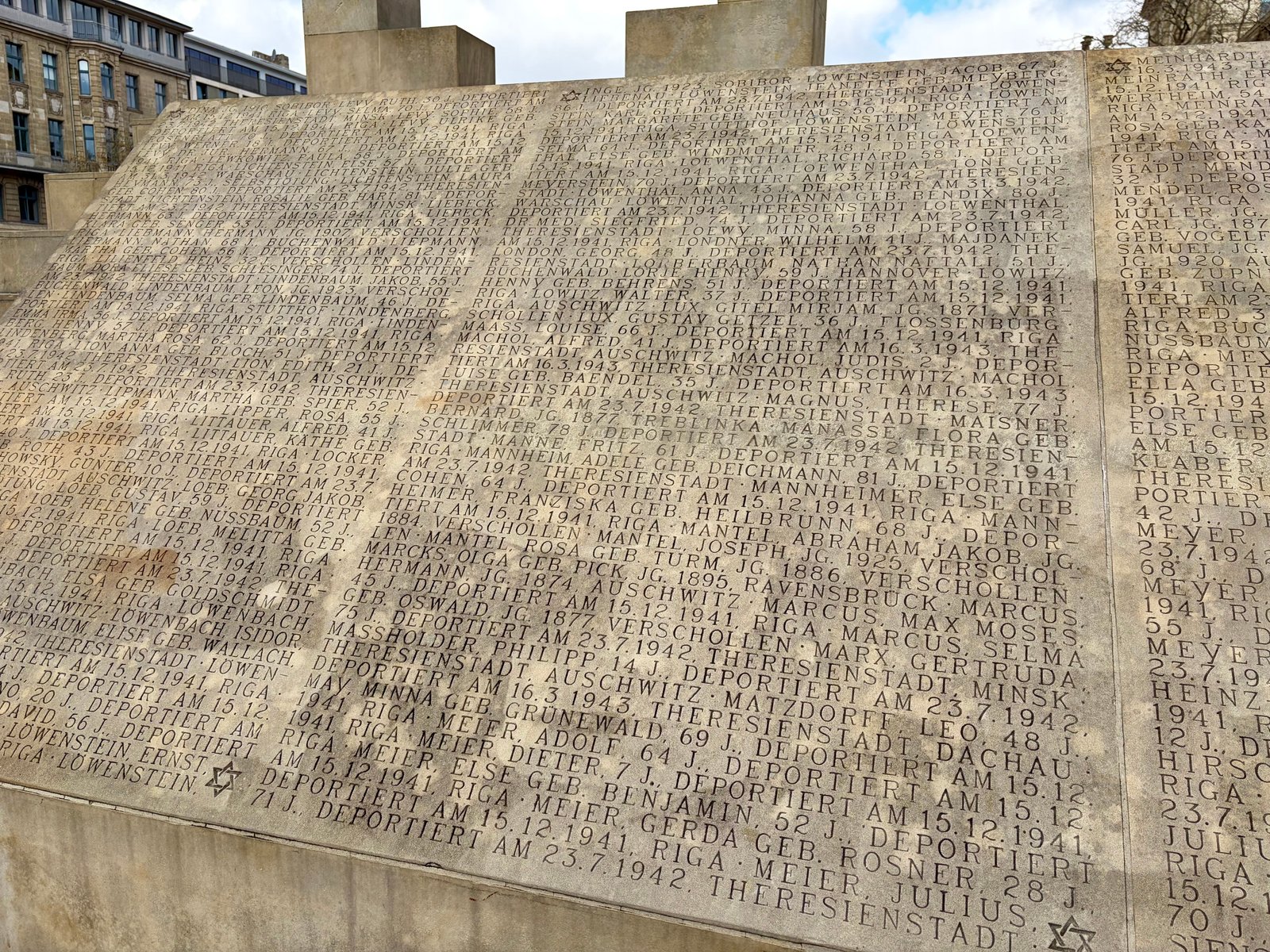
Steps away from the opera house is the Memorial to the murdered Jews of Hannover. Unveiled in 1994, the monument lists the names of 1,935 Jewish citizens of Hannover. For those who were deported, it includes their age at the time. For other victims, it lists their year of birth. It also details what happened to each person, when known. If their place of death remains unknown, the monument simply lists them as missing.
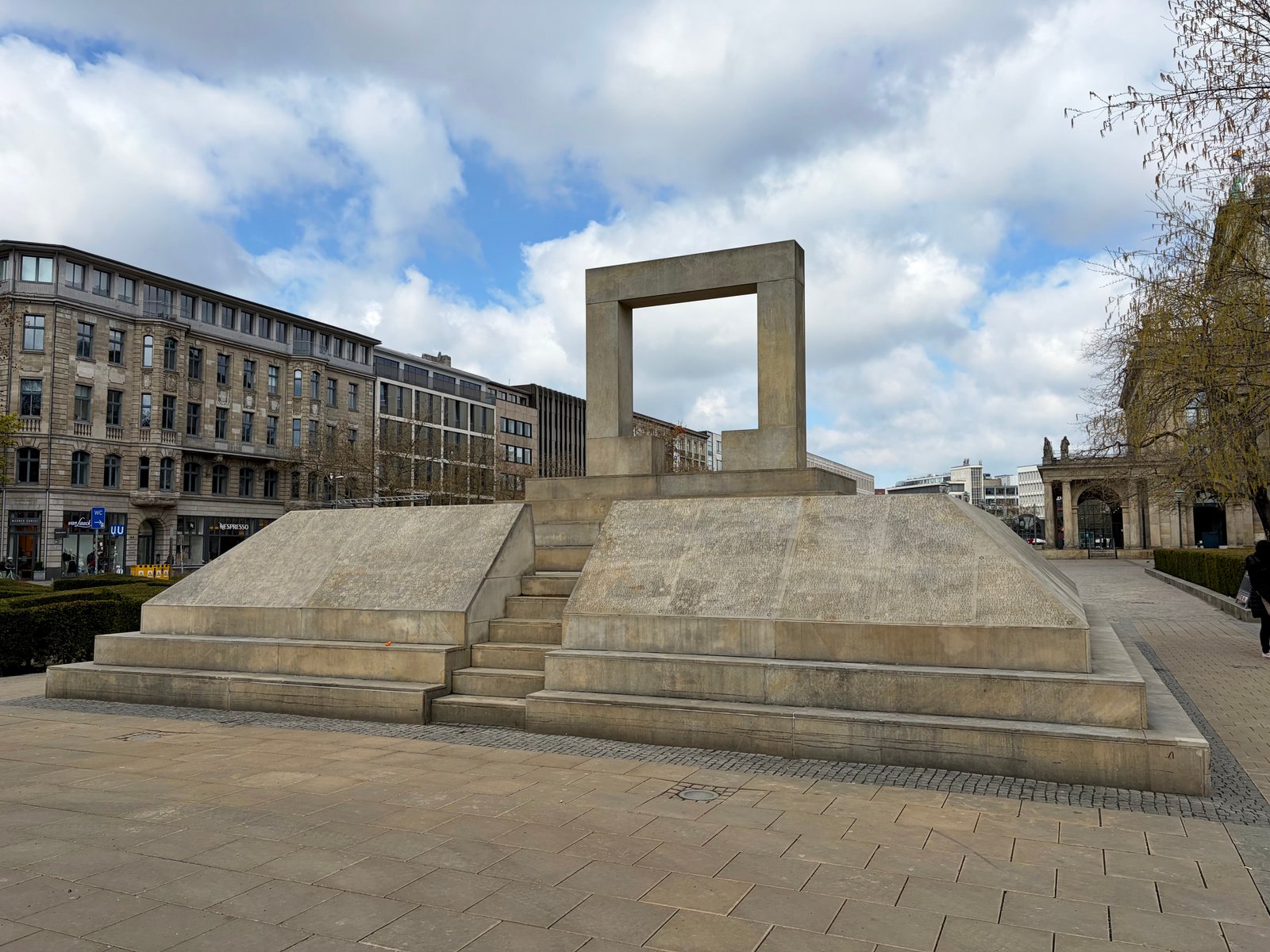
Italian artist Michelangelo Pistoletto designed the monument as an open space that people can walk through and around. The idea was to draw people in and encourage them to take a closer look at the names and the stories behind them.
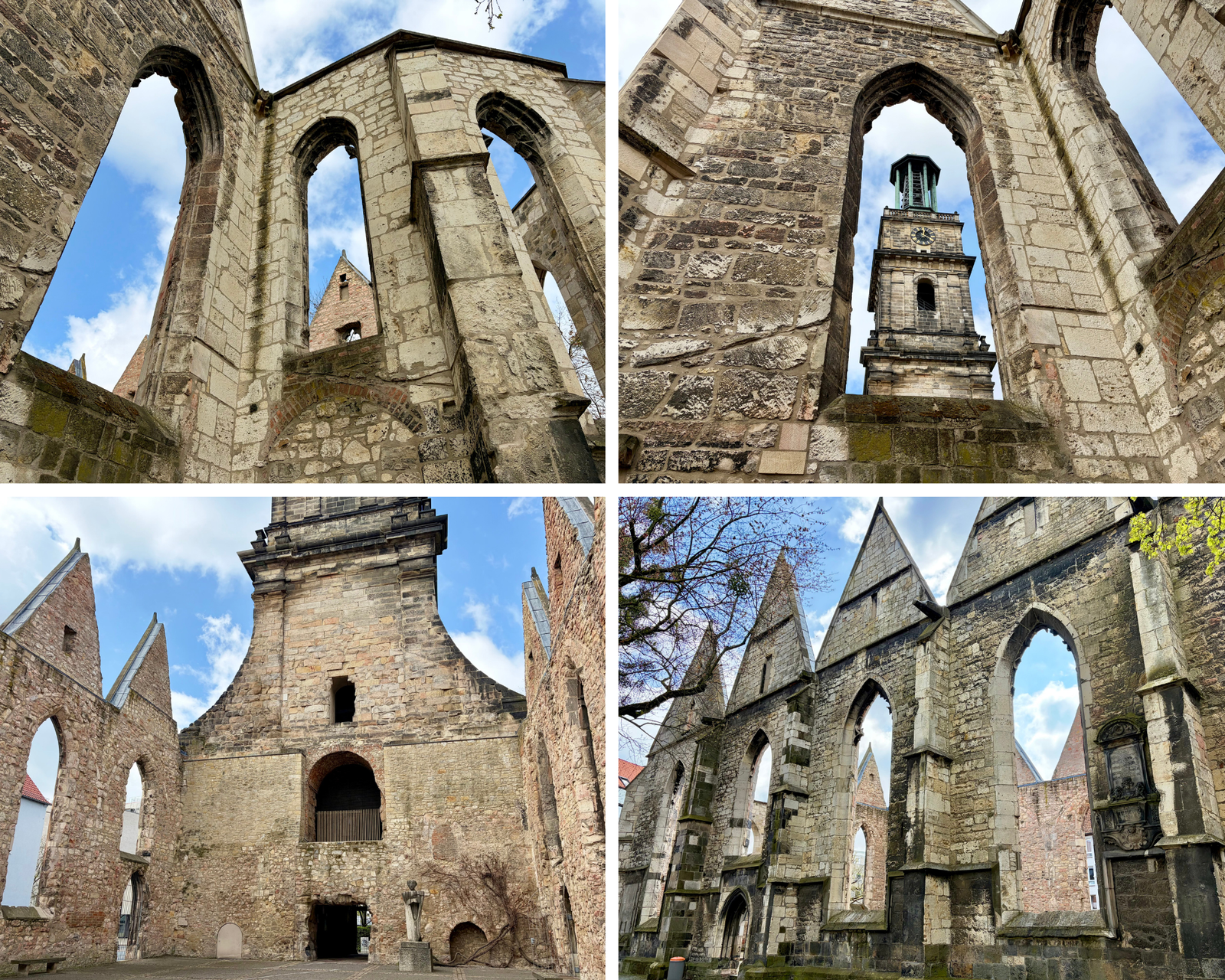
The Aegidien Church in Hannover dates back to the 14th century. Much like many other landmarks in the city, Allied bombing destroyed it during World War II in 1943. The city chose not to rebuild it and the remaining ruins became a memorial to the victims of war and violence.
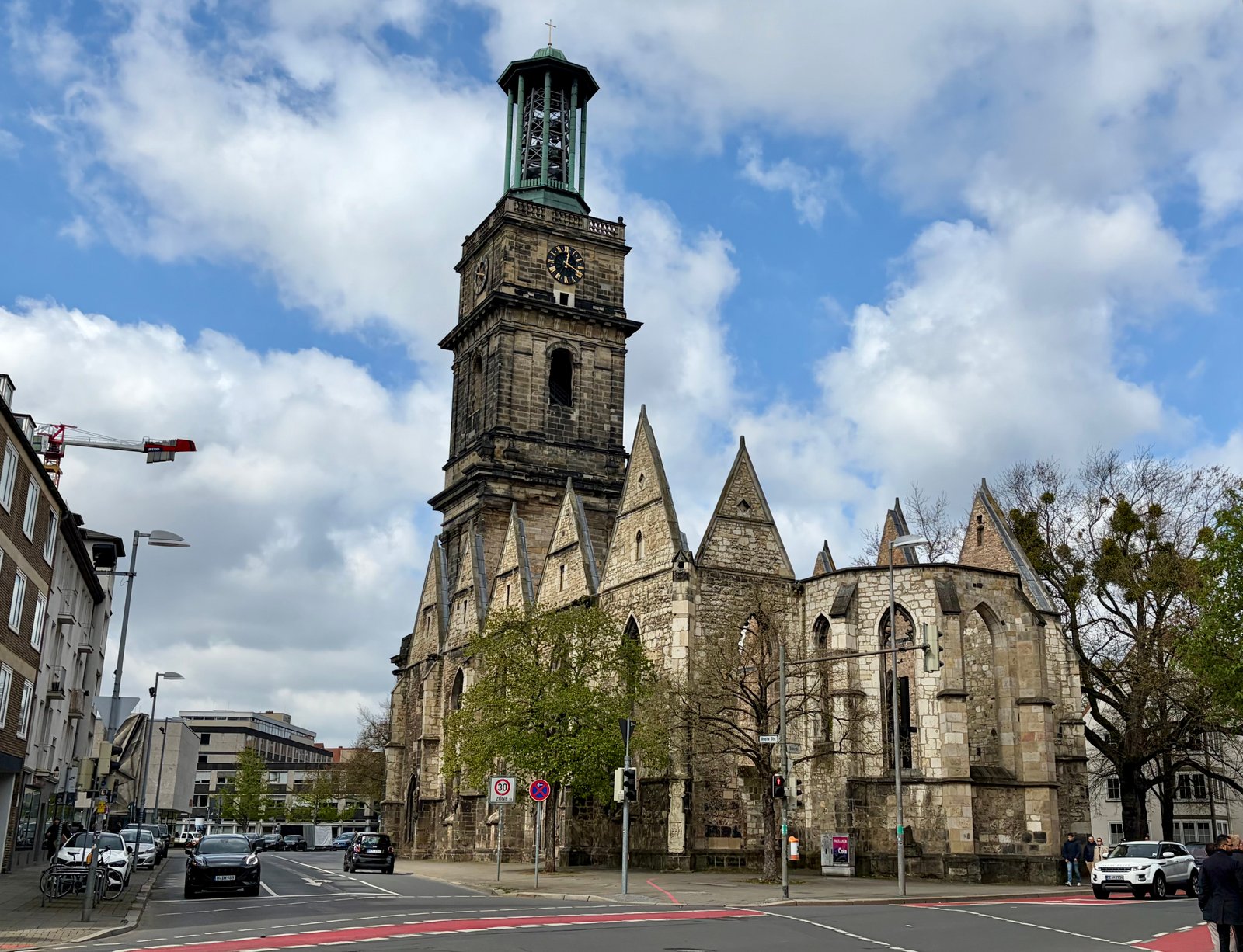
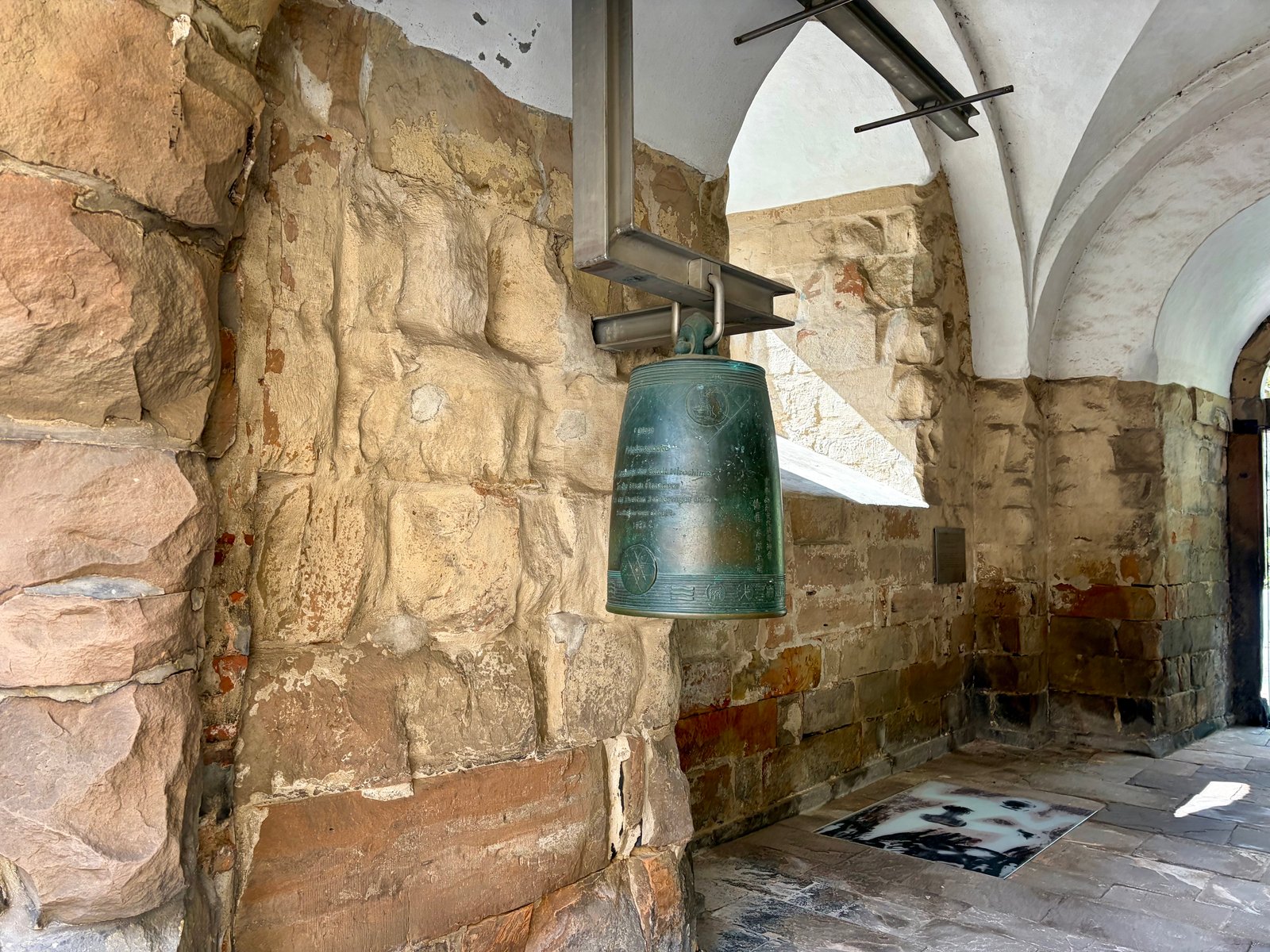
Hiroshima, a twin city of Hannover since 1983, donated a peace bell in 1985. It sits near the tower and rings annually on August 6 for the victims of the atomic bombing of Hiroshima.
We have now arrived at point number 10, The Archer, though the New Town Hall instantly grabs your attention. The bronze statue aims at the mayor’s office in the New Town Hall.
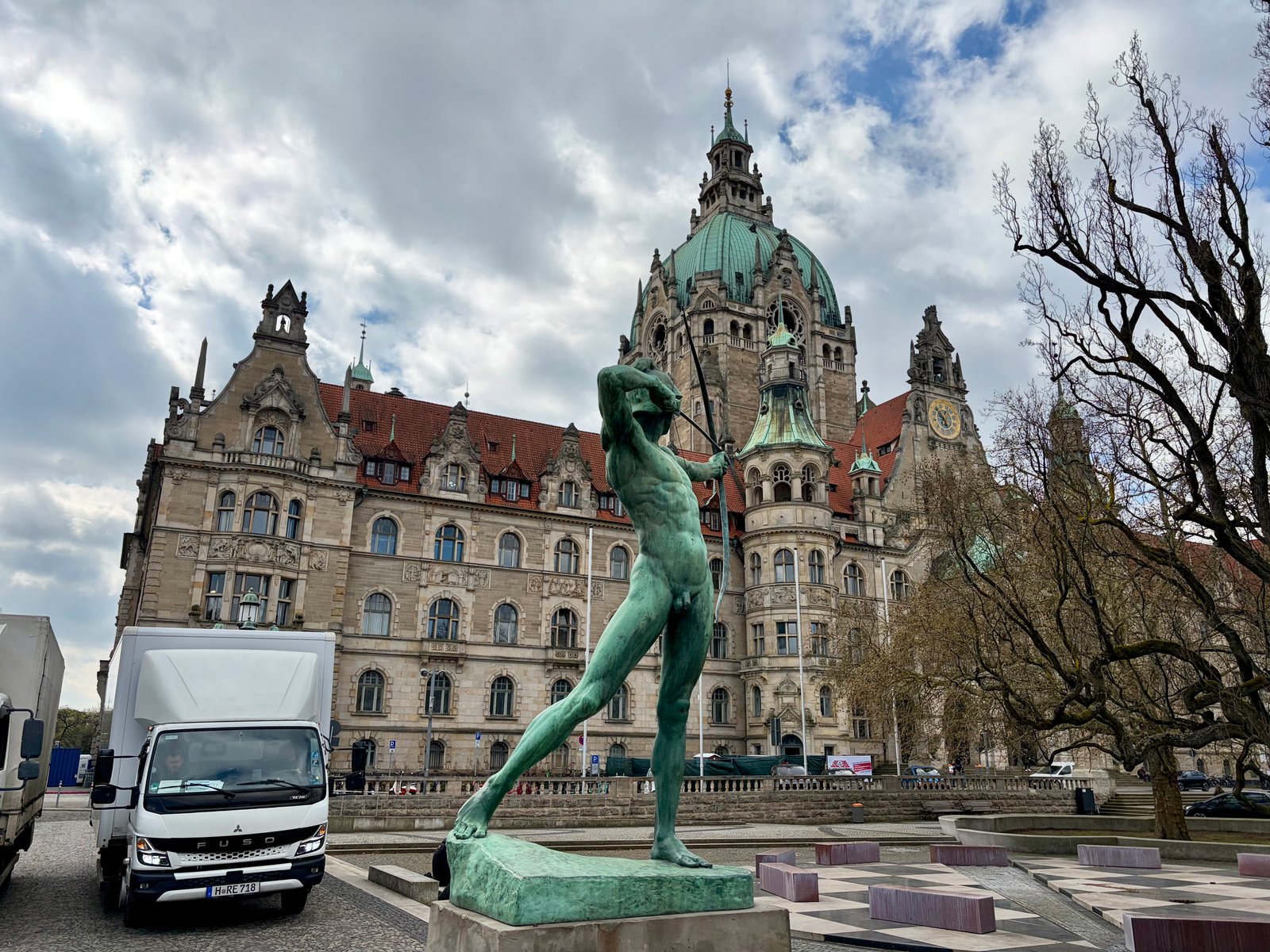
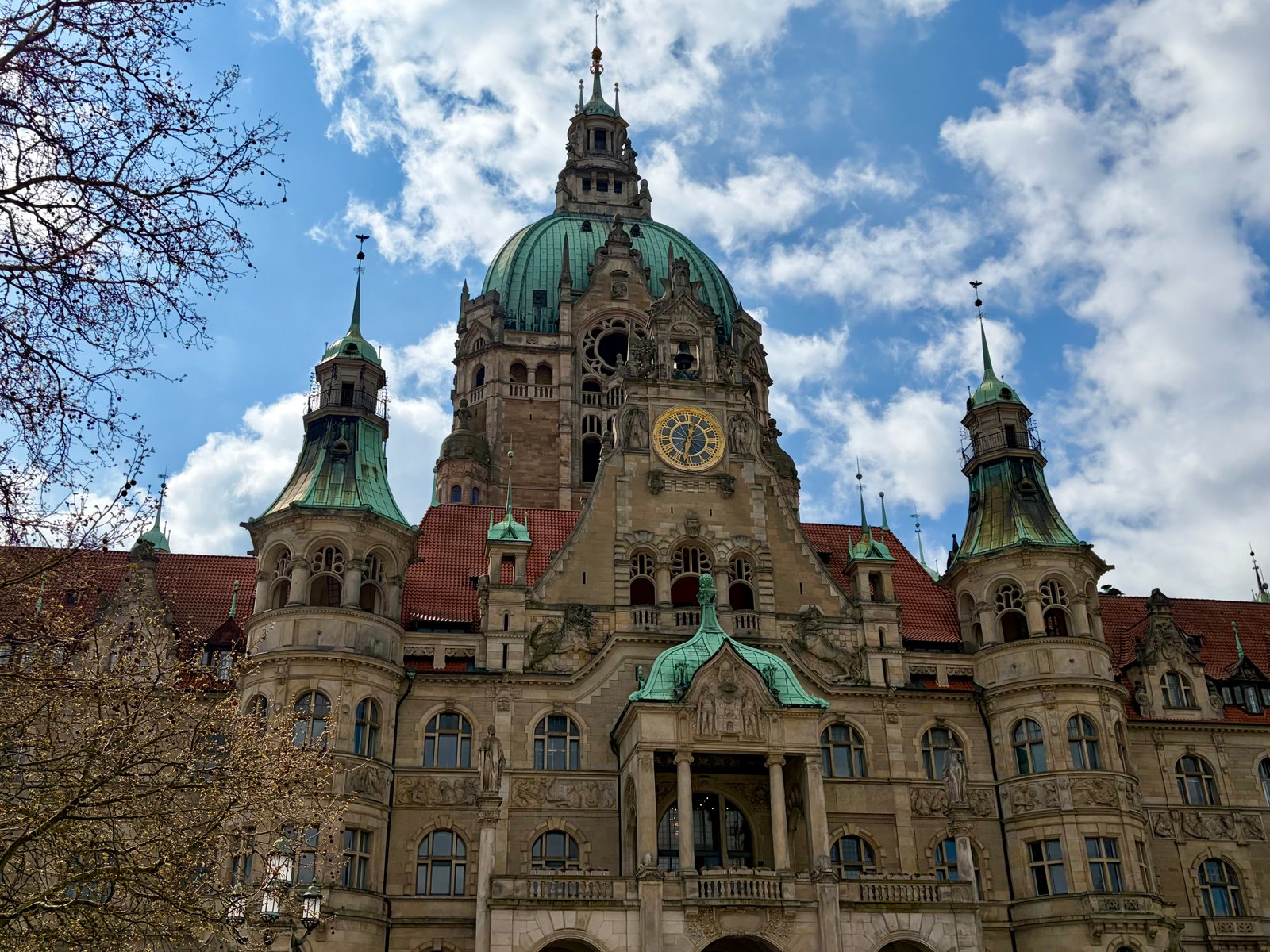
The New Town Hall is absolutely stunning from the outside. Unfortunately for us, some sort of filming was taking place outside and a large truck blocked some of our view for better pictures.
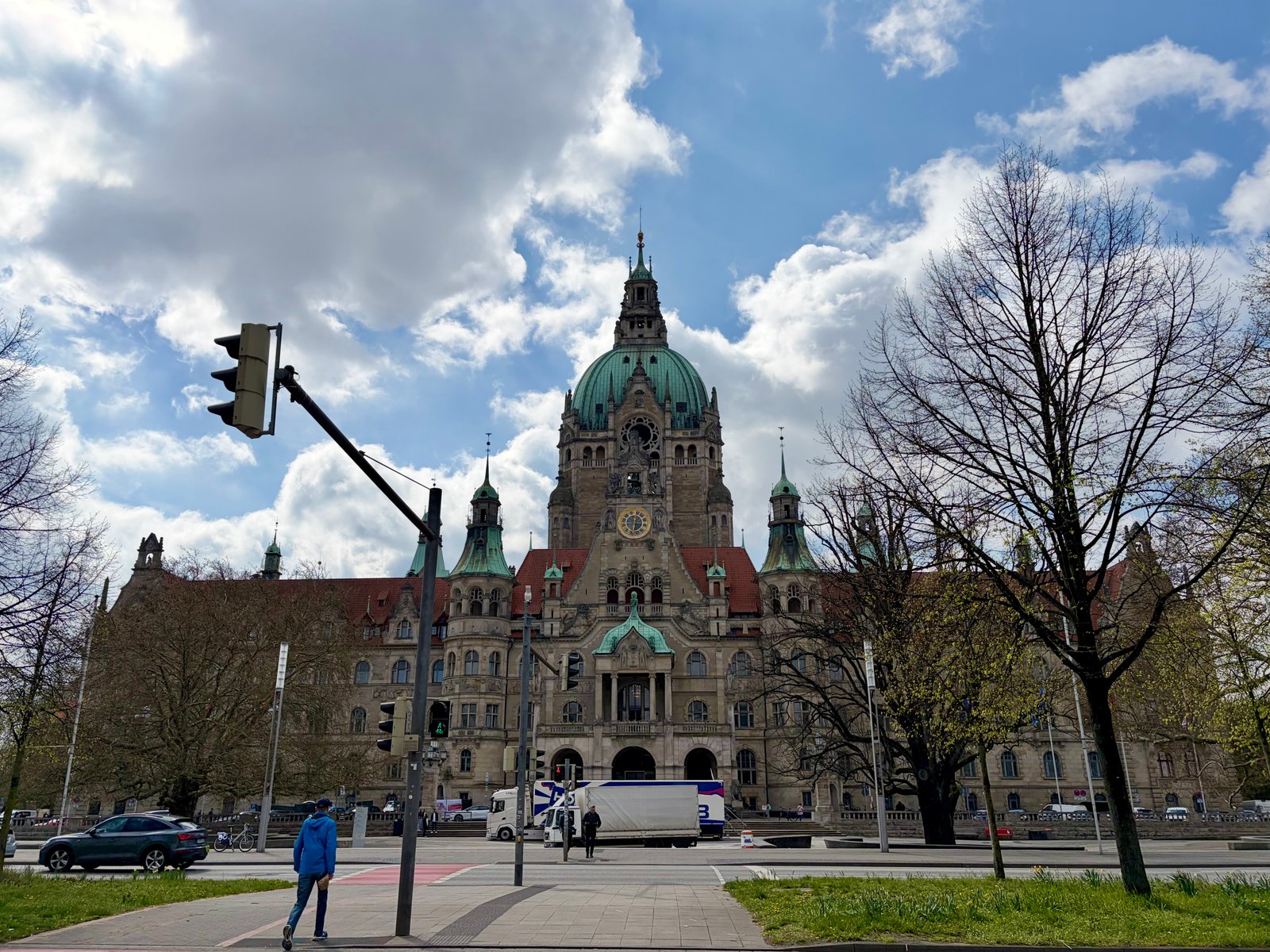
New Town Hall opened in June 1913 and offers free entry to explore the main hall. There’s also an arched elevator inside that travels along the dome to an observation deck. We didn’t take the ride this time, so we’ll just have to make a return visit.
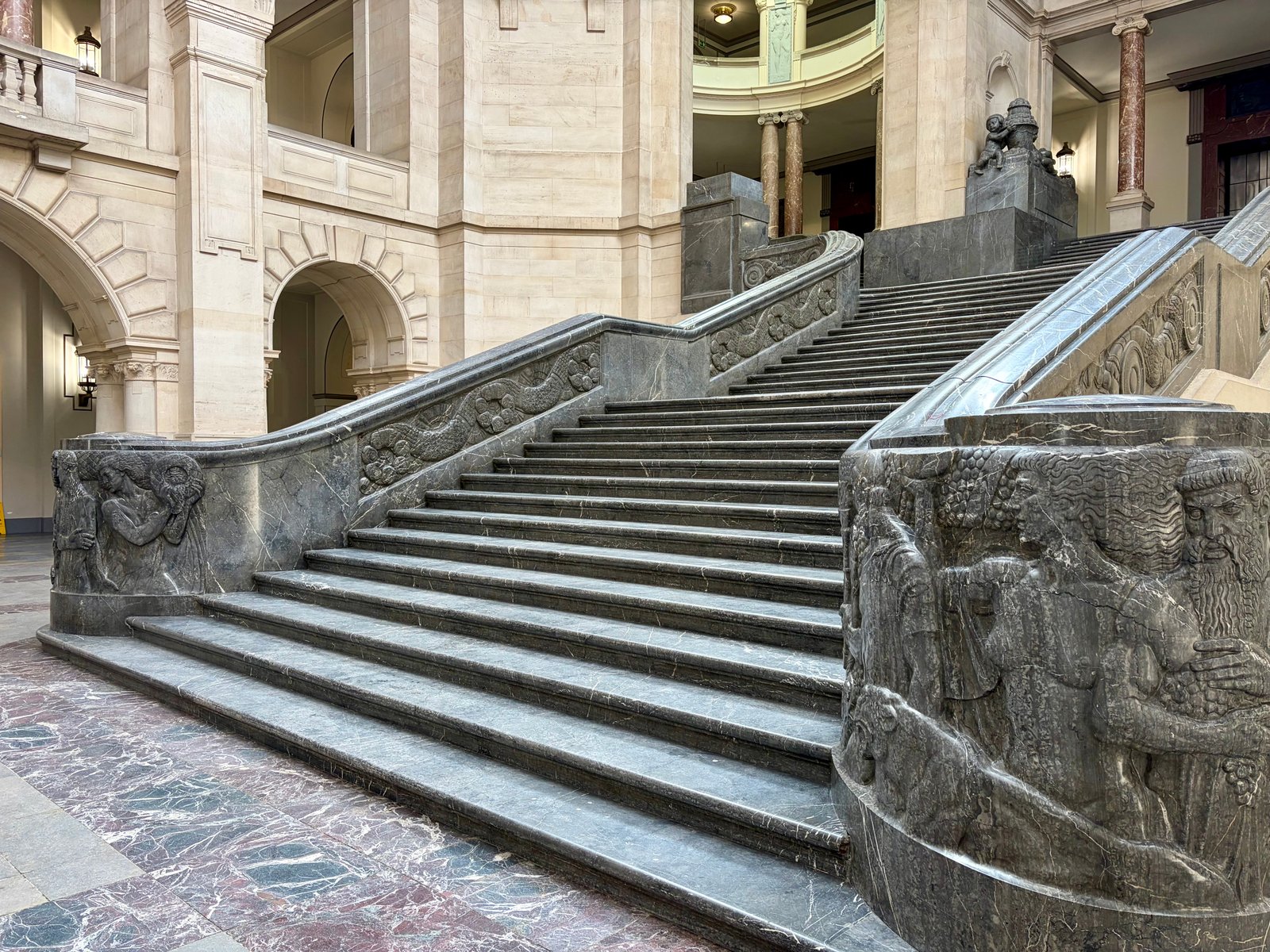
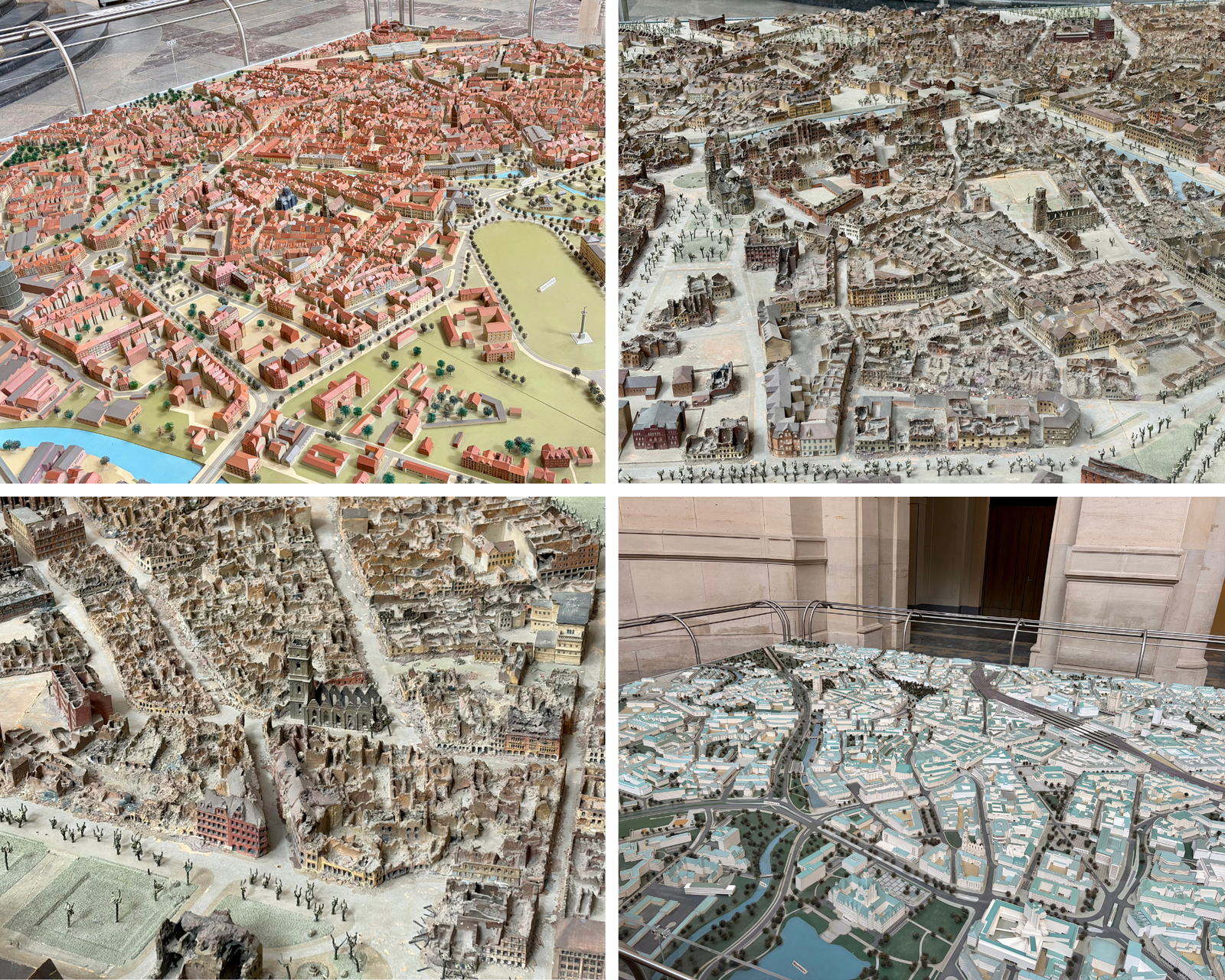
Inside, four models show Hannover at different points in its history: around 1689, just before World War II in 1939, after the bombing raids in 1945 and as it looks today. I found the models fascinating as they offer a great perspective on how much the city has changed over the years.
In the photo below, the 1939 model is in the top left, while the 1945 model appears in the top right and bottom left. The modern-day model is in the bottom right.
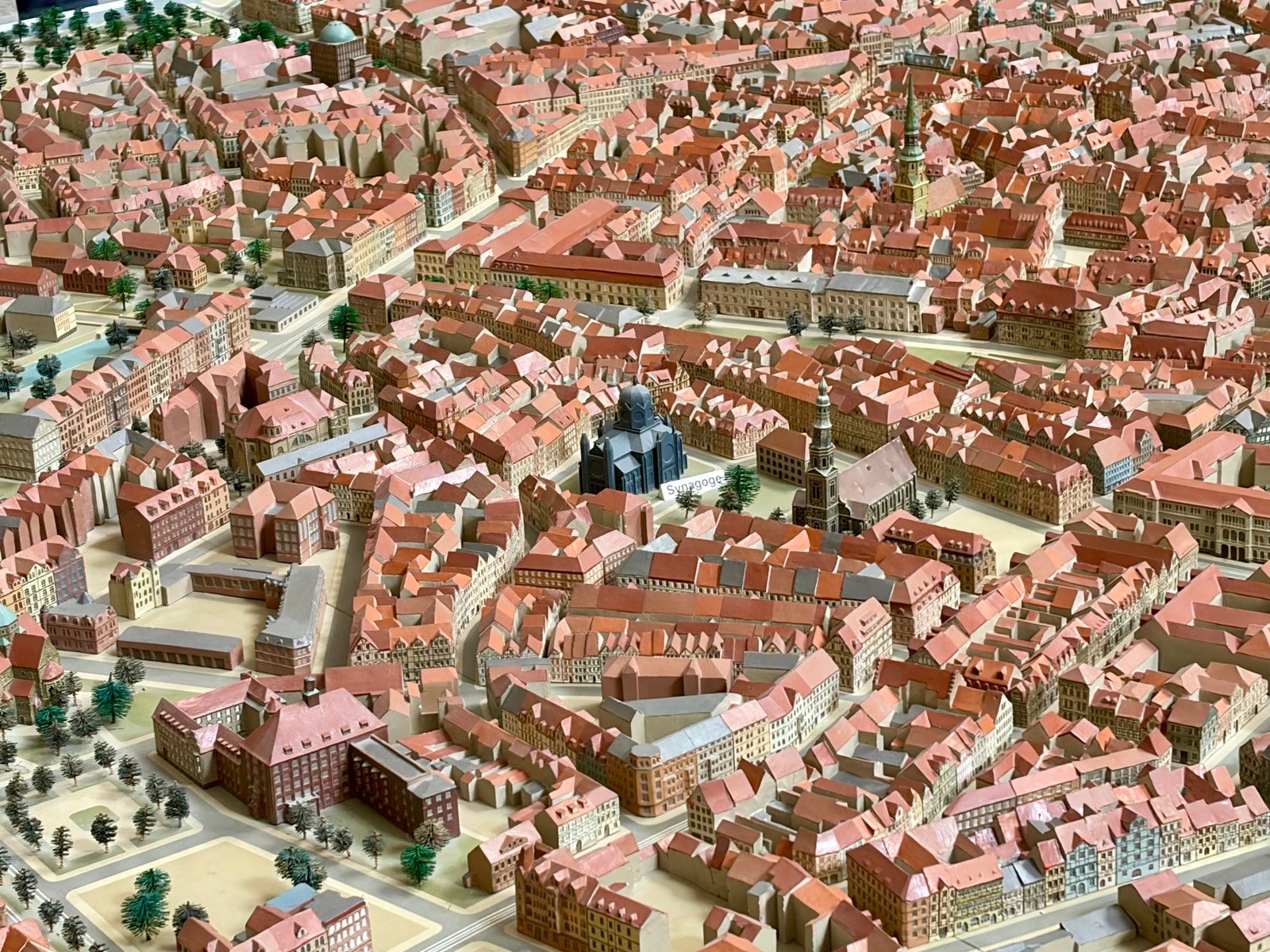
One building in the 1939 model stands out from the others because of its black color. It marks the location of the New Synagogue, which the Nazis set on fire during Kristallnacht on the night of November 9-10, 1938. The name Kristallnacht, which translates to “Night of Broken Glass,” comes from the shards of glass left in the streets after Nazis and their supporters smashed the windows of Jewish-owned businesses and homes.
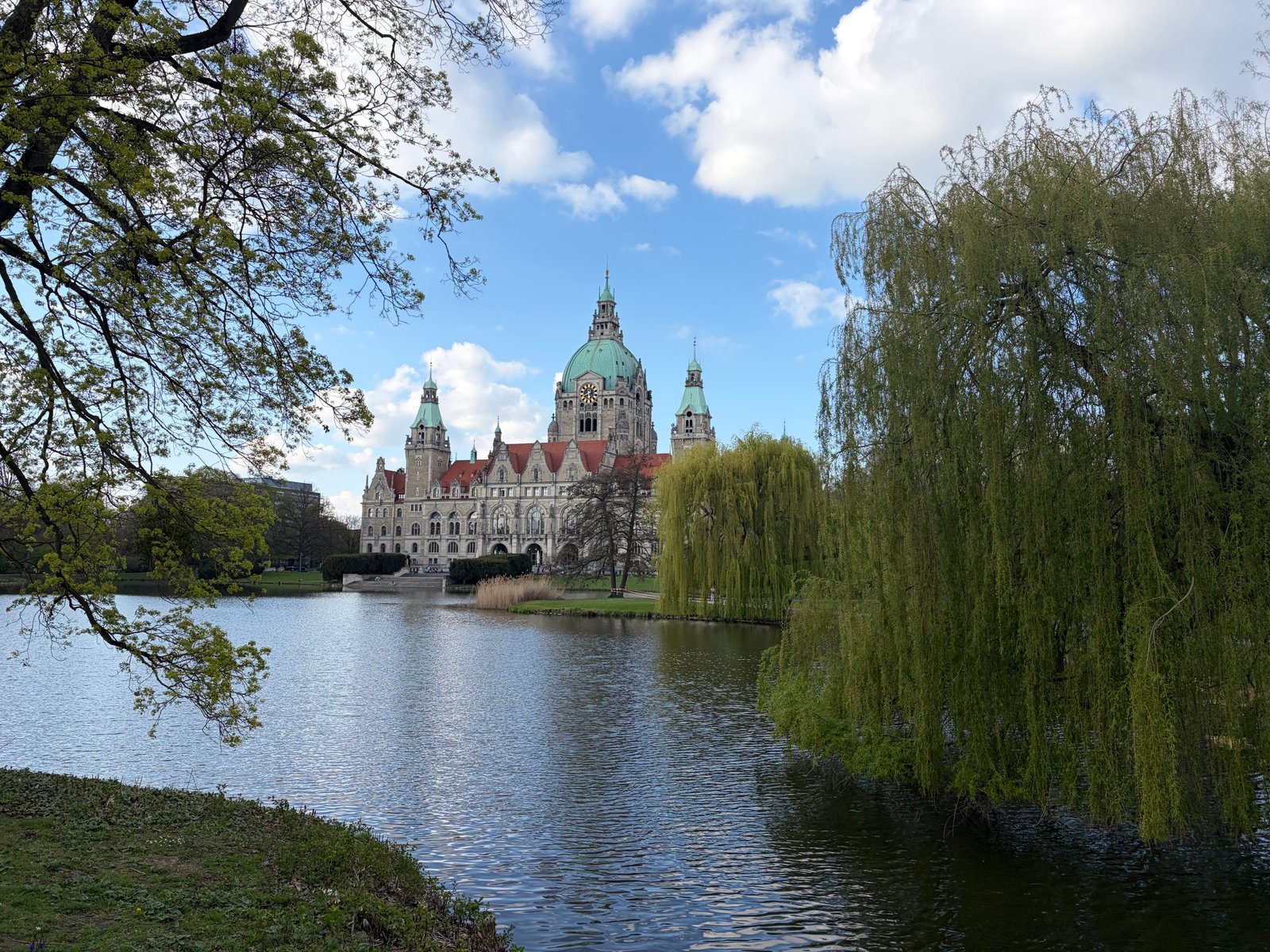
Whether you take a detour from The Red Thread or return later, make sure to walk around the building and explore Maschpark. The historic park was laid out around 1900 and its picturesque pond and beautiful scenery make you feel like you’ve left the city behind and escaped to the countryside.
Not far from New Town Hall, The Nanas are technically stop number 20 along The Red Thread. These three colorful female figures sit along the Leine River and come from the work of Niki de Saint Phalle, a French-American sculptor, painter and filmmaker.
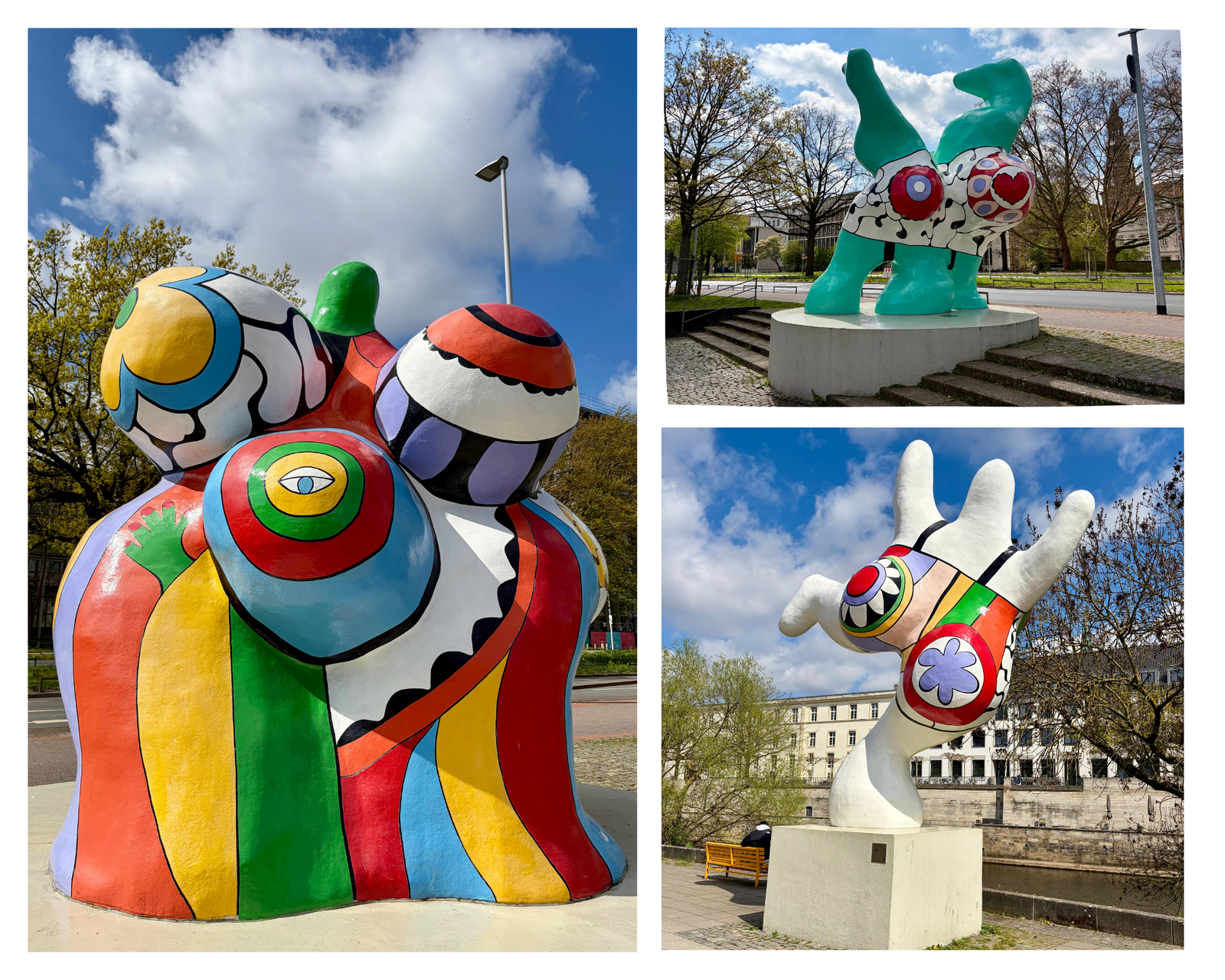
Hannover installed the sculptures in 1974 when the city started embracing art in public spaces. At first, residents weren’t happy about the figures along the river, but today they’re among the city’s most popular photo spots.
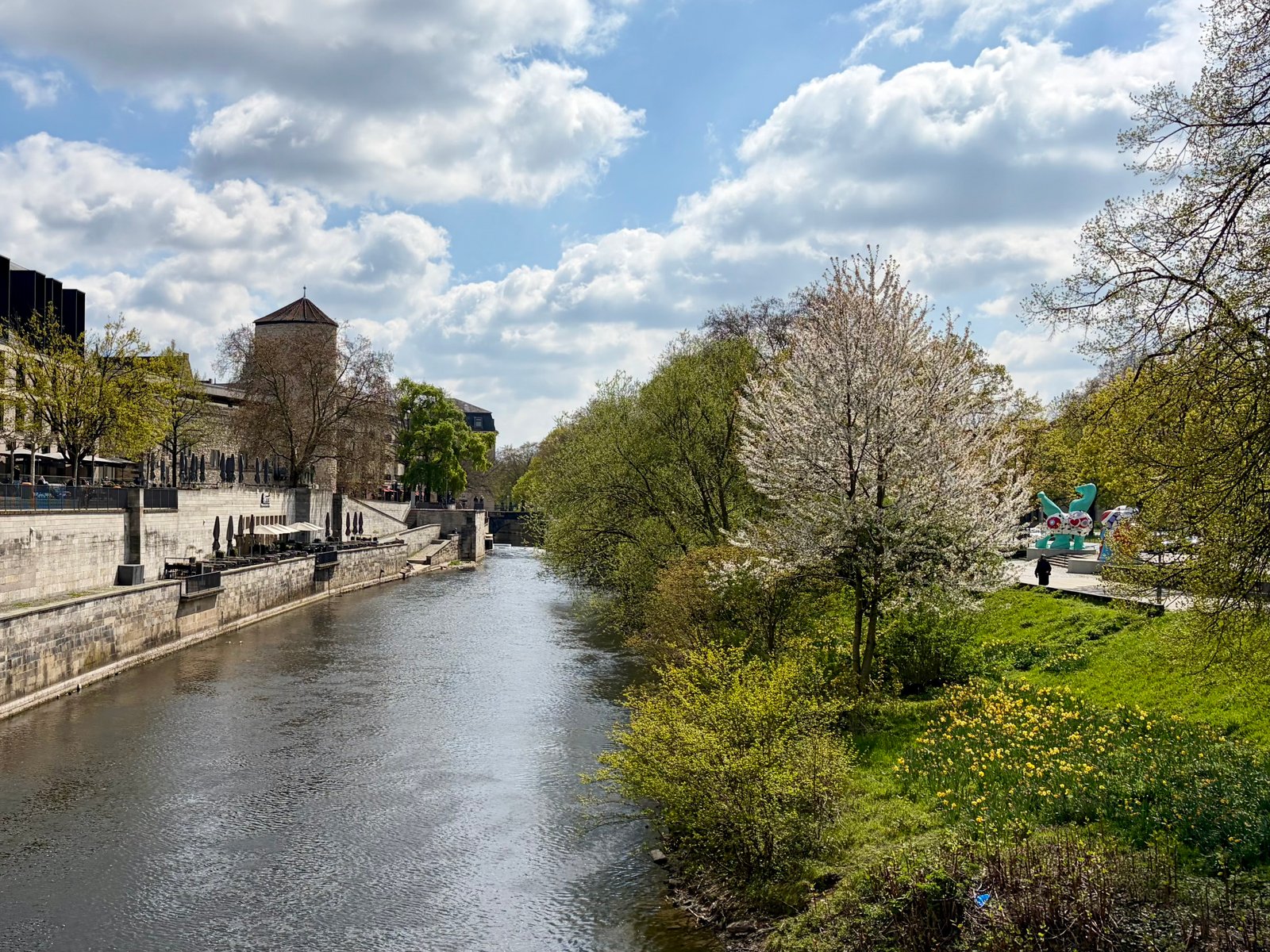
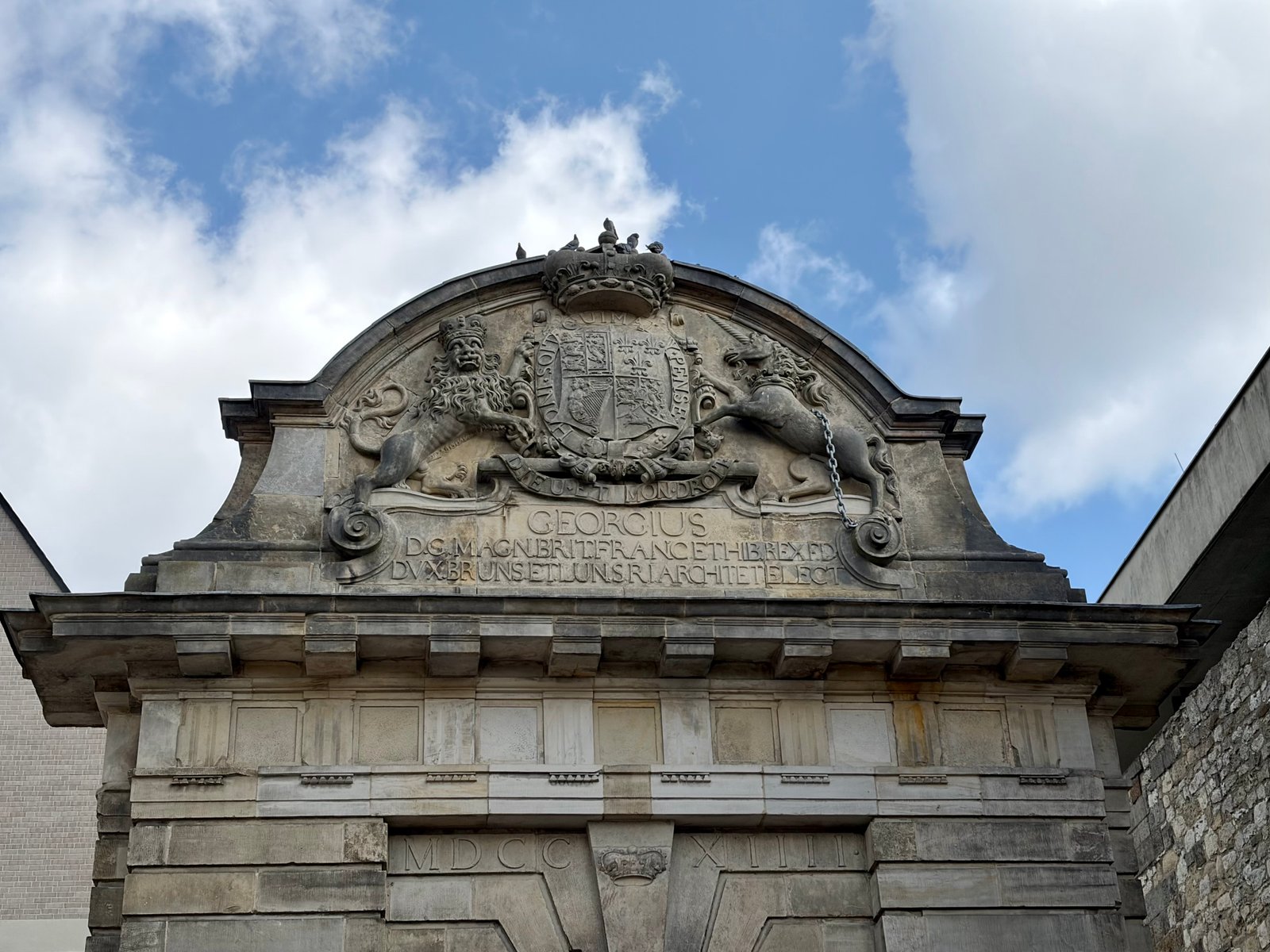
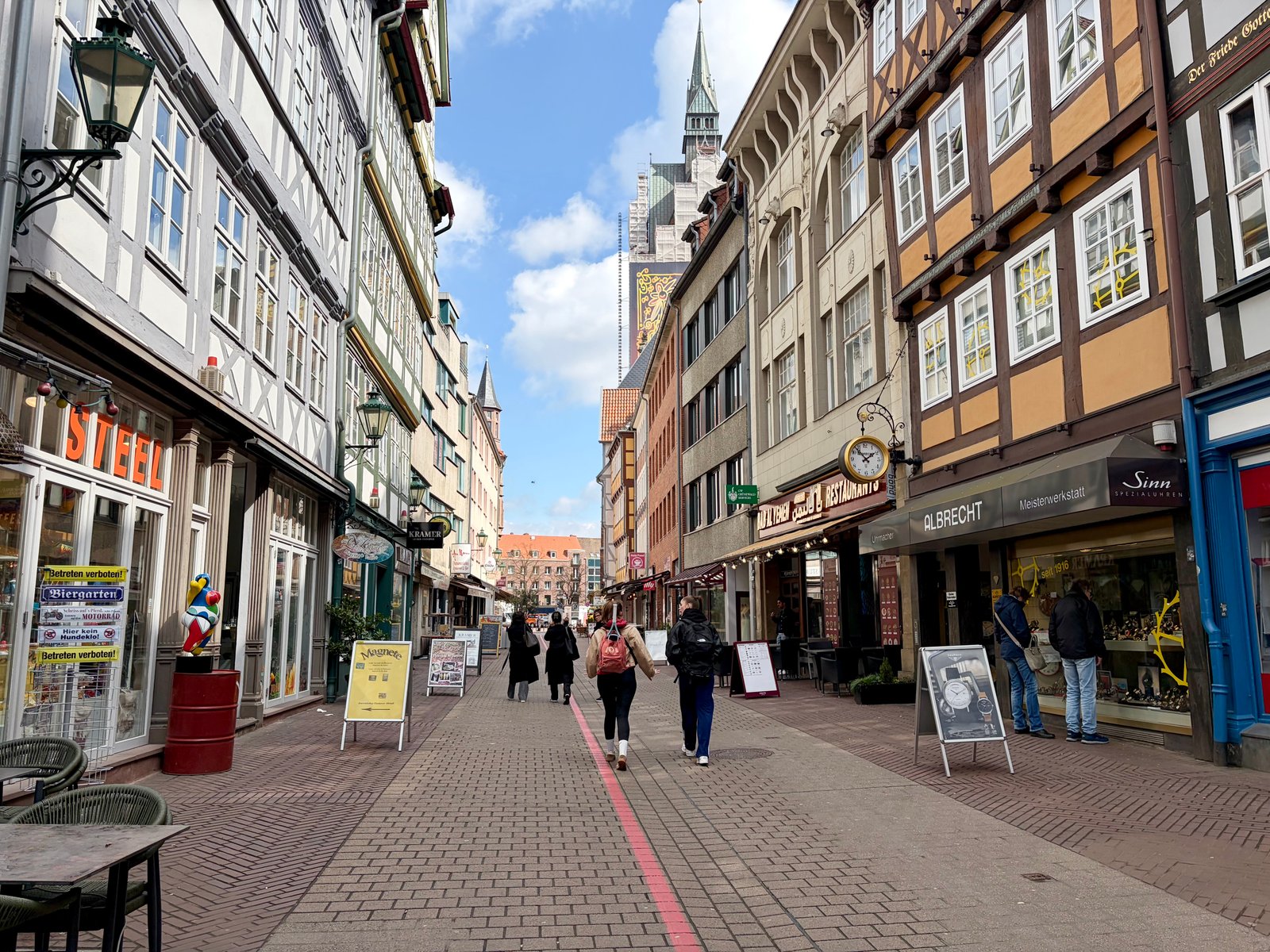
As you continue along The Red Thread, just past The Nanas, you’ll find a beautiful old archway that leads into Old Town, where you’ll discover plenty of charming half-timbered houses.
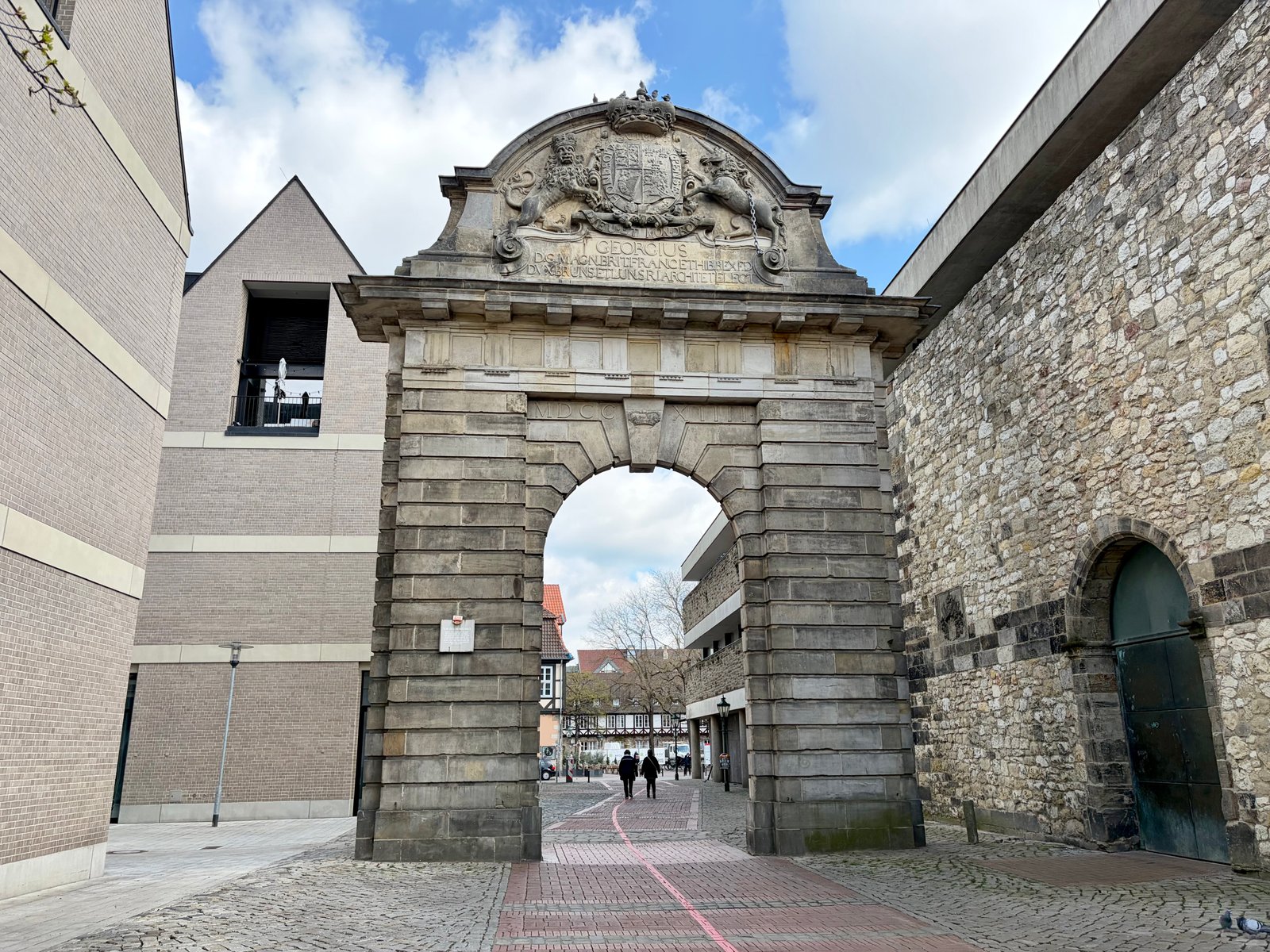
Take a closer look at the arch and you’ll spot the coat of arms of George I, the first British monarch from the House of Hanover. Members of the House of Hanover ruled Great Britain and Ireland, as well as Hanover, at various times from the 18th to the 20th centuries.
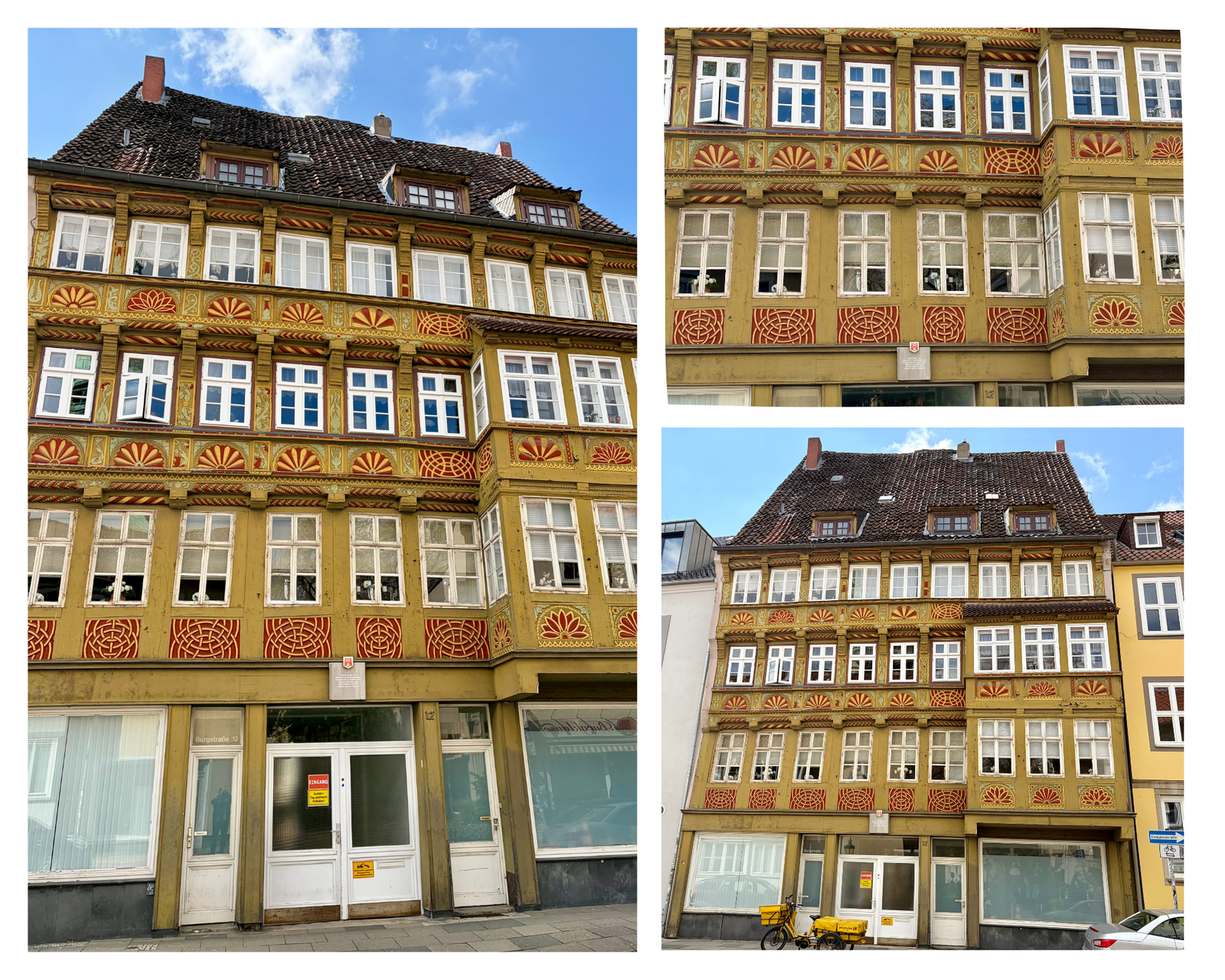
Though the aerial bombings of Hannover during World War II destroyed many of the half-timbered houses, the oldest surviving house still stands today. It has some of the most gorgeous artistic decoration on the exterior.
In the heart of Old Town is Marktkirche (Market Church), Hannover’s main Lutheran church. Unfortunately, the front was covered in scaffolding, so my best photo is a wider view from the back and side.
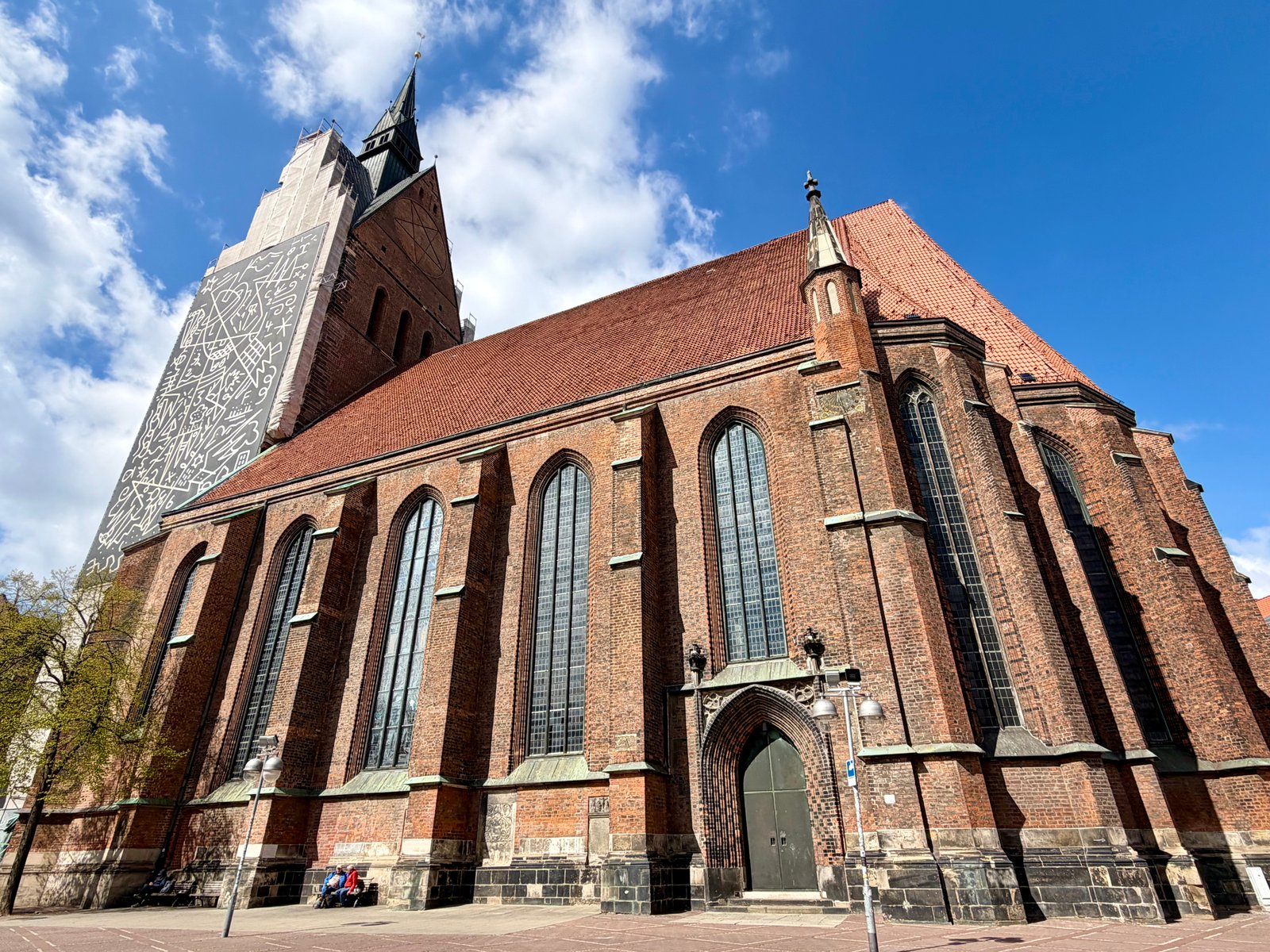
One interesting detail on the Market Church’s tower is the large five-pointed star, known as a pentagram. While the symbol might bring other things to mind today, it has a Christian meaning here, with its five points representing the five wounds Jesus suffered during his crucifixion. The tower also features six-pointed stars surrounding the clocks on its other sides.
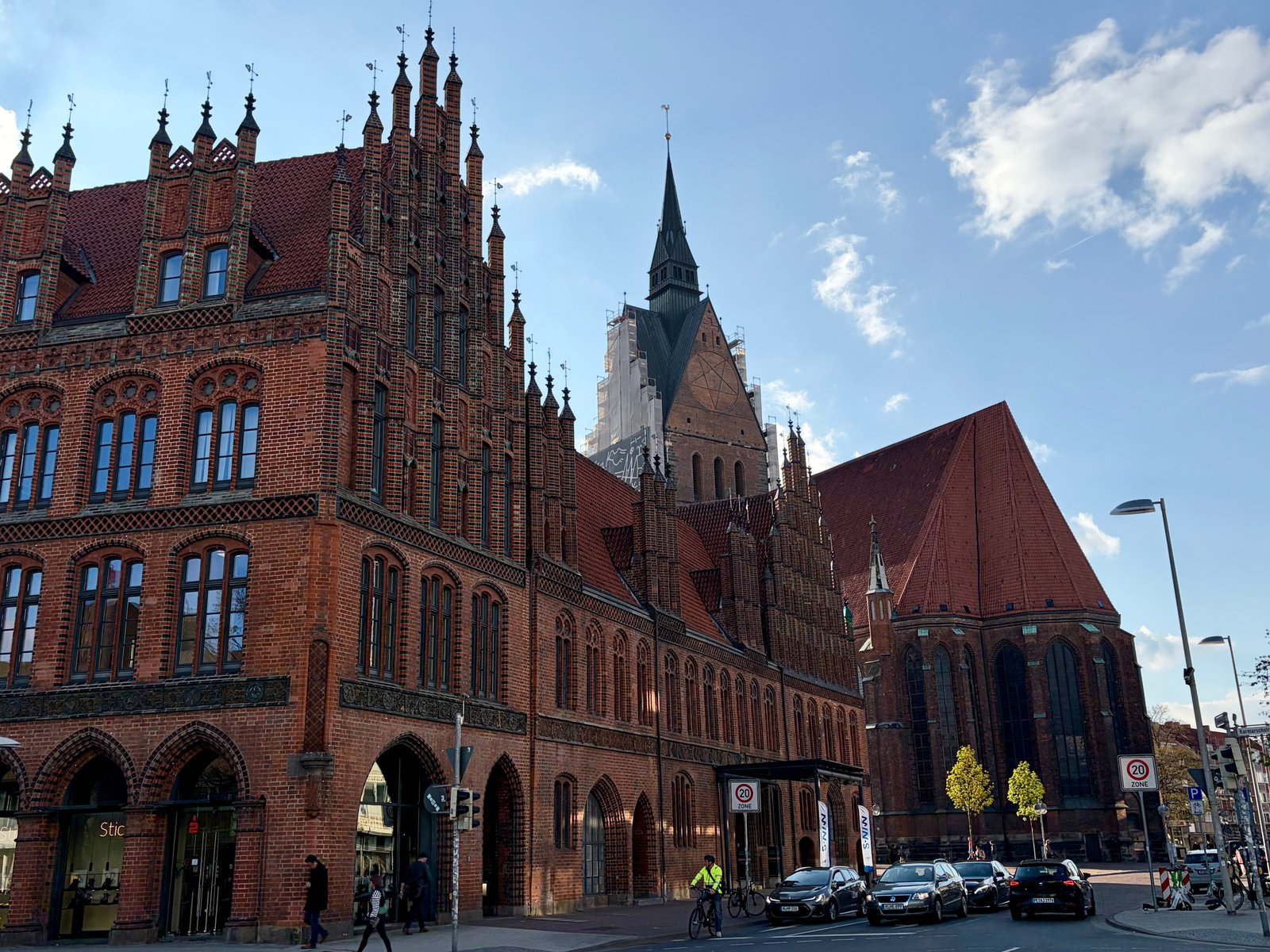
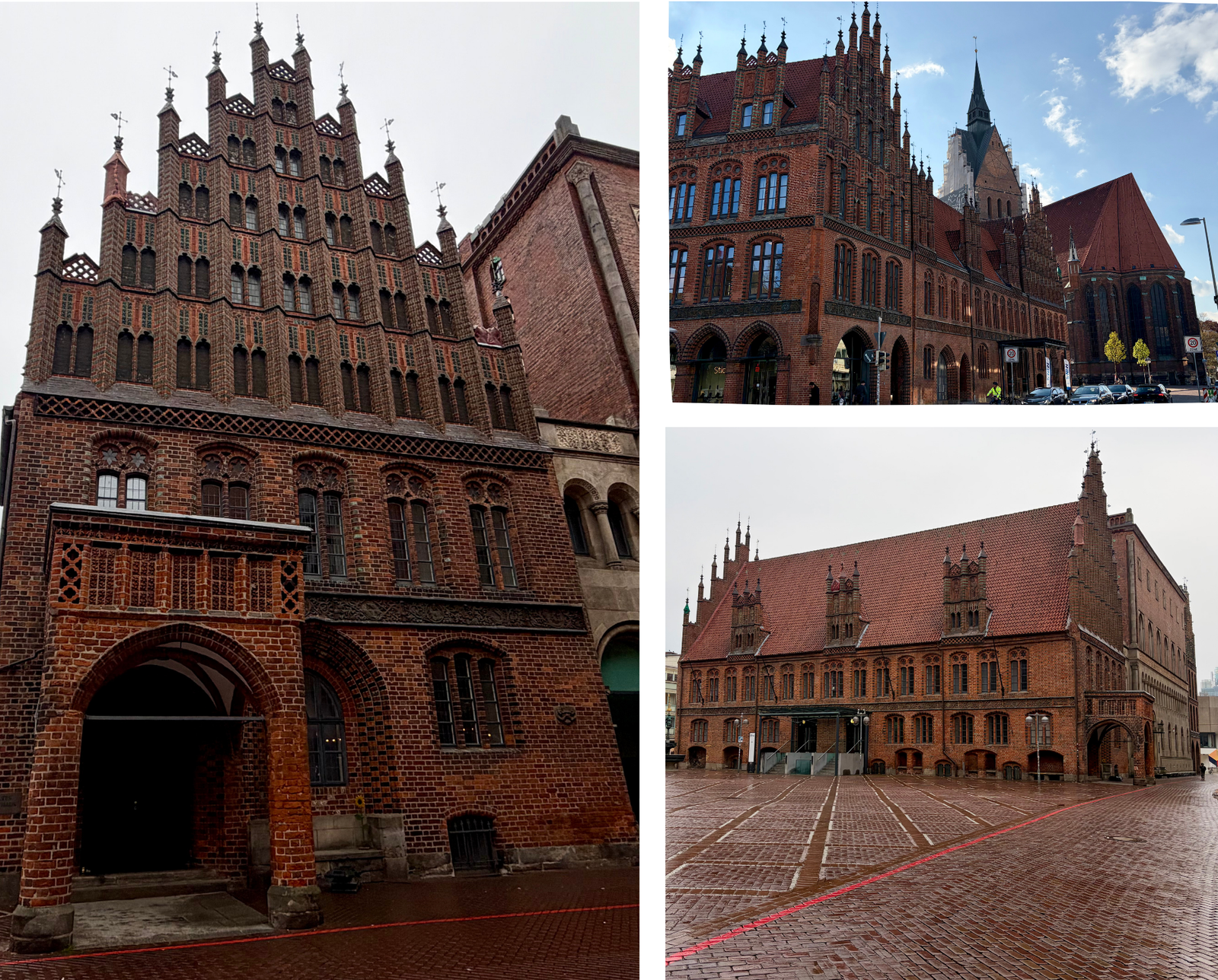
Next to Market Church is the Old Town Hall. It’s a large building with the oldest part of it being towards the back near the church.
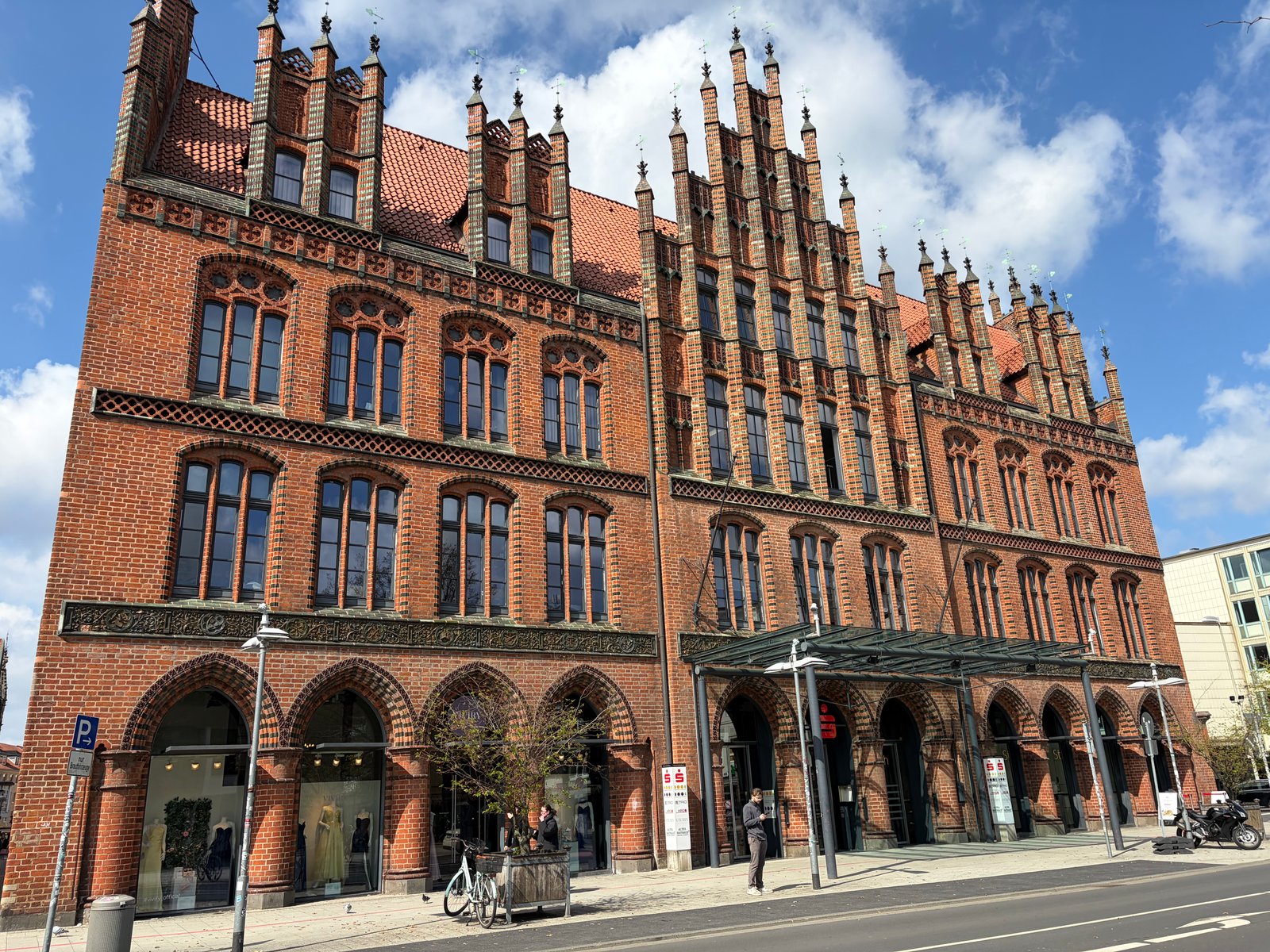
The Old Town Hall features the brick Gothic style, which I absolutely love. Construction began in 1230, and over the centuries, the city expanded and restored the building several times. The oldest surviving section dates back to 1410, which you can see in the bottom-left photo.
Hannover is so picturesque and the architecture so beautiful, even at night. On the left in the picture below is the Kröpcke clock in its namesake square – a popular meeting spot for locals and one of the last spots along The Red Thread.
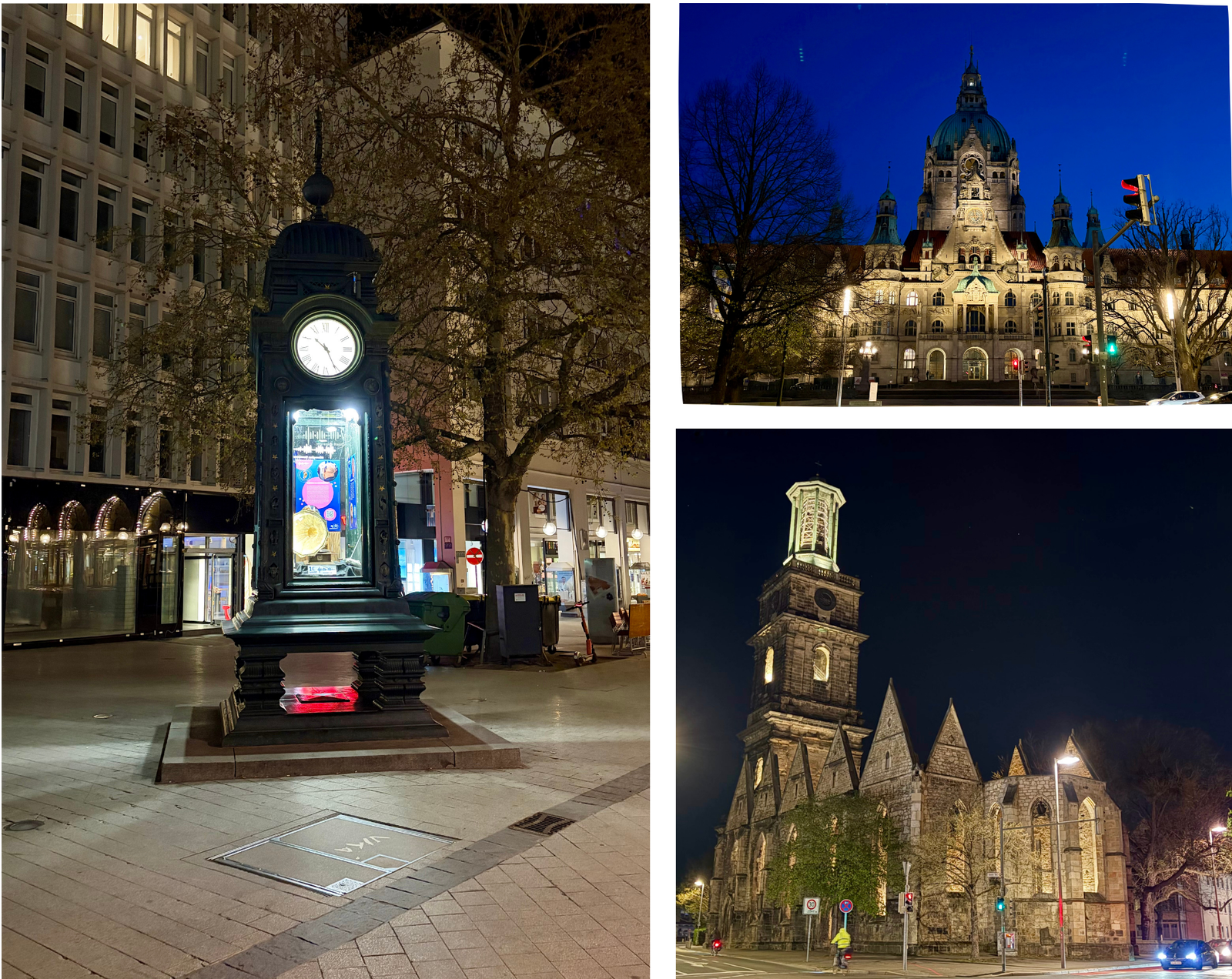
My recap of Hannover’s Red Thread is coming to an end. Again, I didn’t include every site, though I hope you enjoyed the highlights I’ve published here. It truly was a great way to see the city and learn its history.
Hannover 96
Rosie is a big fan of Hannover 96, the city’s professional football (soccer) team, officially known as Hannoverscher Sportverein von 1896 e.V. We took a short walk over to the team’s stadium, Heinz von Heiden Arena, to check it out. We couldn’t get inside, of course, but I can imagine it being a fun atmosphere on match day!
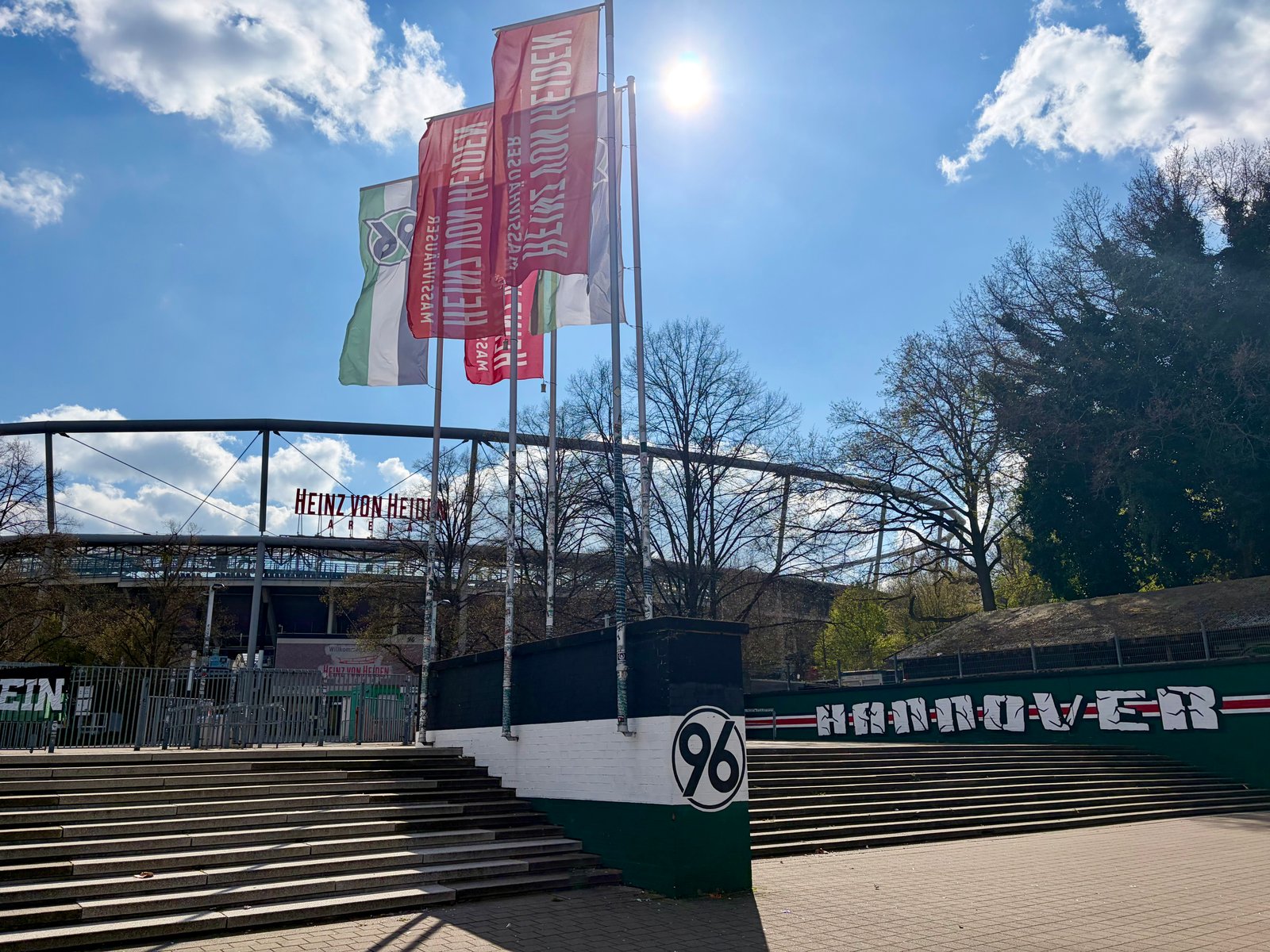
The team currently competes in the 2. Bundesliga, the second tier of German football.
Hannover’s Jewish History
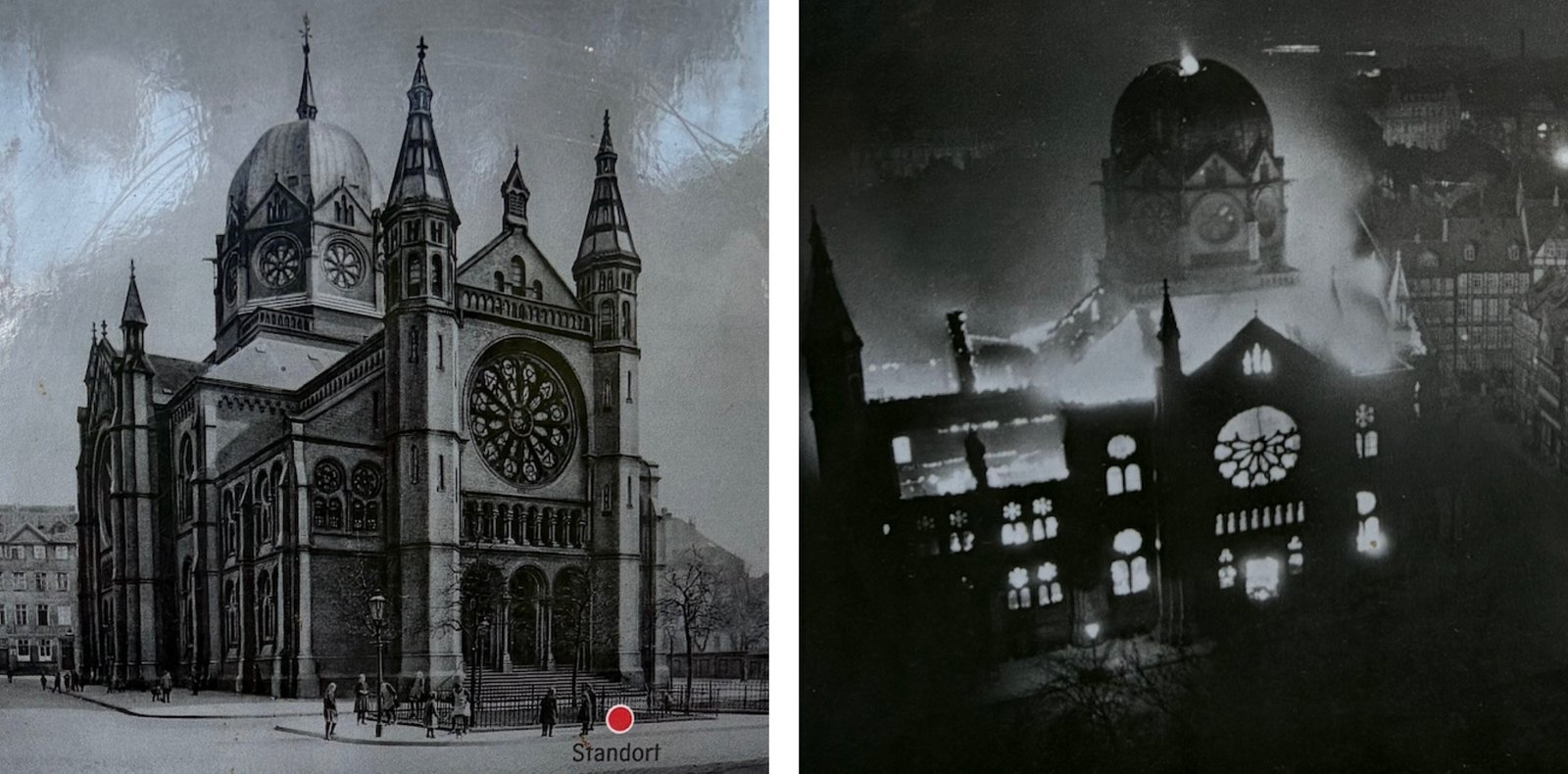
As I briefly mentioned earlier in this post when writing about the Memorial to the Murdered Jews and the destruction of the New Synagogue, Hannover once had a thriving Jewish community. We made our way to the site where the New Synagogue once stood, where a memorial now stands behind a gate.
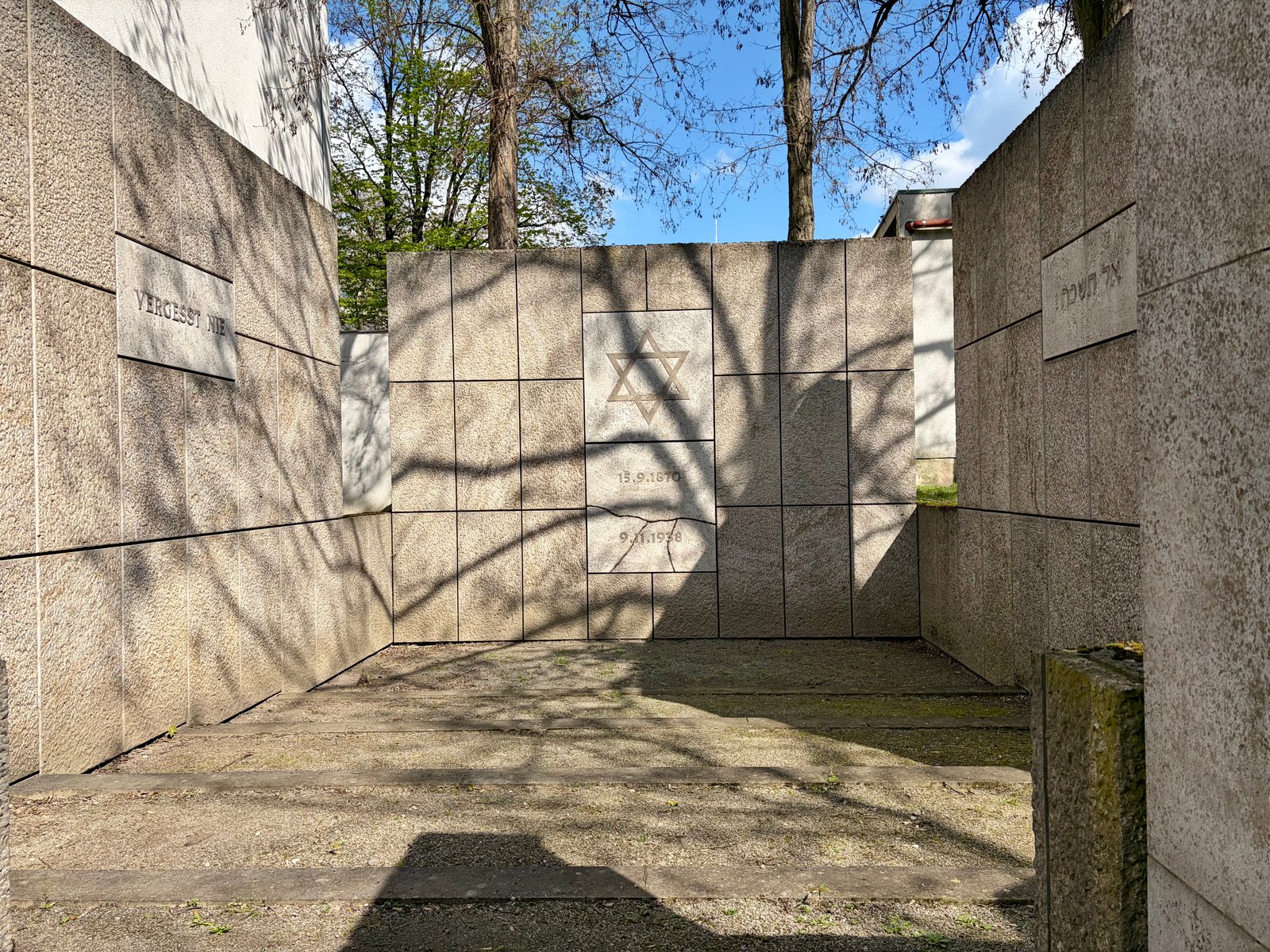
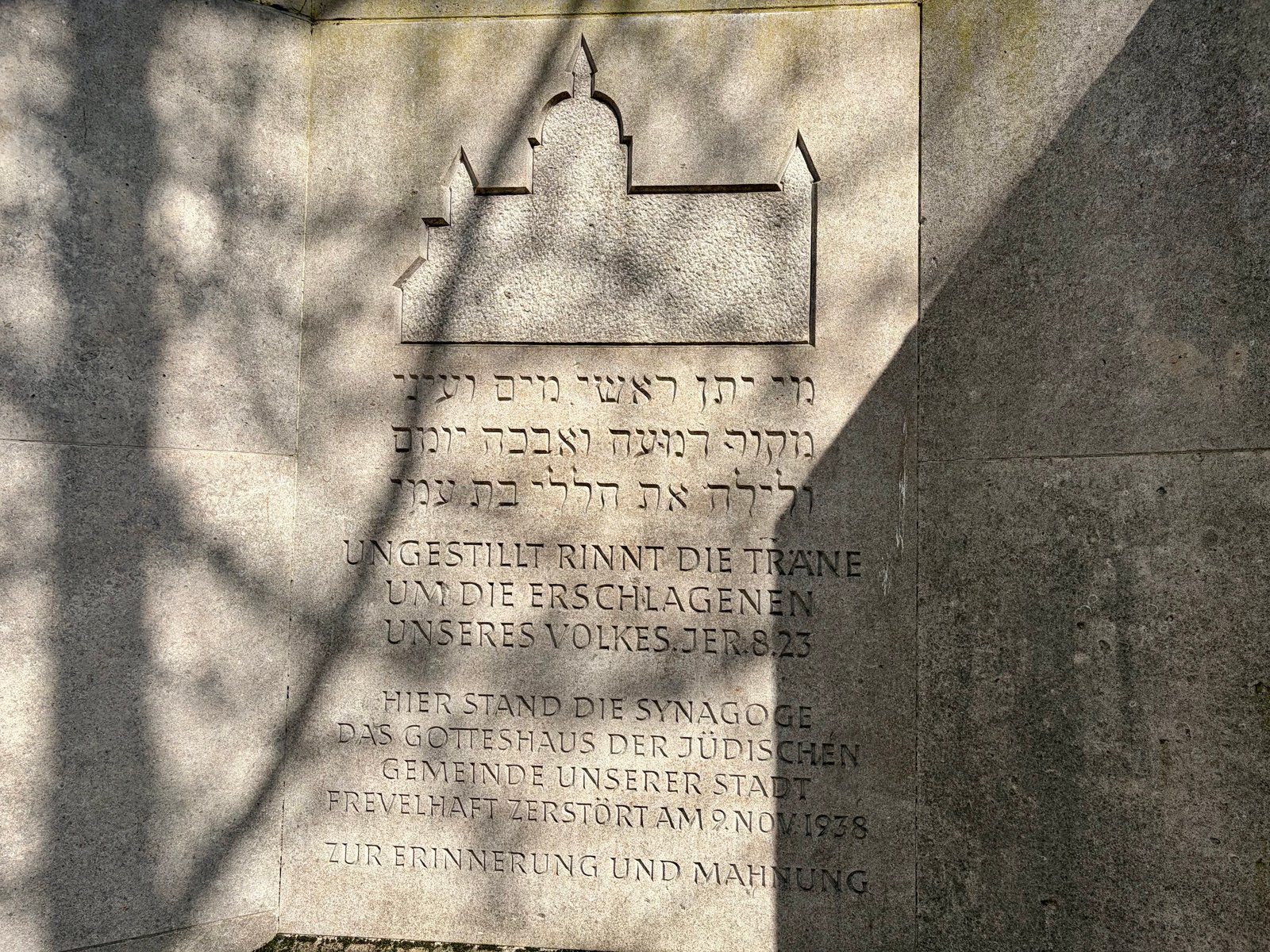
In 1933, about 4,800 Jews lived in Hannover. By the time American troops entered the city on April 10, 1945, only around 100 Jews remained. The Jewish community eventually rebuilt, and by 2009, Hannover’s four Jewish congregations had a combined membership of about 6,200 people.
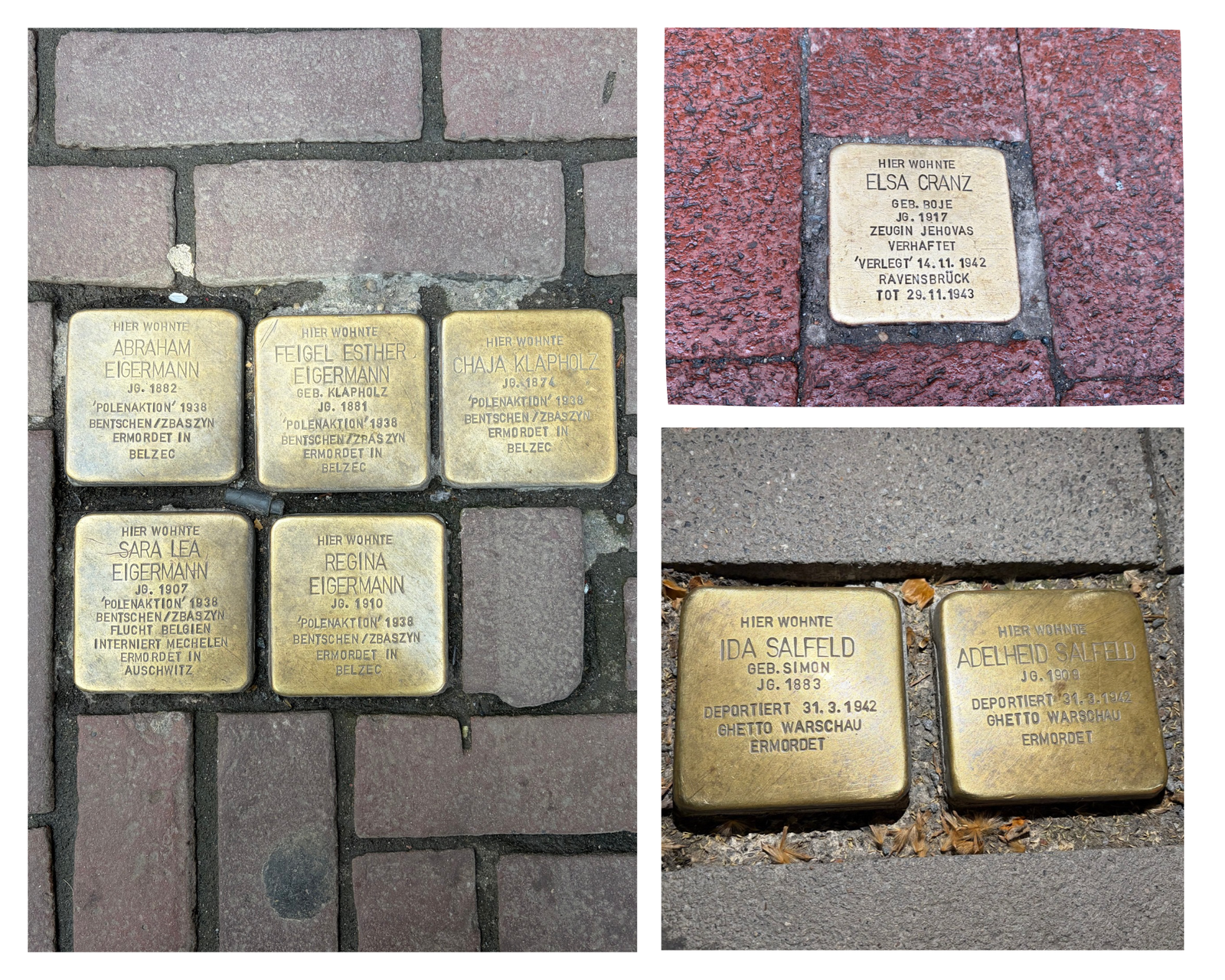
As I’ve written about before, Stolpersteine, or “stumbling stones,” help keep the memory of those who suffered under Nazi persecution alive. These small memorial stones sit in the pavement outside the victims’ last known homes. By 2015, the city had installed 330 Stolpersteine throughout Hannover.
The Eigermann family commemorated in the Stolpersteine below were Polish Jews. Their three sons managed to flee to Palestine before the end of 1939, while their sisters were murdered in Auschwitz and Bełżec.
The Fischer family’s history is both fascinating and heartbreaking. They were Sinti, a Romani group that has lived in Germany for centuries. Outsiders have often called them by the term “Gypsy,” which many Romani people consider offensive. The Nazis persecuted and murdered Sinti and Roma, just as they did the Jewish community.
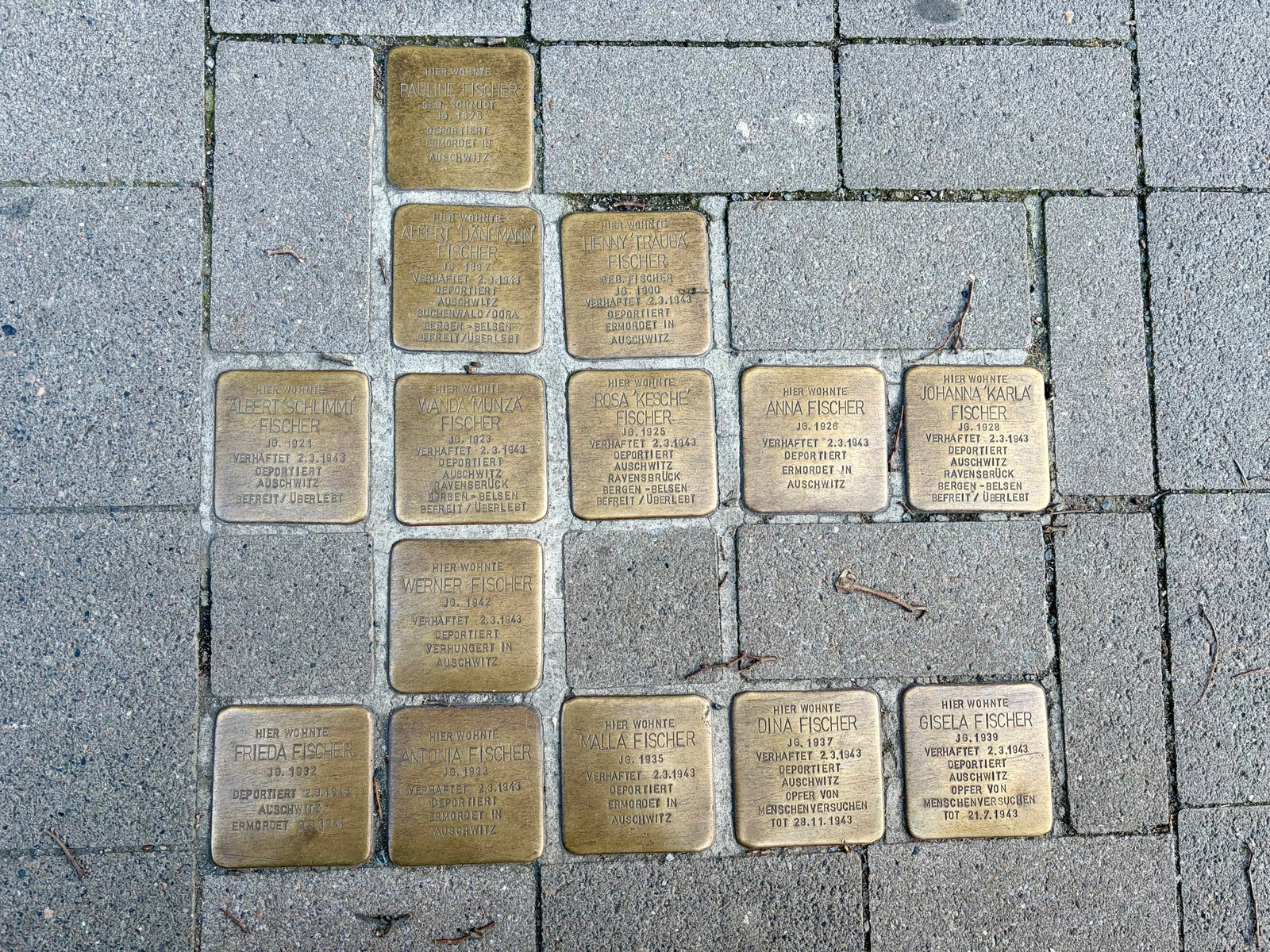
Albert “Dänemann” Fischer and his wife Henny, known as Trauba, raised 11 children. Of the 13 family members, five survived Auschwitz and the persecution that followed. Some of the children died being victims of medical experimentation by Josef Mengele.
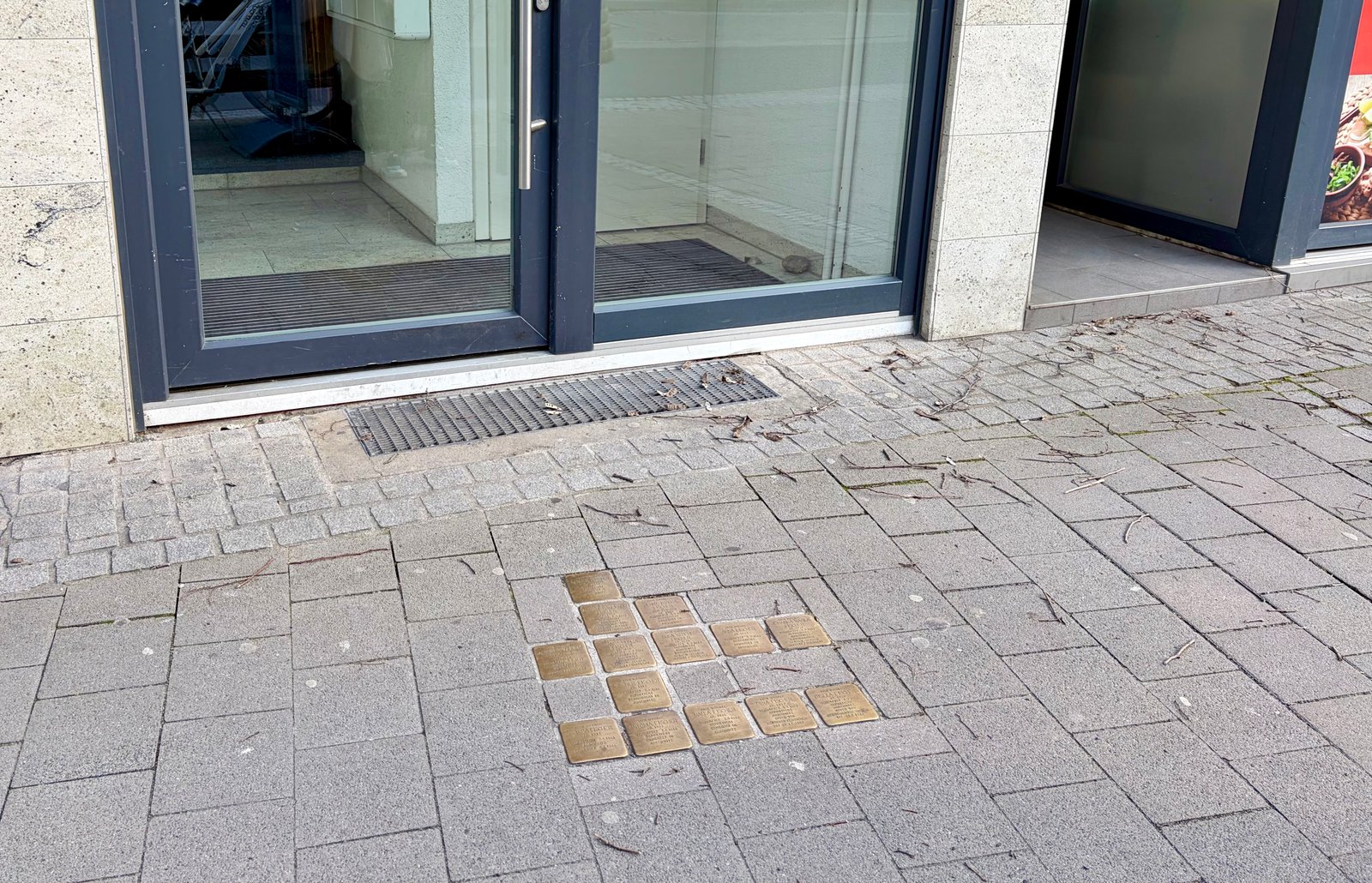
Before visiting Hannover, I had no idea how large the Jewish community once was, or how many stumbling stones (Stolpersteine) we’d come across while walking the city. Only some of them are shown here, but each one gave me a moment to pause and reflect.
Until Next Time, Hannover
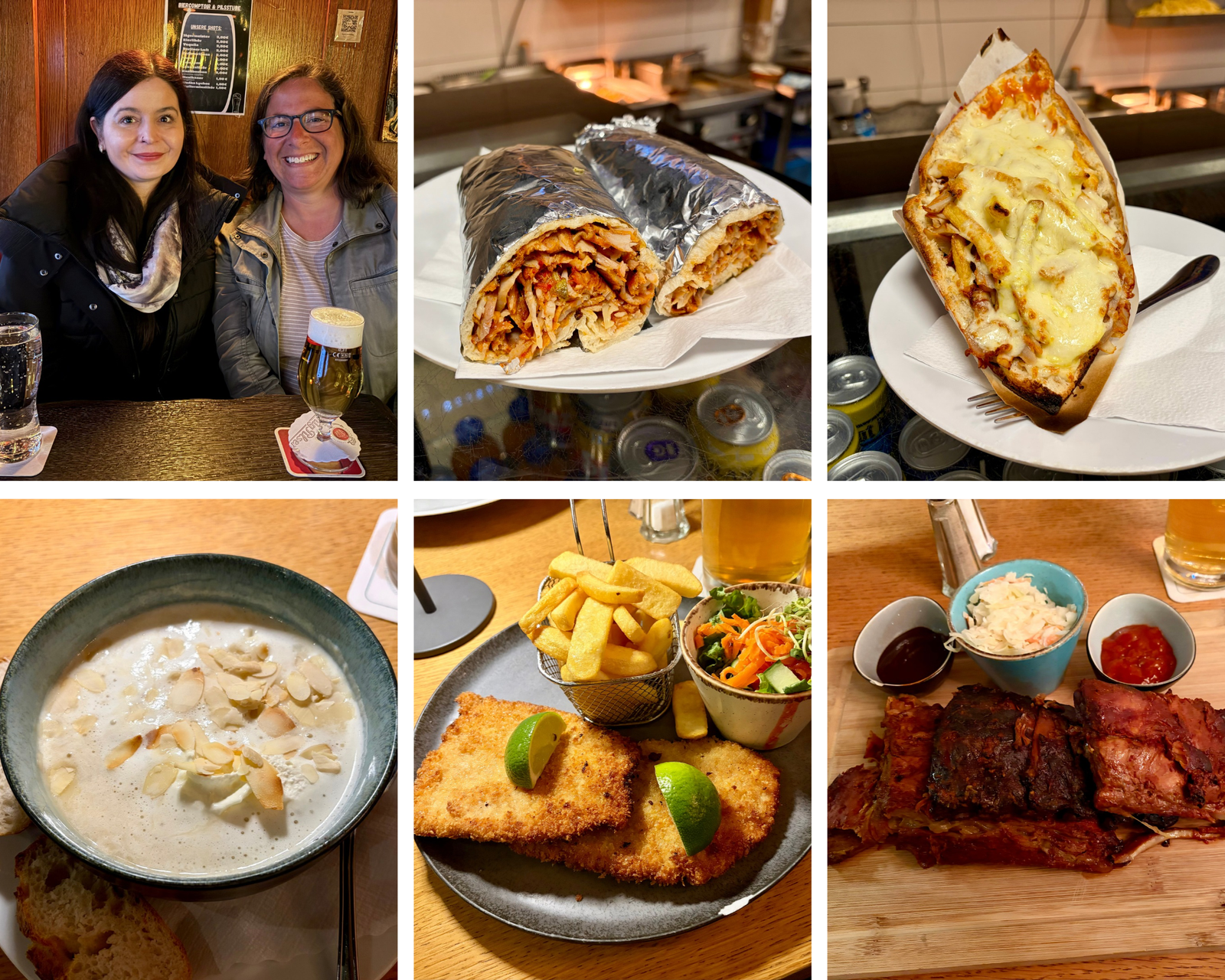
Nik and I cannot thank our friend Rosie enough for sharing her time with us and showing us around her fabulous city. We experienced a little rain along the way but also enjoyed some blue skies. Of course, we found a few good spots for eating and drinking and hope to return again one day!