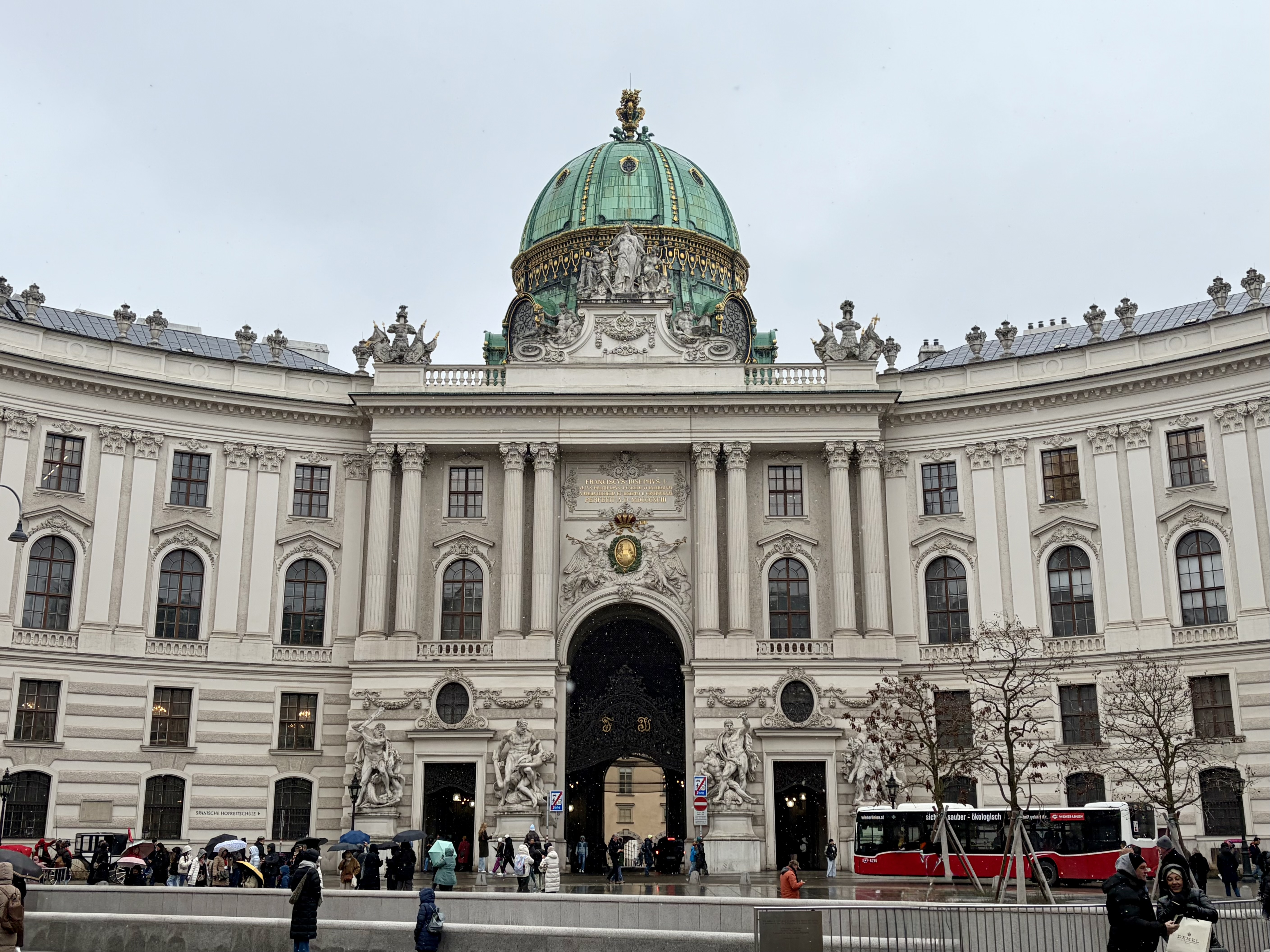
During our visit to Vienna this past February, Nik and I explored the city in a new way. We took a Vienna walking tour that focused on the city’s Imperial history and Jewish Vienna.
Vienna Walking Tour
Through some friends, Nik and I learned about private tours with Stephan. Even though it rained on and off during our tour, with a little wet snow mixed in, Stephan did a really great job telling us about places we’d walked past before but never knew much about, while also introducing us to a few new spots.
Related: Recapping our stay at Hotel Imperial on this trip
Memorial Against War and Fascism
We met Stephan outside the Vienna tourism office and started our tour across the street at the memorial against war and fascism on Albertinaplatz. It’s located at the back of the Vienna State Opera and adjacent to the Albertina museum. It’s an area we’ve been to numerous times, but never spent much time looking at the memorial and monuments.
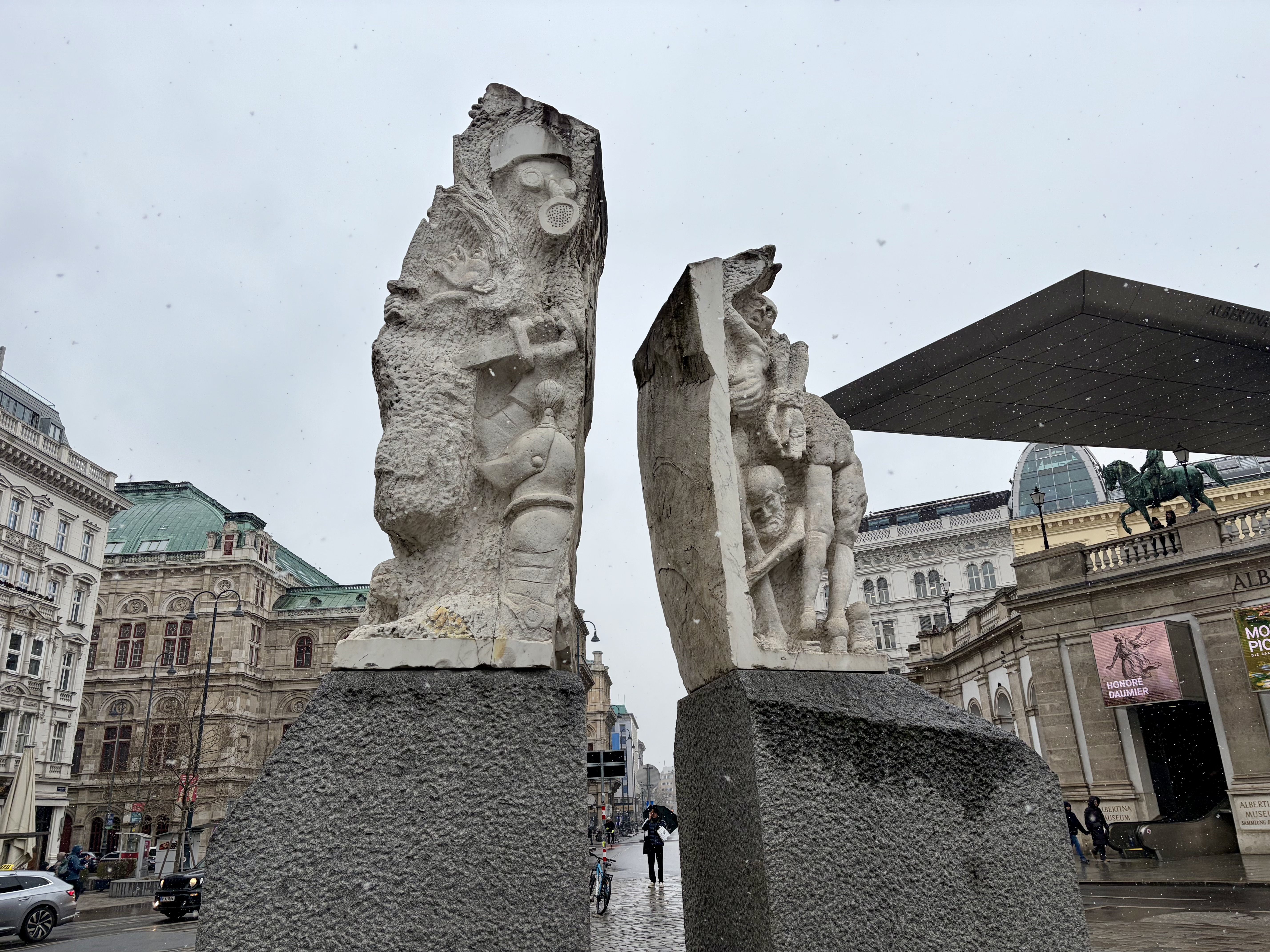
A residential building once stood here but was destroyed by a bomb attack in 1945. Hundreds of people who had sought shelter in the cellars were buried alive. Because many bodies could not be recovered, the site itself remains an undisturbed mass grave. The ruin was leveled in 1947 and this memorial was unveiled on November 24, 1988, the fiftieth anniversary of Kristallnacht.
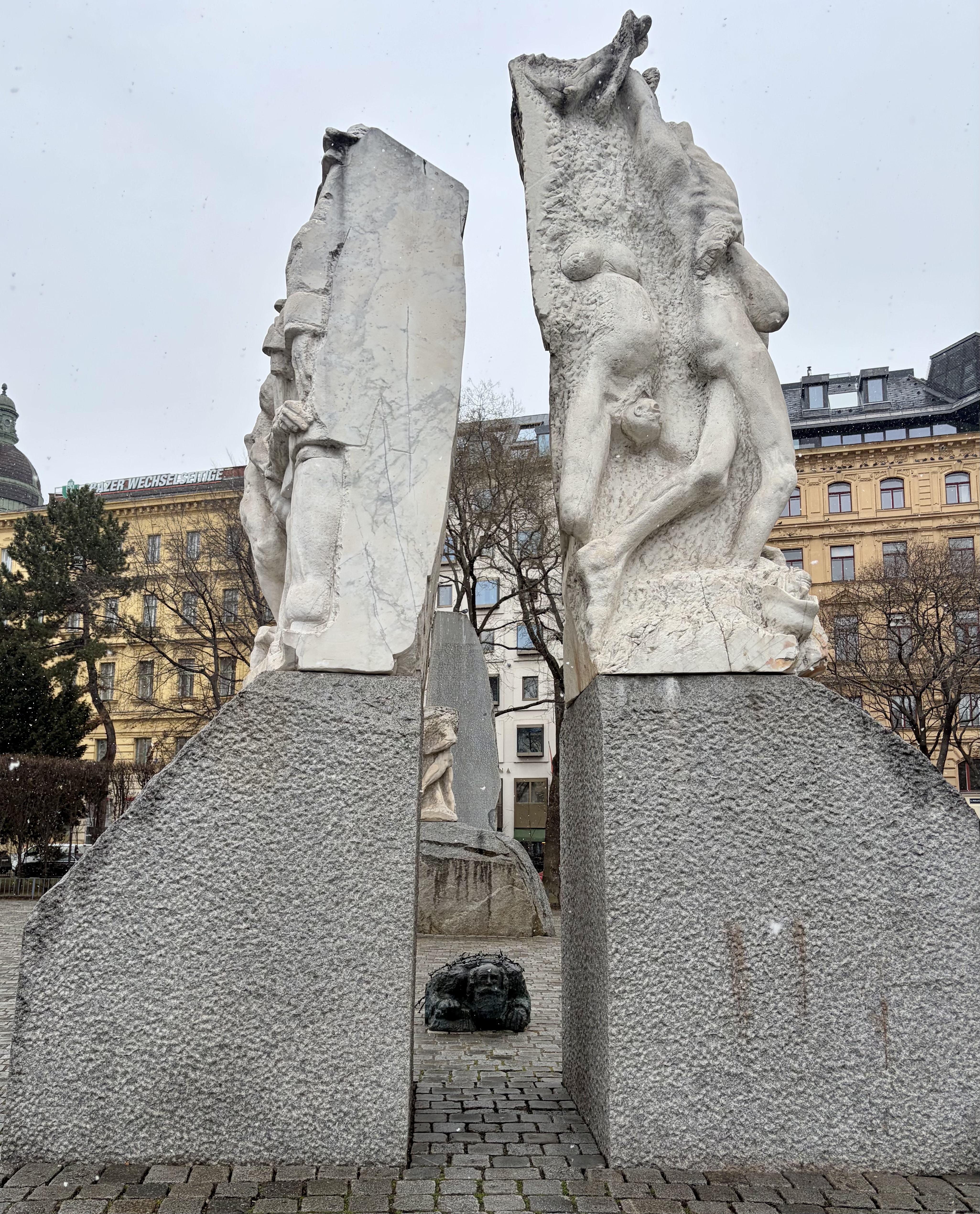
Though there are several statues in the plaza, the main monument is the Gates of Violence, pictured above. It is divided into two parts. The left side represents the victims of mass murders carried out by the Nazis. The right column was designed to honor the memory of all the victims of war, with the woman giving birth representing the rebirth of Austria after the horrors of war.
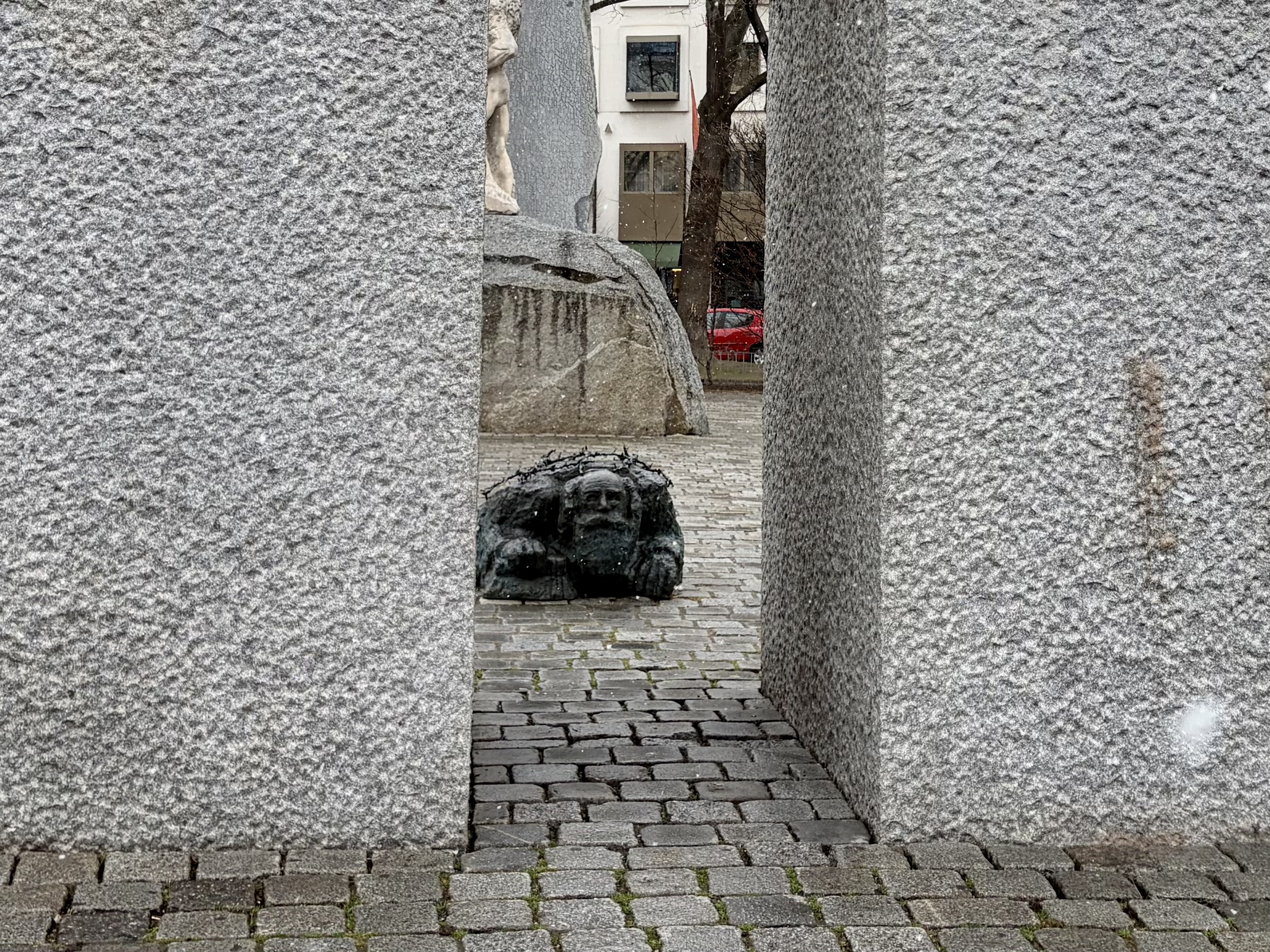
Through the gate, you come across the Kneeling Jew, a bronze figure of a chained Jewish man scrubbing the pavement. After the Anschluss (annexation of Austria to Nazi Germany in March 1938), Jews were forced to scrub the streets to remove pro-Austrian and anti-Nazi slogans. The sculpture serves as a stark reminder of the humiliation inflicted on Jewish citizens before the Nazis carried out their systematic persecution and murder.
Augustinerkirche (The Augustinian Church)
From there, we walked alongside the Albertina Museum toward Josefsplatz, where Augustinerkirche stands. Its exterior is so unassuming that you’d never guess a church is inside.
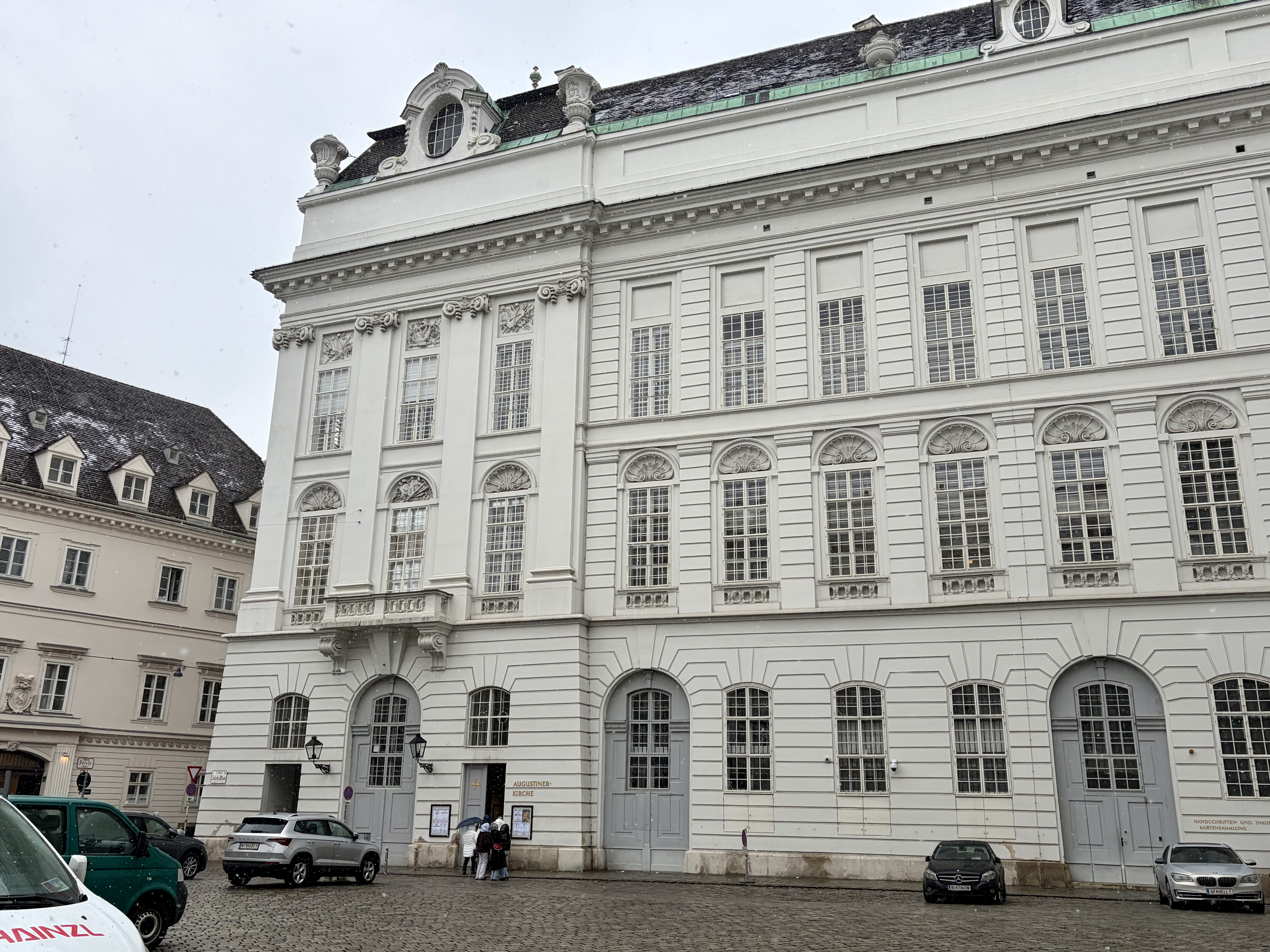
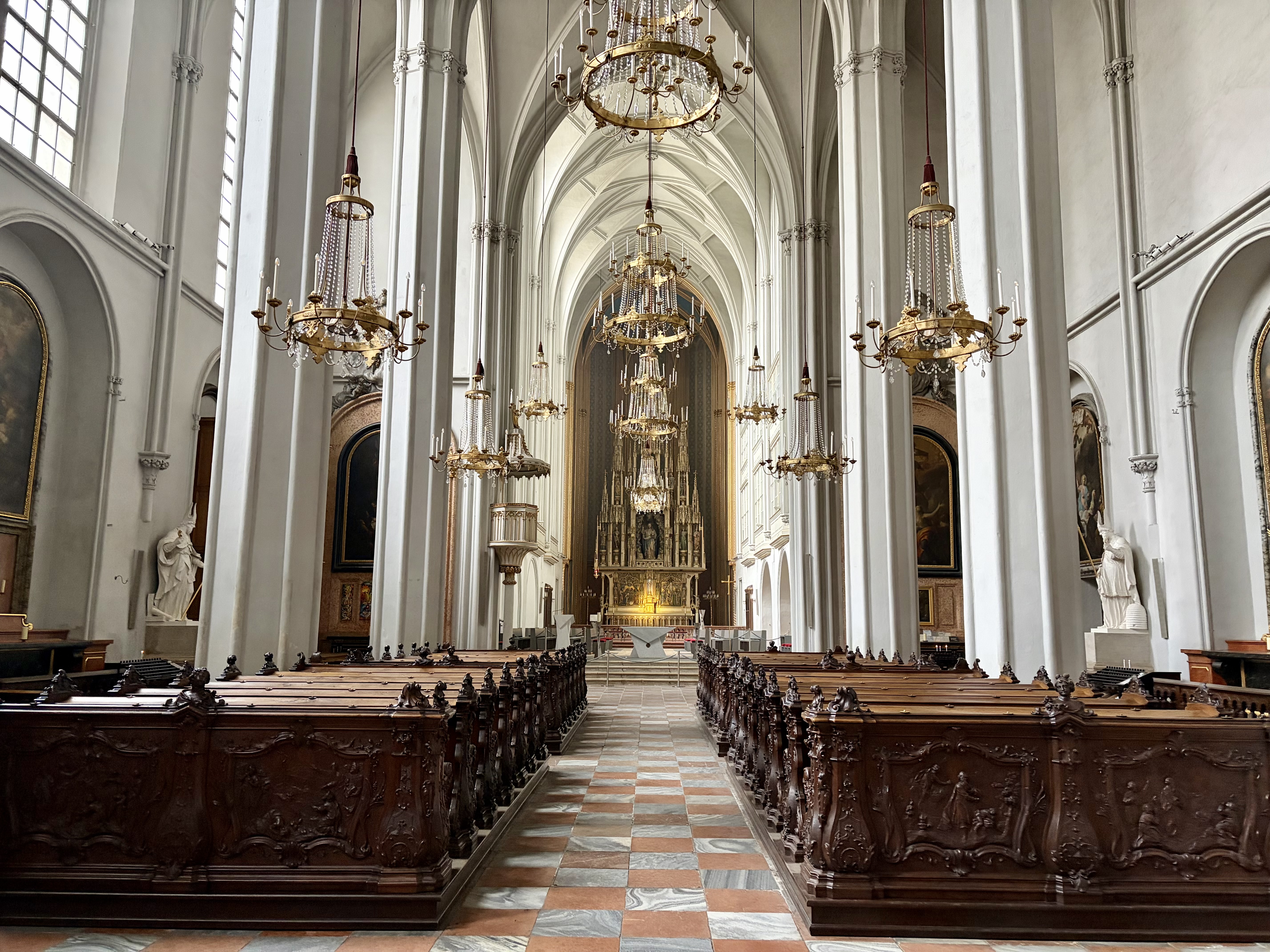
The Augustinian Church served as the Habsburg monarchy’s court church for nearly 300 years and is one of the oldest buildings in the city.
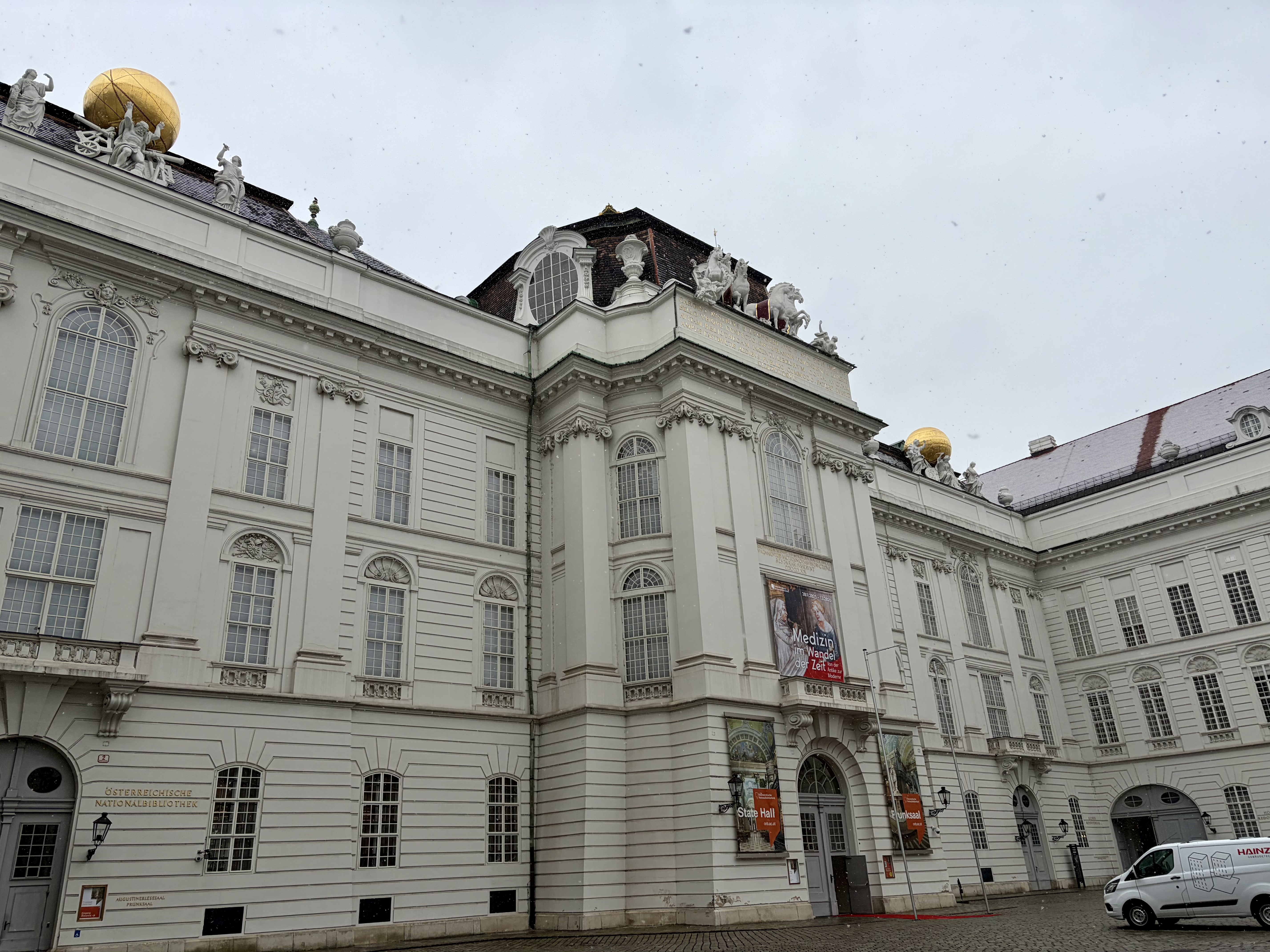
Three sides of Josefsplatz share a common facade, but each building serves a different purpose. There’s the church, the gorgeous National Library (which Nik and I still need to see from the inside), and part of the Hofburg imperial complex.
The Schweizertor (Swiss Gate)
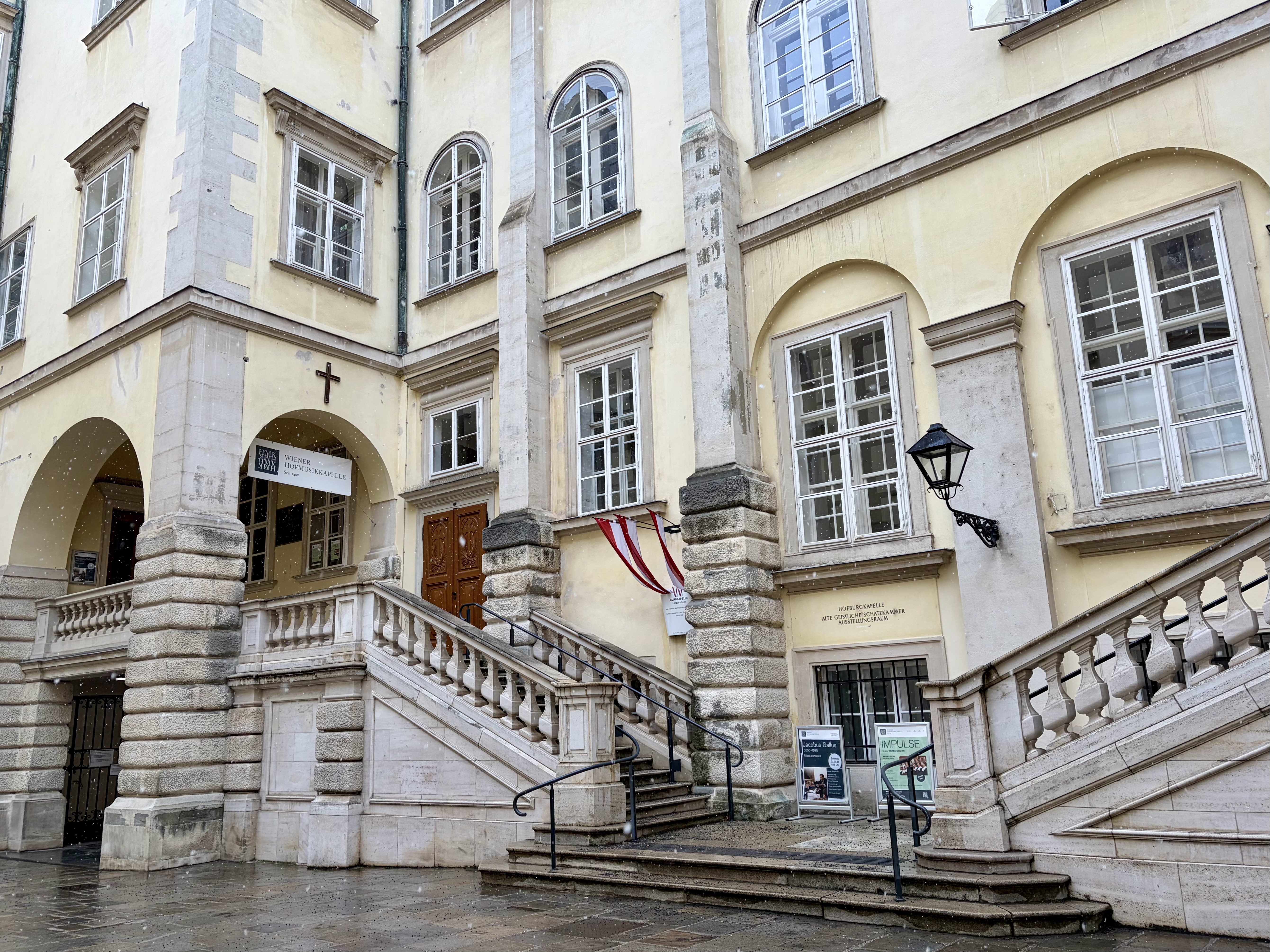
As we moved through the square we passed by the Imperial Treasury through the Schweizertor (Swiss Gate) which first allowed access to the Hofburg palace over 470 years ago.
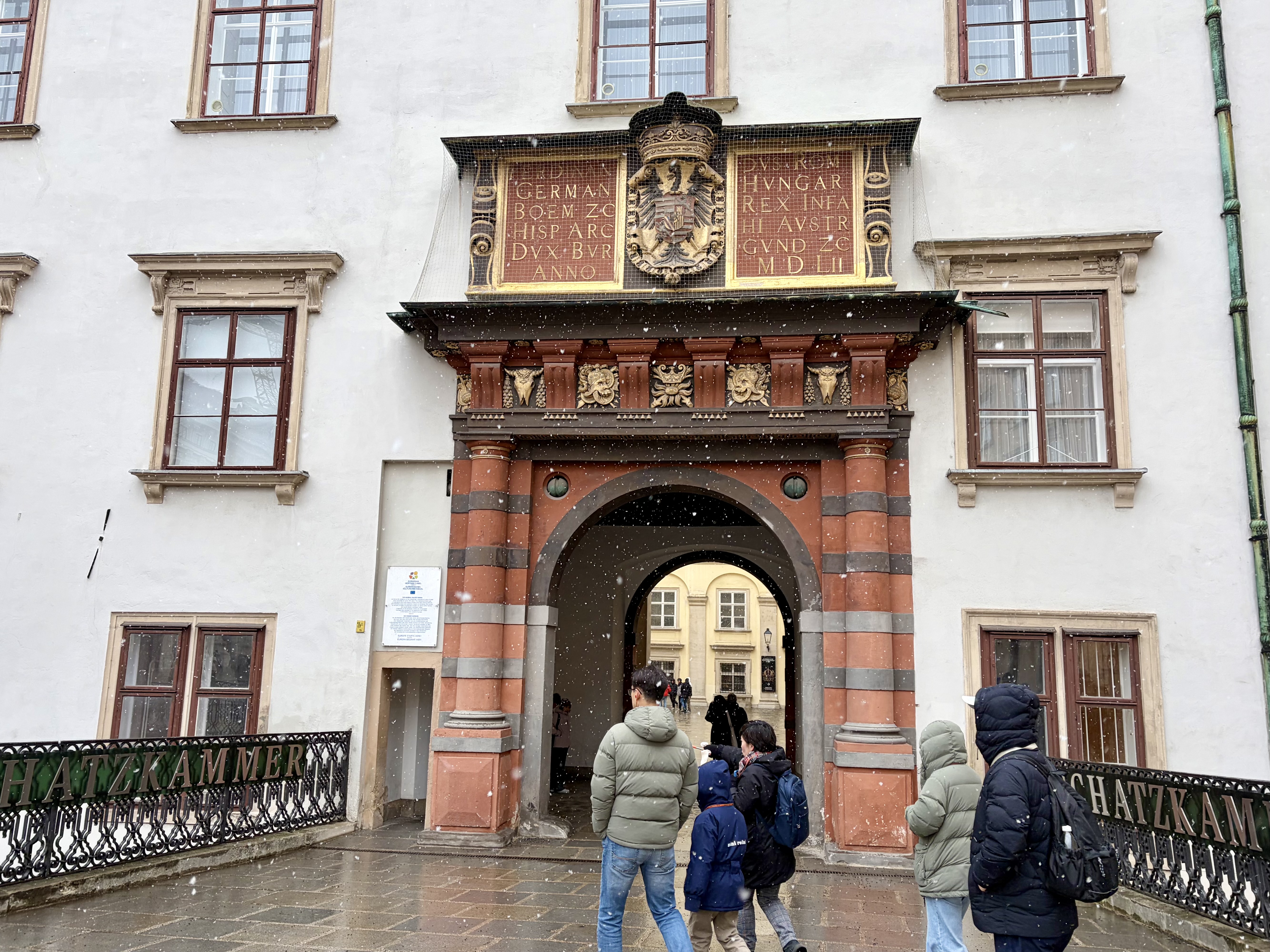
The gate was commissioned by Ferdinand I and the inscription records Ferdinand’s many royal titles and ends with Roman numerals for the year 1552, when the gate was completed.
Across from the gate is another square lined with several buildings, including Amalienburg, where the facade has two clocks on it. One a mechanical clock and one a sundial.
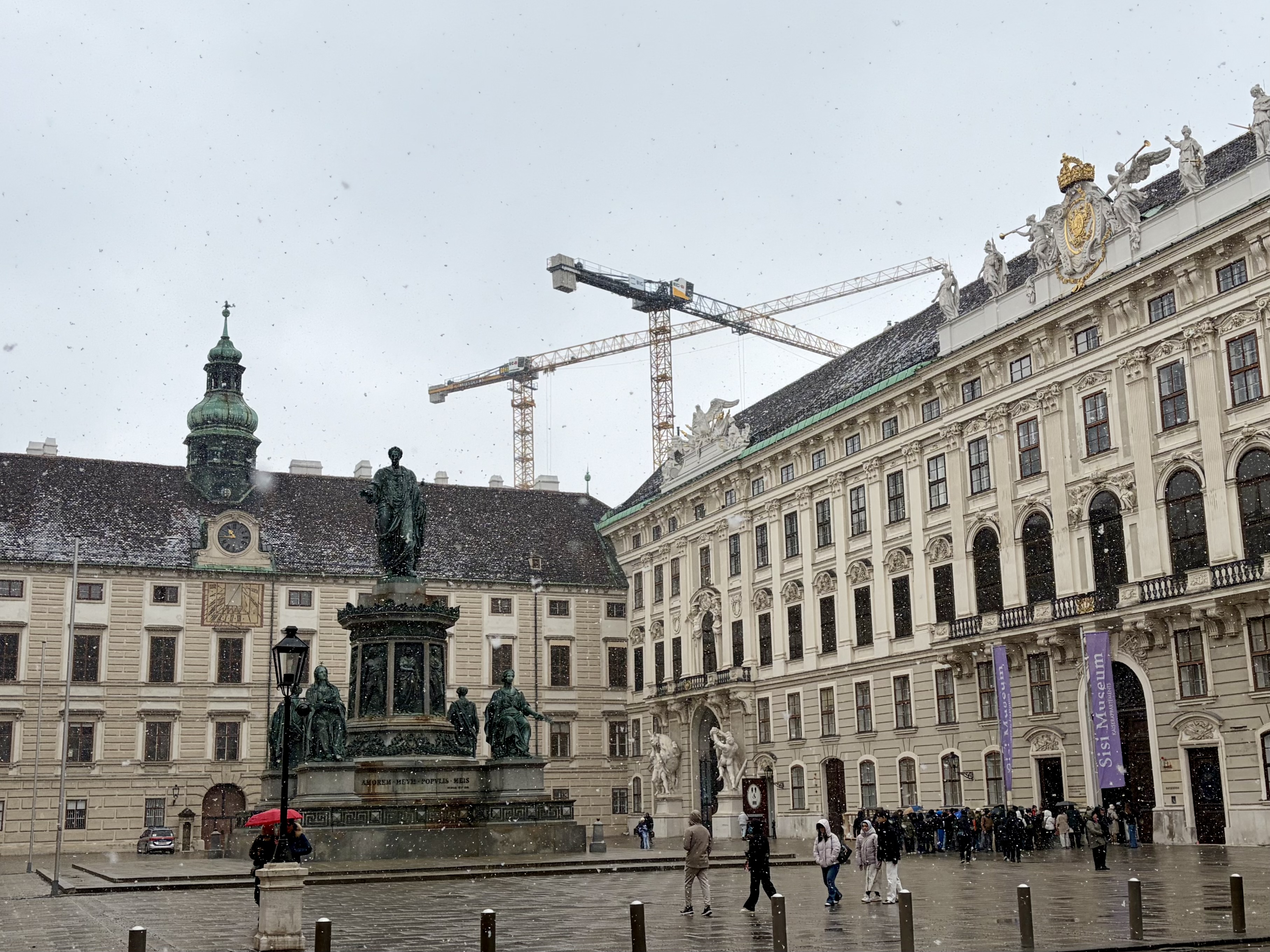
In all our visits to Vienna, I really don’t recall passing through this area, especially the gate.
Related: Tracing my family history in Vienna
The Neue Burg and Michaelerplatz
Moving along past the Sisi Museum we came out to a lovely view of the Neue Burg, part of the Hofburg imperial complex.
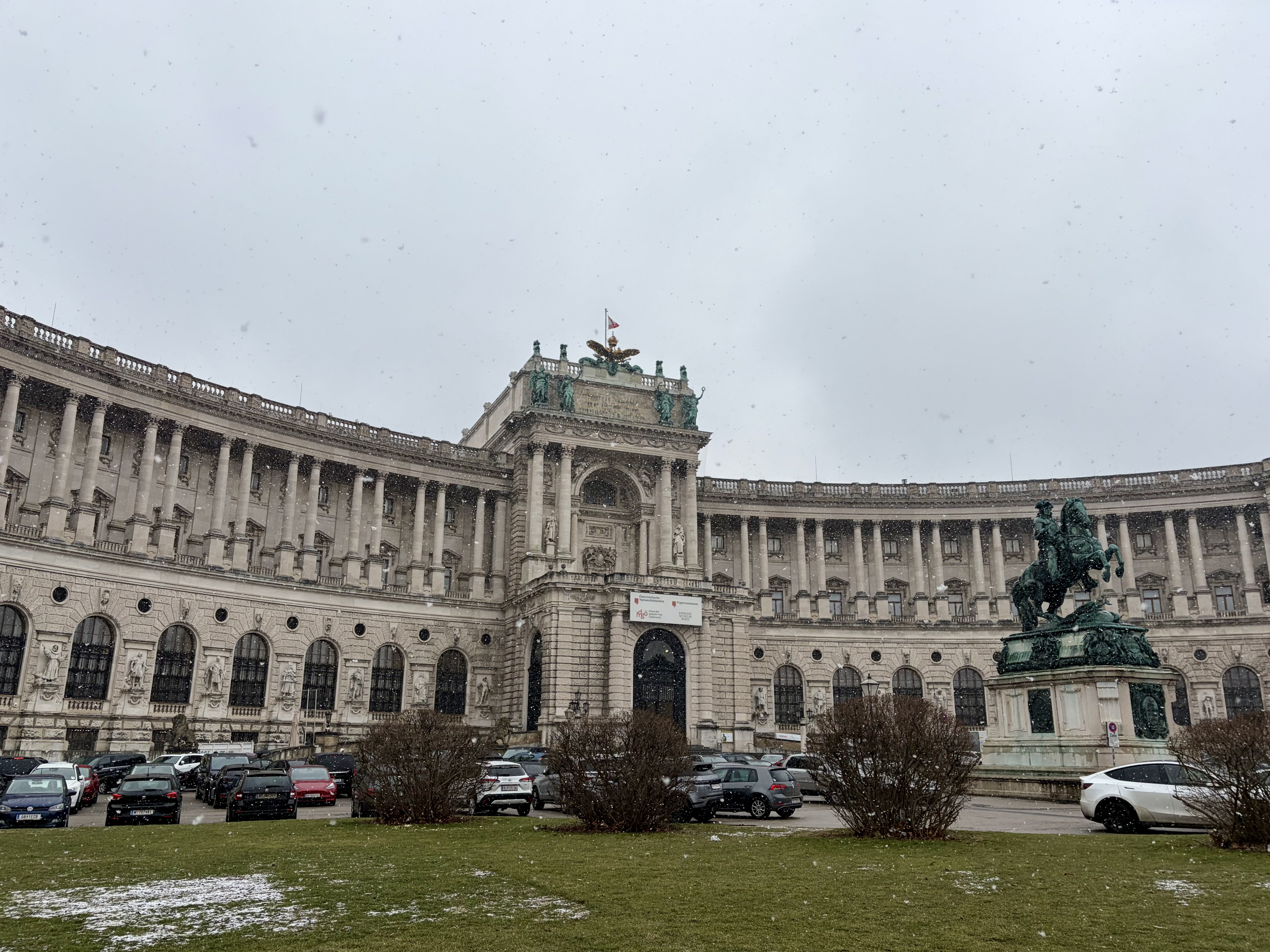
A stunning building, in my opinion. Today, it houses several museums and the National Library. It’s perhaps best known as the balcony where Hitler proclaimed the Anschluss on March 15, 1938.
Nearby is Michaelerplatz, one of Vienna’s main squares. Gorgeous historic buildings surround the plaza, anchored by St. Michael’s Gate, the domed entrance to the Hofburg complex.
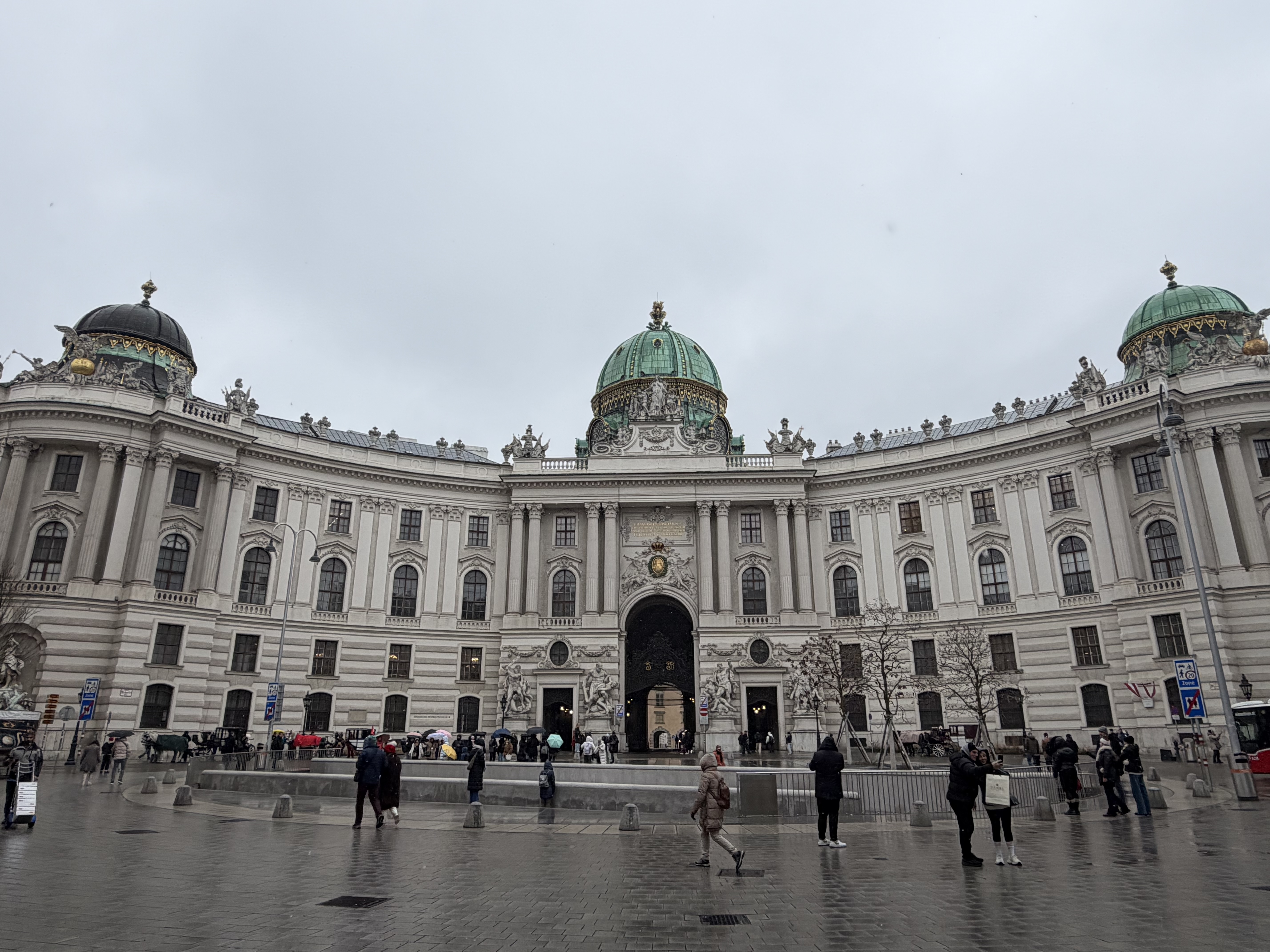
St. Michael’s Church also borders the square, which is where Michaelerplatz gets its name.
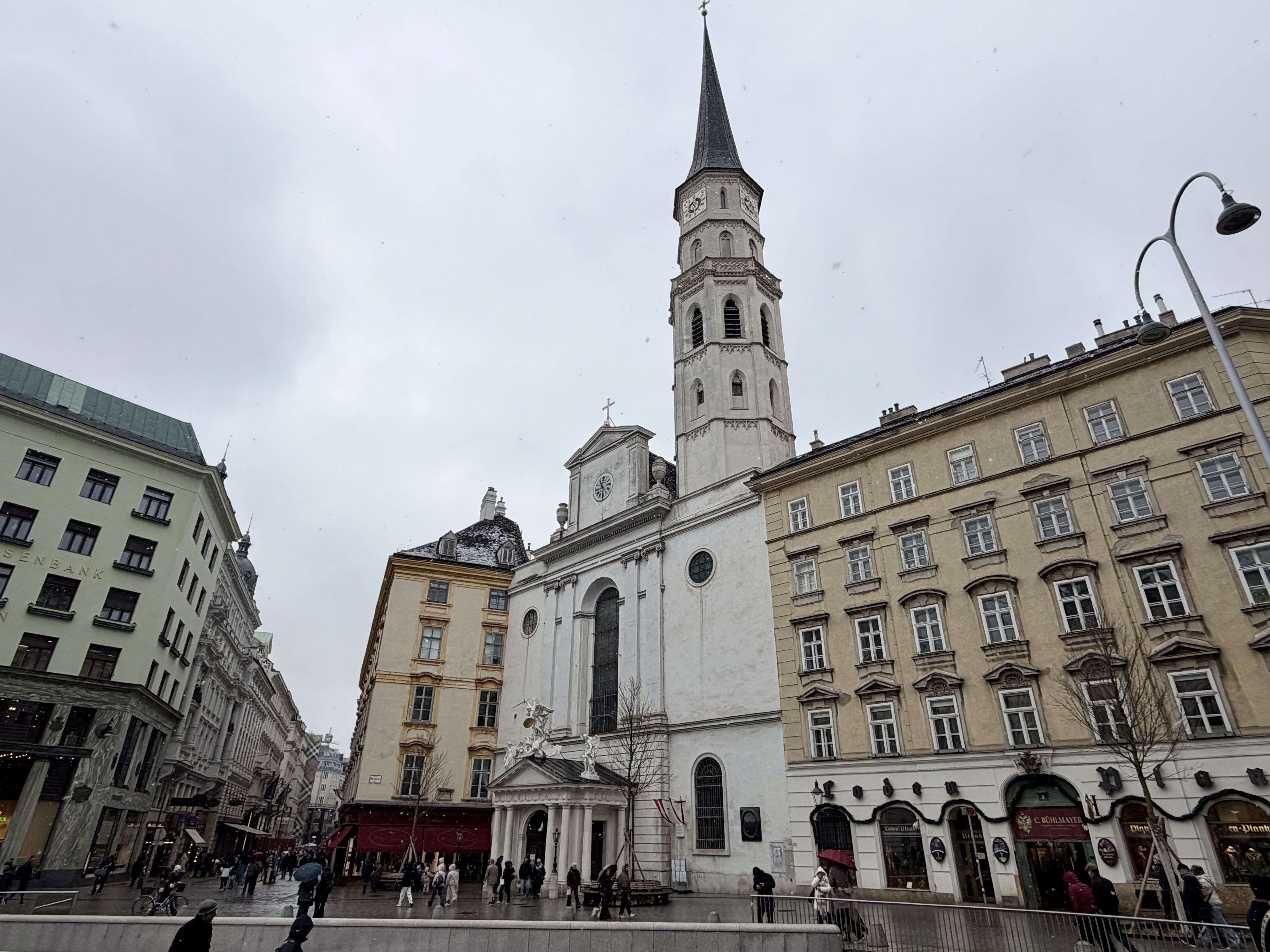
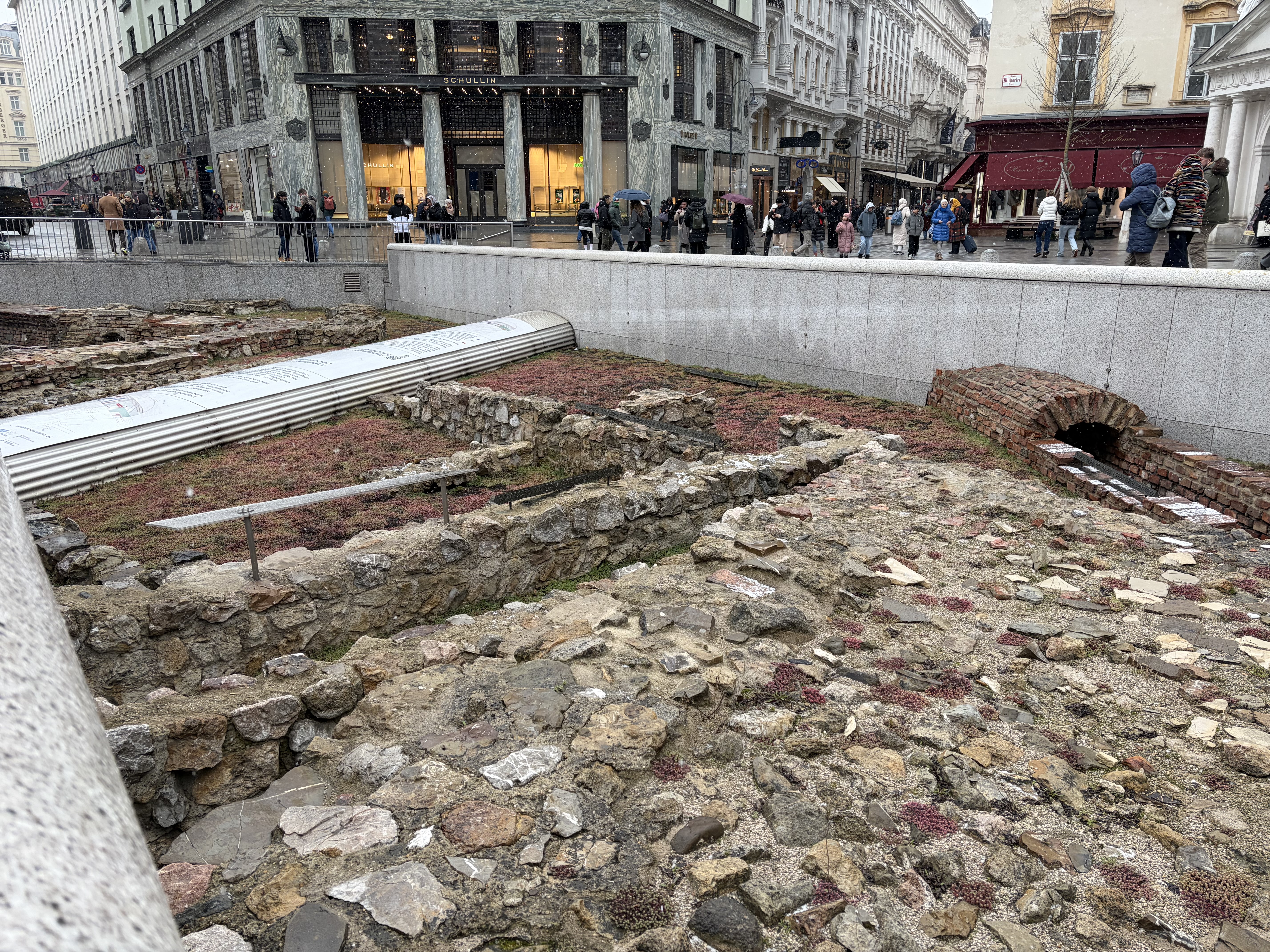
Right in the middle of the square are Roman ruins dating back nearly 2,000 years, now known as the Ausgrabungen (Excavations) of Michaelerplatz. I don’t remember ever noticing them on any of our previous visits to Vienna.
Judenplatz
As our tour began to wind down, we walked into Judenplatz, a square Nik and I have been to before. This time however, it was nice to have some added context from Stephan.
Long associated with the Jewish community, Judenplatz is anchored most notably by the Holocaust Museum, which Vienna unveiled in 2000.
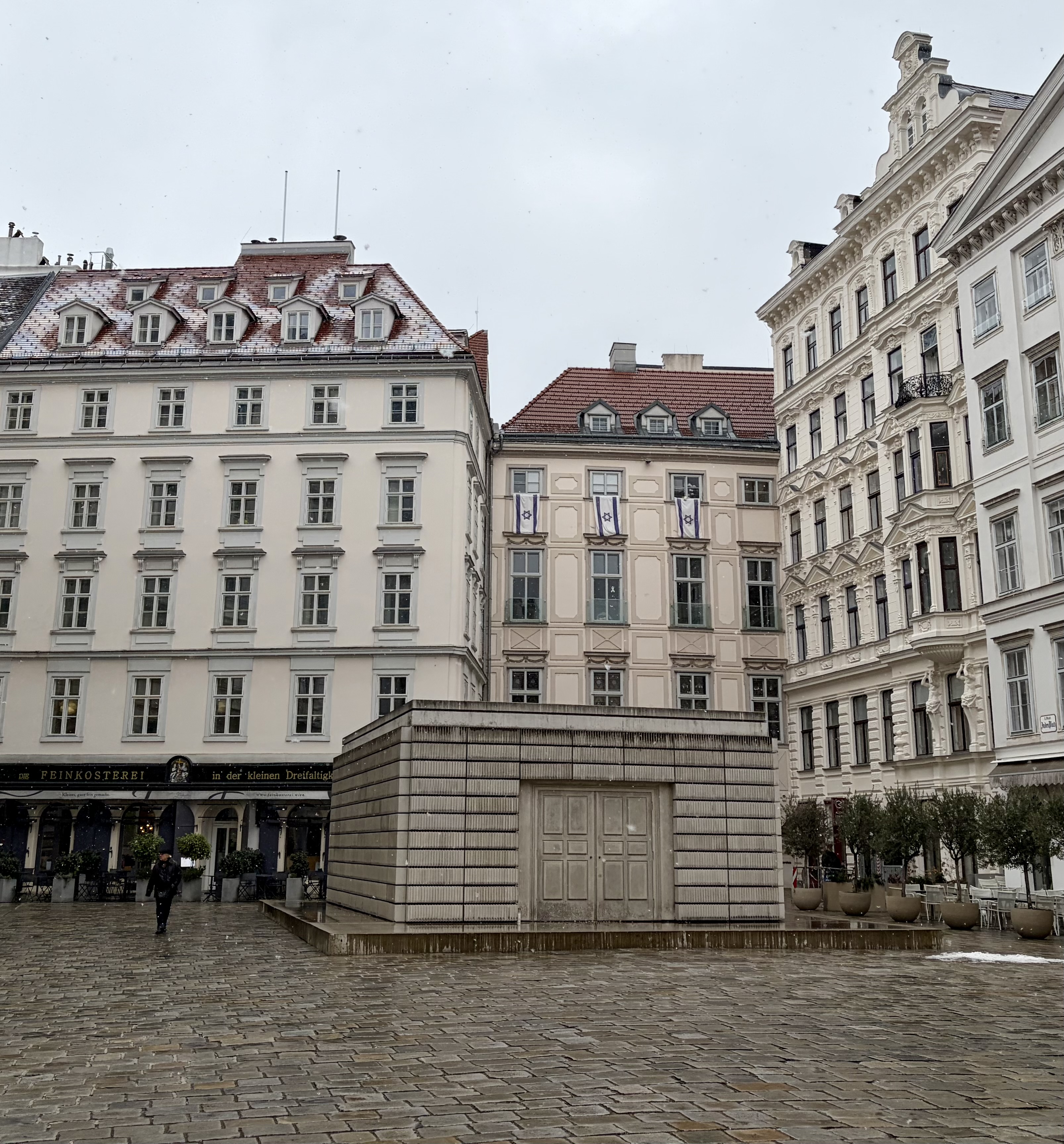
The design represents an introverted, non-accessible library. The spines of the books on the walls are not legible; they all are turned inwards. Countless editions of the apparently same book stand for the large number of victims and their life stories.
Along the base, the names of the concentration camps where an estimated 65,000 Austrian Jews were murdered are engraved, along with a dedication to the victims in German, English, and Hebrew.
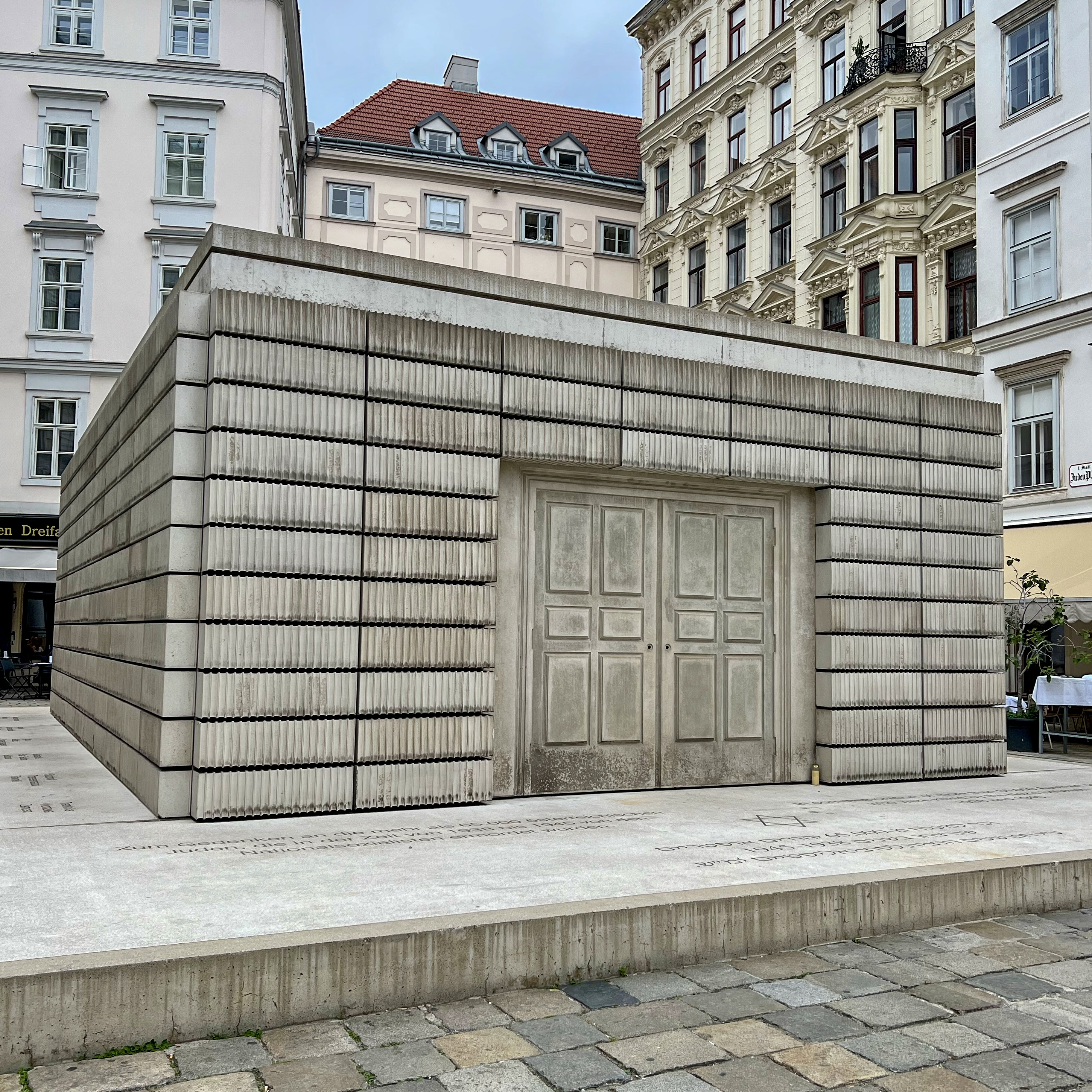
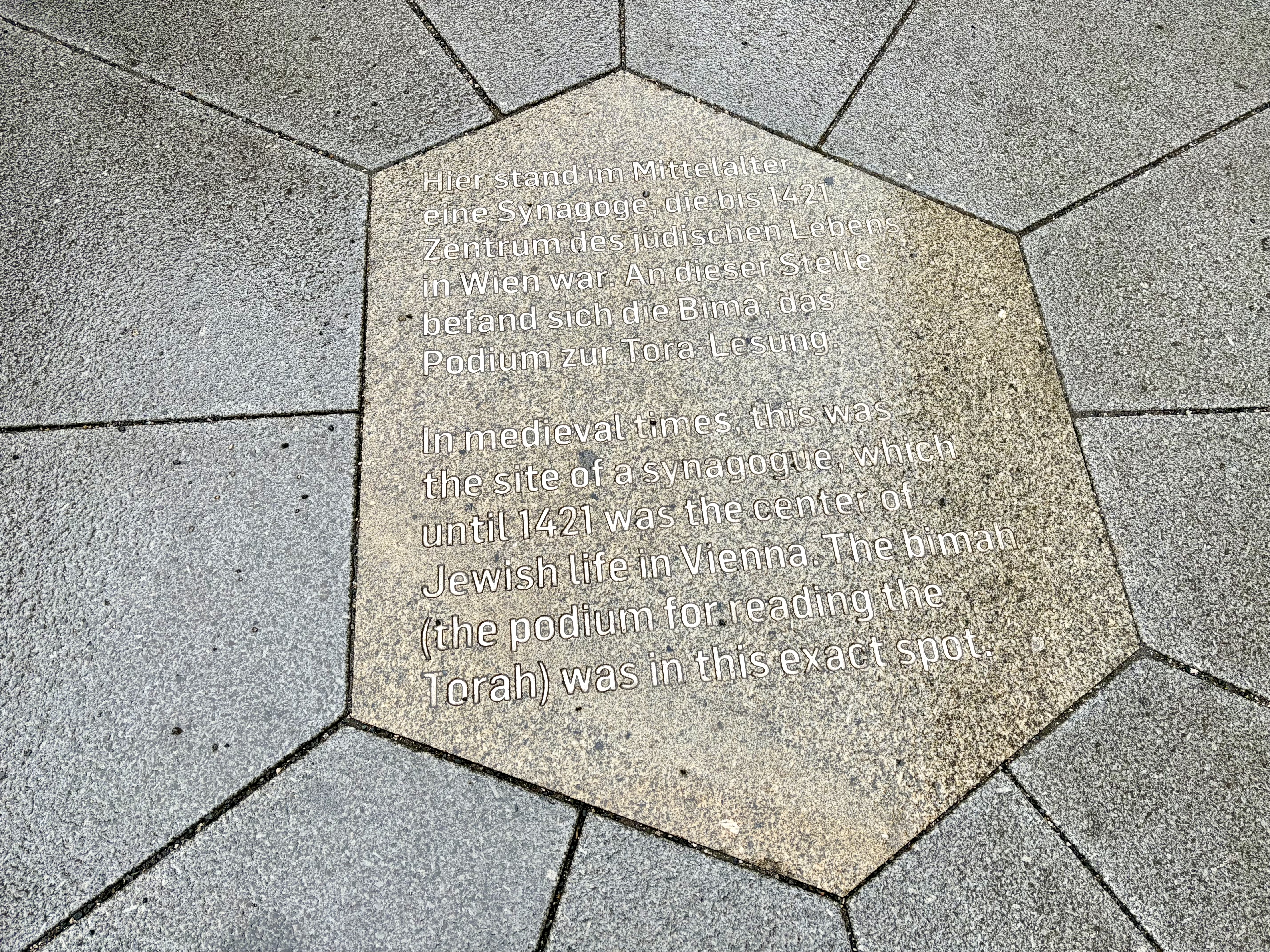
During excavation for the memorial, remains of a medieval synagogue were discovered and can now be viewed in the Jewish museum which is located just beyond the memorial.
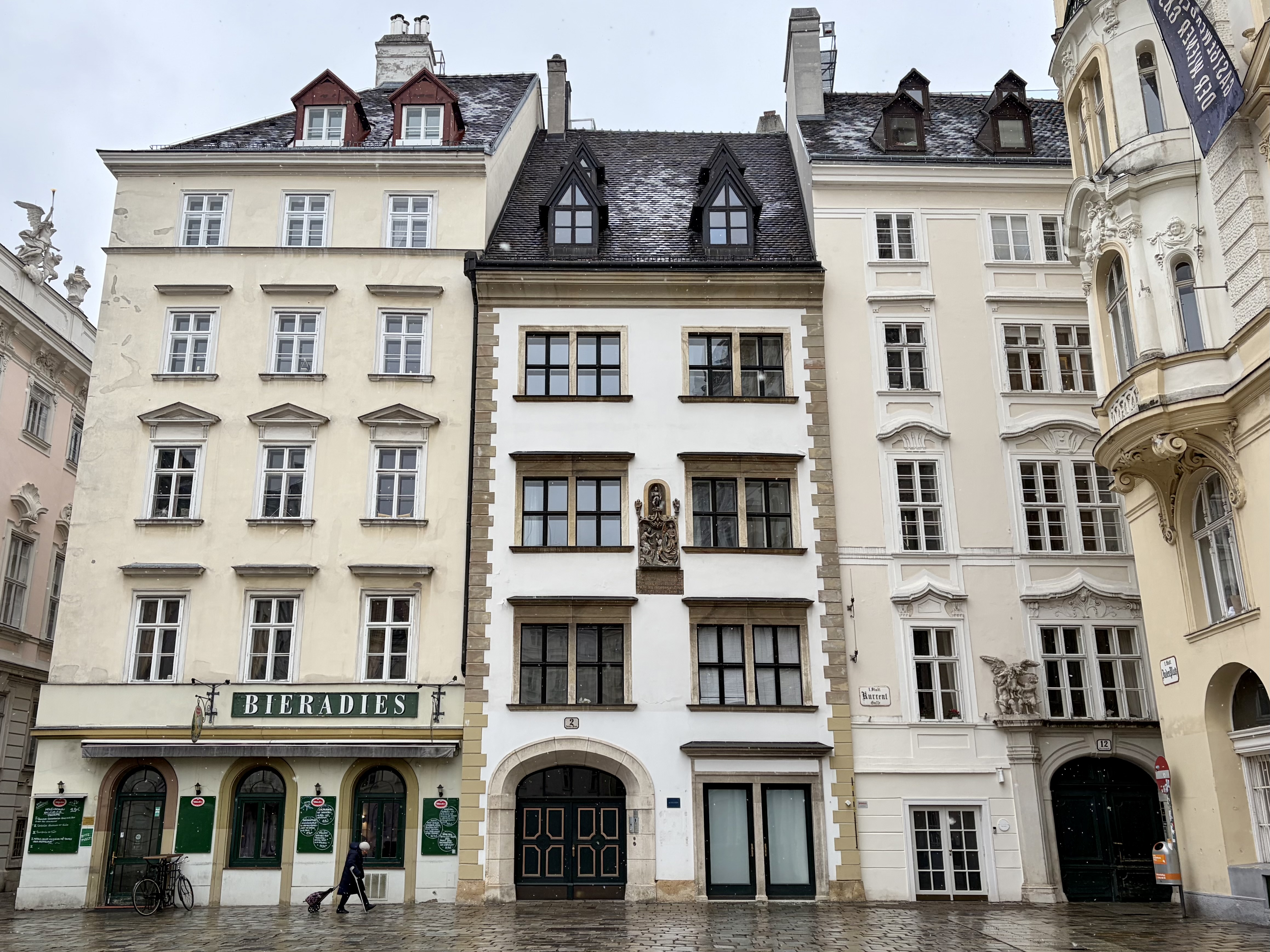
The square is shaped by a number of great old buildings, including the narrow house at Judenplatz 2. Significant parts of it date back to the mid-16th century and earlier. The depiction that dominates the front is perhaps 15th century and has Saint George above a scene of Jesus’s baptism.
Judenplatz is also home to the Lessing Monument, honoring Enlightenment writer Gotthold Ephraim Lessing and his ideals of tolerance and dialogue across religious boundaries.
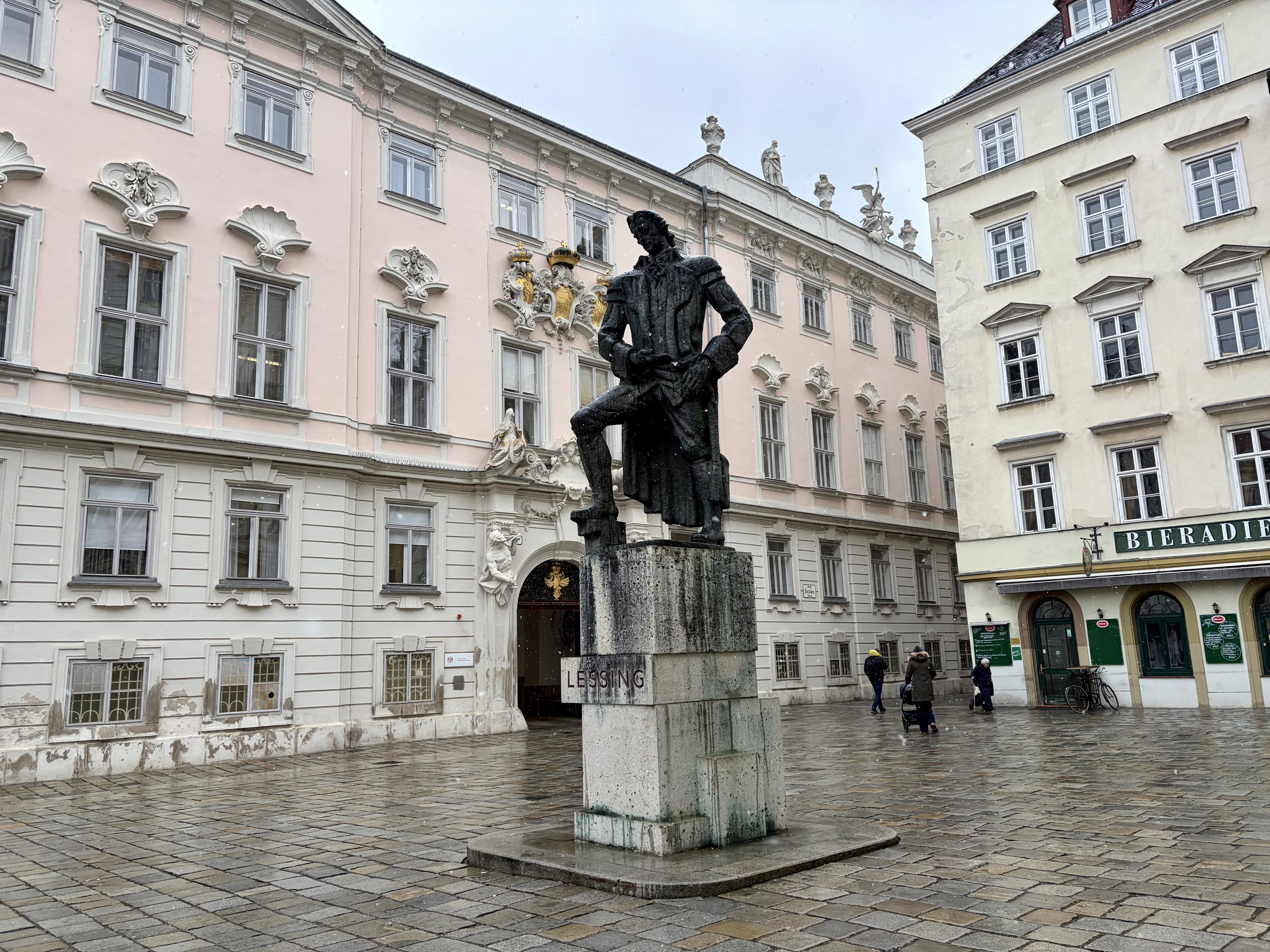
The first statue went up in 1935. However, because of his philosophy, the Nazis destroyed it a few years later. A “second replacement” statue from the same sculptor eventually appeared in Vienna in 1968 and moved to the Judenplatz in 1981.
The Stadttempel – Vienna’s Main Synagogue
As we moved out of Judenplatz, we passed the Stadttempel, the main synagogue in Vienna. It survived Nazi destruction because of an edict issued by Emperor Joseph II that only Roman Catholic places of worship were allowed to be built with facades fronting directly on to public streets. And so the synagogue was constructed from 1824 to 1826, fitted into a block of houses and hidden from plain view of the street.
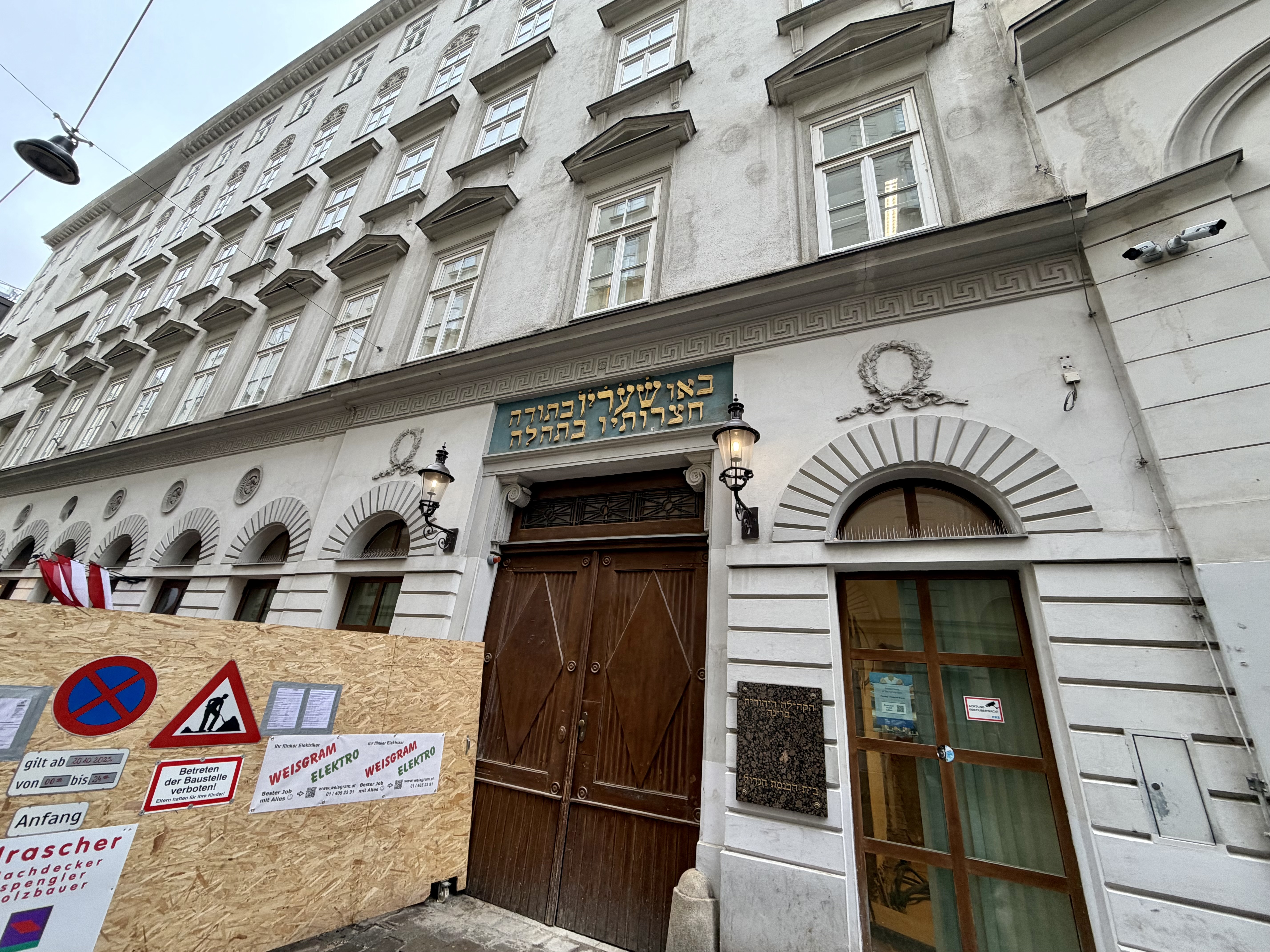
Unfortunately for us, a large portion of the exterior was closed off for construction.
Ankeruhr (Anchor Clock)
Our tour was perfectly timed to end at noon at the Ankeruhr (Anchor clock) located on Hoher Markt, one of the oldest squares in Vienna. This was certainly a spot Nik and I have never passed by or least never noticed.
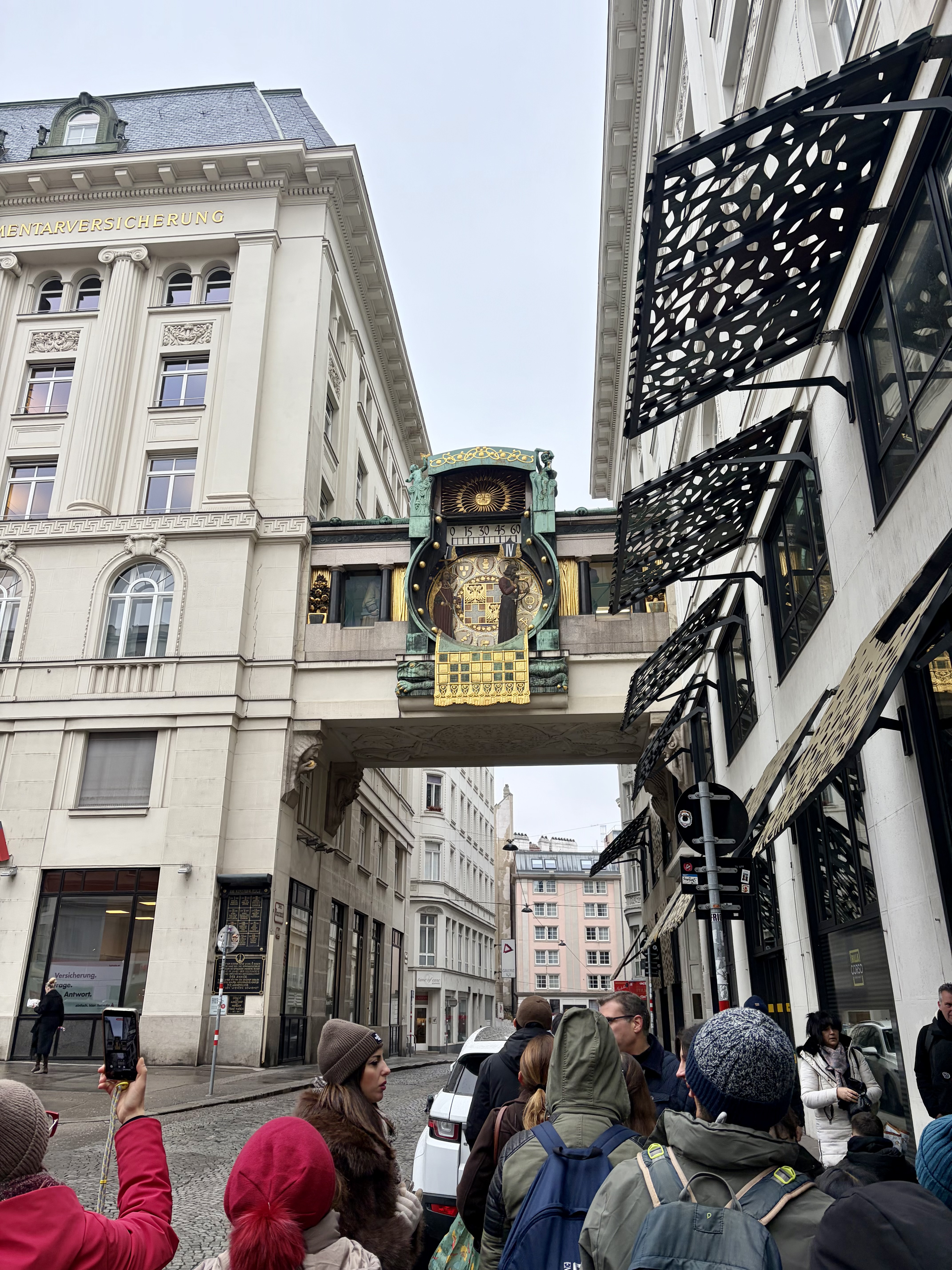
The Anker Insurance Company (now Helvetia) built the clock in 1914 as a contribution to Vienna’s art and culture, but it also served as a subtle reminder of the importance of life insurance. The clock’s details reflect the inevitable passage of time and the fleeting nature of human life.
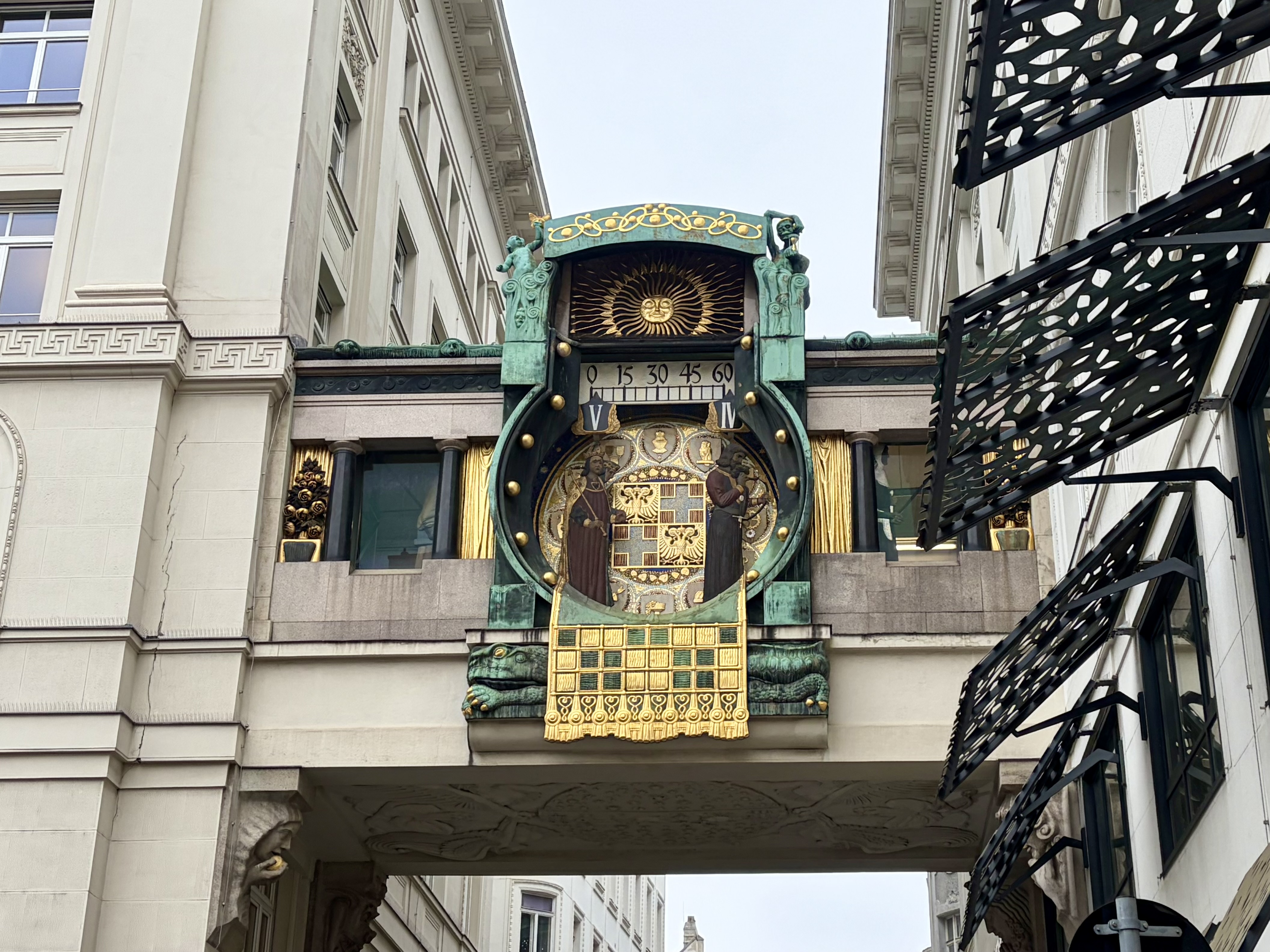
A set of 12 personalities from Vienna’s past rotates slowly around the display, ensuring a new figure appears each hour. The biggest crowds come at midday, when all twelve Ankeruhr figures go through a complete rotation with musical accompaniment.
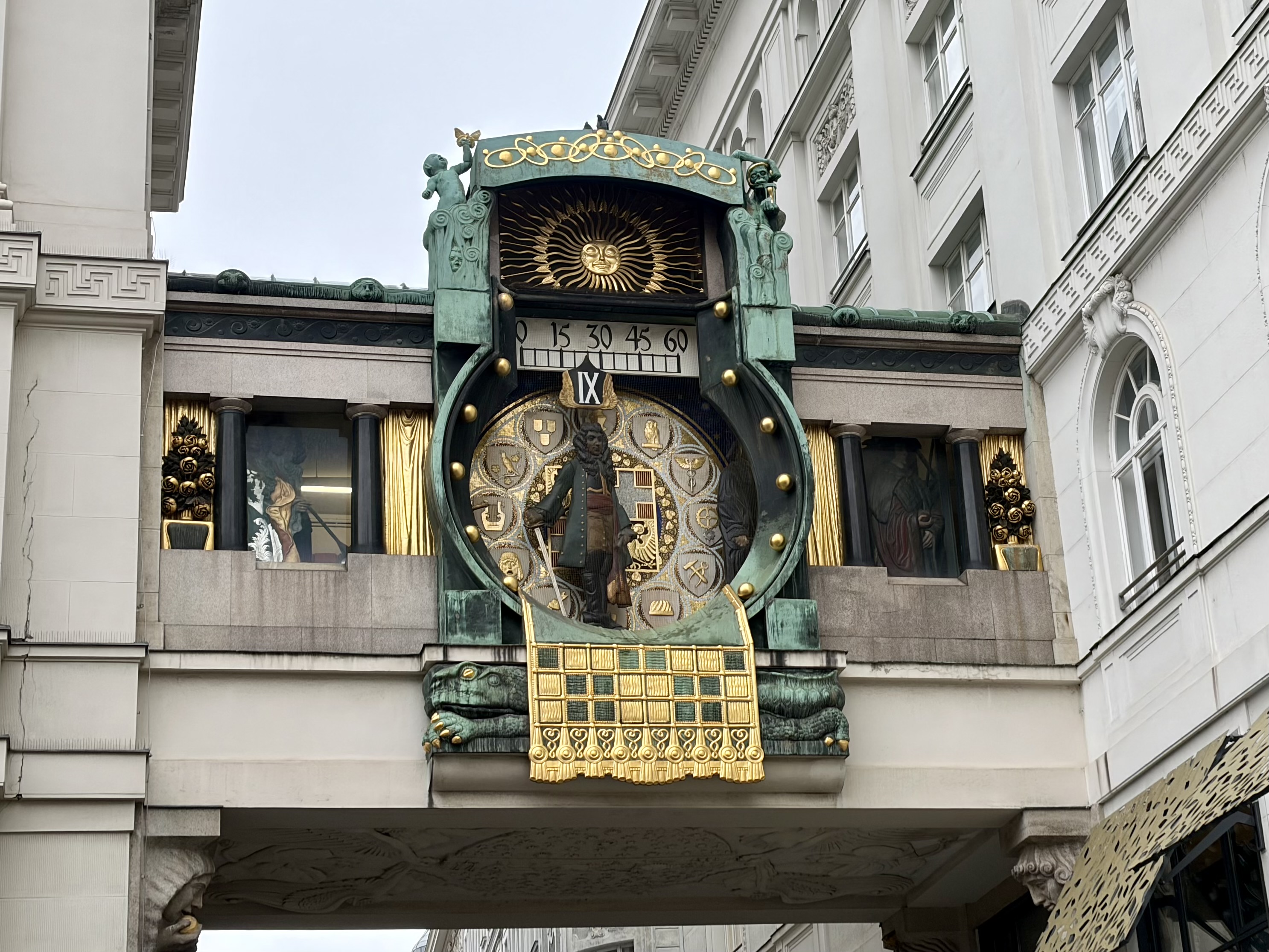
Some of the figures include: Emperor Maximilian I of the Habsburg monarchy, Prince Eugene of Savoy, Maria Theresa and her husband Franz Stephan of Lorraine. Maria Theresa was another of the more notable rulers during Habsburg times.
The Wedding Fountain
Though it wasn’t an official stop on our tour, Stephan took a moment to tell us about the Wedding Fountain, a stone and metal monument dating to 1732.
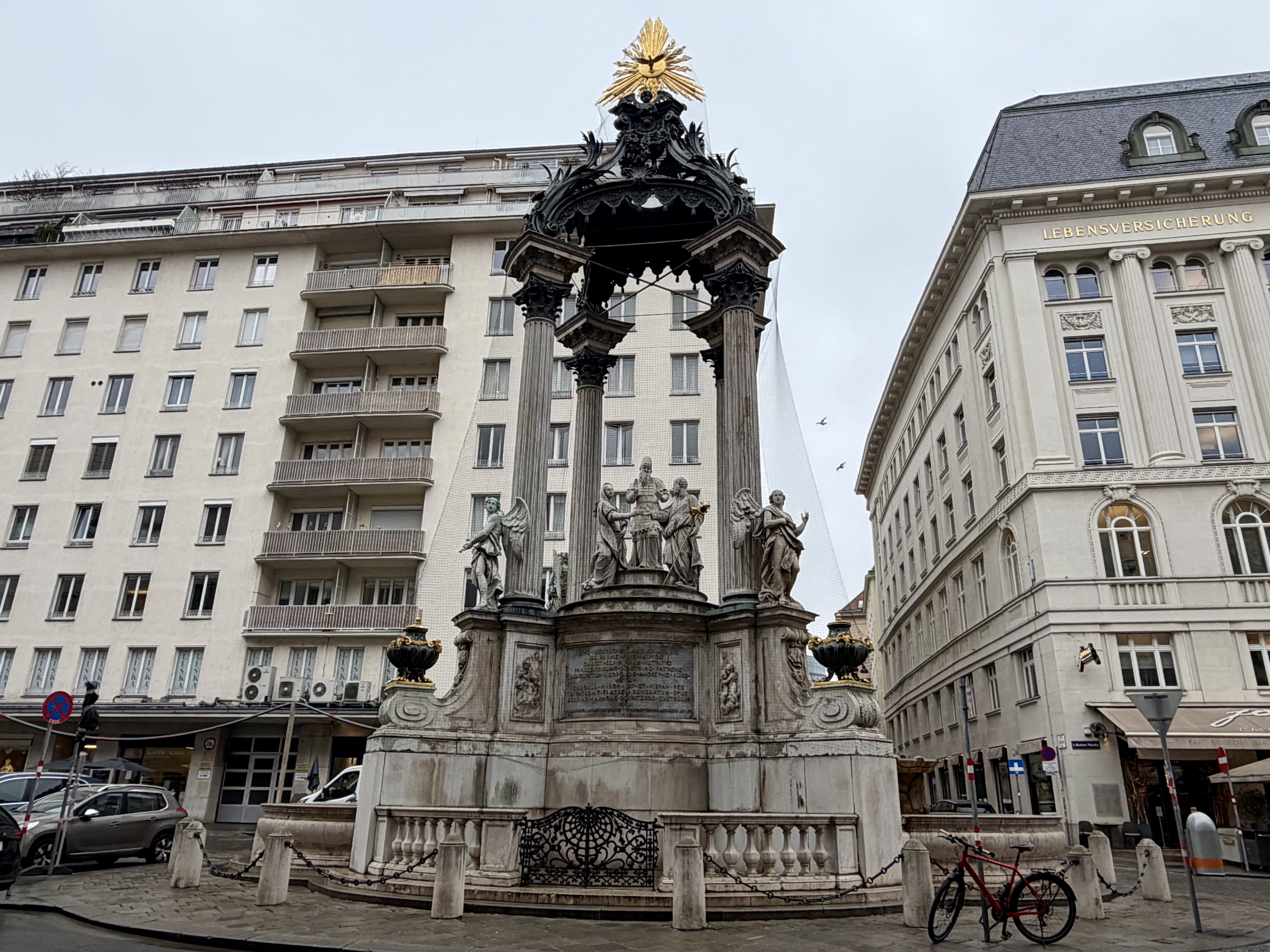
It depicts Mary and Joseph being married beneath a chuppah, the traditional canopy used in Jewish wedding ceremonies. Since both Mary and Joseph were Jewish, they would have married according to Jewish custom, making this a fitting—though relatively uncommon—depiction in Christian art. It’s a small detail that’s easy to miss, but one that quietly acknowledges Christianity’s Jewish roots and was clearly missed by the Nazi regime as they left it standing.
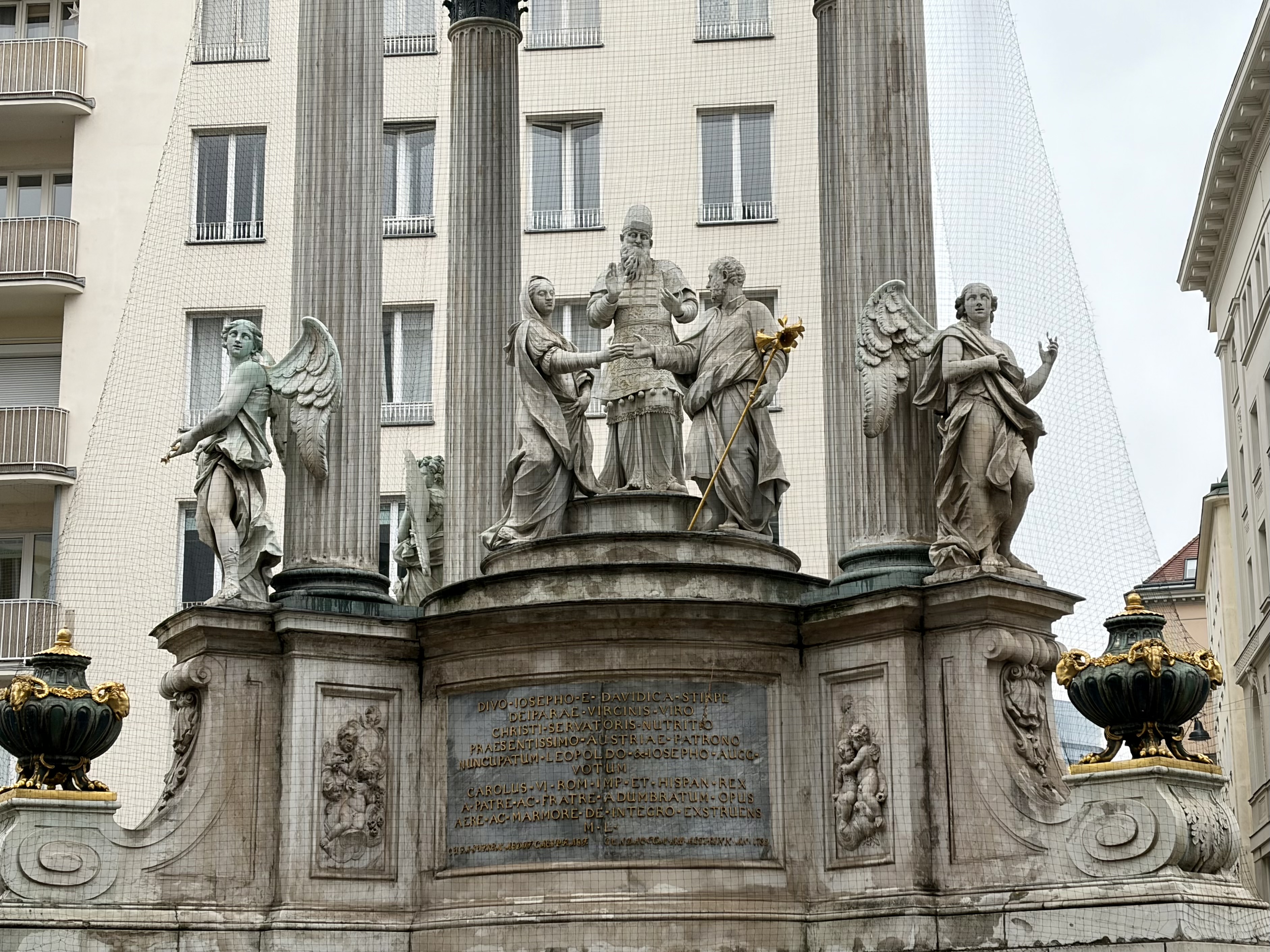
Bombs severely damaged the monument during World War II. It was restored between 1950 and 1955, though Mary’s original head had to be replaced with a copy.
The Stephansdom (St. Stephen′s Cathedral)
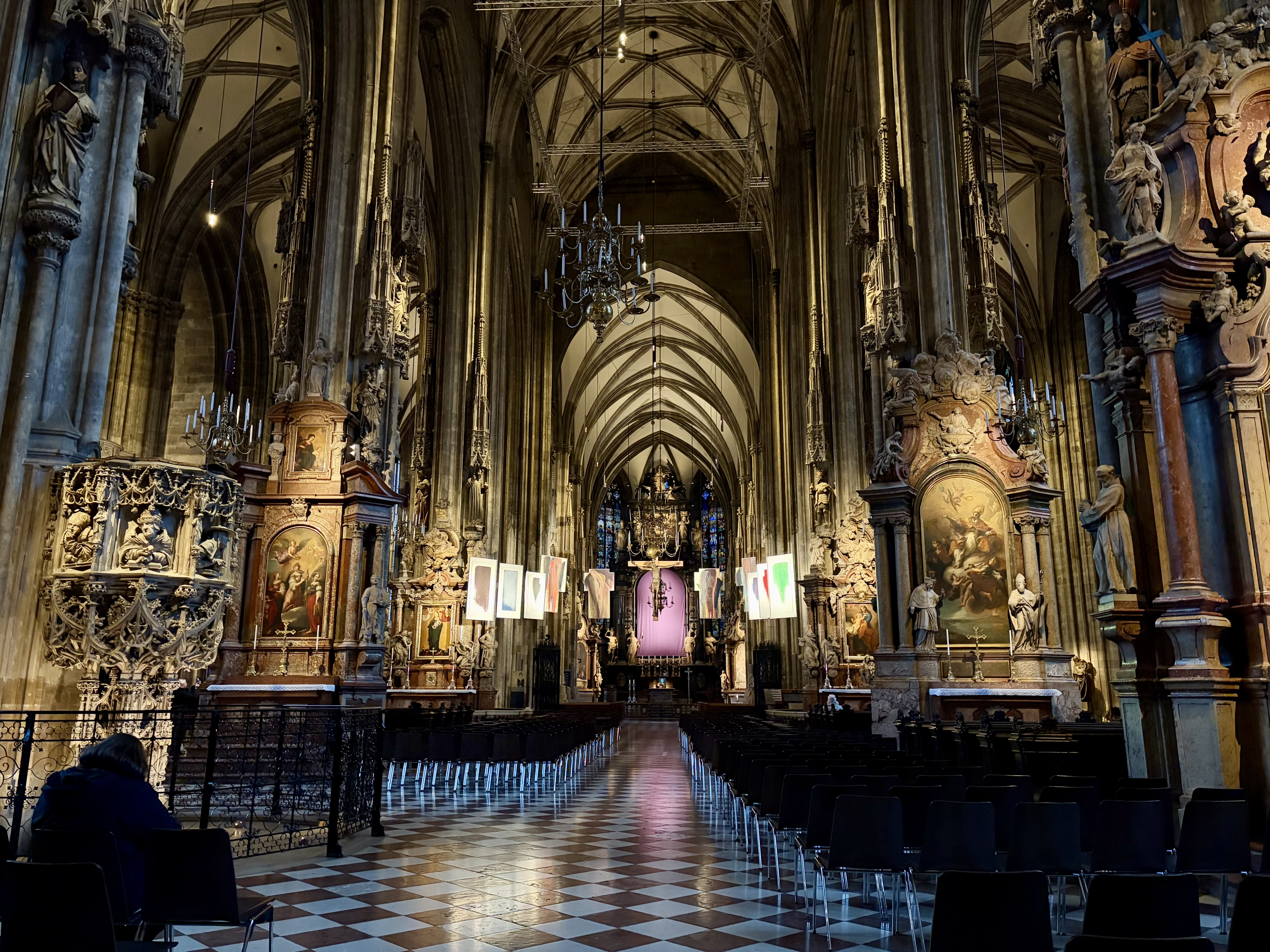
The Wedding Fountain is close to another of Vienna’s top attractions, Stephansdom Cathedral. Although the first structure was completed in 1160, reconstruction and expansion lasted until 1511. I absolutely love this cathedral, especially with its colorful tiled roof.
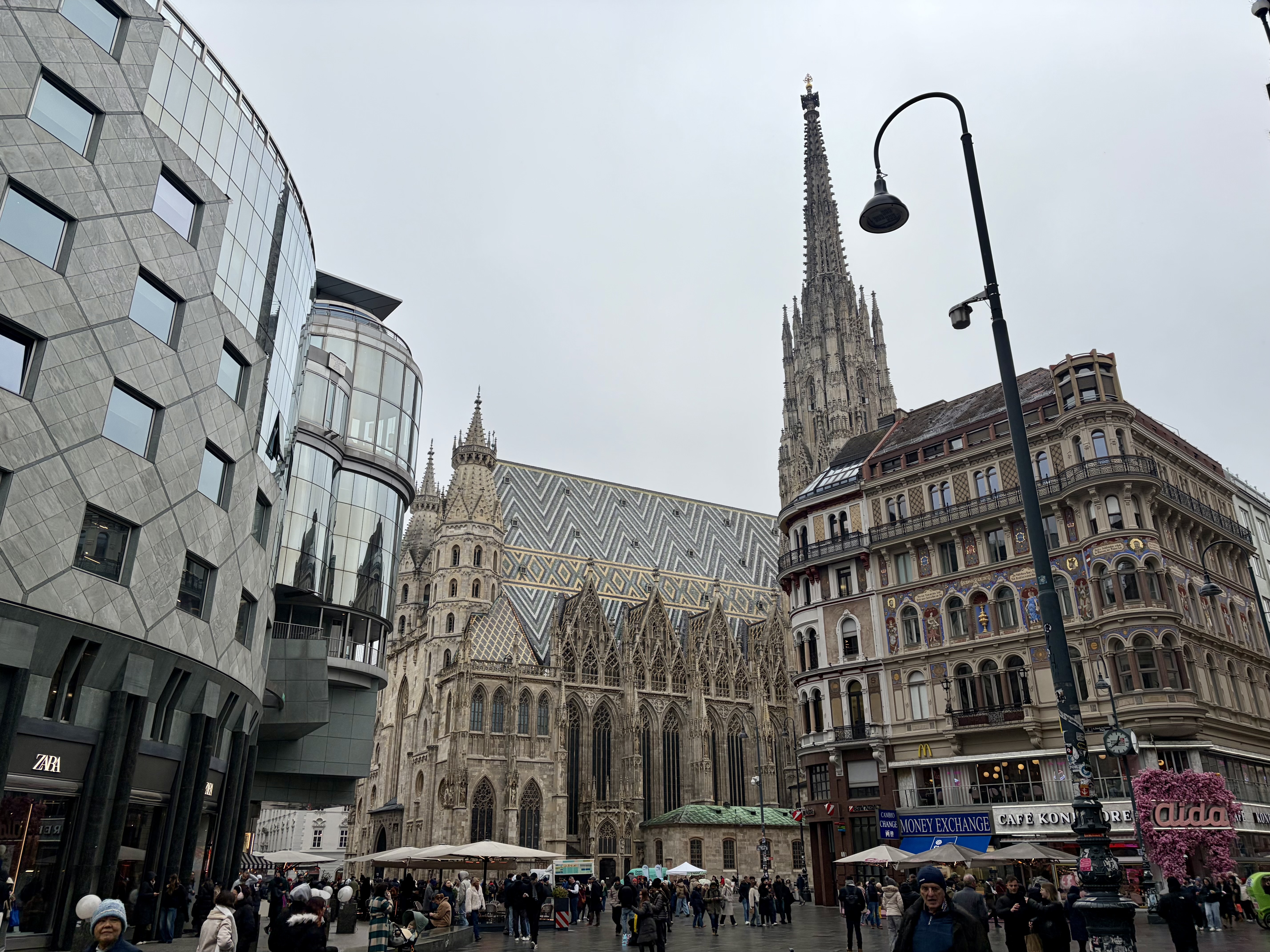
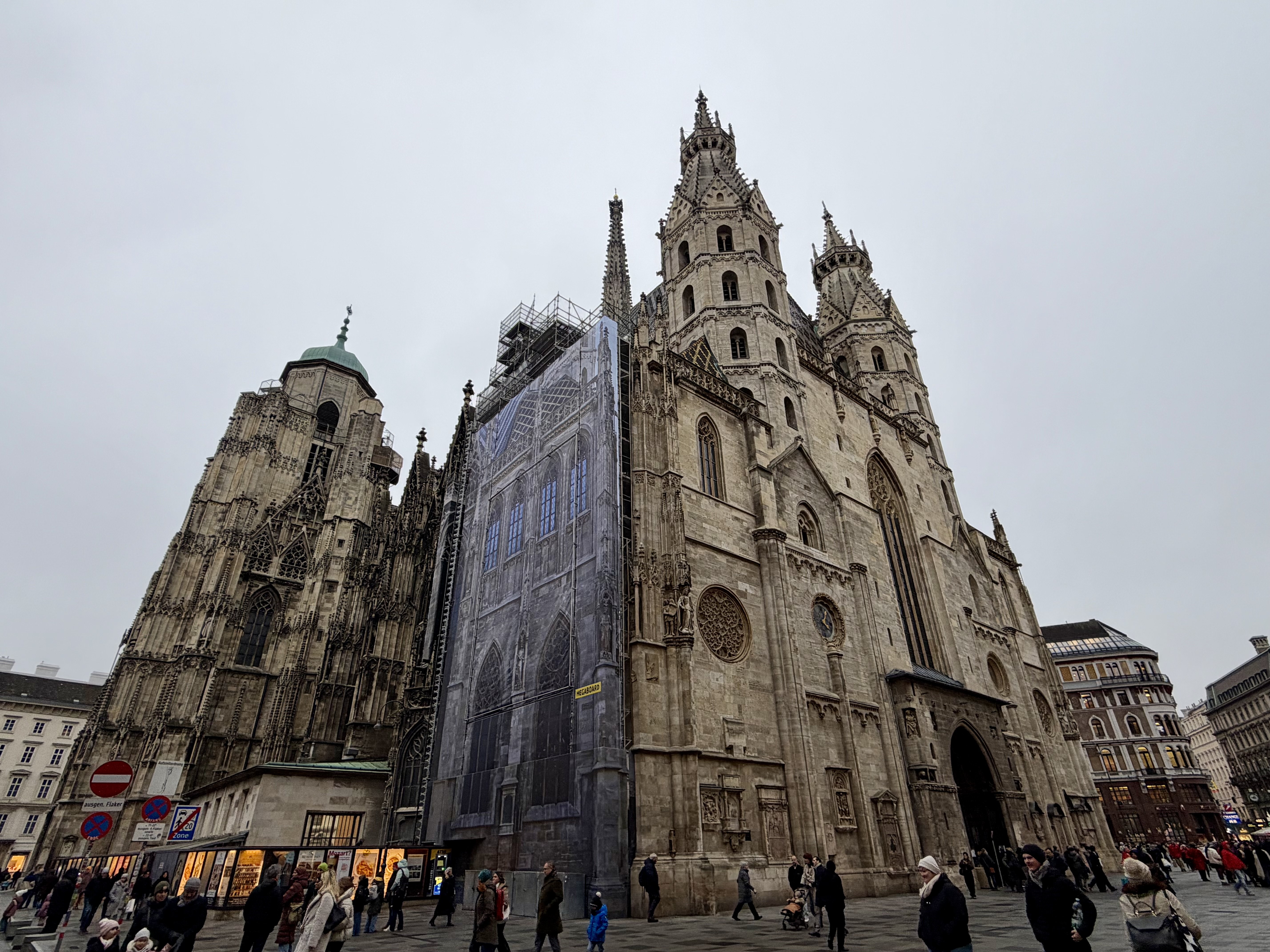
The cathedral survived the aerial bombings of World War II, only to be badly damaged when a fire in nearby buildings spread to the cathedral in April 1945. Repairs took just a few years, but even in the present day, it seems there is always some ongoing work.
Don’t think a walking tour is worth it? Hopefully this post changed your mind! We discovered so many “new-to-us” landmarks in this Vienna walking tour and the extra history and context made exploring the city even more enjoyable.