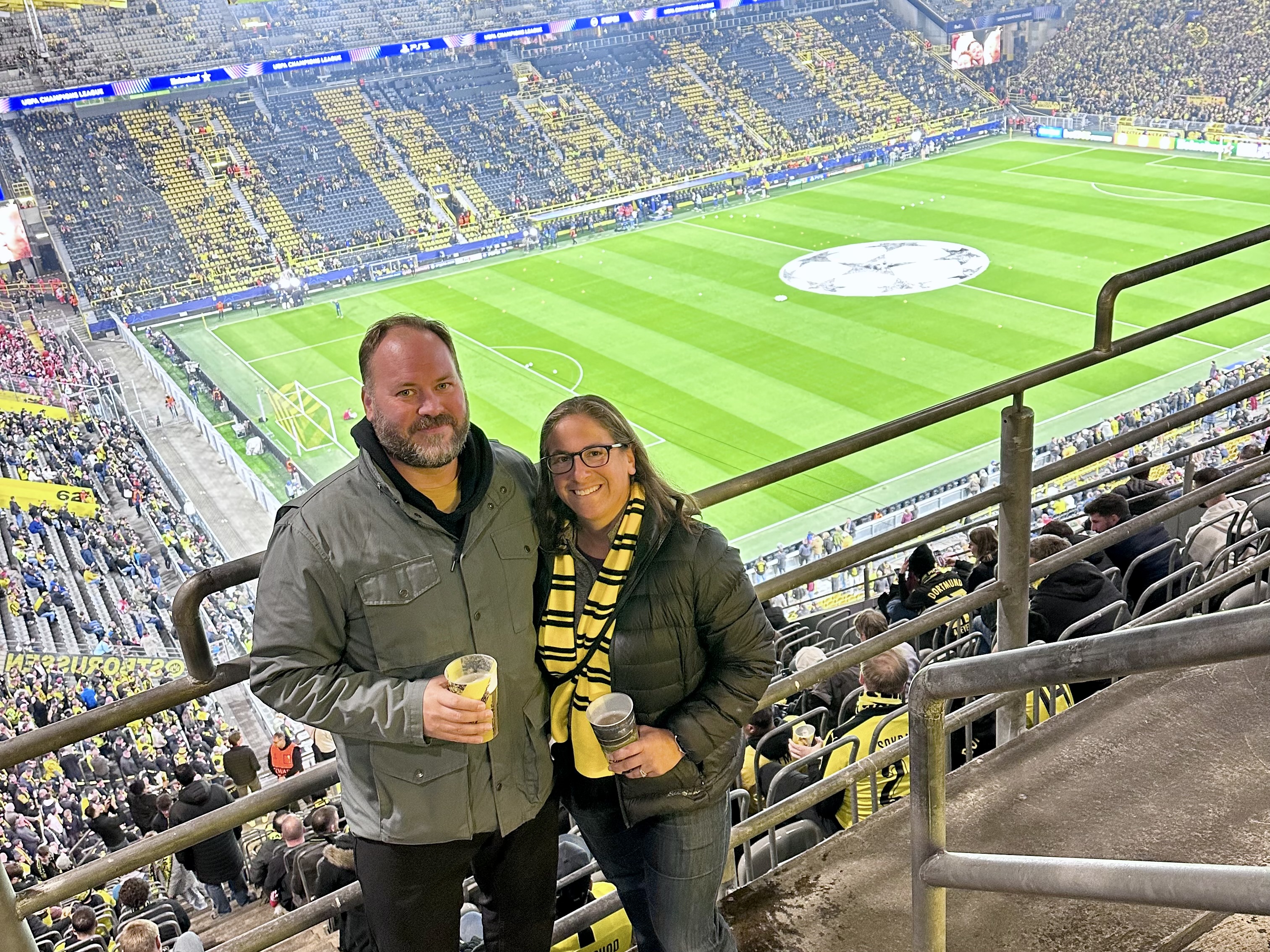
As Nik and I planned our trip to Germany for a taste of Oktoberfest, we wanted to see if we might be able to fit in a European football game. Fortunately, visiting Dortmund was going to be able to check both boxes for us!
Getting to Dortmund
Following our stay in Cologne, Nik and I took the train from there to the city of Dortmund with a change in Düsseldorf. The train ride was rather boring, which is all you can ask for, I suppose. As the loyal Marriott goers we are, rather than stay in Old Town, Nik found us a Marriott not far from Dortmund’s stadium. We took a local train from the main station to what felt like a suburb. Once we got off the train, we still had a walk of 15-20 minutes that took us on a path over the highway. The hotel really was in the middle of nowhere.
Dortmund vs. Bilbao Soccer Game
While researching soccer game options, we saw that Dortmund of the German Bundesliga would host Athletic Bilbao of Spain’s La Liga in a Champions League match, which immediately piqued our interest. Two historical teams with large followings playing in an important tournament – sign us up! We were able to buy a pair of tickets on the secondary market for not too crazy of a price.
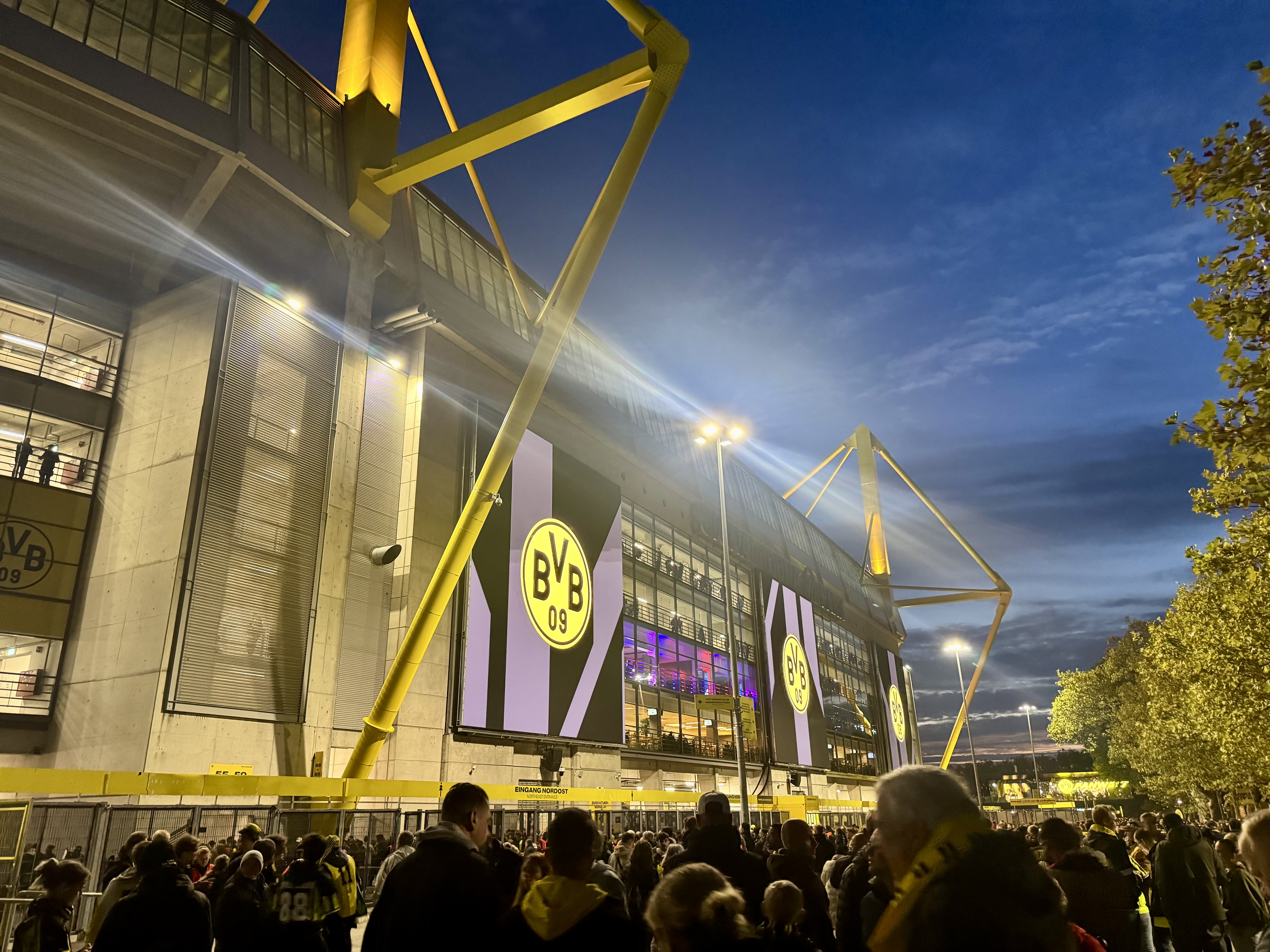
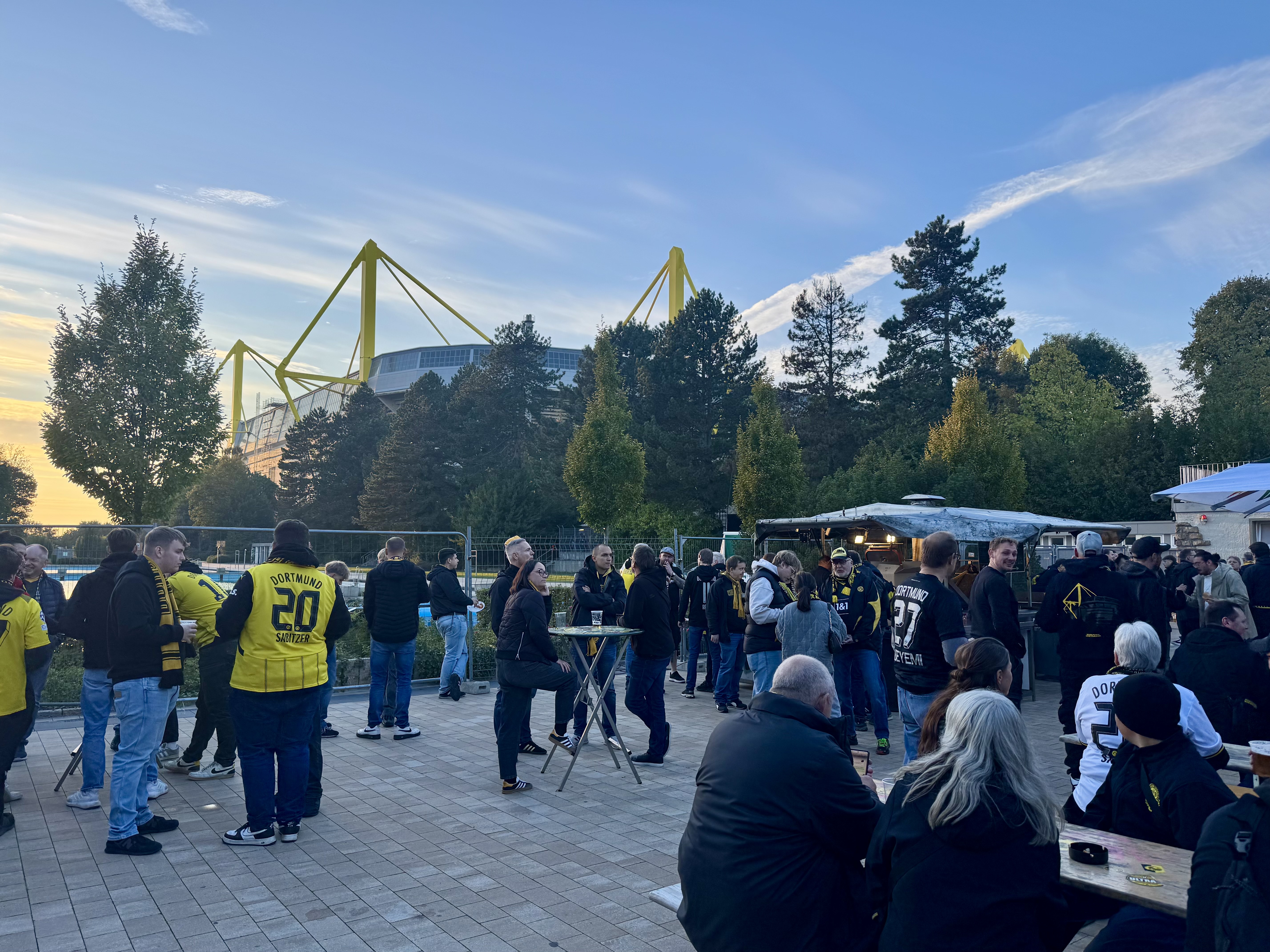
Dortmund plays at Westphalia stadium, though officially called Signal Iduna Park for sponsorship reasons. It is Germany’s largest stadium and the sixth-largest in Europe. Nik read ahead of time that the stadium has a pretty cool pre-game vibe with food and drink options. Knowing we’d probably have to make the 30 minute walk back to the hotel after the game we called an Uber to take us the stadium.
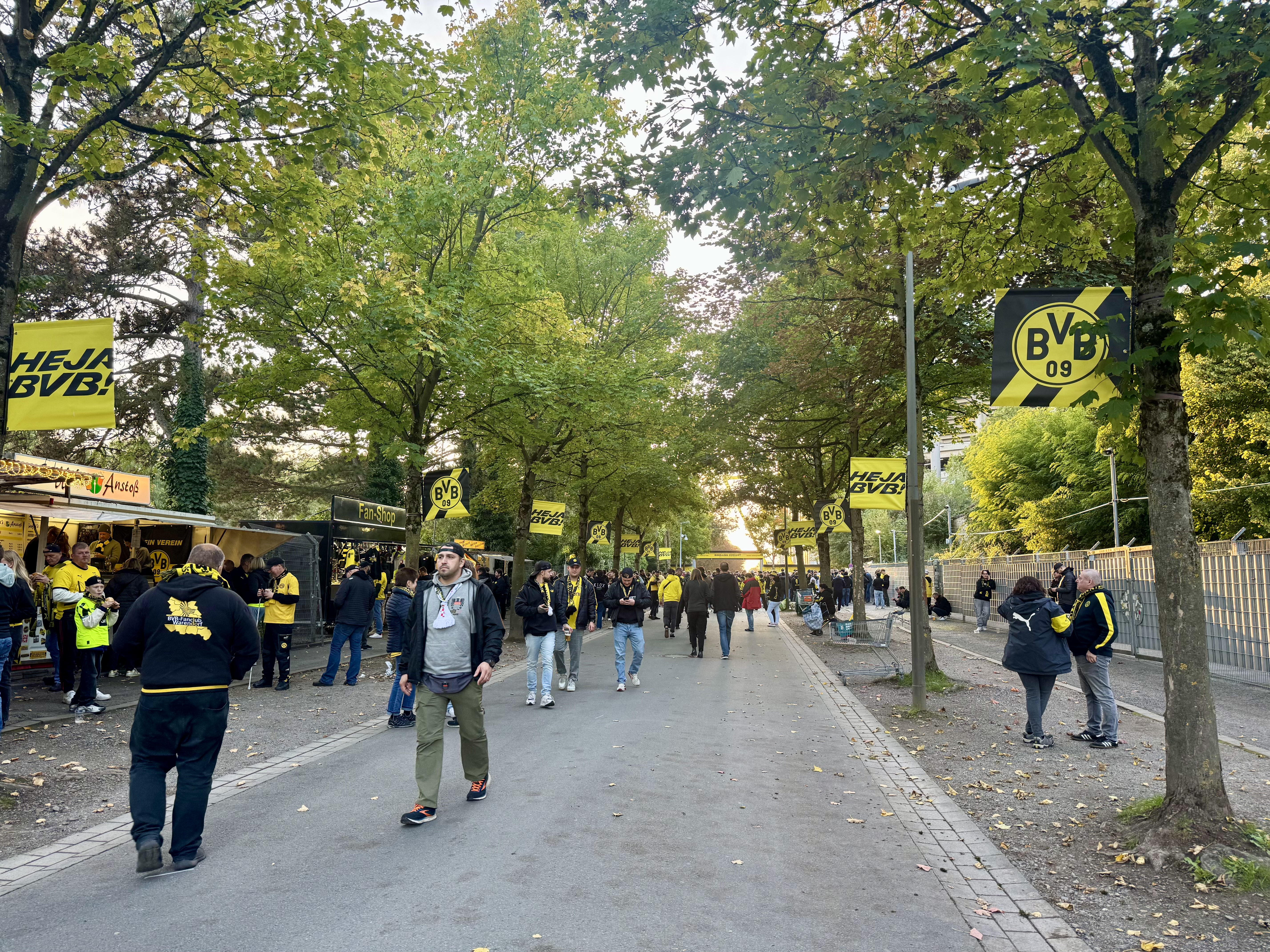
Food vendors lined up along the roadside and there was even a beer garden inside Stadion Rote Erde, where the team played in its early years and into the 1970s before the new stadium was built next door.
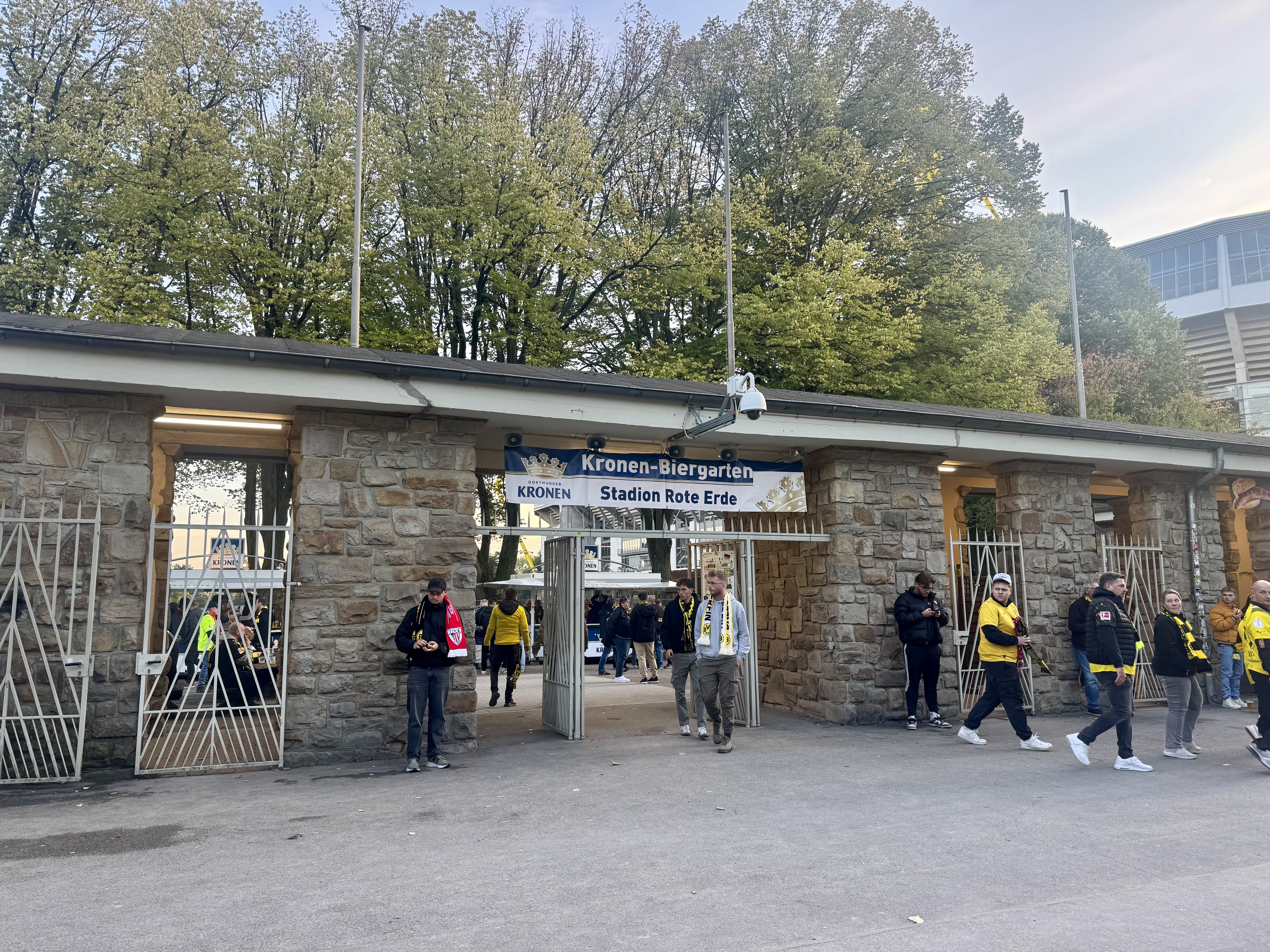
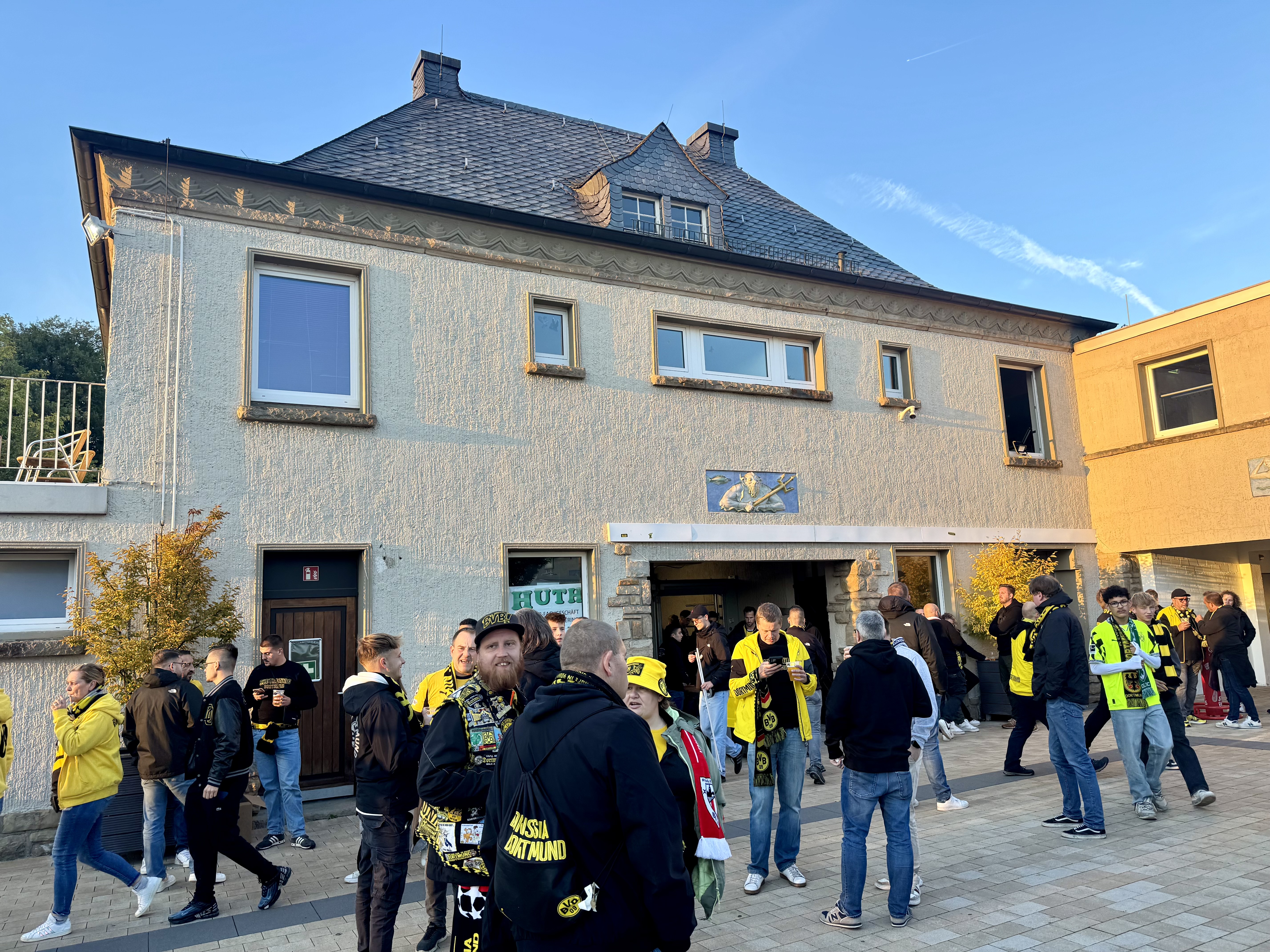
There was also another beer garden option at the far end of the stadium grounds that we checked out too. The building we entered through may have been part of the nearby pool club that appeared closed.
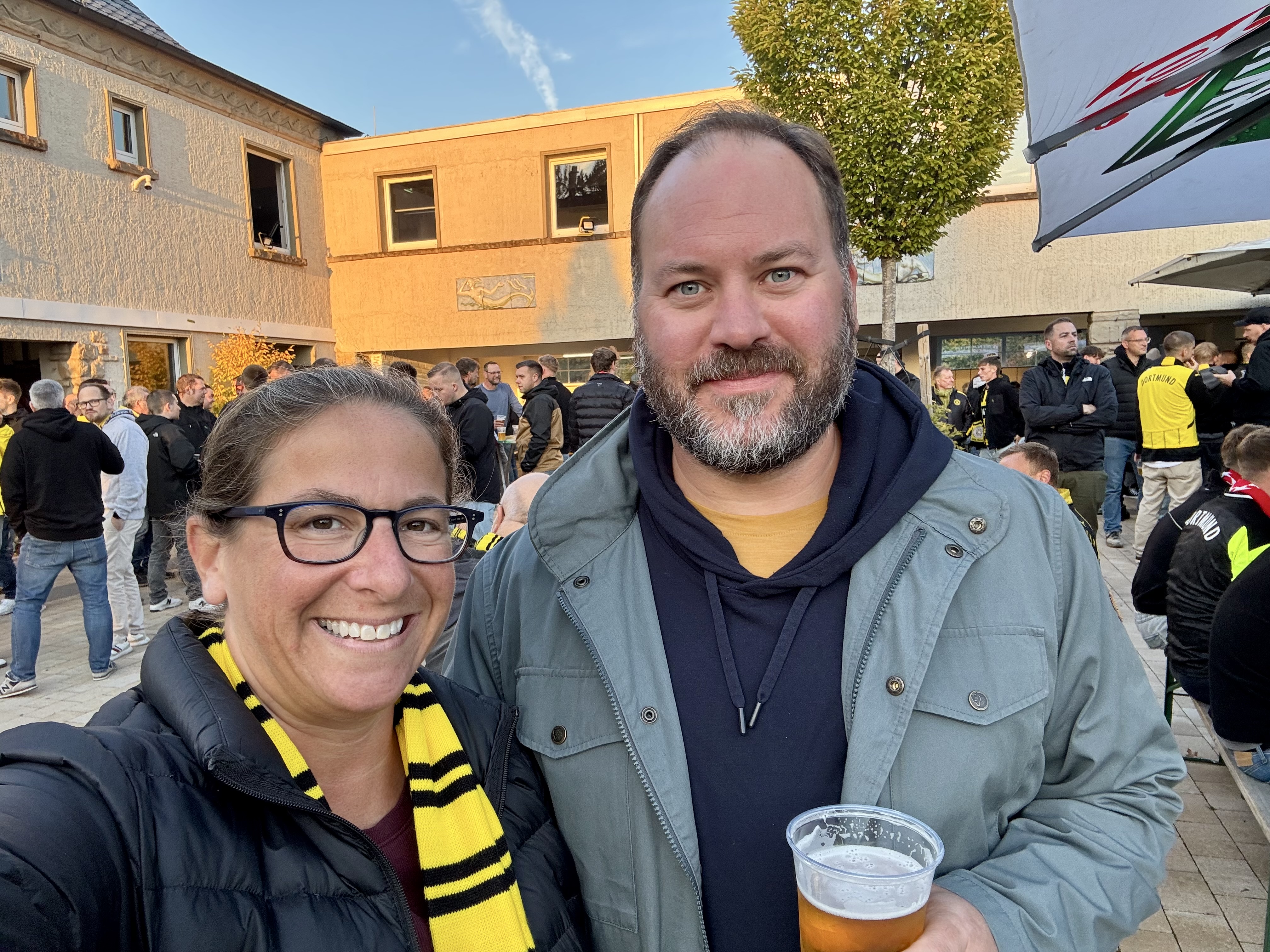
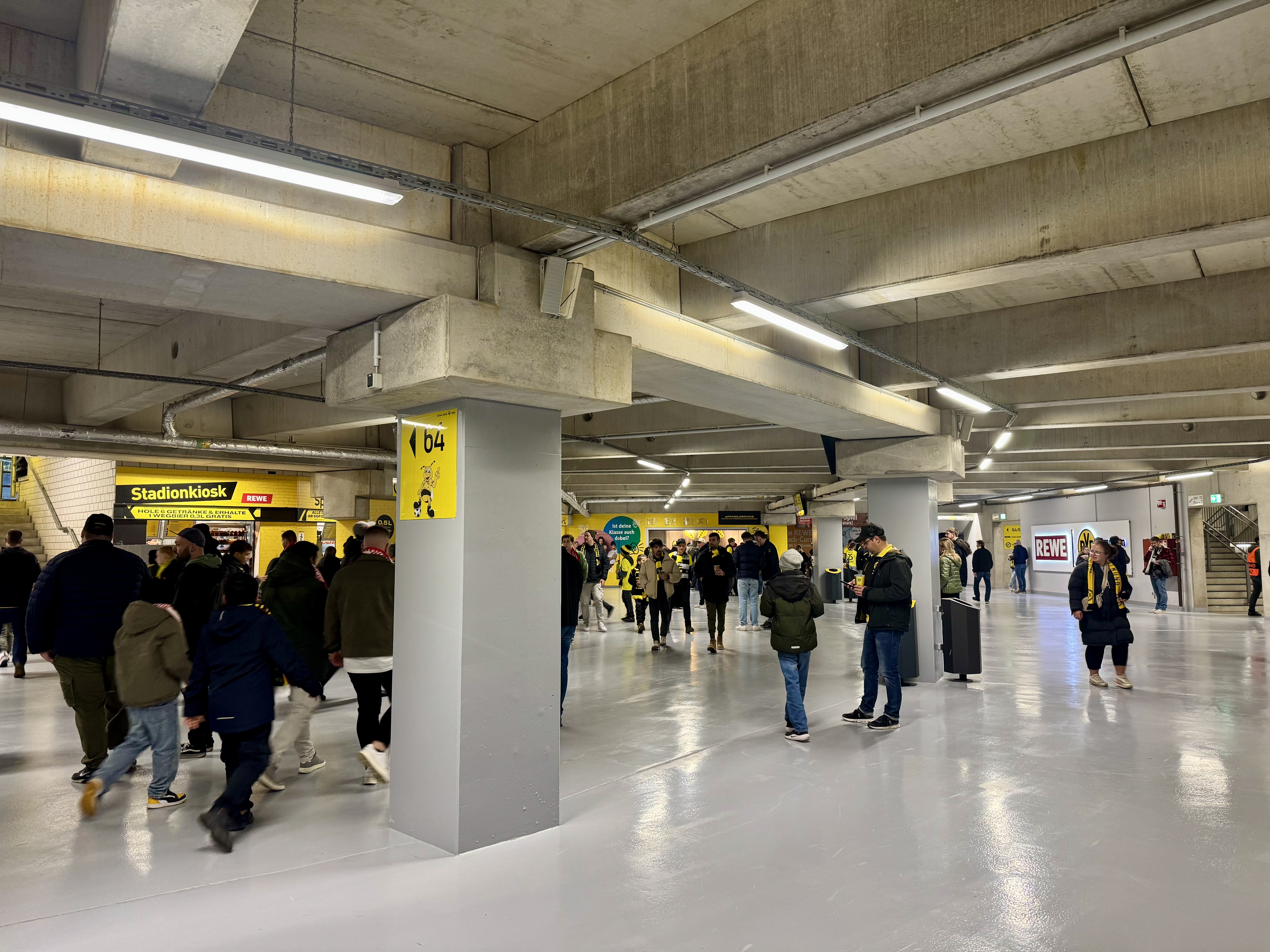
Over the last few years we’ve been to several European stadiums for sporting events and concerts. Dortmund’s stadium felt the newest and most American, with wide, bright concourses and plenty of restrooms for both men and women. The stadium also had a very nice and large team shop with every possible item one might need to own so I picked up a team scarf.
Related: Hertha Berlin Soccer at Olympic Stadium
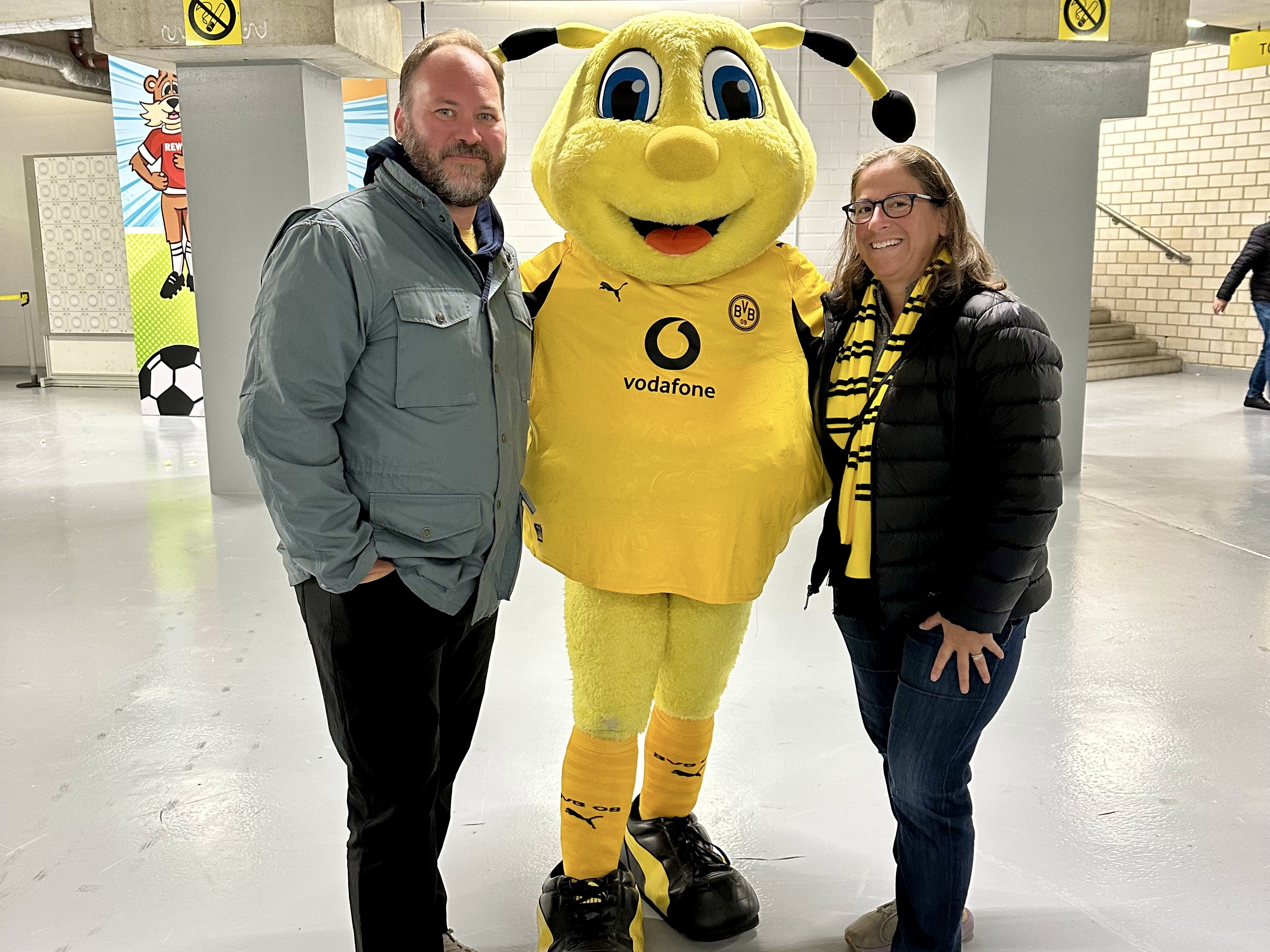
Entry into our gate was pretty easy. It was certainly busy but there was good signage and plenty of staff to keep things moving along. Once inside, Dortmund’s mascot, Emma the Bee, was making the rounds, so of course we had to get a picture.
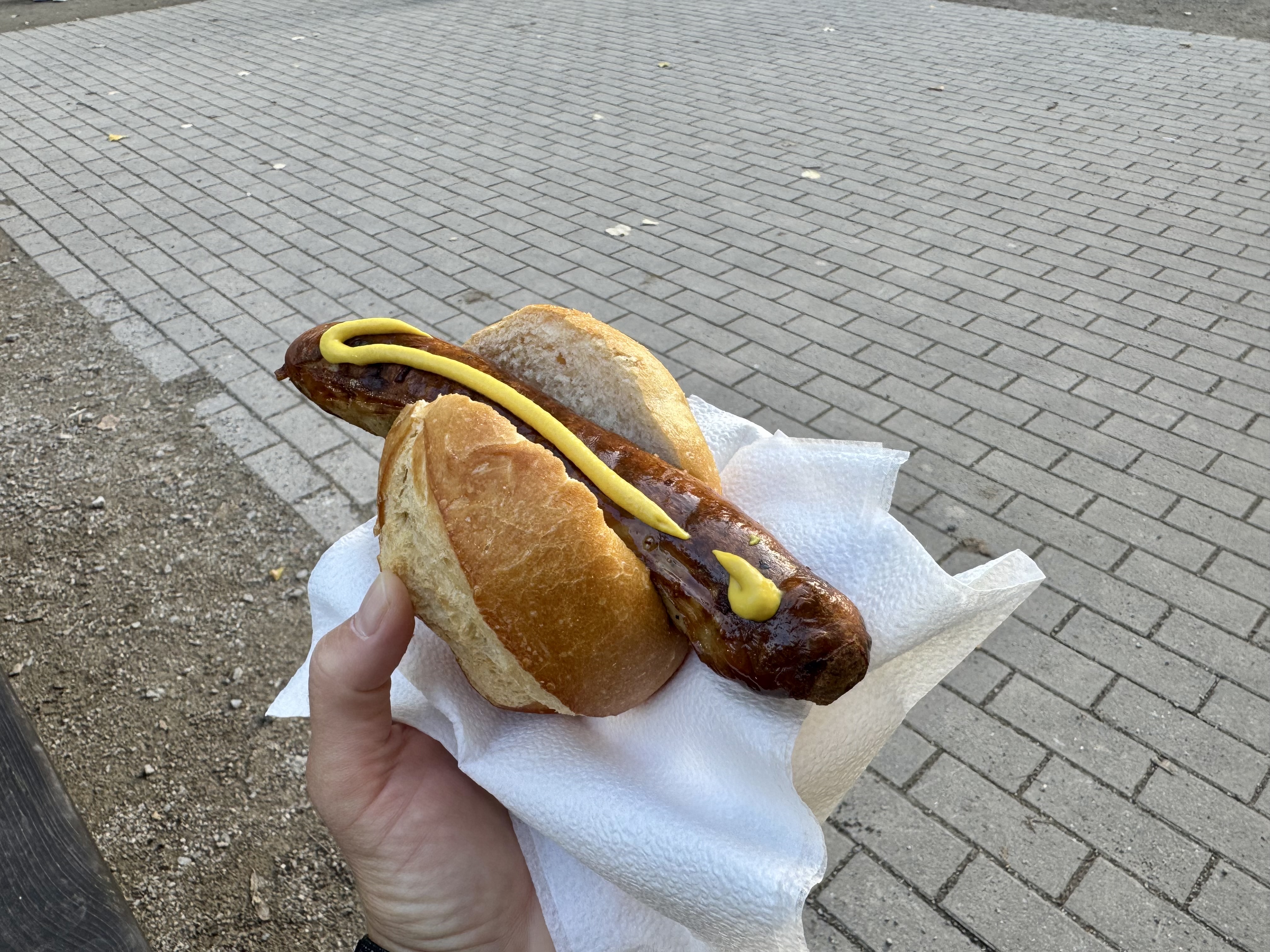
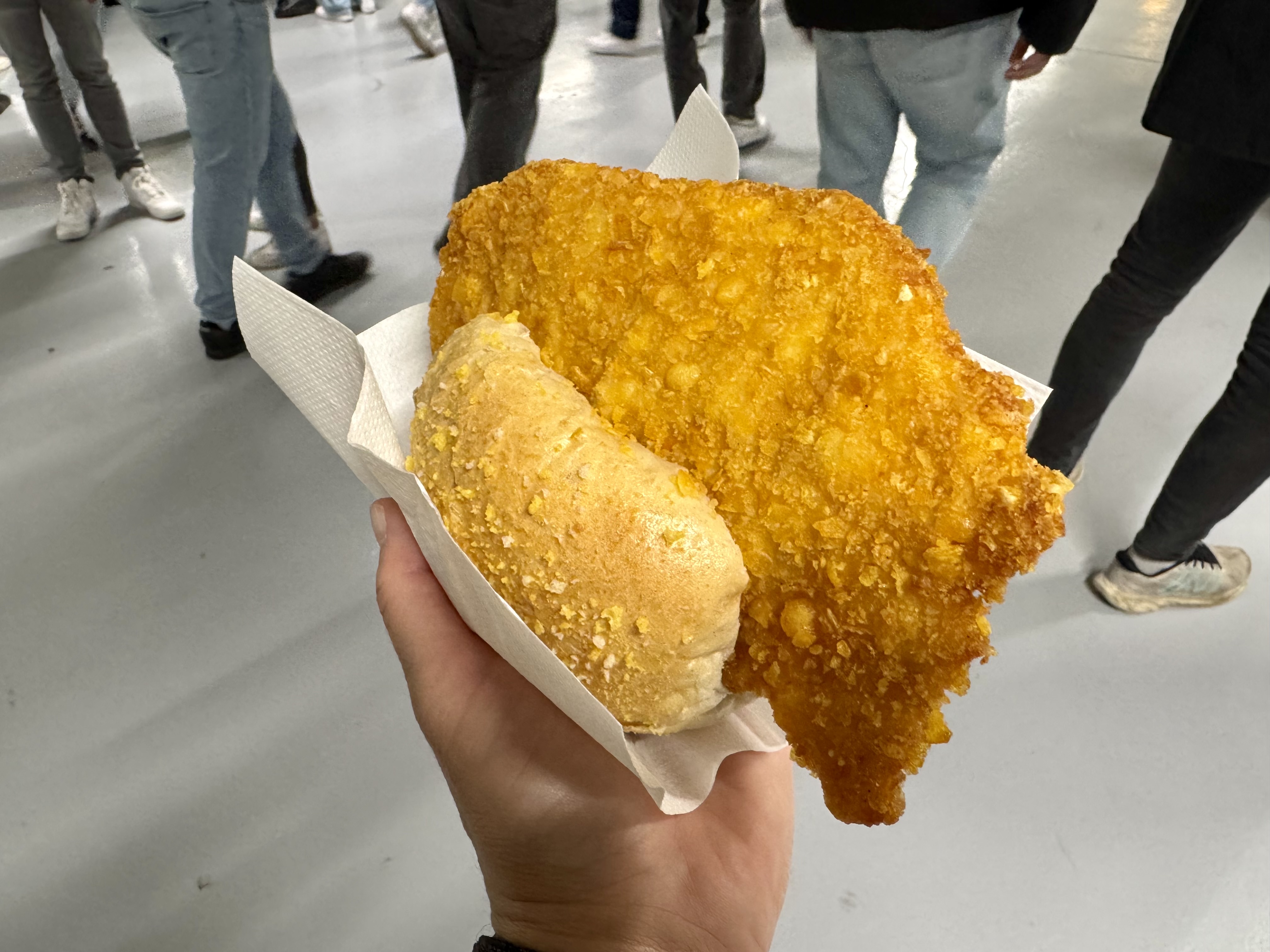
The next priority was food and drink and boy was it successful. The concession options were some of the best we’ve seen at a European event. The usual pretzel and popcorn were available, but then they stepped up their offerings with kebab pita pockets and schnitzel sandwiches! The latter was delicious. I’m surprised we didn’t get a second one.
Related: Camp Nou for an FC Barcelona Match
As soon as we entered the stairwell to our seats, you could feel and see just how large the stadium is. We probably got to our seats about 45 minutes before opening kick to take it all in.
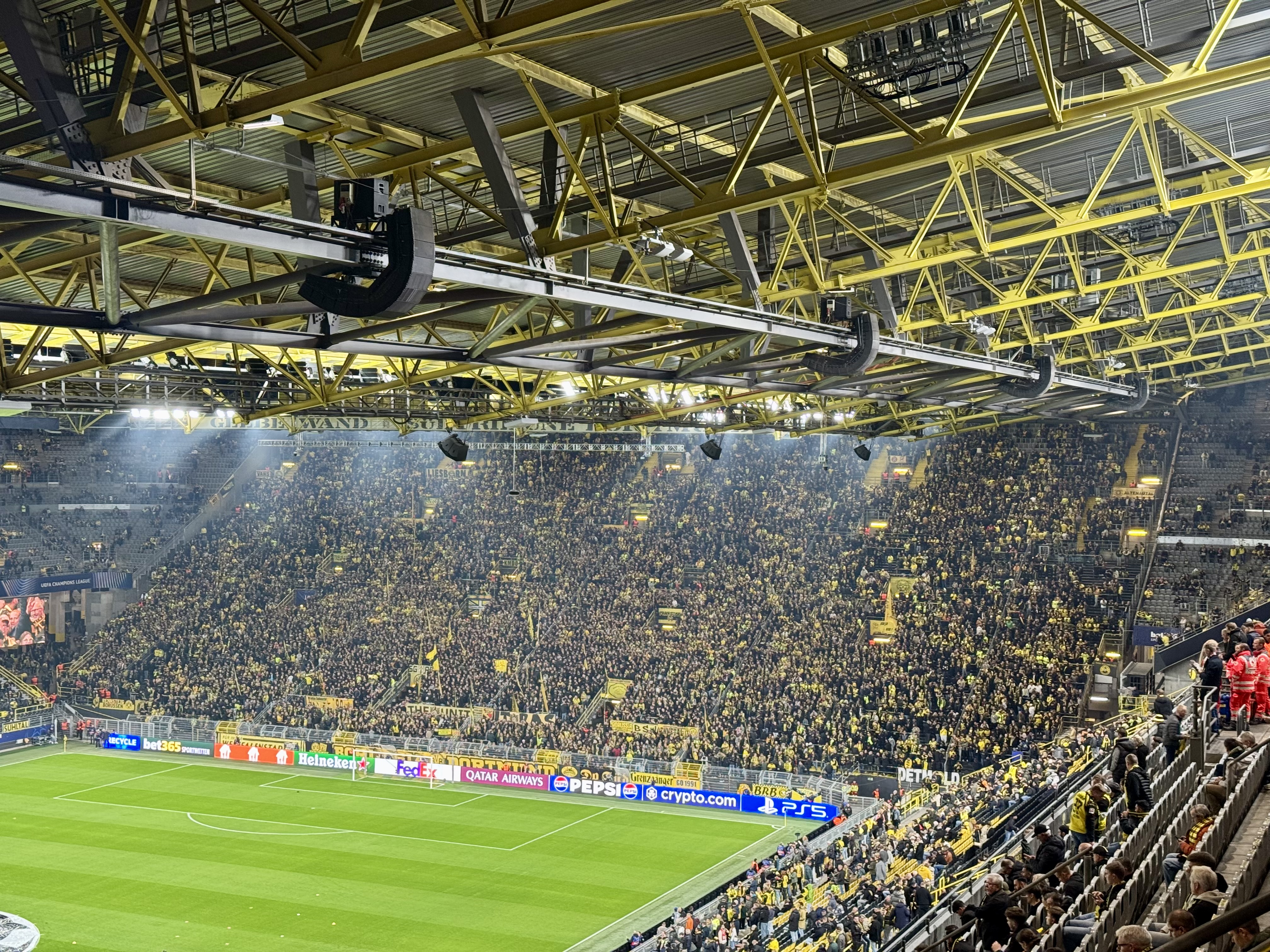
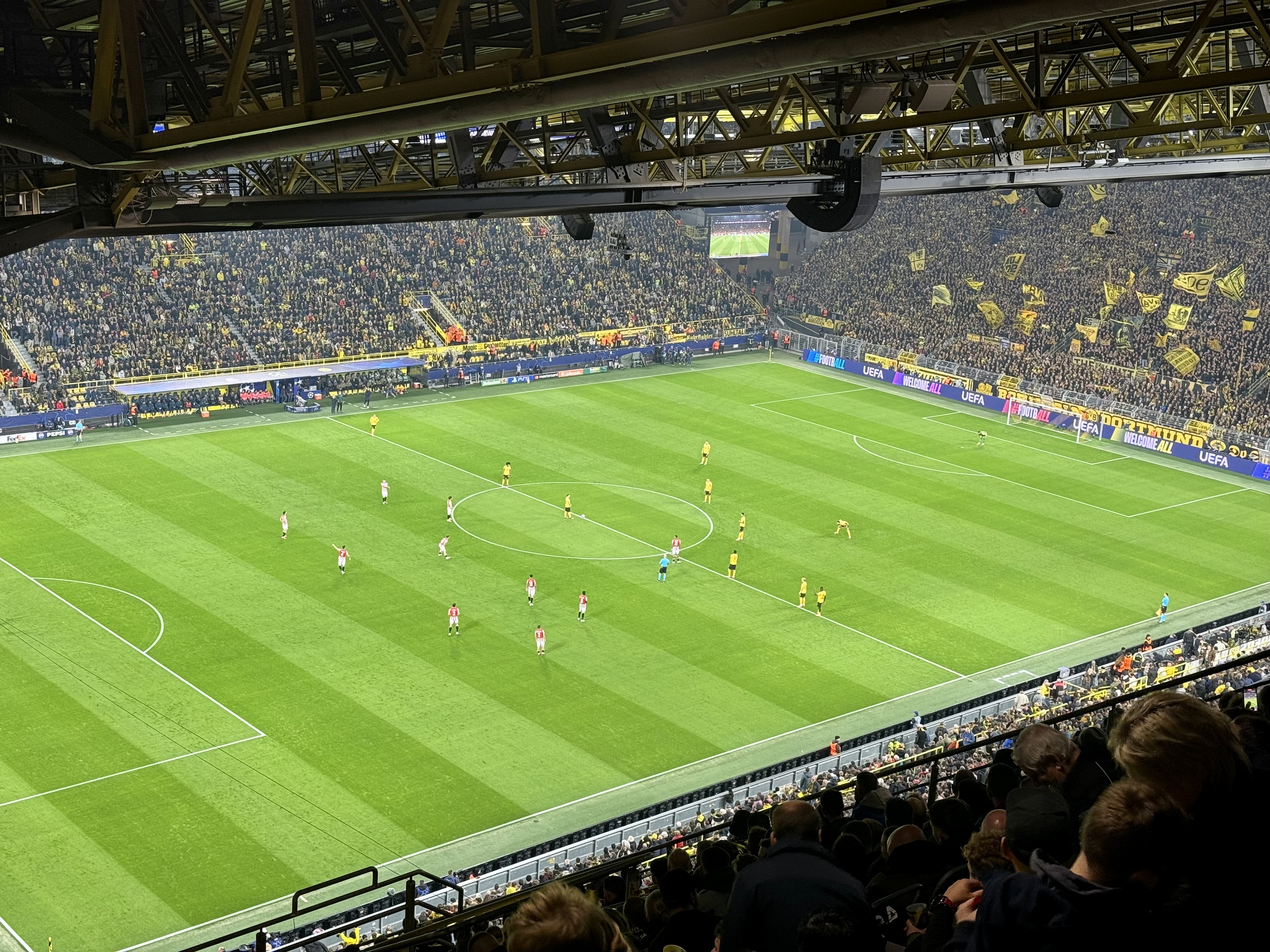
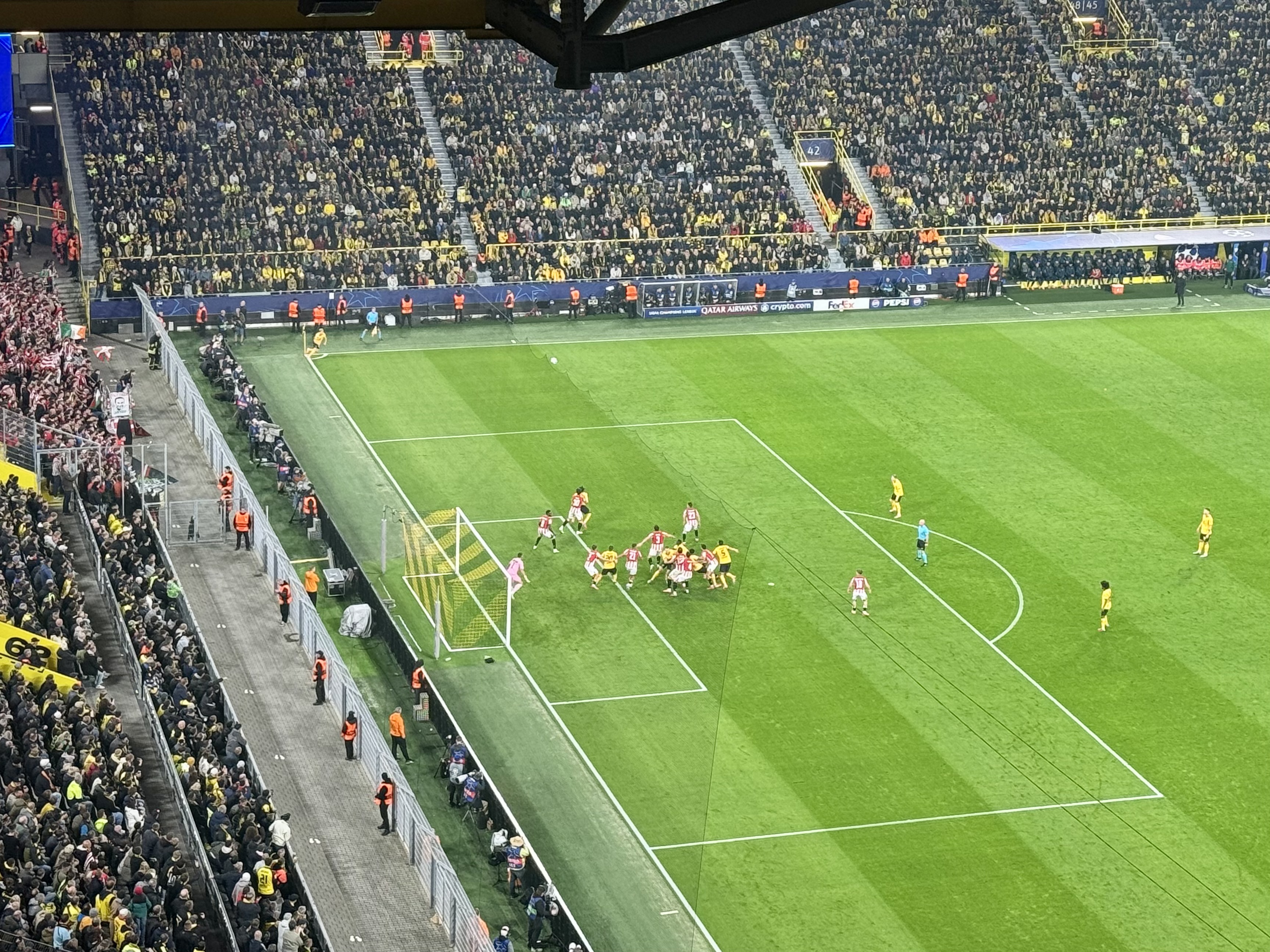
The atmosphere felt electric from the start. Fans around us cheered nonstop and waved their scarves throughout the match, while supporters in the Yellow Wall kept the energy high with signs and drums. We saw a couple goals at our end of the field too, as Dortmund won 4-1.
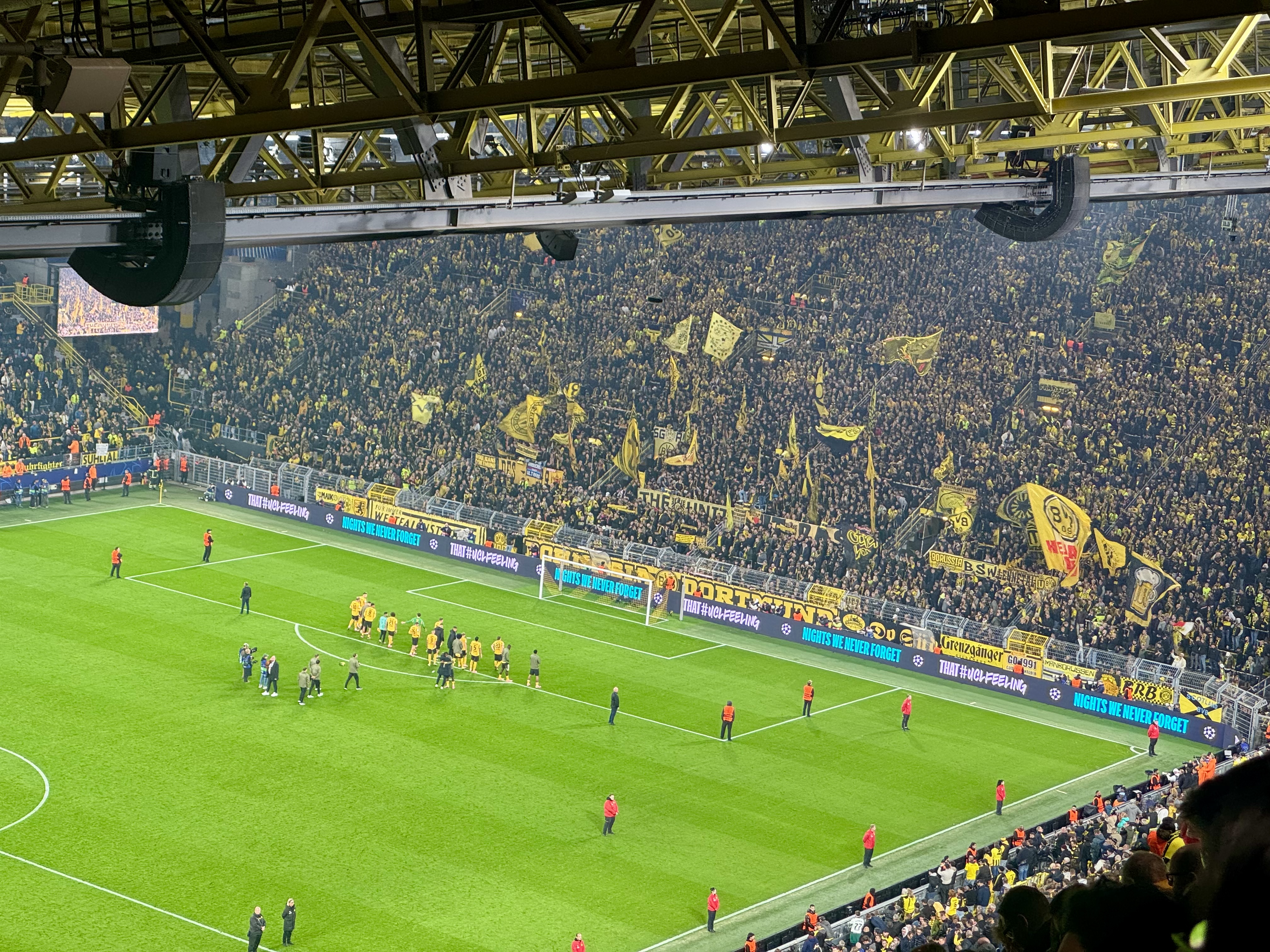
We took our time leaving the stadium and made sure to return our plastic beer cups to a concession stand to get our few-euro deposit back. The deposit-and-refund system is incredibly popular across Europe and virtually unheard of in the United States. Once we got outside, we started the roughly 30 minute walk back to the hotel which took us through a pitch black path and a park. Luckily a few others were doing the walk too, but it was still a little nerve wracking.
Dortmunder Oktoberfest
Our second night in Dortmund took us to their Oktoberfest at Revierpark Wischlingenn, a park in another part of the city that once again felt like a suburb. We bought entry tickets ahead of time – €75 for two tickets.
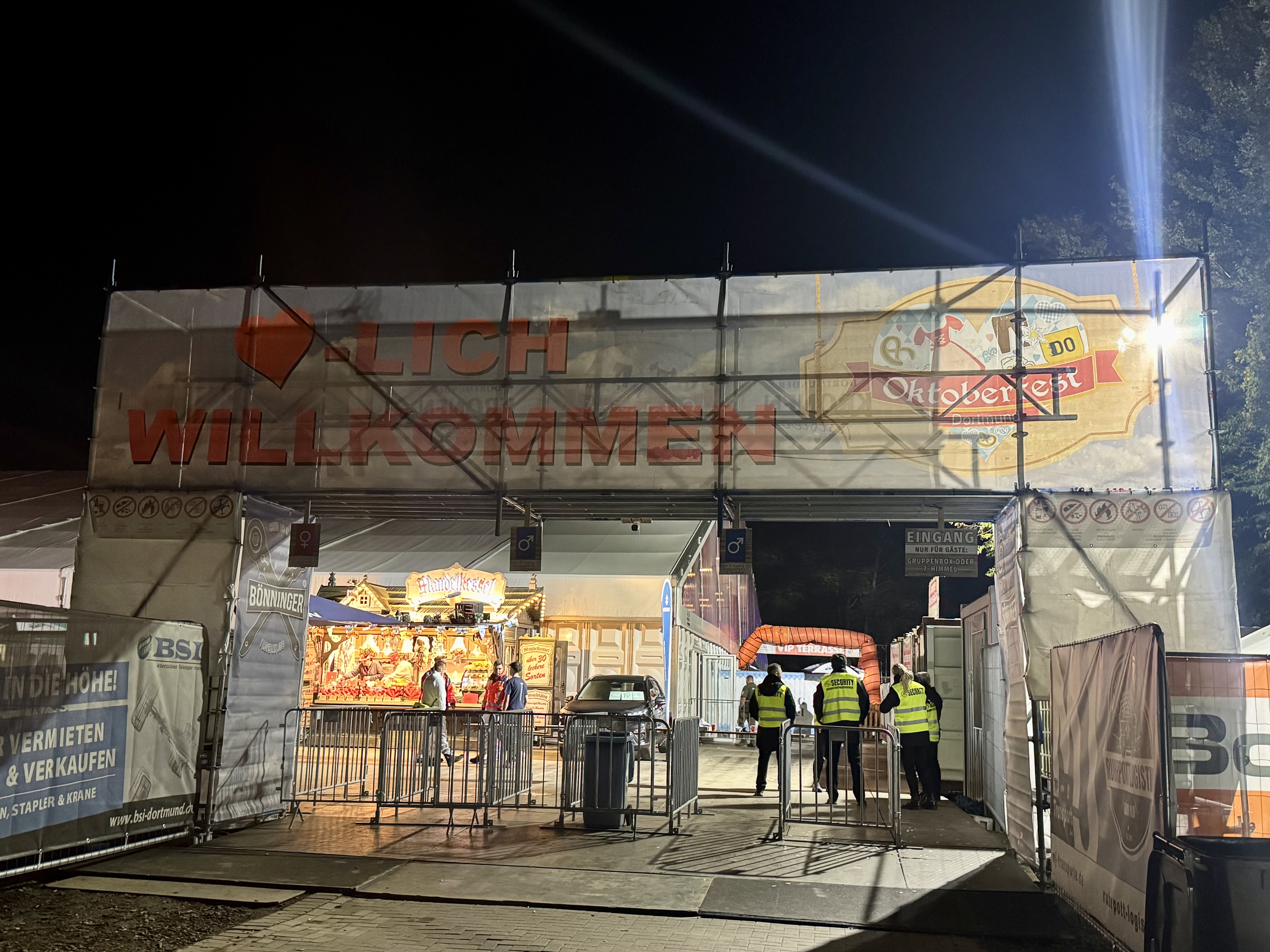
The Oktoberfest website included an FAQ and a section devoted specifically to dress code. It required a traditional Bavarian shirt or dress, but we didn’t take it too seriously and showed up in simple, solid-colored shirts and jeans.
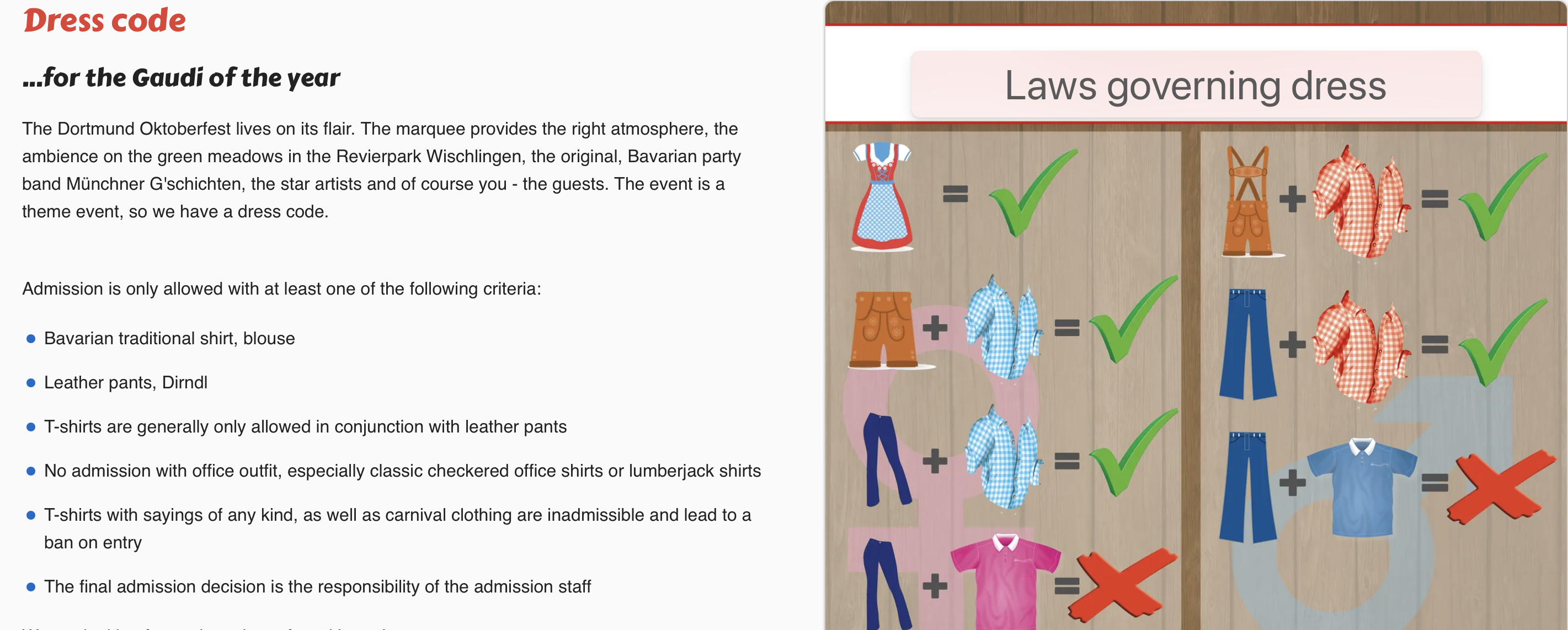
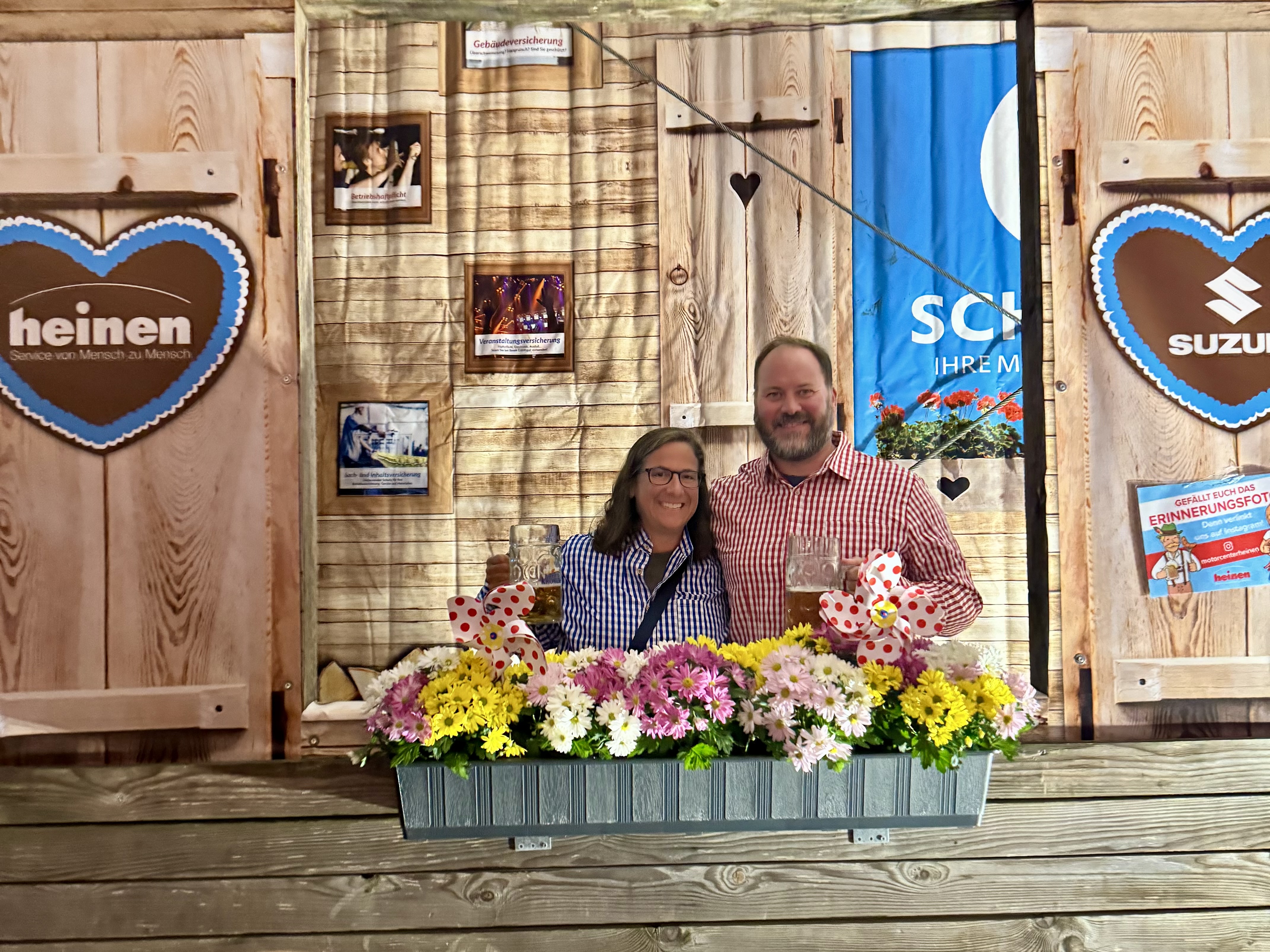
Our tickets got scanned but it was the admission/bag check right after where the workers disputed our outfits. They must expect this to happen since the booth selling food and drink tickets also had checkered button down shirts for sale at €25 each. Both Nik and I had to buy one. Luckily there was a locker area (8€ for the locker) where we could store our belongings for the few hours.
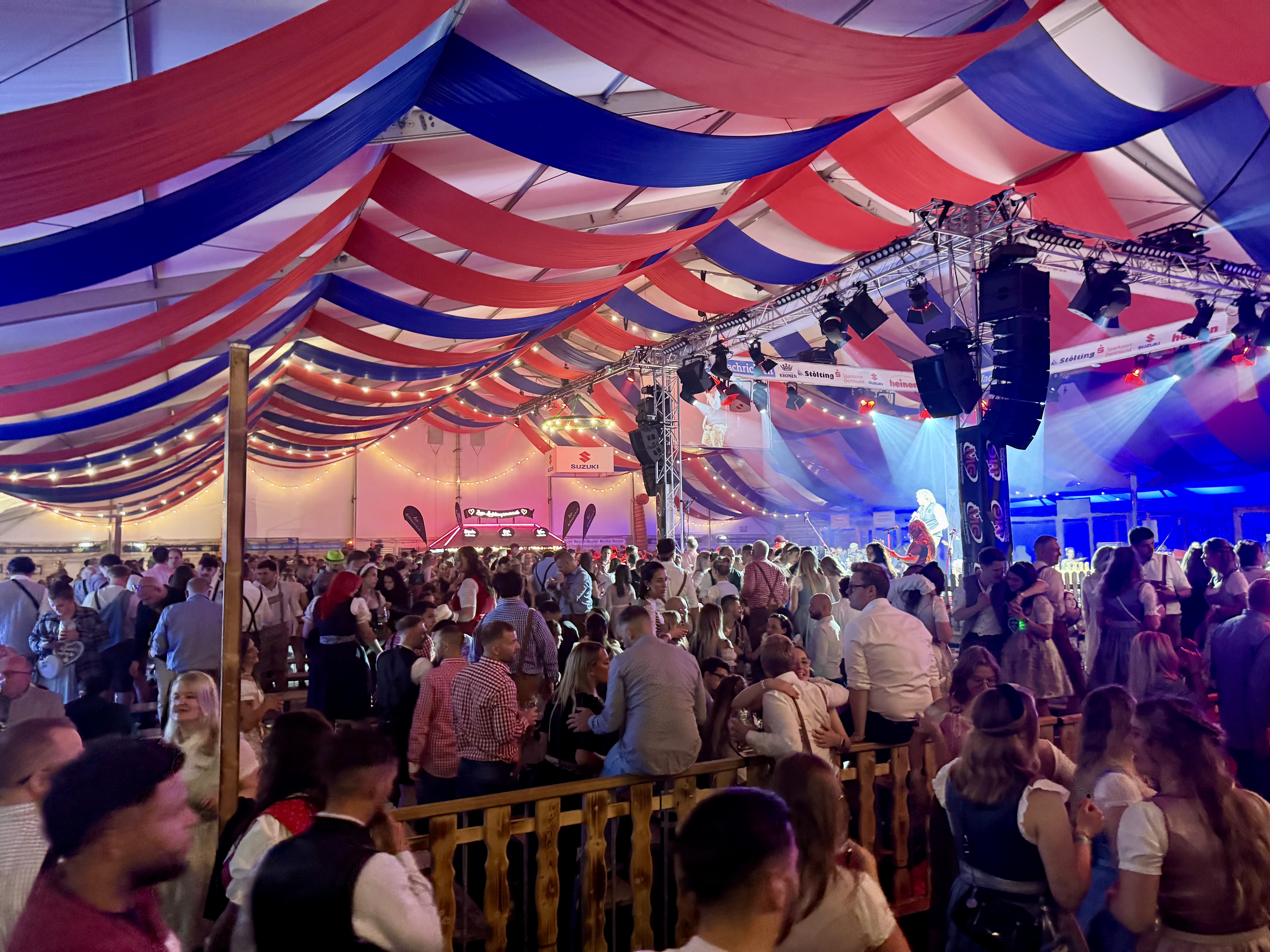
The Oktoberfest setup was one large tent with a center stage for entertainment, a large bar and a separate food area and numerous wooden picnic tables and benches.
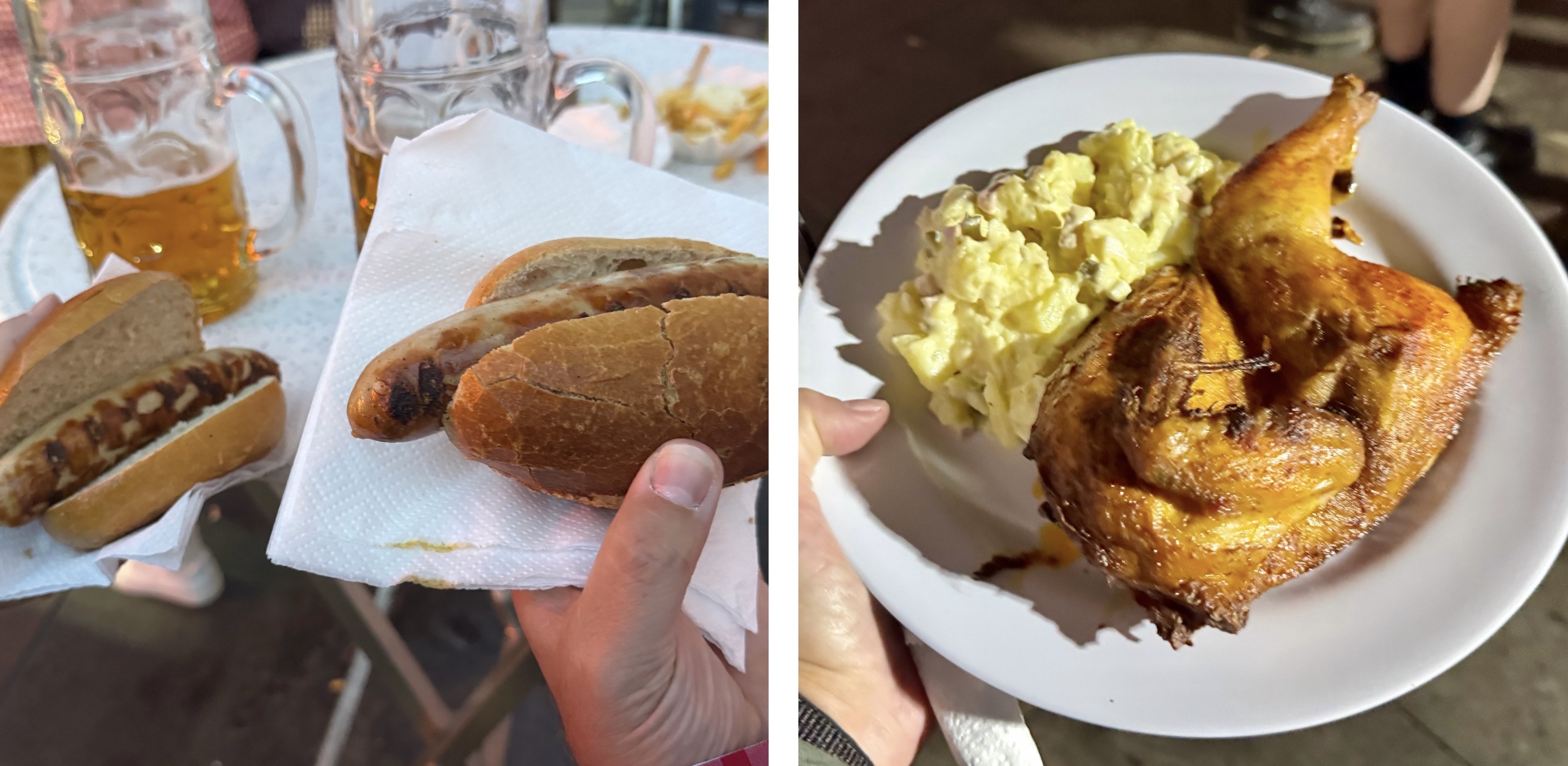
Outside of the tent were hightop tables, another big food stand, a few smaller food venders with pretzels, sweets and other things of that sort. We got sausages and half a roasted chicken. Both hit the spot. Of note, credit cards were accepted throughout and you bought tokens to use for payment of food and drink.
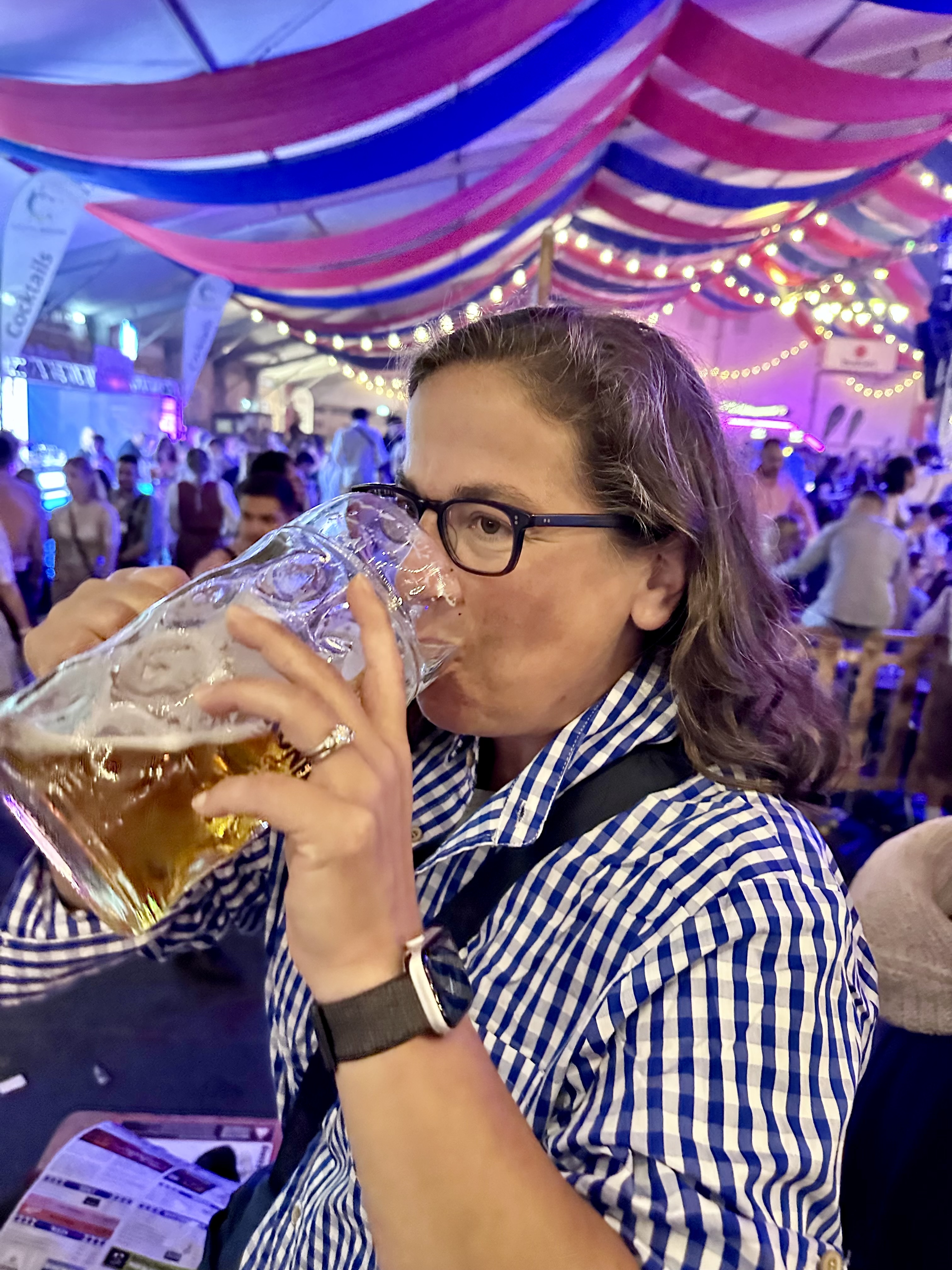
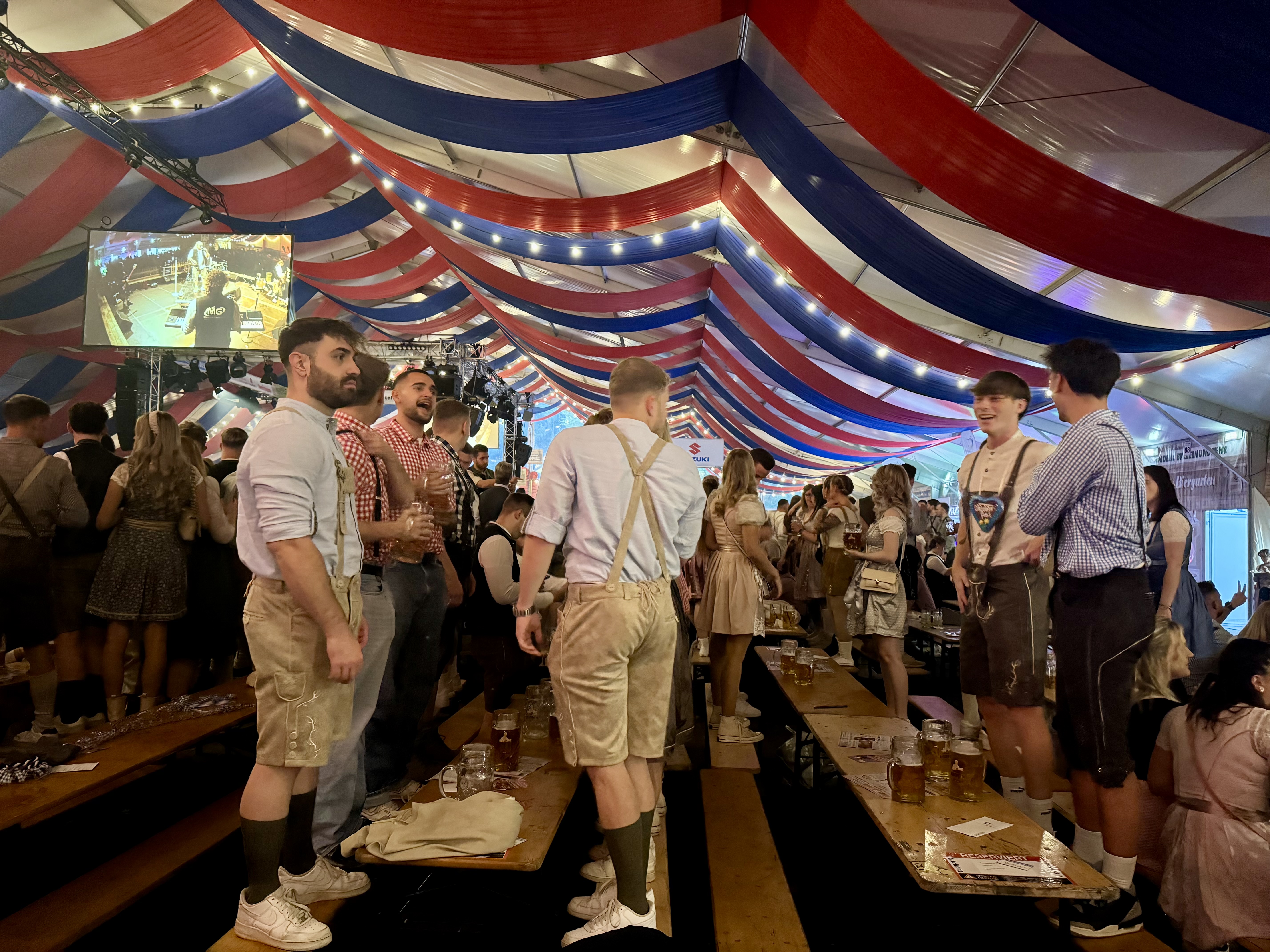
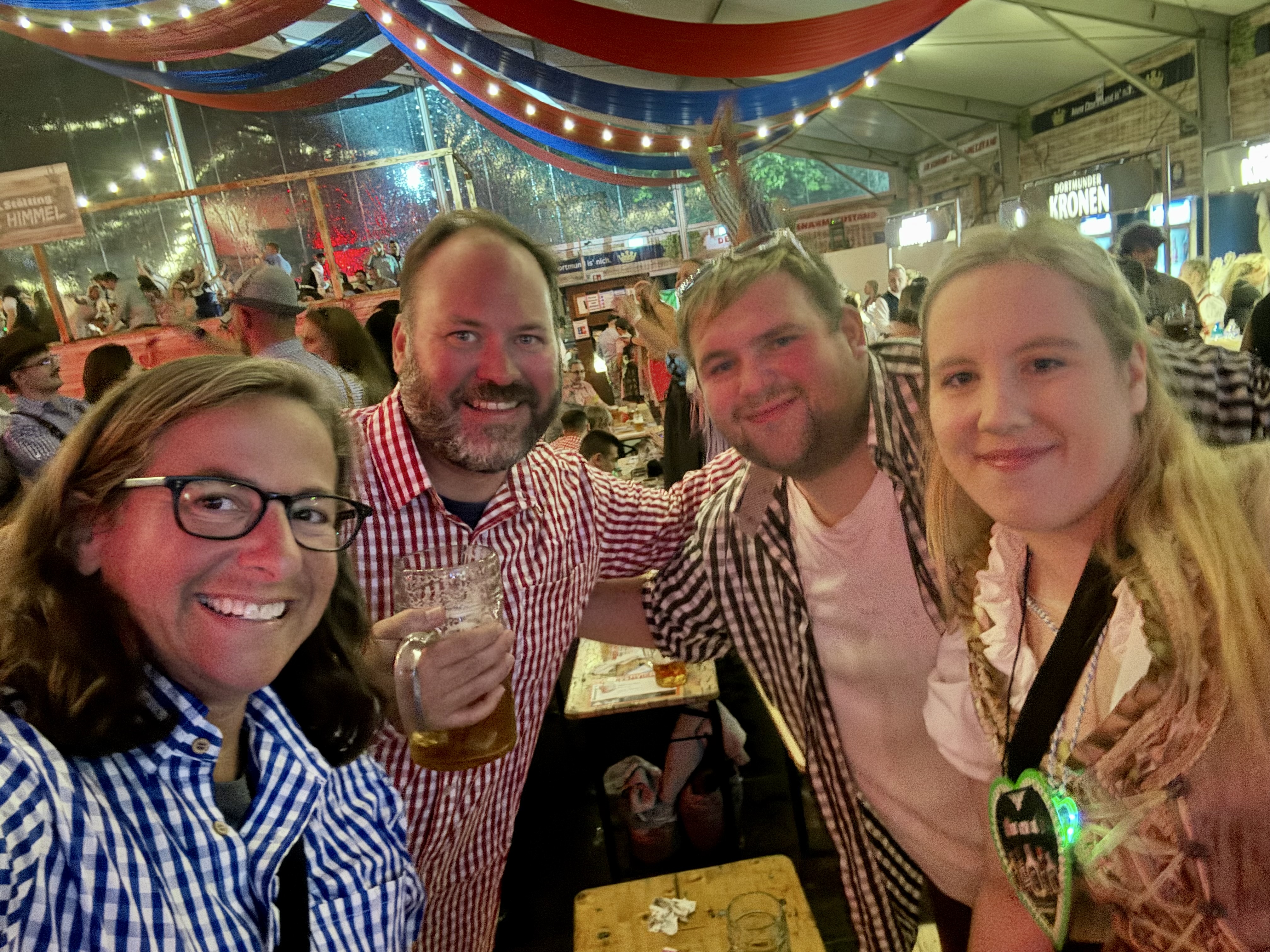
The entertainment rotated between live performances and DJ sets which made for a fun and loud environment. Standing on the benches, and occasionally even a table, seemed to be the norm. Table reservations required a different type of ticket, so we didn’t have access to one. Toward the end of the night, a random couple invited us to join their table, and they turned out to be very nice.
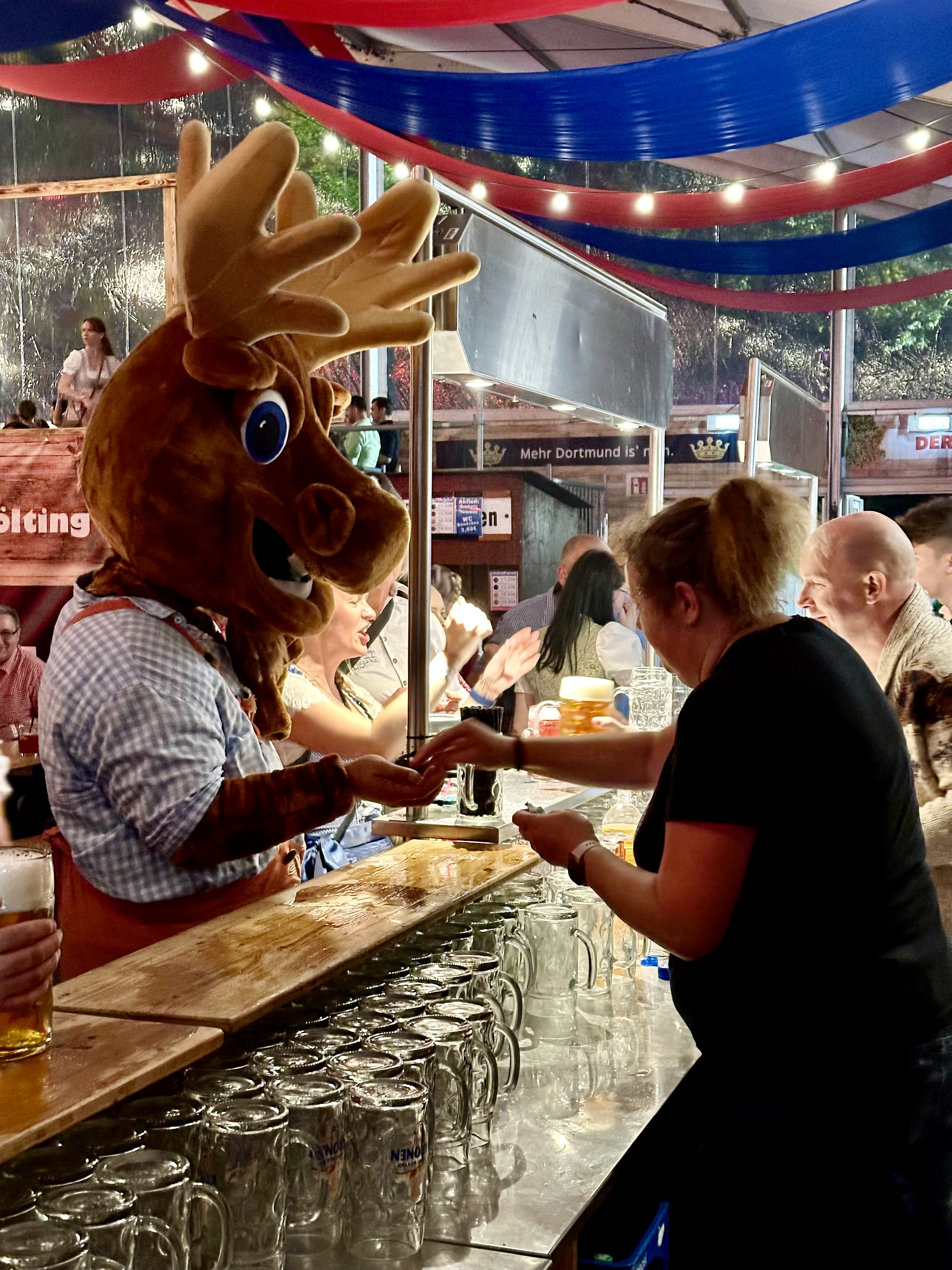
Eddy is the mascot of Dortmund Oktoberfest and, according to online sources, is a mix of an elk and a deer dressed in traditional Bavarian attire.
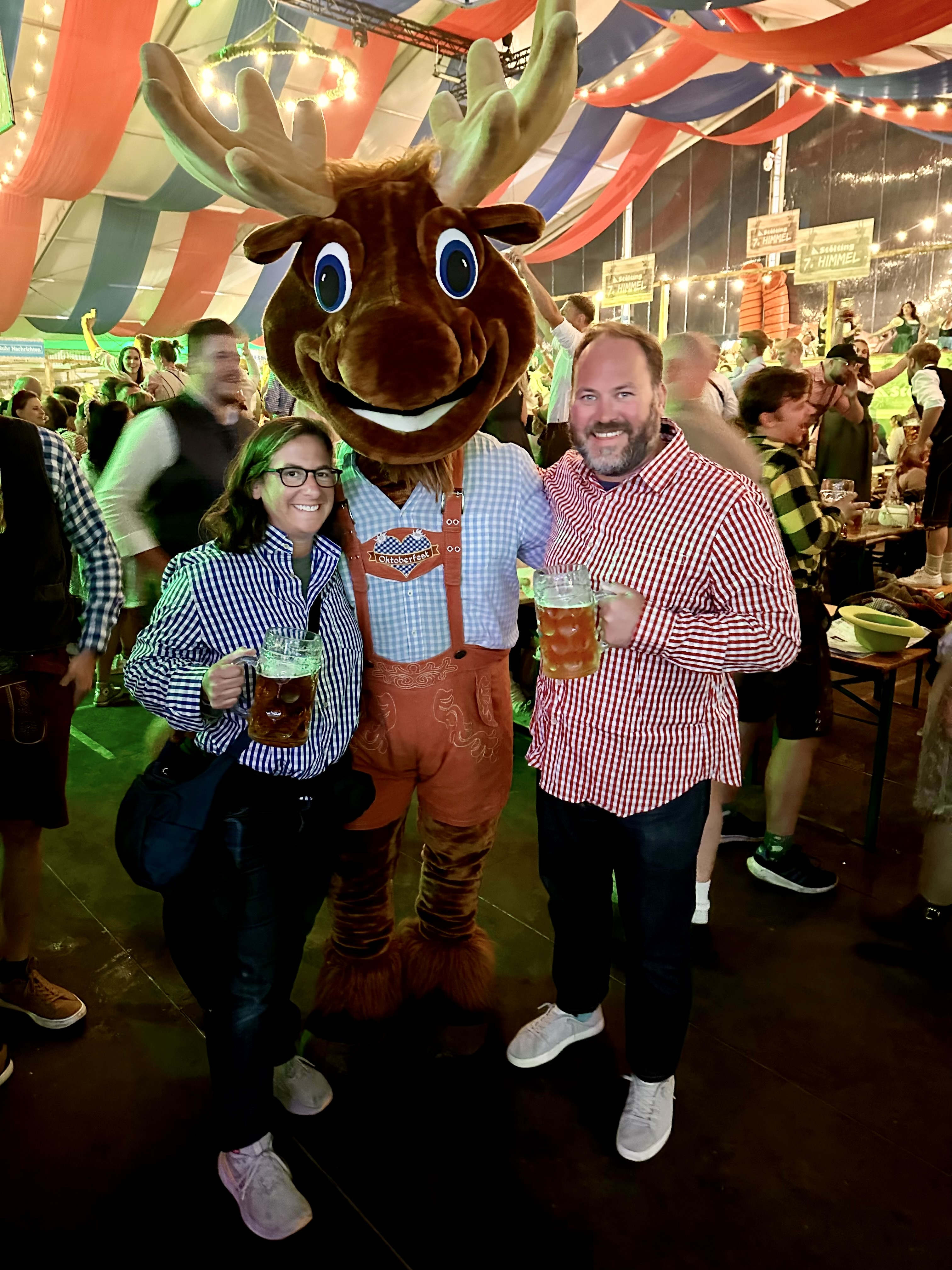
Not only does Eddy pose for pictures, but he can drink like the best of them.
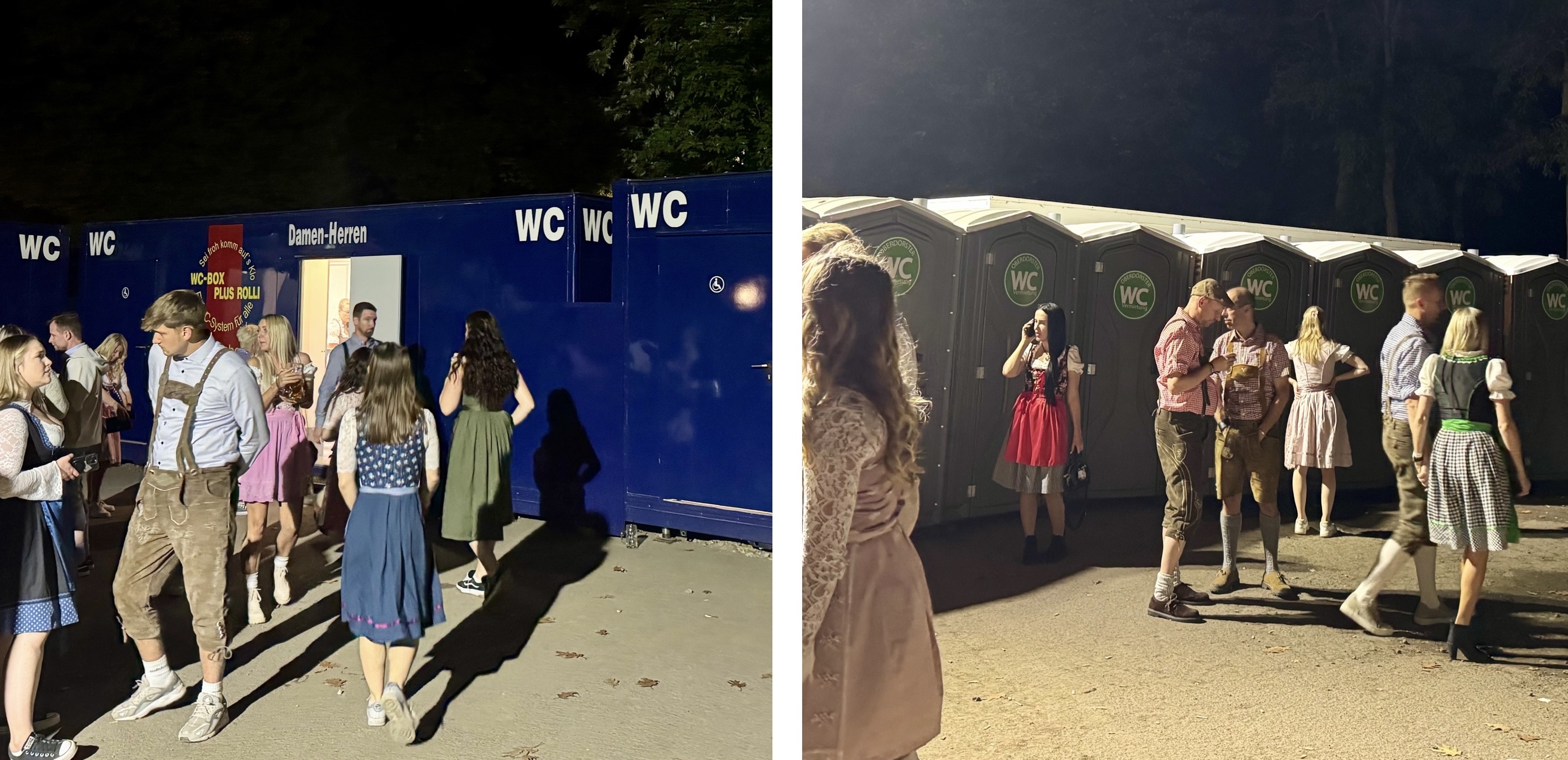
The bathroom situation was also very good for a festival. They had a set of trailer style toilets that were being well kept throughout the night and also the usual porta-potty style.
Overall, we had a great time. The environment was really fun and the perfect size for us. Though Nik would like to experience Oktoberfest in Munich one day, I cannot even begin to fathom the large scale of it compared to our experience in Dortmund.
Old Town Dortmund
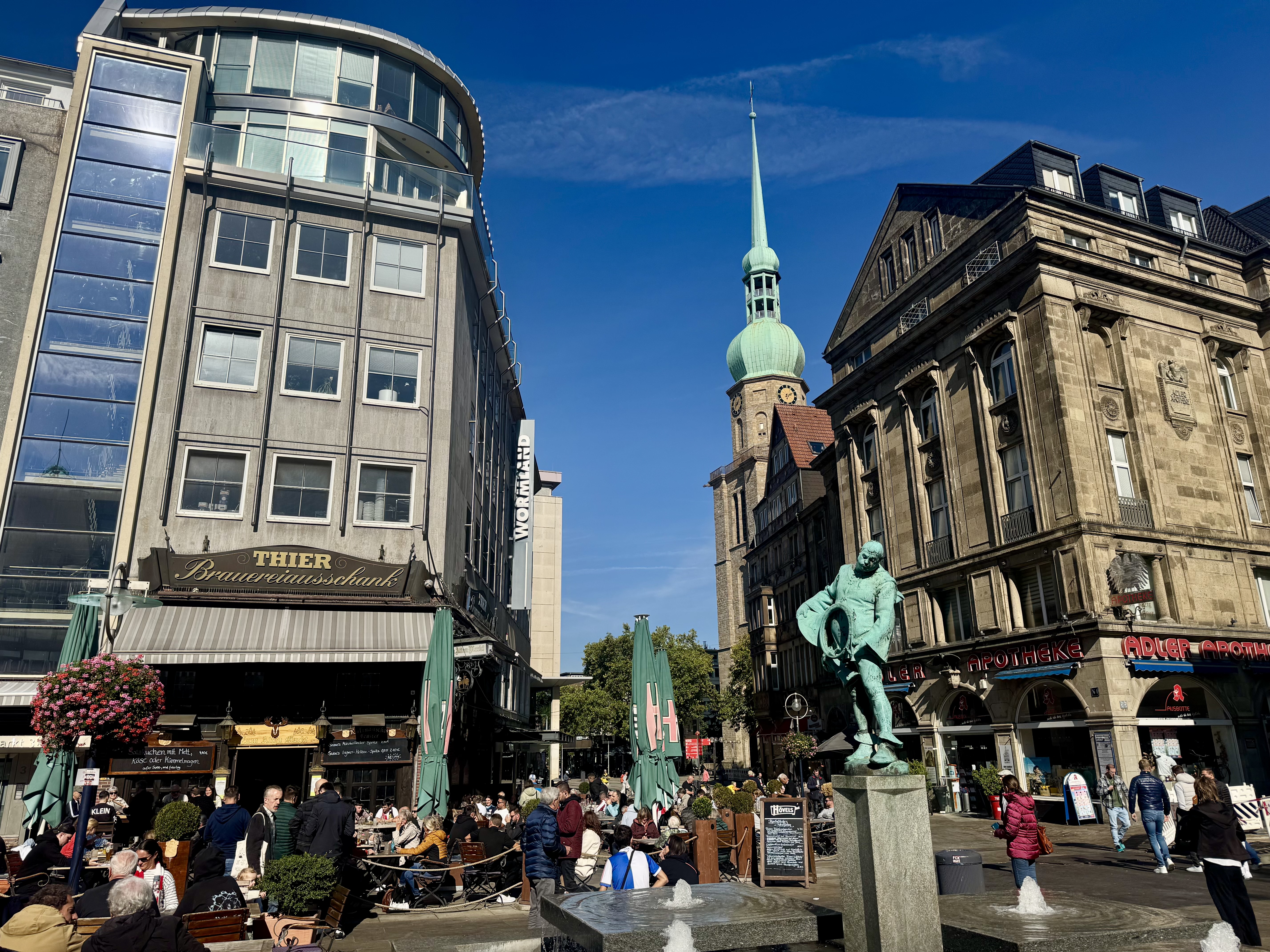
Though visiting Dortmund was a short trip for Nik and I, we did make some time to check out Old Town. We tried to take public transit from our hotel area but we must’ve waited 30 minutes for a train that never came and finally gave up and ordered an Uber. We got dropped off just outside Old Market Square and enjoyed walking around.
Notable Landmarks
There were three main landmarks that stood out to us as we wandered the old square.
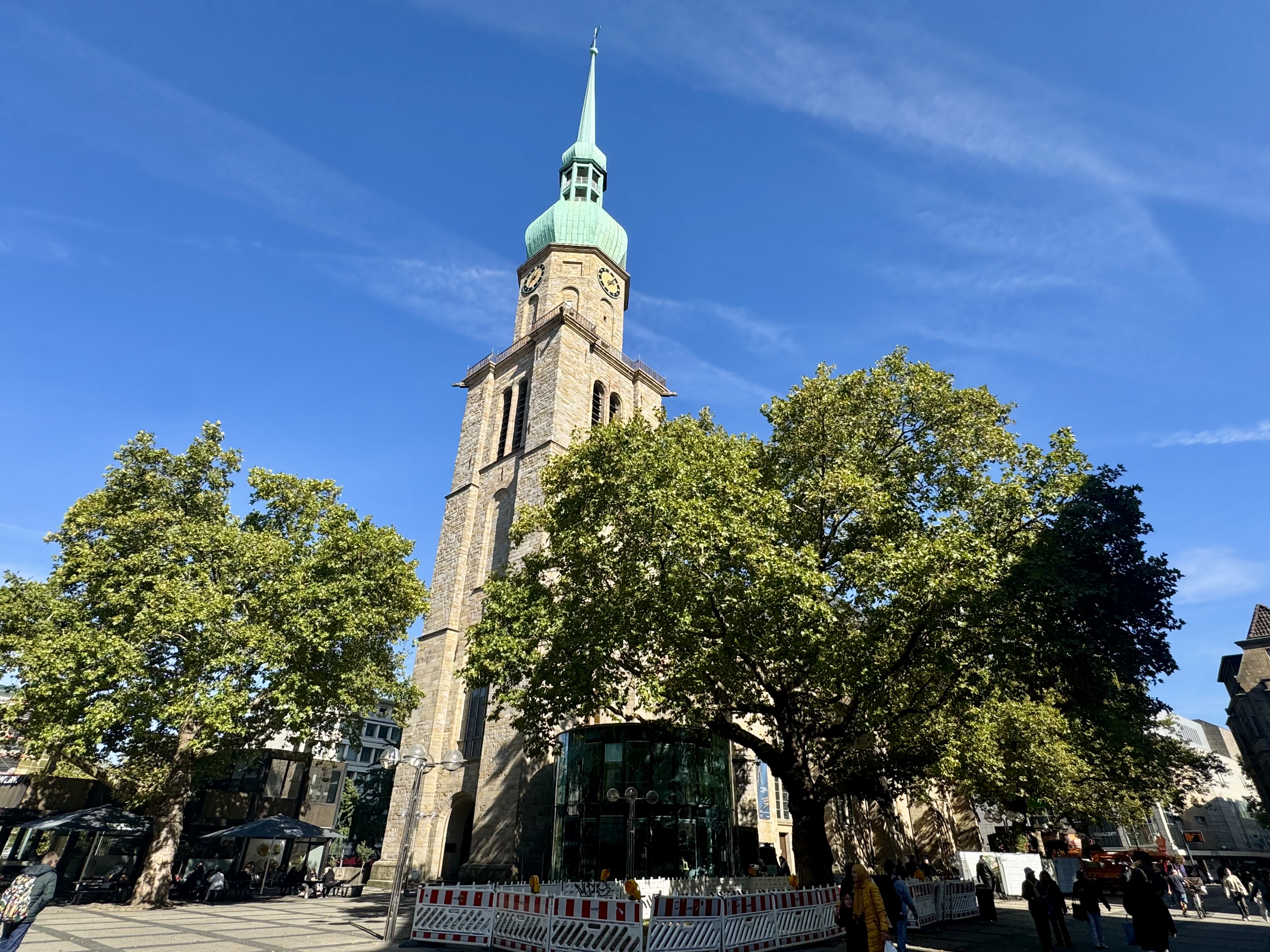
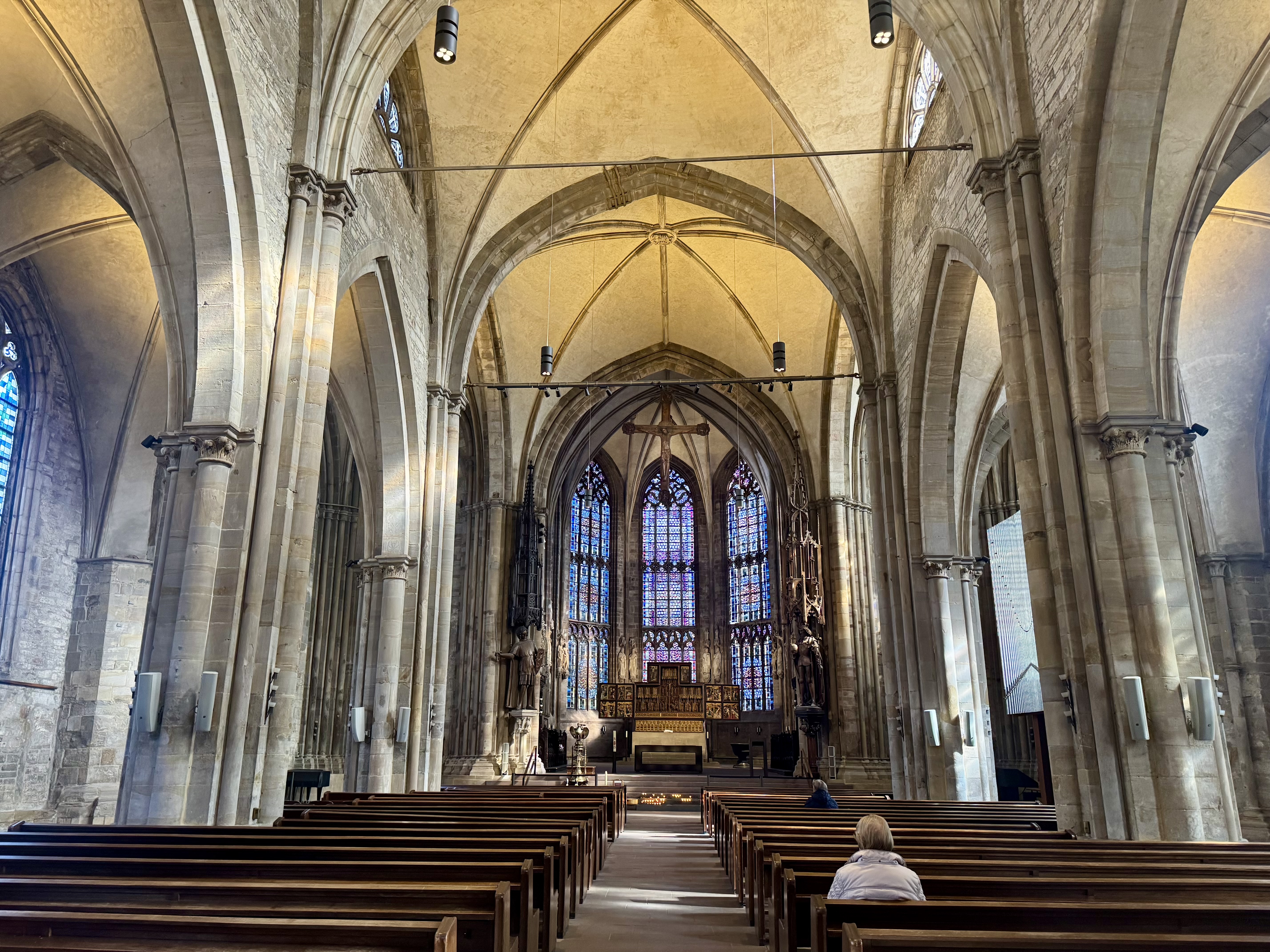
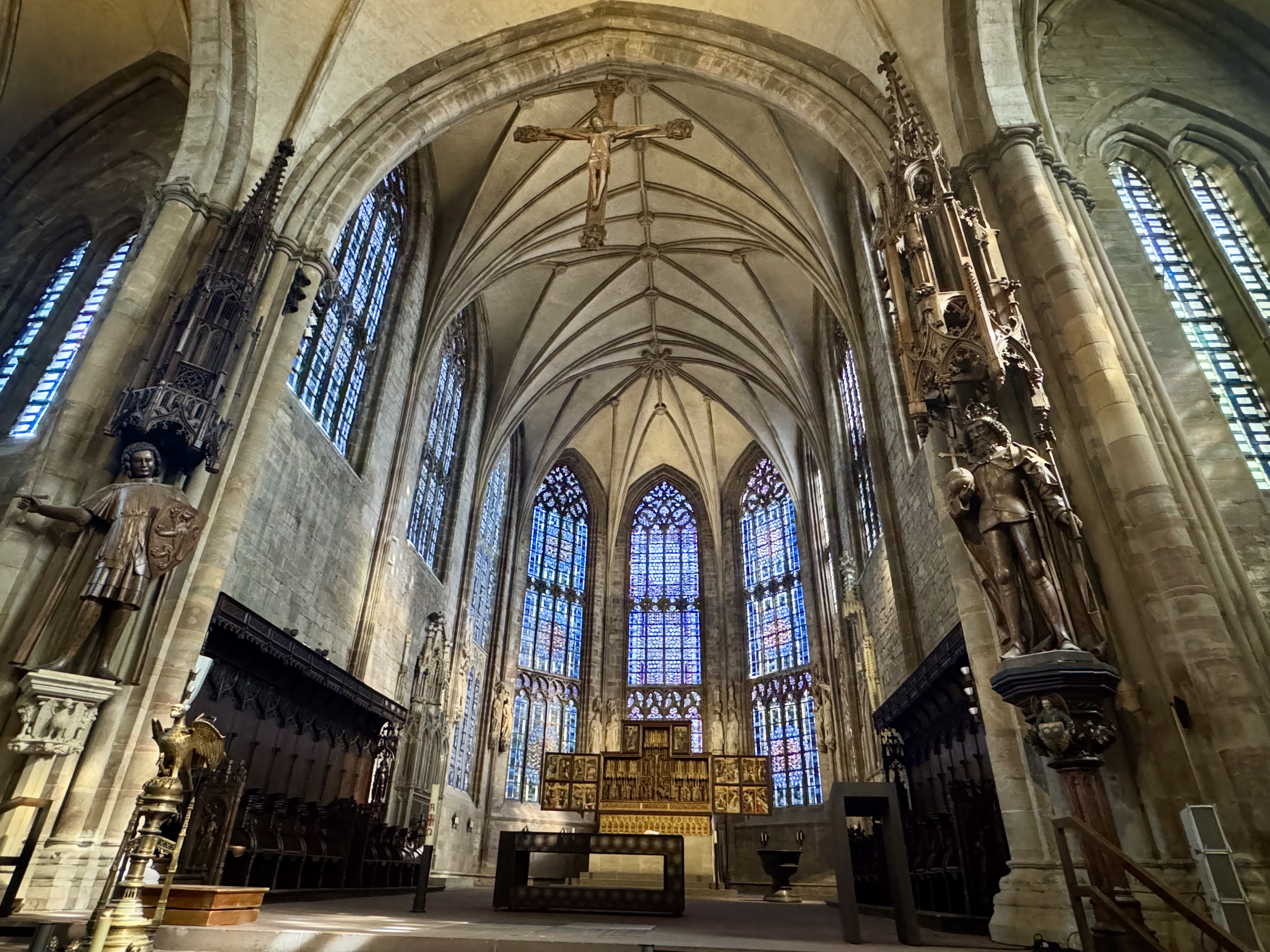
One is St. Reinold’s Church which can be traced to the Romanesque period of the 11th and 12th centuries. The current structure, with its distinctive Gothic features, was largely built in the 13th and 14th centuries. Since then, the church has undergone various renovations and restorations.
The interior of the church features ornate altarpieces, beautiful stained glass windows and intricate carvings.
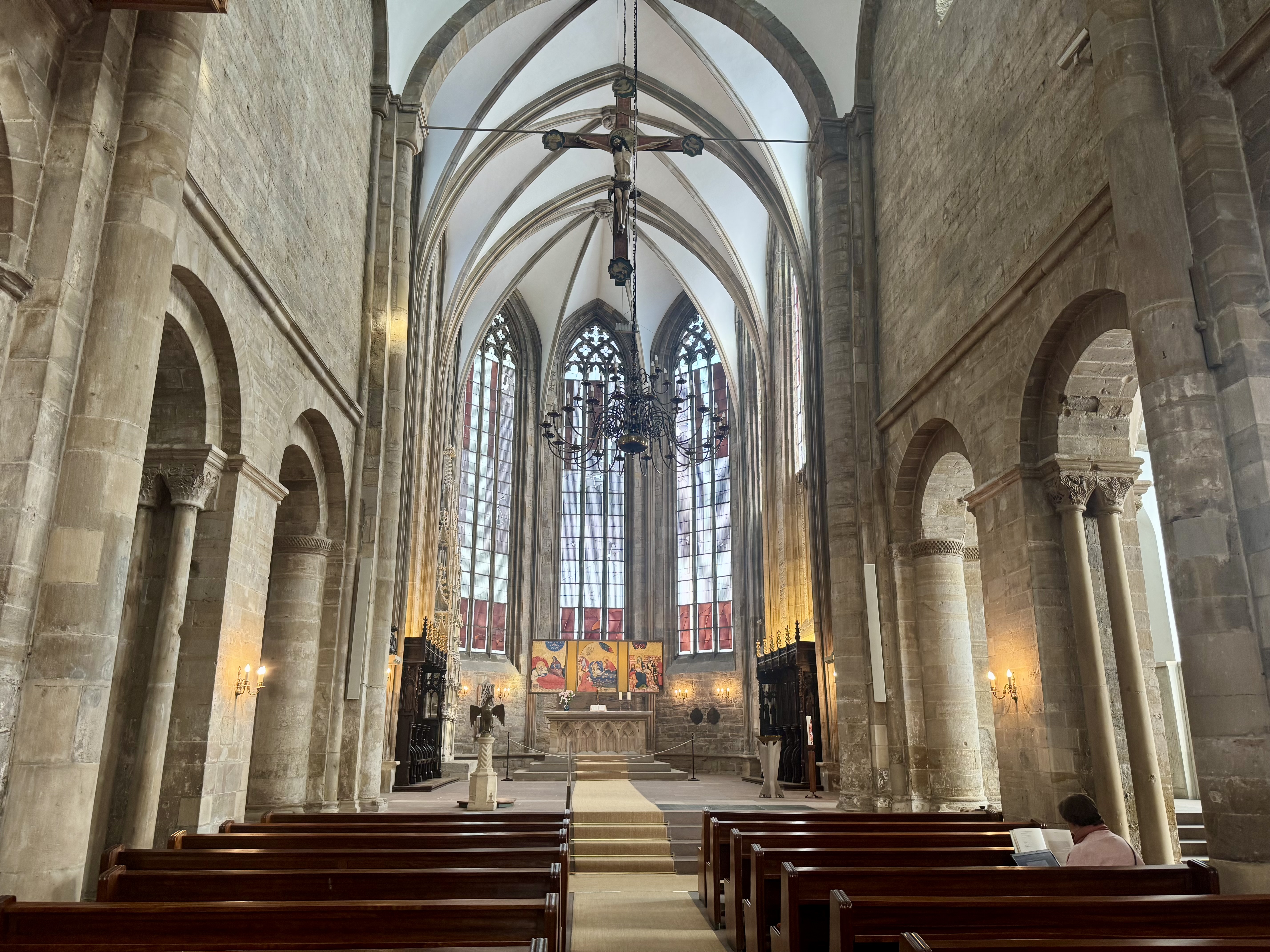
Next was St. Mary’s Church, which felt more understated but just as historic.
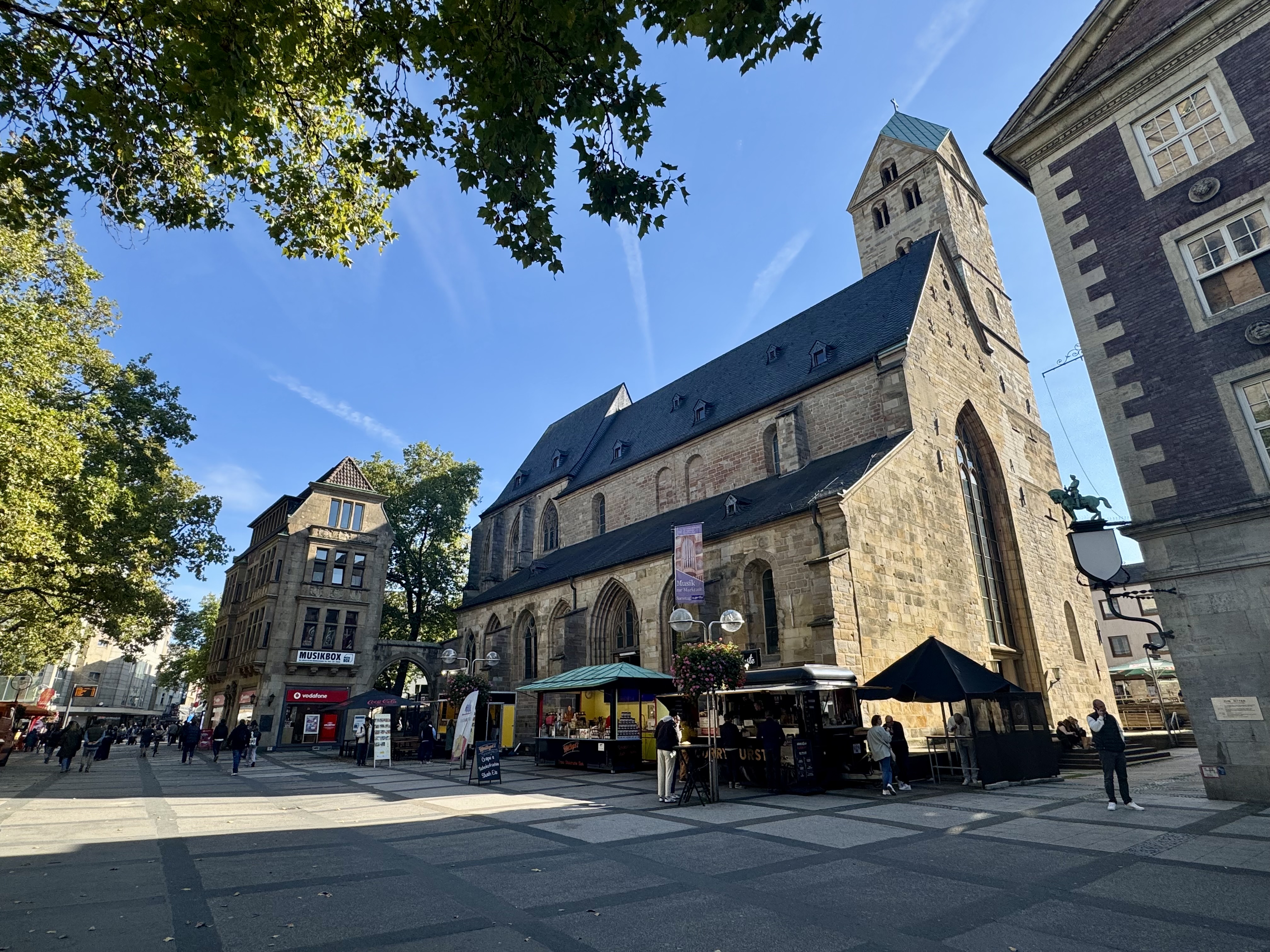
St. Mary’s Church also shows elements of Romanesque and Gothic architecture, and houses notable Medieval art. The church was destroyed in World War II, but rebuilt. It also serves as a concert venue for sacred music.
Lastly is Adler Apotheke. The pharmacy is located in a historic building in the old square. Its existence was first documented in 1392 and was owned by the same family for over 500 years.
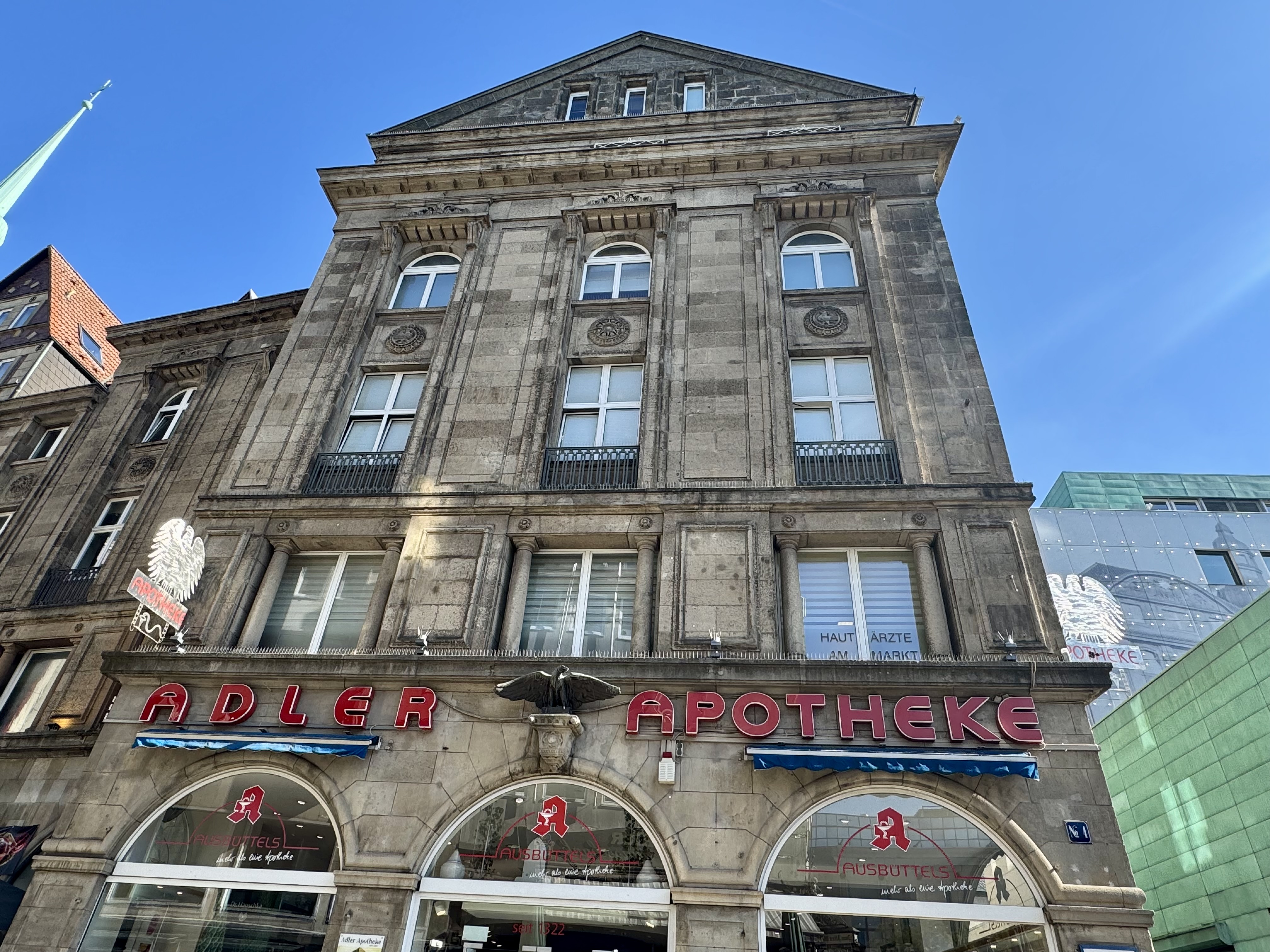
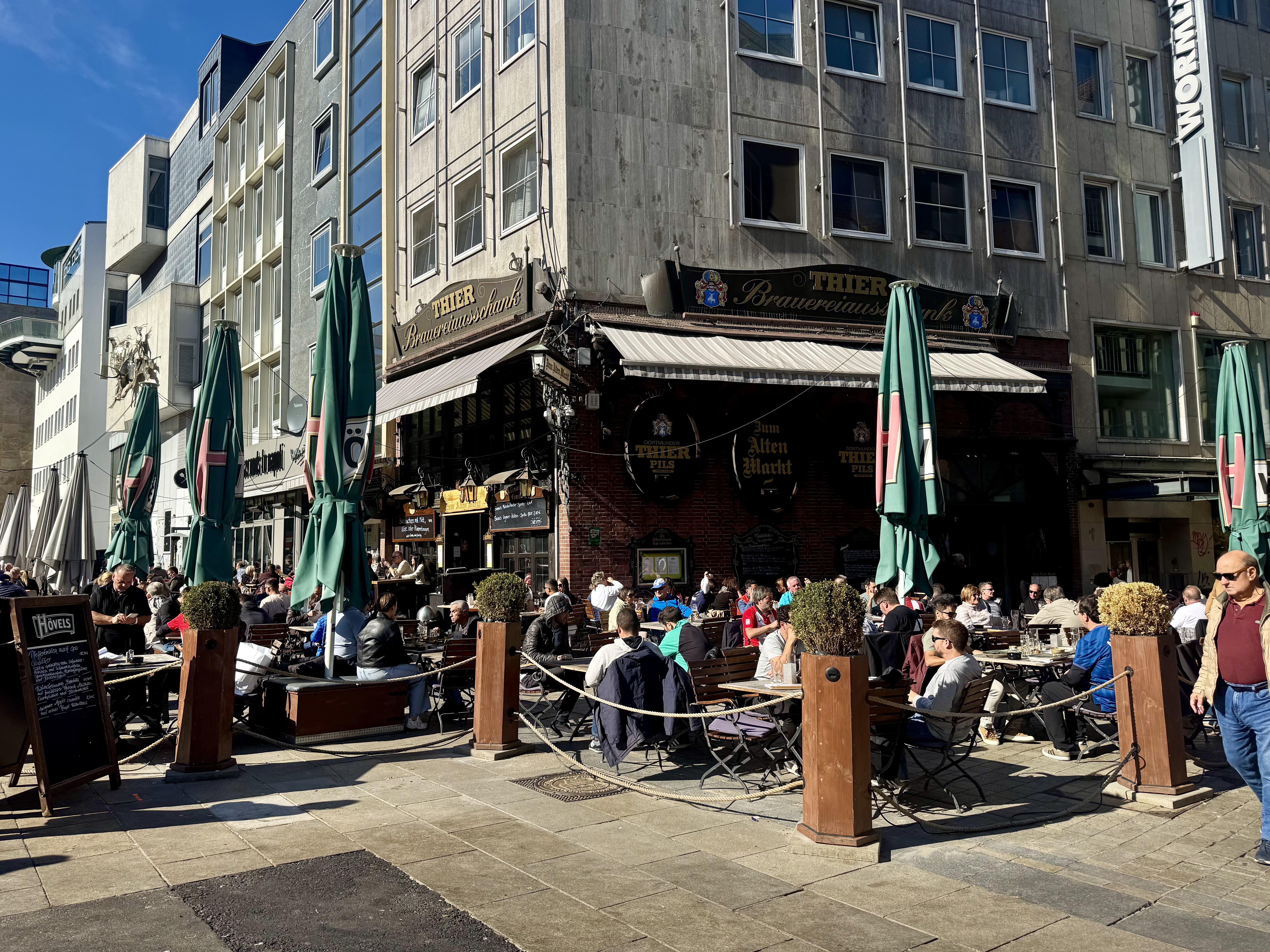
It was about lunchtime so we were able to snag a table at Zum Alten Markt, a typical German restaurant. I have to admit that while the location and vibe were cool, the food was ok. Every schnitzel on their menu came topped with some sort of gravy. I didn’t mind it too much, but both Nik and I enjoy ours simply breaded.
Düsseldorf
Following our stay in Dortmund, Nik and I had to return to Düsseldorf to catch our late afternoon flight back to Nice. We boarded a train from Dortmund and arrived in late morning to Düsseldorf. We underestimated how much free time we really had and cut it close catching a train to the airport. But we did manage to stop at a couple beer halls and quite literally stumbled upon some Stolperstein.
Siegmund & Julie Levy
As Nik and I walked into town, just five minutes from Düsseldorf’s train station, we passed two of the cities 400 Stumble Stones, known in German as Stolperstein.
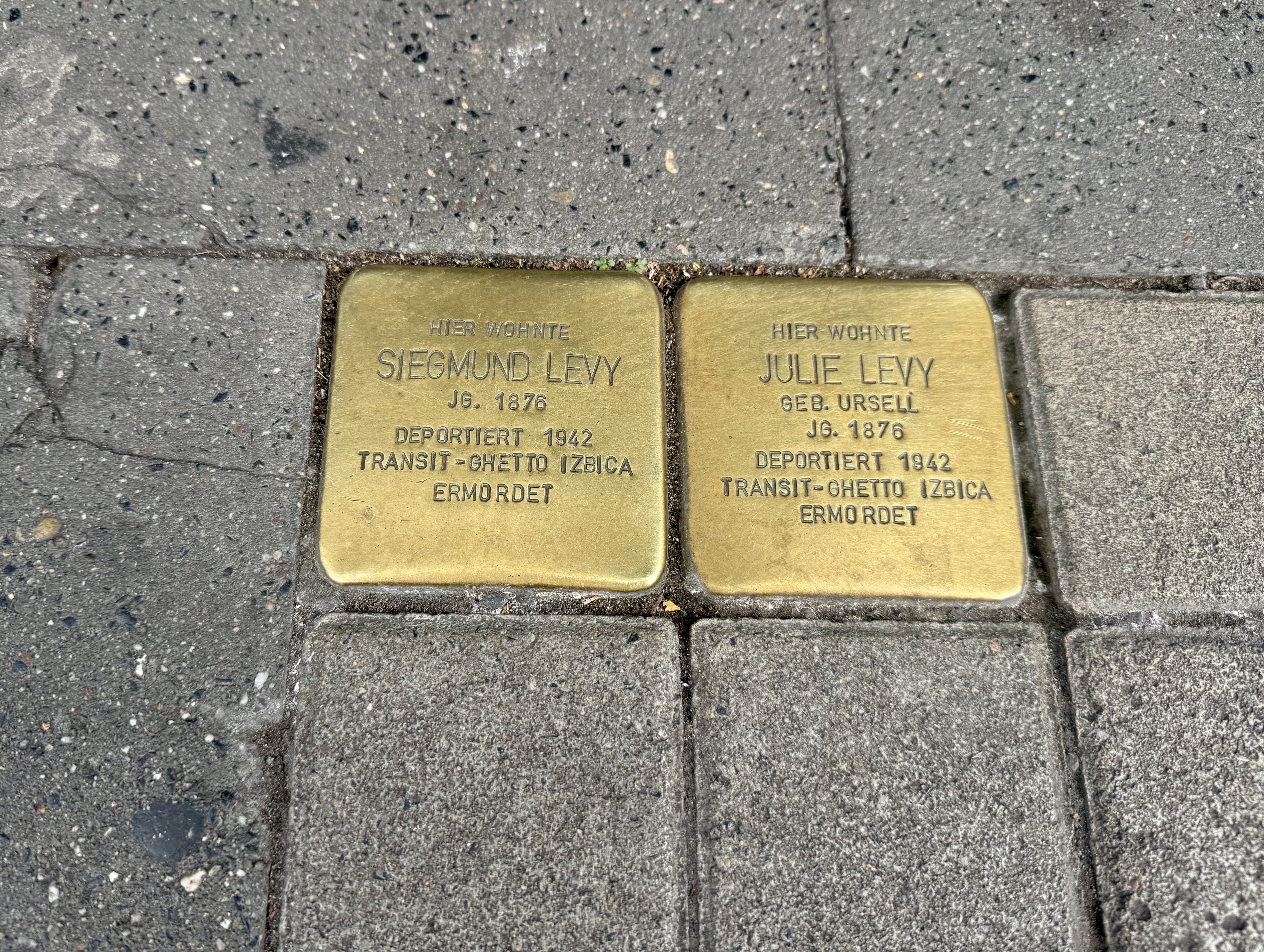
This pair was located at Friedrich-Ebert-Strasse 12, the last known residence for Siegmund & Julie Levy. Their stone translates that they were deported in 1942 to Izbica ghetto in Poland. Further research led me to a list of Stolperstein in Düsseldorf, where I found additional information about the Levys:
Husband and wife Siegmund & Julie Levy. He was publisher of the Chamber of Commerce of Dusseldorf. She owned a clothing store. After the Nazis took power, he had to sell his share of the business.
In March 1942, Julie was interrogated by the Gestapo because she had covered her Jewish star in public with a large handbag. She was sentenced to a fine of 30 Reichsmark.
While both children of the Levy family emigrated to Palestine, the Levy spouses initially remained in their apartment until April 1942 when they were deported to the Izbica ghetto in Poland. They didn’t survive.
Altbier in Düsseldorf
As I wrote about in our Cologne recap, it is common in Germany for a region or city to specialize in a specific type of beer. Cologne has Kölsch and Düsseldorf has Altbier, a dark and copper-colored beer known for its distinct malty sweetness, balanced by a subtle hop bitterness. Despite that description and its appearance, Altbier is a fairly light beer.
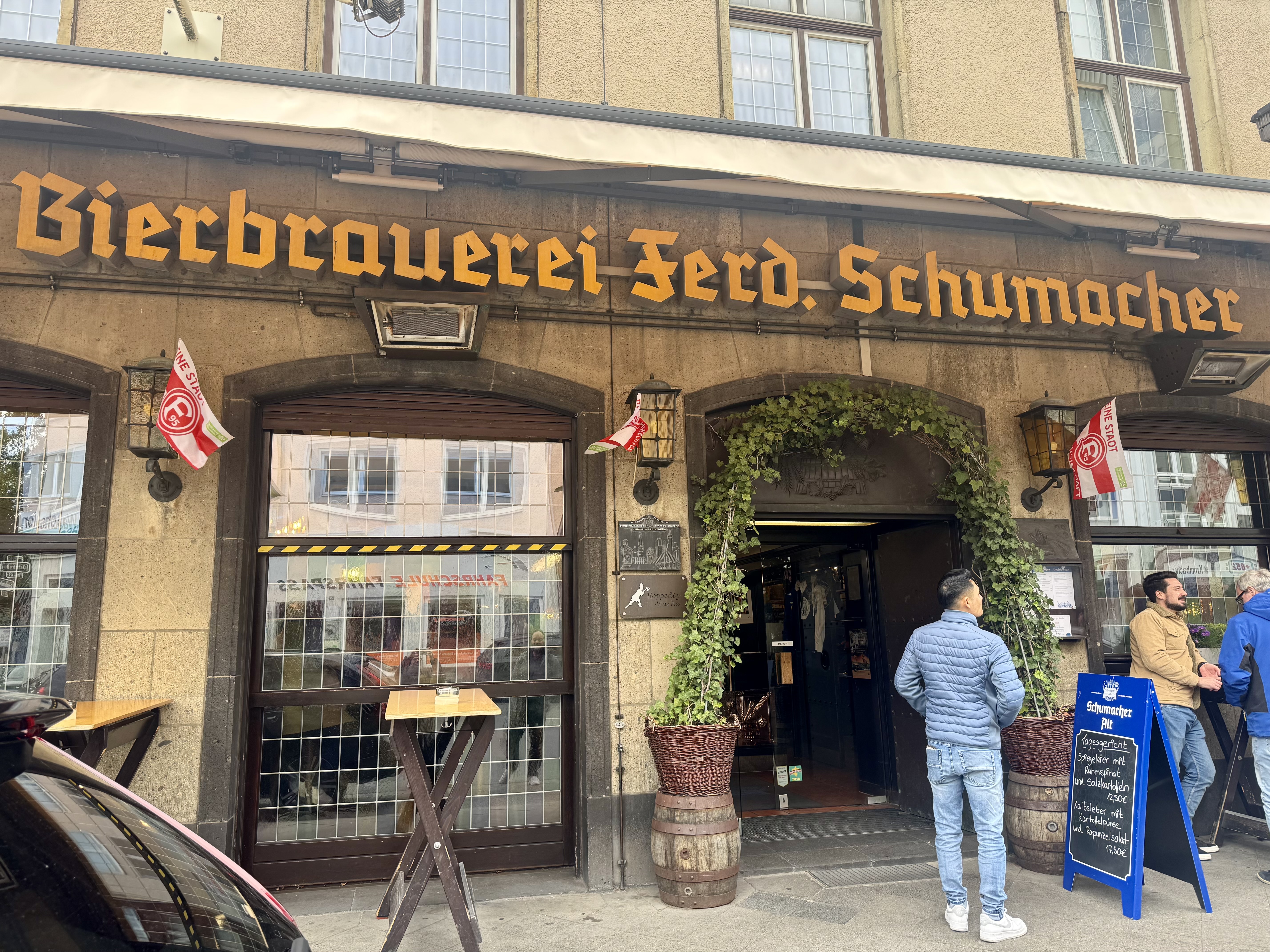
There are seven bars in Düsseldorf which brew Altbier on the premises and in our couple hours spent in the city we managed to visit two of them. The first being Brauerei Schumacher where we sat at high-top table and enjoyed a few crisp beers. Schumacher also has an expansive dining space that reflects its place in history, being around since the mid-1850s.
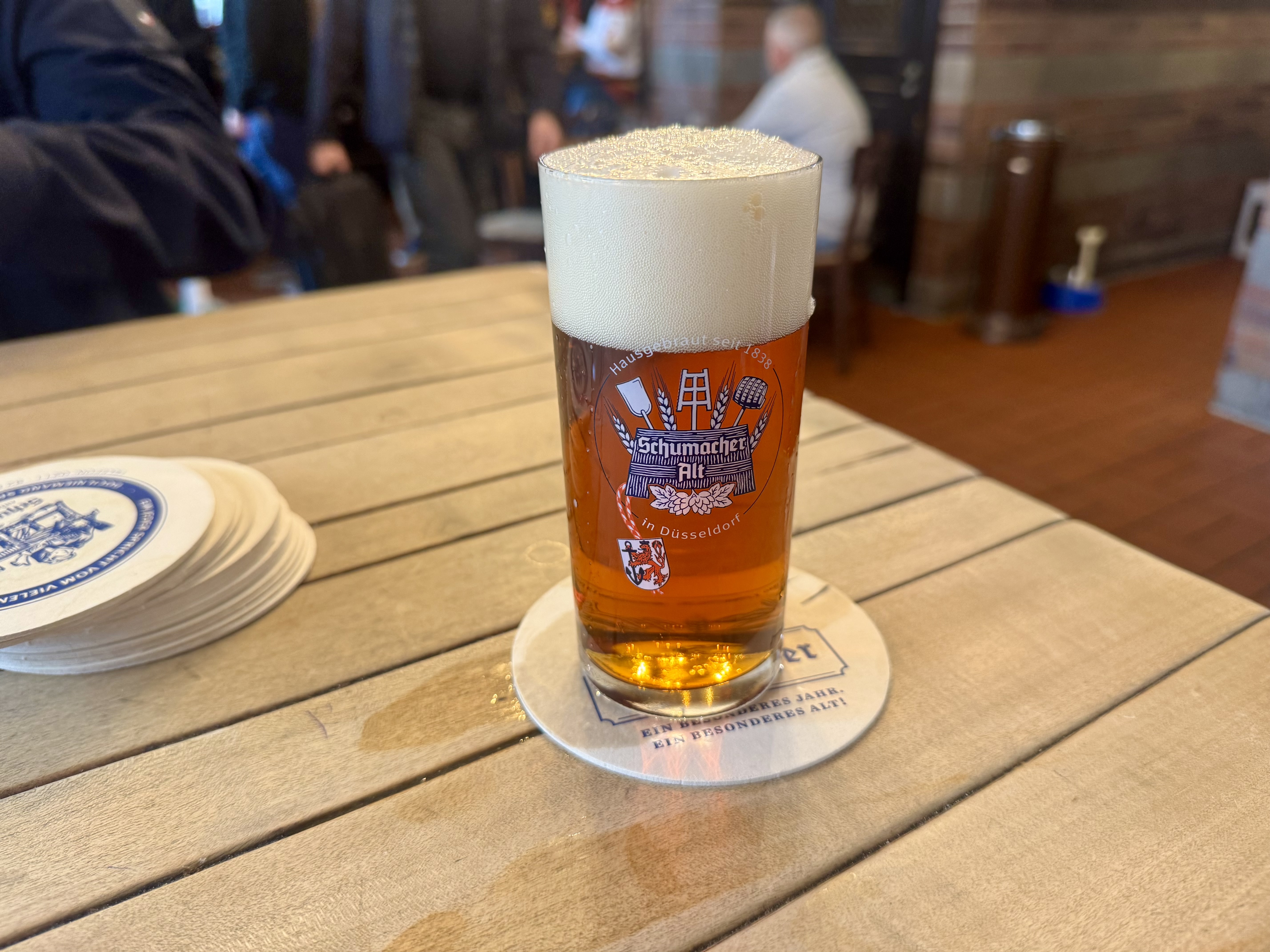
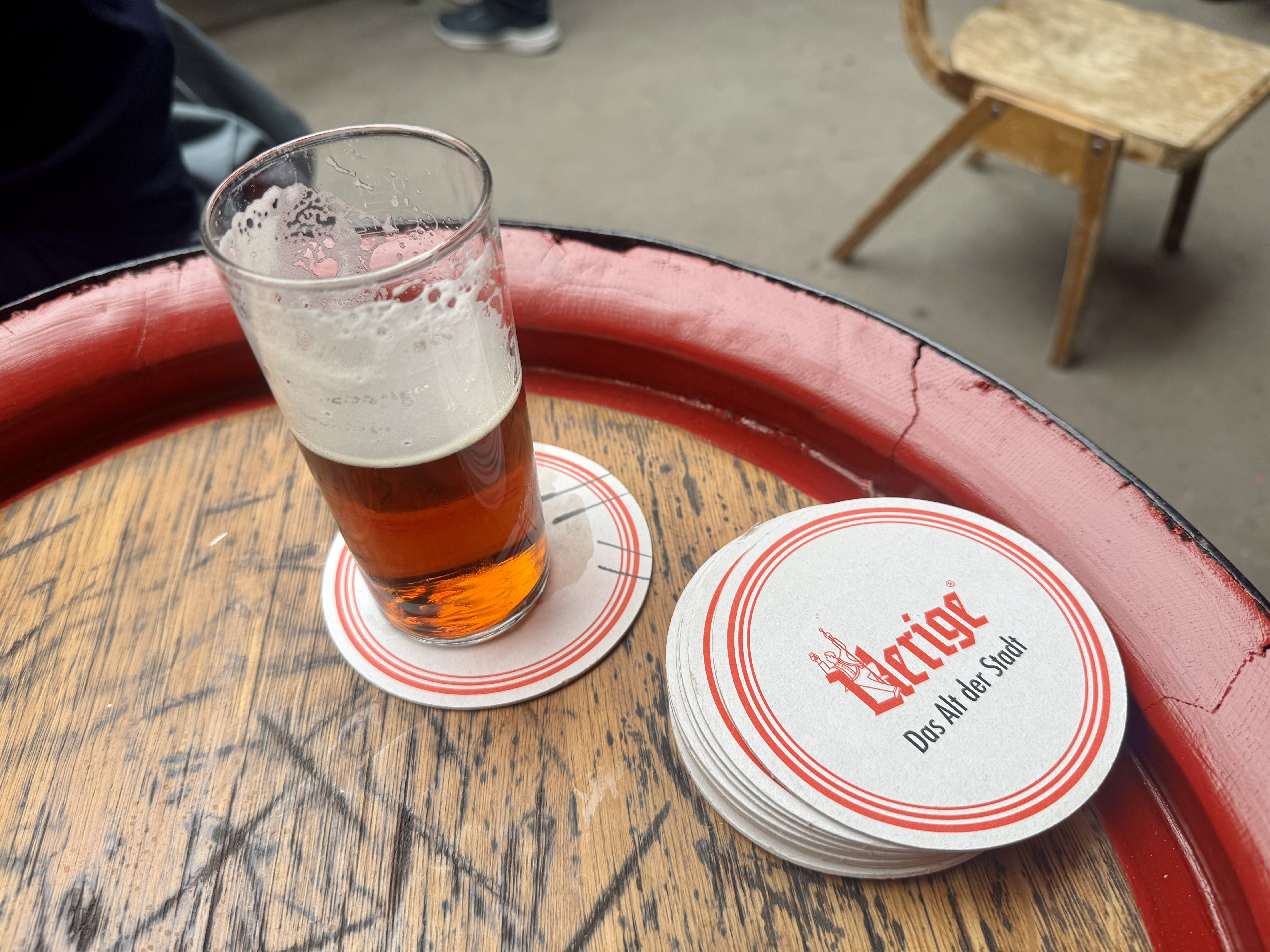
Altbier comes in the same small, cylinder glass as Kölsch, a design meant to keep the beer cold. Servers tally each drink directly on your coaster, just like in Cologne.
We stopped next at Uerige, a bar in the heart of Old Town that also brews its Altbier on-site.
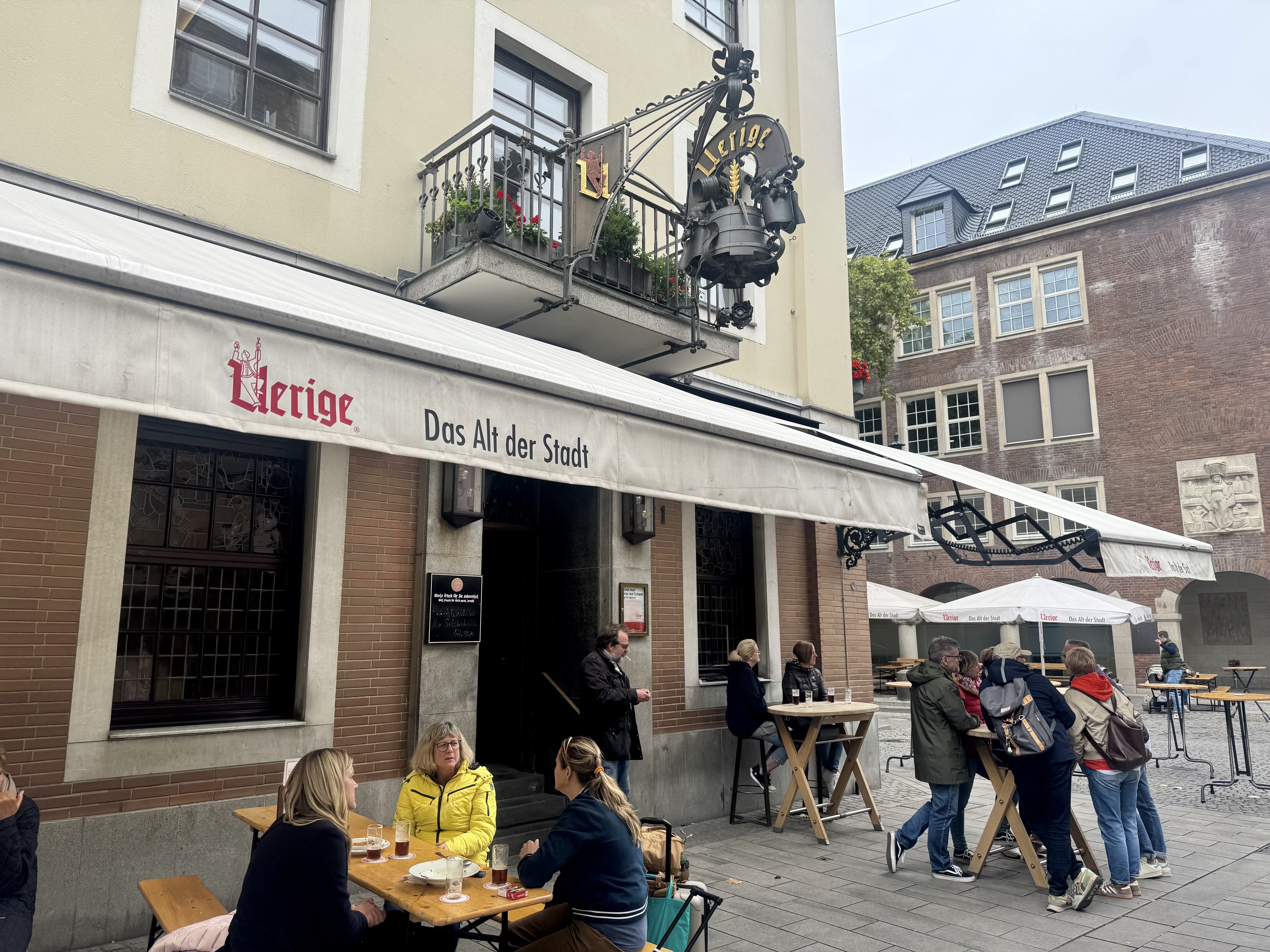
Uerige had a full dining space but we sat a beer barrel turned table in one of their side rooms that was half wood-paneled and painted murals.
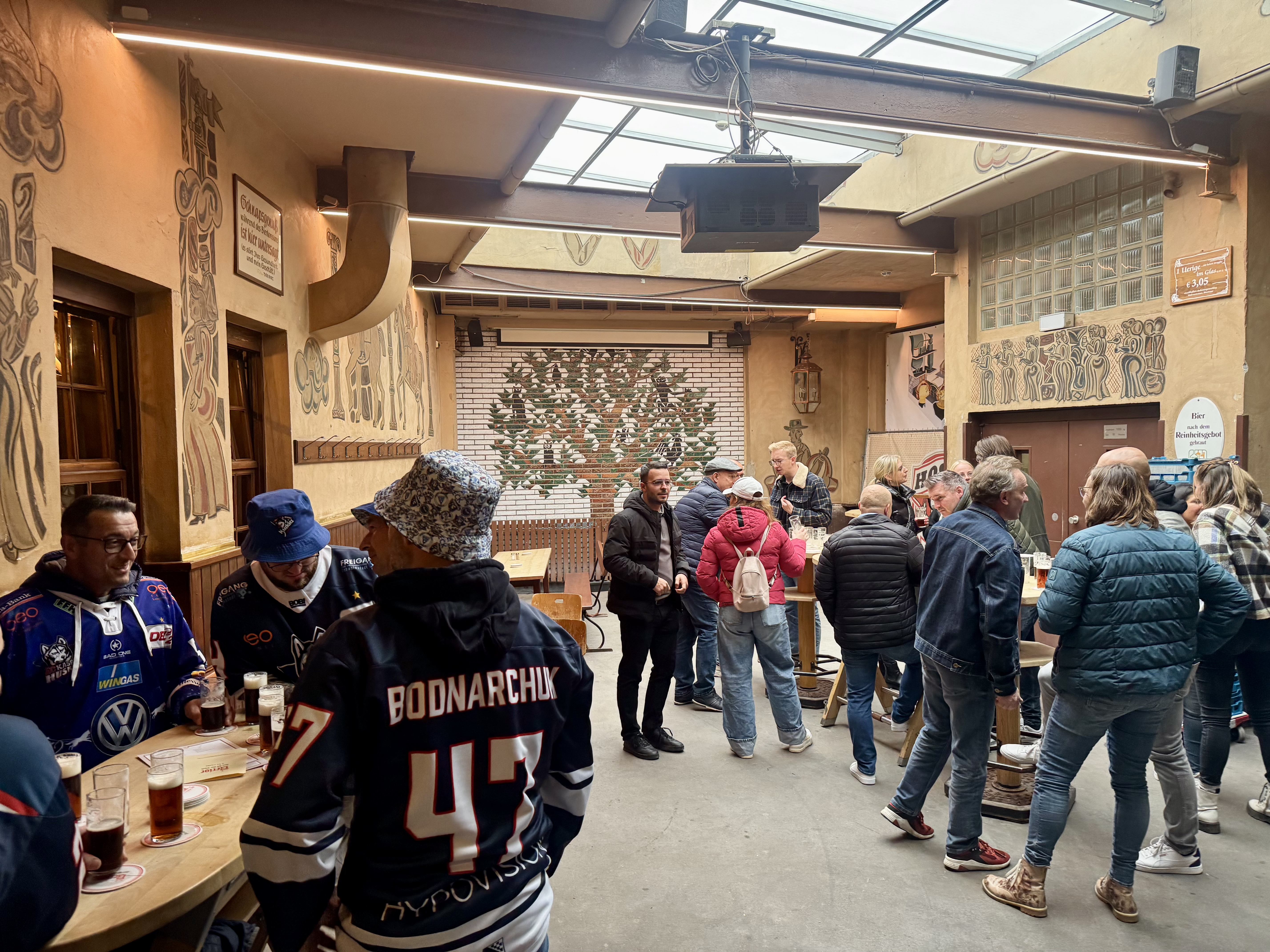
We learned the hard way that Uerige is cash only, so Nik had to run out and find an ATM. Lesson learned to always carry cash even if you might not need it.
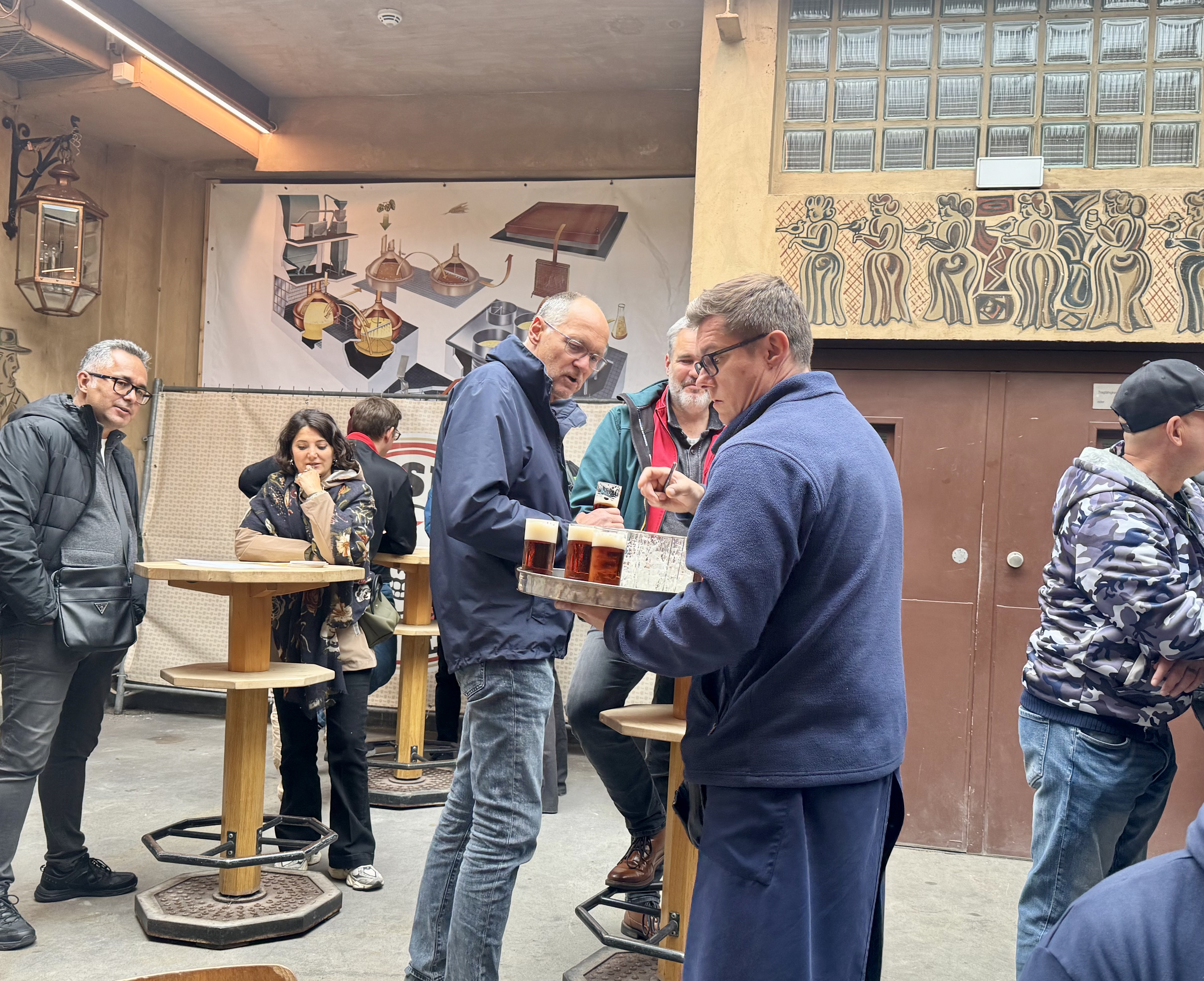
Without realizing the time, we got a bit ambitious and stopped at HeimWerk Altstadt, a typical German restaurant, for beers and food. Once we saw how tight it would be to make our train to the airport, we paid and left rather quickly without eating. Oh well.
Overall we enjoyed our few hours in Düsseldorf and loved the soccer game and Oktoberfest experiences in Dortmund. I don’t think either city needs more than two days, and unlike Cologne, I’m not sure either is on my list to revisit.